
 Kurt SchwittersDeutschland, 1887–1948
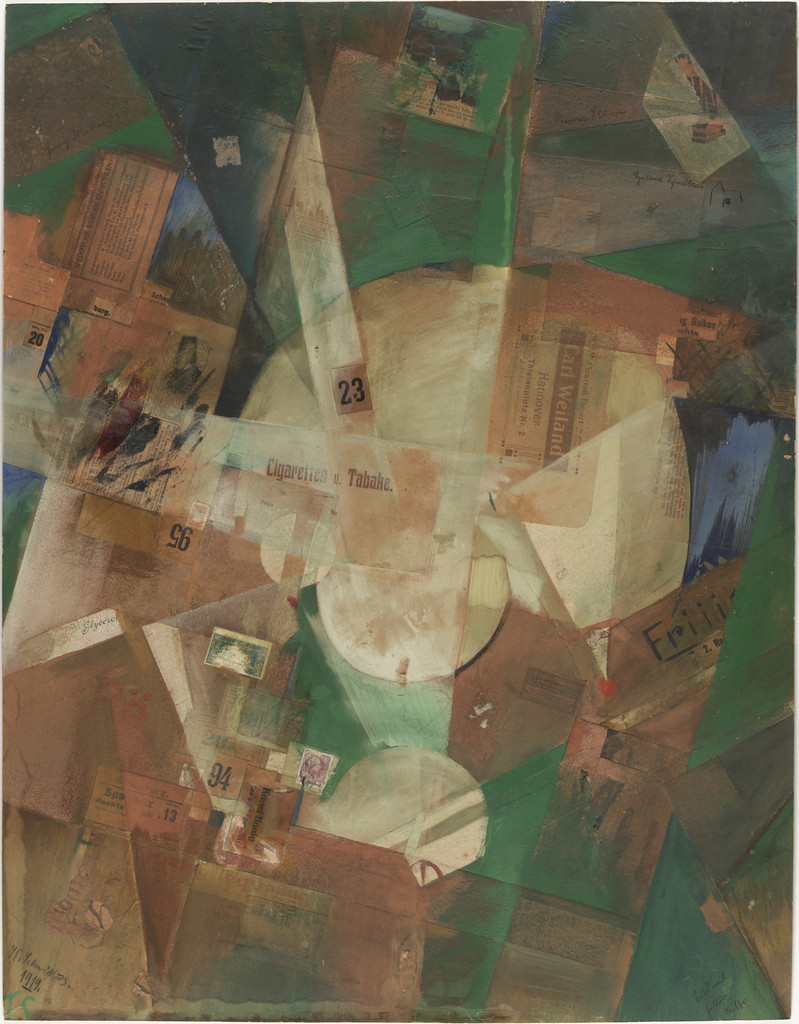
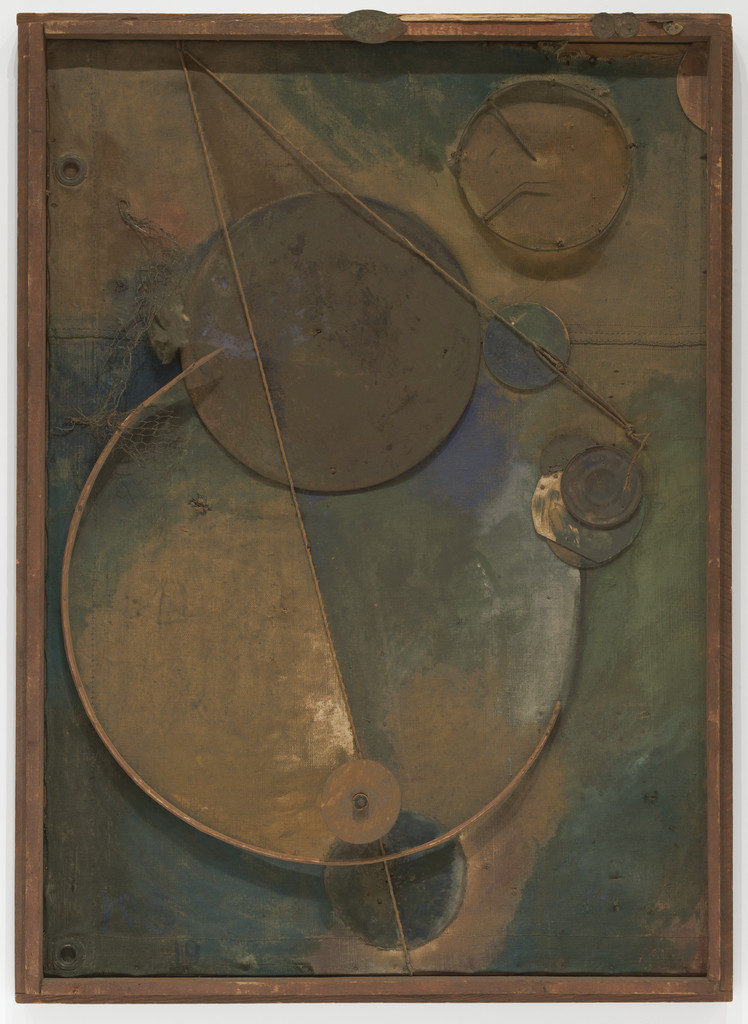
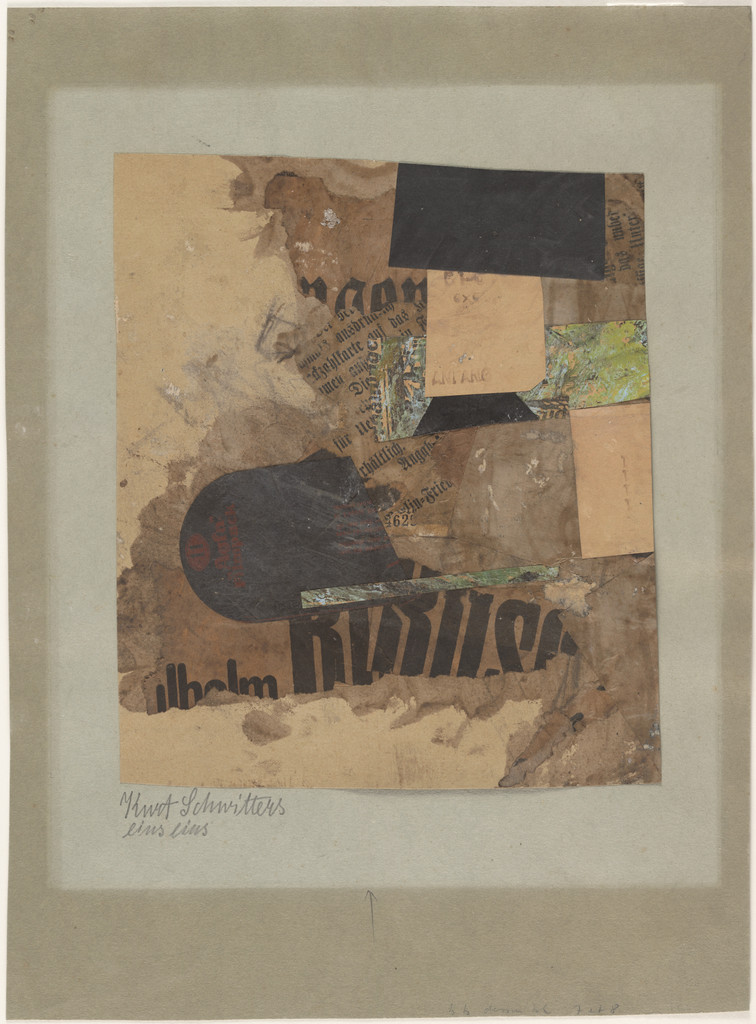
Merz 3 (0/1)
Darf man es sehen?
Empfängt derzeit nicht

Washington, D.C., Vereinigte Staaten
Es gehört zur Sammlung, ist derzeit aber nicht ausgestellt.
- Geprüft
- Unverändert seit
- Quelle
- Das Museum
Angaben
- Inventarnummer
- 2006.52.3
Was es zeigt
Im Katalog
Quellen
- National Gallery of Art
- Bild: National Gallery of Art — © the artist or rights holder
Derweil im Leben von Kurt Schwitters
Das ganze Leben1920s
Lecture and recital tours across Europe
Together with other members of the international avant-garde — Jean Arp, Raoul Hausmann and Tristan Tzara — he organises and takes part in tours of provocative evening recitals and lectures in Czechoslovakia, the Netherlands and Germany.
1922
Answers Huelsenbeck with an absurdist story
Huelsenbeck had ridiculed him as ‘the Caspar David Friedrich of the Dadaist Revolution’; in reply Schwitters publishes in the magazine Der Sturm the story ‘Franz Mullers Drahtfrühling’, about an innocent bystander who starts a revolution ‘merely by being there’.
1922–1923
Dada evenings in the Netherlands with Van Doesburg
In 1922 Theo van Doesburg organises Dada performances in Amsterdam, Leiden, Utrecht and The Hague: the Dadaists he invites decline, and the programme is carried by Theo van Doesburg, Nelly van Doesburg (performing as Petrò van Doesburg), Schwitters and sometimes Vilmos Huszár. Schwitters’s solo evening takes place on 13 April 1923 in Drachten, where he later stays often with the local painter Thijs Rinsema and makes collages, probably together with him.
1923–1932
Publishes the periodical ‘Merz’
The periodical appears from 1923 to 1932, each issue devoted to a central theme: no. 5 (1923) is a portfolio of prints by Jean Arp, and double issue 8/9 (1924) is edited and typeset by El Lissitzky, whose friendship proves particularly influential and brings Schwitters’s pictures closer to Constructivism. In all, 21 issues appeared; by numbering, the last is no. 24.
after 1924
Runs the advertising agency Merzwerbe
After the demise of the Der Sturm gallery in 1924 he runs an advertising agency, Merzwerbe, whose clients include Pelikan inks and Bahlsen biscuits. Designs, test prints and proof sheets from these jobs often crop up in his Merz pictures.
14 February 1925
First performance of the ‘Ursonate’
He performs the ‘Ursonate’ for the first time at the home of Irmgard Kiepenheuer in Potsdam, then performs it regularly, developing and extending it; in 1932 he publishes the notation in the last ‘Merz’ (no. 24, typography by Jan Tschichold) and continues to develop the piece for at least ten more years.



![Ginevra de' Benci [obverse], Leonardo da Vinci, c. 1474/1478](https://api.nga.gov/iiif/8f29e3c9-a289-4d53-abf0-31a66e9e98fa/full/!2400,2400/0/default.jpg)
![Wreath of Laurel, Palm, and Juniper with a Scroll inscribed Virtutem Forma Decorat [reverse], Leonardo da Vinci, c. 1474/1478](https://api.nga.gov/iiif/ff62e8d0-45c4-498f-ad36-6358de827e04/full/!2400,2400/0/default.jpg)


