ART WIKI33.040 ausgestellt
KarteSammlungKünstlerMuseenAusstellungenJournal
Anmelden

ART WIKI

Wo das Meisterwerk hängt und wann man vorgelassen wird.

Sammlungen: Art Institute of Chicago, Cleveland Museum of Art, Eremitage, Getty Villa, Harvard Art Museums, Hirshhorn Museum and Sculpture Garden, J. Paul Getty Museum, Louvre, Metropolitan Museum of Art, Minneapolis Institute of Art, Museum of Modern Art, National Gallery of Art, National Museum of Asian Art, National Portrait Gallery, Puschkin-Museum, Rijksmuseum Amsterdam, Russisches Museum, Smithsonian American Art Museum, Statens Museum for Kunst, Tretjakow-Galerie, Victoria and Albert Museum, Whitney Museum of American Art, Staatskatalog des Museumsfonds Russlands (274 Museen), Europeana (19 Museen), Wikidata (6 Museen), Paris Musées (12 Museen) und Joconde, die Museumsdatenbank des französischen Kulturministeriums (495 Museen). Die Bilder gehören ihren Rechteinhabern.

Rubriken

  • Karte
  • Suche
  • Sammlung
  • Meisterwerke
  • Jetzt ausgestellt
  • Künstler

Mehr

  • Museen & Galerien
  • Ausstellungen
  • Journal
  • Woher die Daten stammen
  • Datenschutz & Cookies
StartseiteKarteKatalog
  1. Sammlung/
  2. Cleveland Museum of Art/
  3. Male Votive Figure
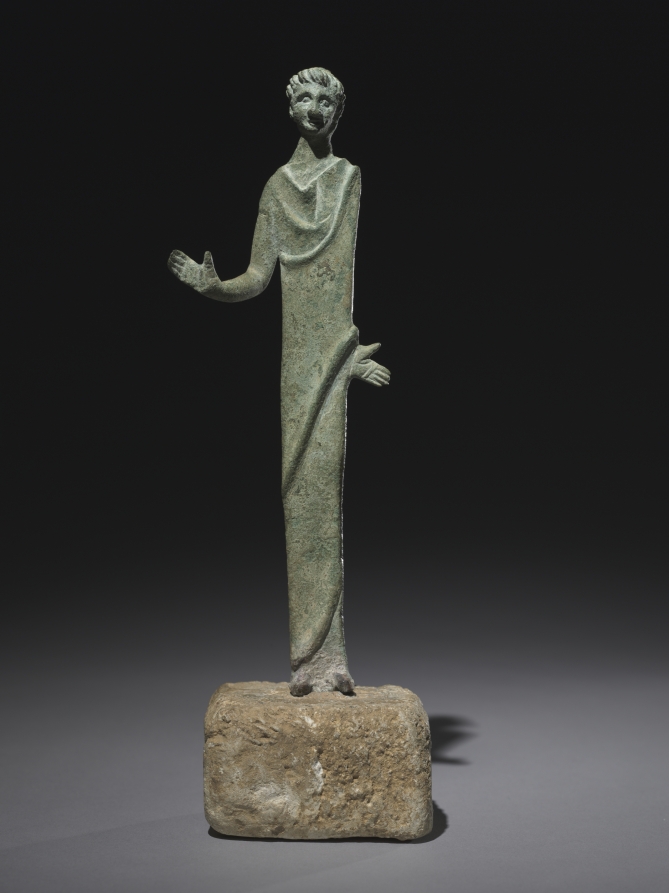
Male Votive Figure, 300s BCE

Male Votive Figure

300s BCE · Sculpture

Darf man es sehen?

Ja, es empfängt Besucher

Cleveland Museum of Art

Cleveland, Vereinigte Staaten

Saal102D Pre-Roman

Öffentlich ausgestellt. Wer dafür bürgt, steht unten.

Geprüft
vor 9 Tagen
Unverändert seit
19. Aug. 2026
Quelle
Das Museum
Auf der KarteMuseumsseite

Über die Skulptur

This Etruscan votive figure is posed with his hands turned to expose his palms, one near his hip, the other projecting laterally. With the exception of the fully three-dimensional head and the extended right arm and hand, the side profile of this figure is shockingly flat. The tall man’s back is not only extremely thin but also an almost perfectly vertical column. Other examples of this votive figure type are even more elongated, and some hold small cups or libation dishes, as if making offerings. Some scholars have suggested that these votive figures may represent shadows due to their extreme height and relative lack of depth, while others have seen connections to much older traditions of relatively flat cult images, whether of wood or metal.

Cleveland Museum of Art

Angaben

Inventarnummer
1985.3

Im selben Saal · 102D Pre-Roman, Cleveland Museum of Art

Museumsseite

Im Katalog

SkulpturBronzeEtruscan

Quellen

  • Cleveland Museum of Art
  • Bild: Cleveland Museum of Art — Museum open access
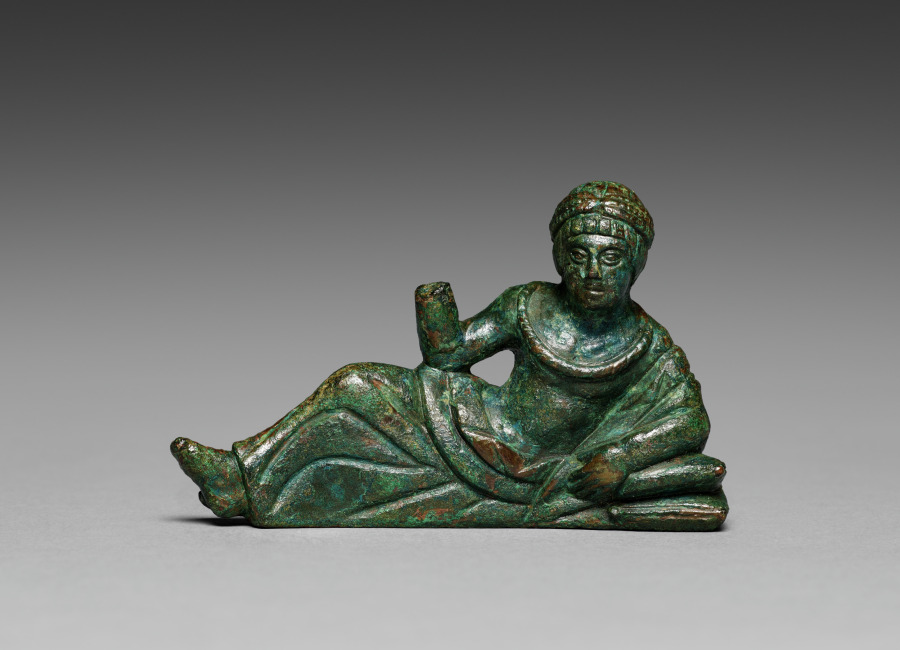
Vessel Ornament of Banqueter, probably 400–375 BCE

Vessel Ornament of Banqueter, probably 400–375 BCE

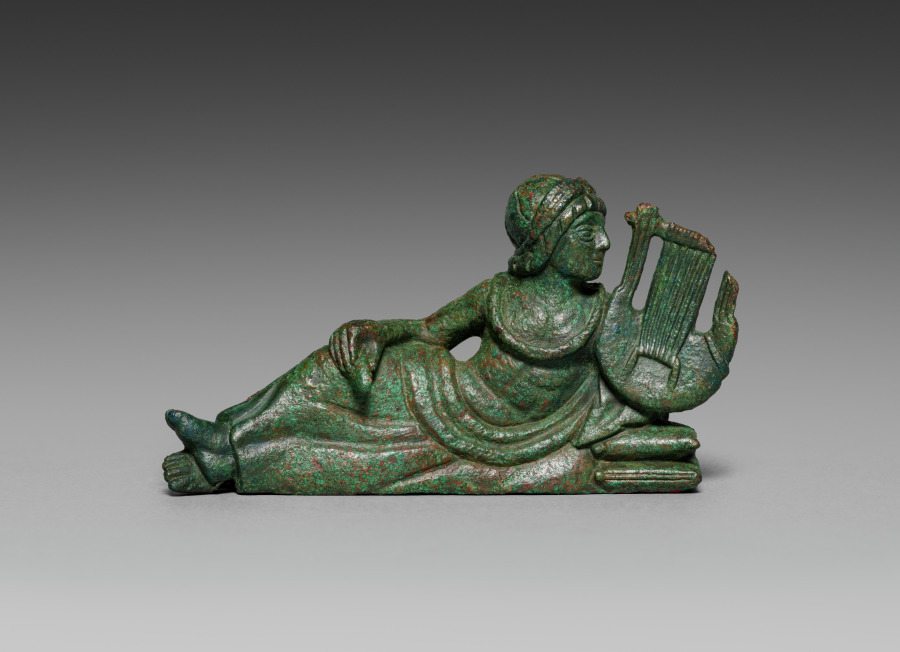
Vessel Ornament of Reclining Lyre-player, probably 400–375 BCE

Vessel Ornament of Reclining Lyre-player, probably 400–375 BCE

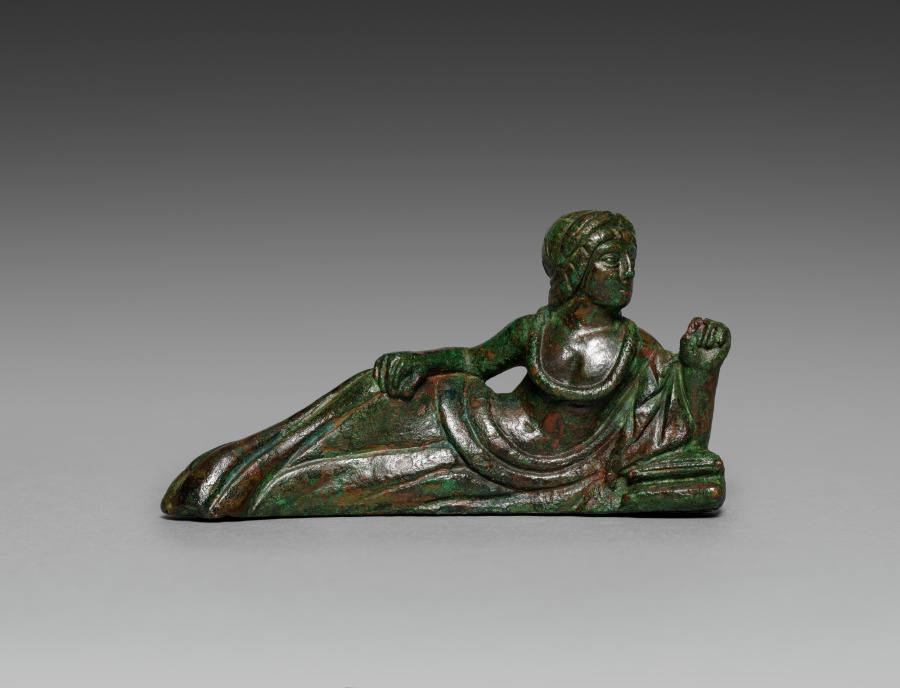
Vessel Ornament of Banqueter, probably 400–375 BCE

Vessel Ornament of Banqueter, probably 400–375 BCE

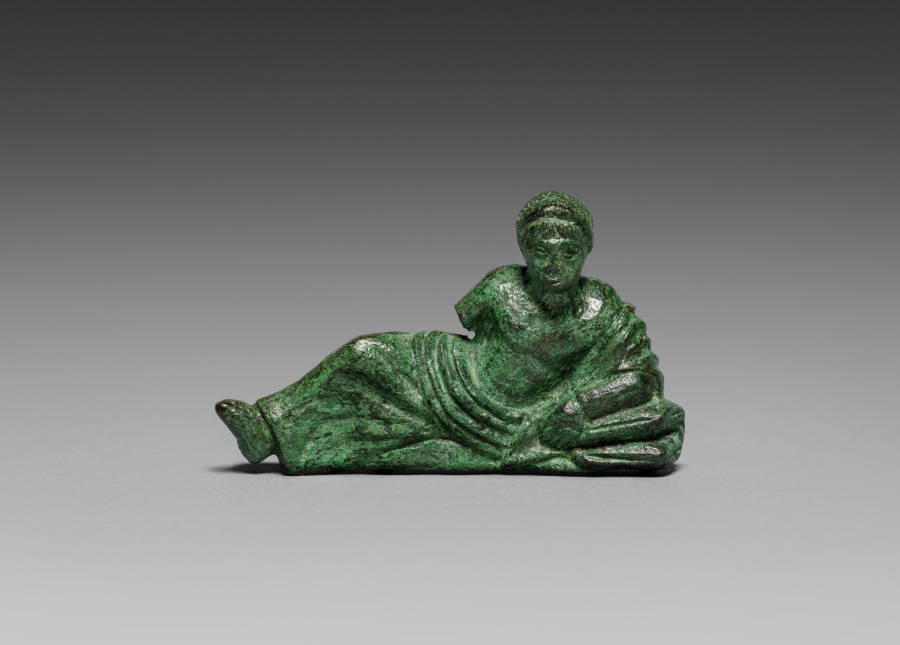
Vessel Ornament of Banqueter, c. 400–375 BCE

Vessel Ornament of Banqueter, c. 400–375 BCE

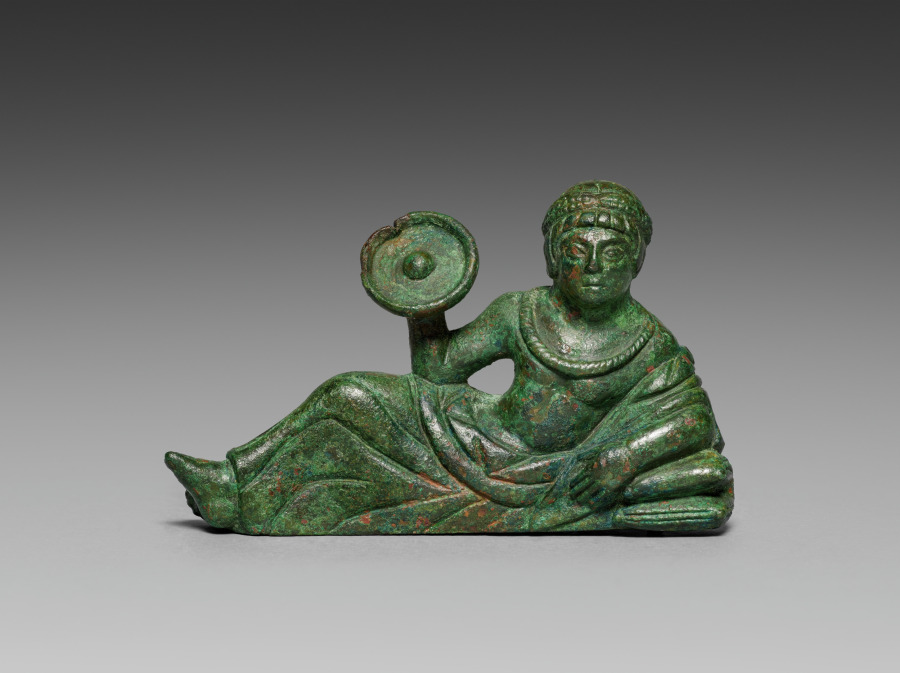
Vessel Ornament of Banqueter Holding an Omphalos, probably 400–375 BCE

Vessel Ornament of Banqueter Holding an Omphalos, probably 400–375 BCE

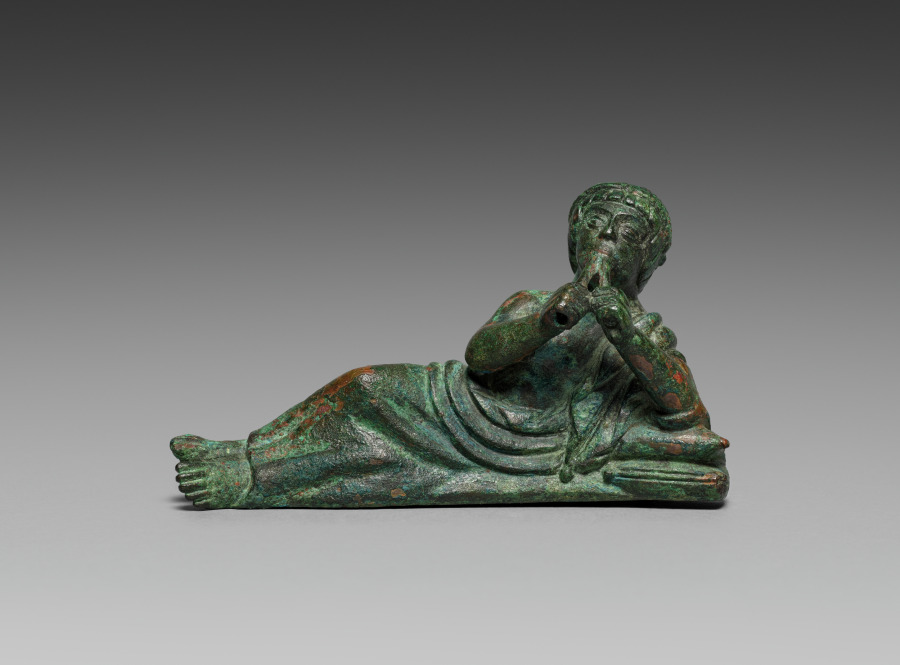
Vessel Ornament of Reclining Pipes Player, probably 400–375 BCE

Vessel Ornament of Reclining Pipes Player, probably 400–375 BCE

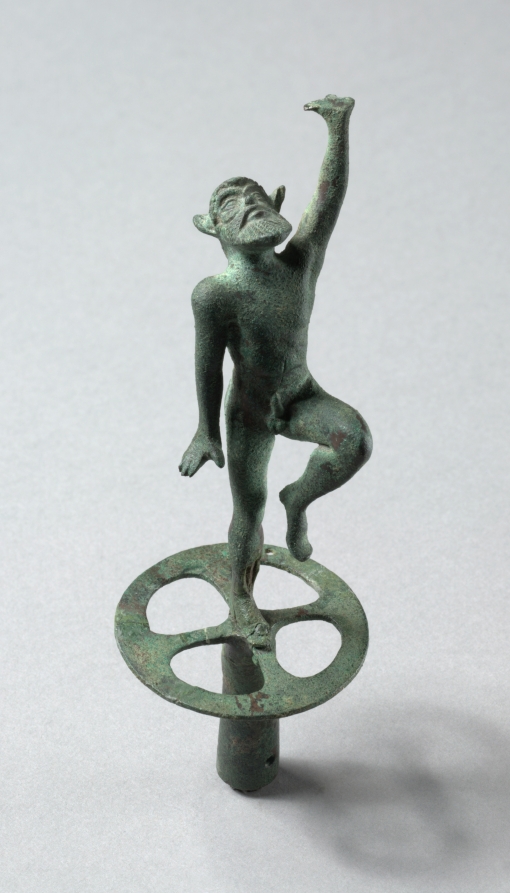
Kottabos Element of a Dancing Satyr, 470–450 BCE

Kottabos Element of a Dancing Satyr, 470–450 BCE

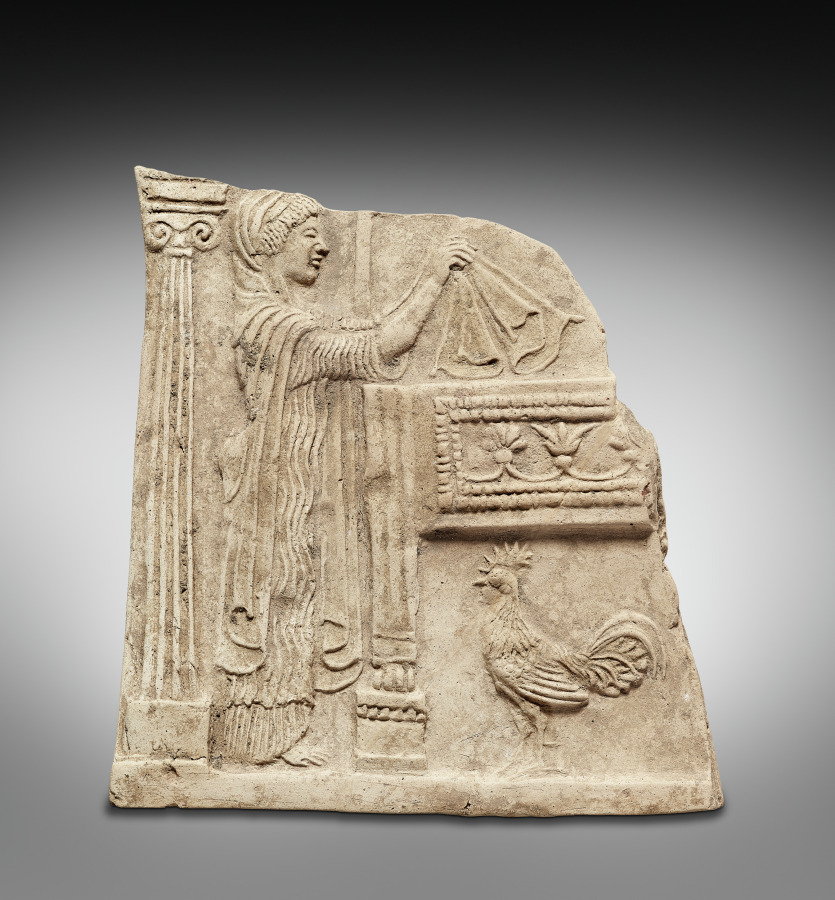
Votive Plaque (Pinax) with Persephone Making her Bridal Bed, c. 490–450 BCE

Votive Plaque (Pinax) with Persephone Making her Bridal Bed, c. 490–450 BCE