ART WIKI32.963 ausgestellt
KarteSammlungKünstlerMuseenAusstellungenJournal
Anmelden

ART WIKI

Wo das Meisterwerk hängt und wann man vorgelassen wird.

Sammlungen: Art Institute of Chicago, Cleveland Museum of Art, Eremitage, Getty Villa, Harvard Art Museums, Hirshhorn Museum and Sculpture Garden, J. Paul Getty Museum, Louvre, Metropolitan Museum of Art, Minneapolis Institute of Art, Museum of Modern Art, National Gallery of Art, National Museum of Asian Art, National Portrait Gallery, Puschkin-Museum, Rijksmuseum Amsterdam, Russisches Museum, Smithsonian American Art Museum, Statens Museum for Kunst, Tretjakow-Galerie, Victoria and Albert Museum, Whitney Museum of American Art, Staatskatalog des Museumsfonds Russlands (274 Museen), Europeana (19 Museen), Wikidata (6 Museen), Paris Musées (12 Museen) und Joconde, die Museumsdatenbank des französischen Kulturministeriums (495 Museen). Die Bilder gehören ihren Rechteinhabern.

Rubriken

  • Karte
  • Suche
  • Sammlung
  • Meisterwerke
  • Jetzt ausgestellt
  • Künstler

Mehr

  • Museen & Galerien
  • Ausstellungen
  • Journal
  • Woher die Daten stammen
  • Datenschutz & Cookies
StartseiteKarteKatalog
  1. Sammlung/
  2. Louvre/
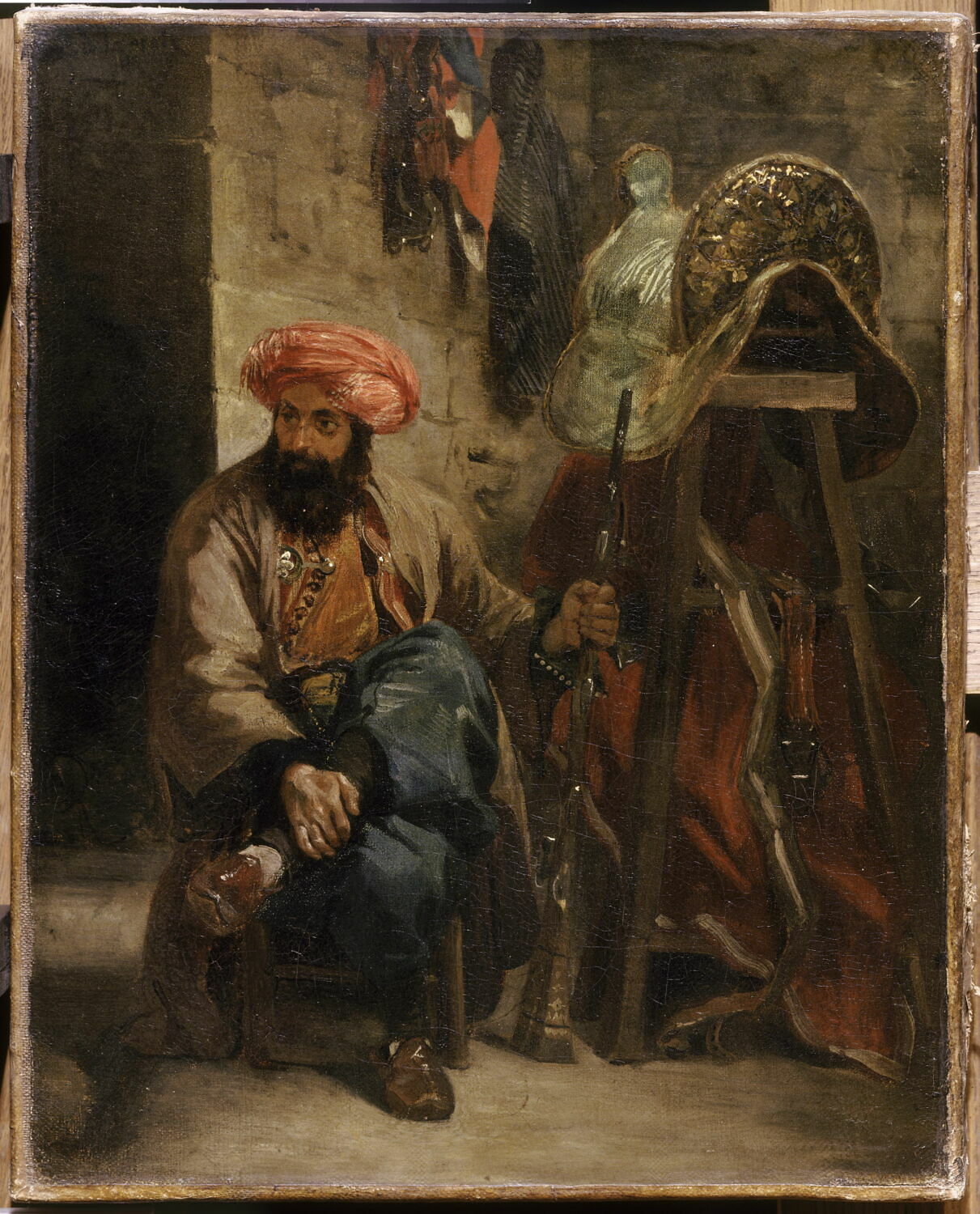
  3. Le turc à la selle
Le turc à la selle, Delacroix, Eugène, 2e quart du XIXe siècle (1825 - 1850)
Eugène Delacroix, PorträtEugène DelacroixFrankreich, 1798–1863

Le turc à la selle

2e quart du XIXe siècle (1825 - 1850) · Peintures

Angaben

2e quart du XIXe siècle (1825 - 1850)
17981863
Inventarnummer
RF 1654

Derweil im Leben von Eugène Delacroix

Das ganze Leben
  1. 1824

    Success of "The Massacre at Chios" at the Salon

    Shown at the Salon of 1824, The Massacre at Chios, devoted to the tragedies of the Greek War of Independence, brought Delacroix genuine success: the authorities recognized him as the leading painter of the new Romantic style, and the painting was bought by the state.

  2. 1825

    Journey to England

    During a trip to England Delacroix visited Thomas Lawrence and Richard Parkes Bonington; the color and manner of English painting gave impetus to his subsequent work.

  3. 1831

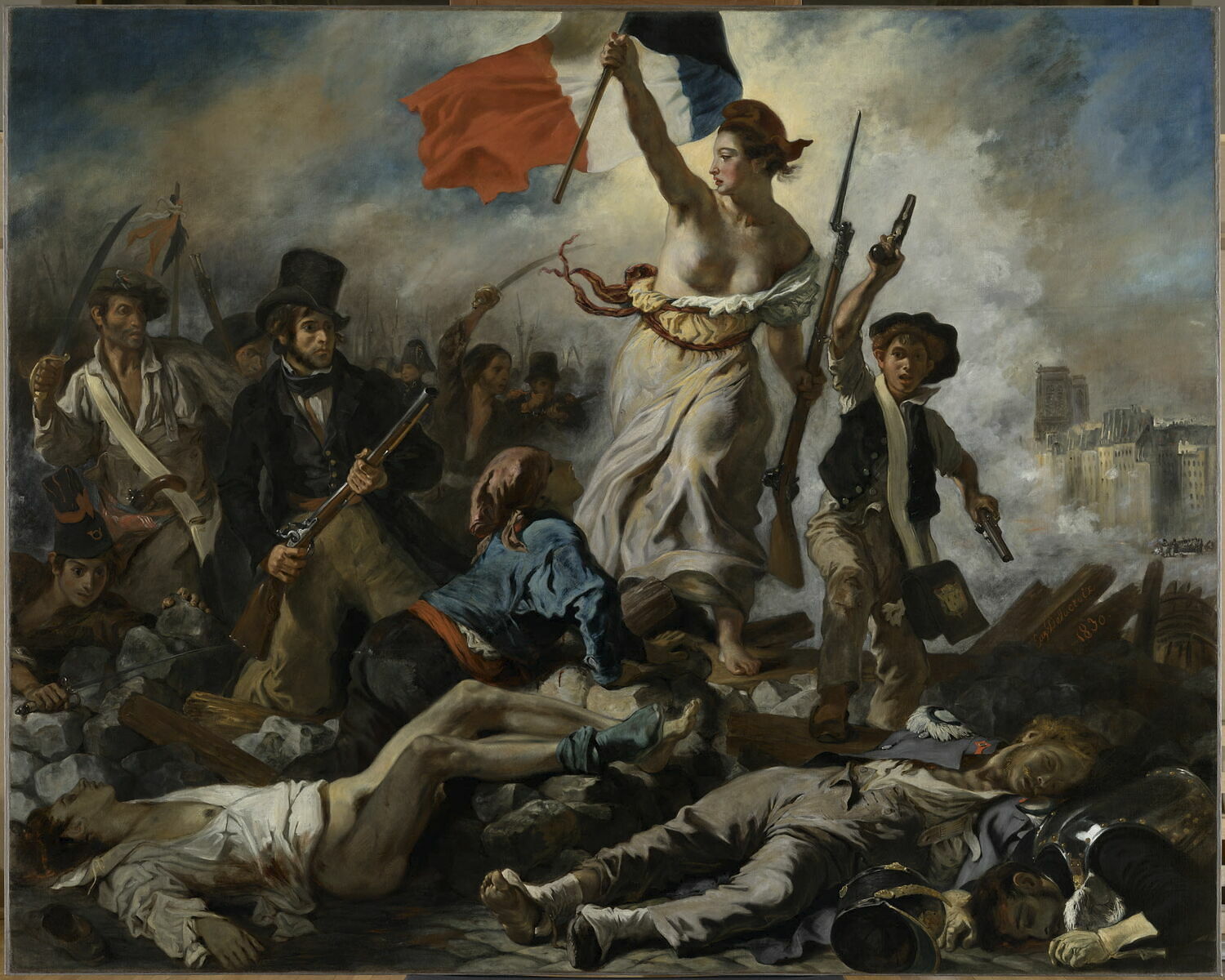
    "Liberty" at the Salon of 1831

    Liberty Leading the People was enthusiastically received by the public at the Salon of 1831 and immediately acquired by the state for 3,000 francs for the throne room of the Luxembourg Palace.

  4. 1832

    Journey to Spain and North Africa

    As part of the diplomatic mission of Charles-Edgar de Mornay, Delacroix traveled to Morocco shortly after the French conquest of Algeria. The journey proved a turning point: he made dozens of sketches, and his impressions of North Africa nourished his art for the rest of his life.

  5. 1833–1837

    Decoration of the Salon du Roi in the Palais Bourbon

    From 1833 Delacroix received numerous commissions to decorate the public buildings of Paris; the first was his work on the Salon du Roi in the Chamber of Deputies at the Palais Bourbon, completed in 1837.

Mehr von Eugène Delacroix

Alle Werke

Im selben Saal · Salle 950, Aile Sully, Niveau 2, Louvre

Museumsseite
  • 1838

    "Medea" Causes a Sensation at the Salon

    Delacroix exhibited Medea About to Kill Her Children — his first major engagement with Greek mythology; the painting caused a sensation at the Salon and was quickly purchased by the state.

  • Darf man es sehen?

    Ja, es empfängt Besucher

    Louvre

    Paris, Frankreich

    Saal950, Aile Sully, Niveau 2

    Öffentlich ausgestellt. Wer dafür bürgt, steht unten.

    Geprüft
    vor 12 Tagen
    Unverändert seit
    26. Sept. 2026
    Quelle
    Das Museum
    Auf der KarteMuseumsseite

    Im Katalog

    GemäldeÖlFranzösische MalereiKlassizismusRomantik19. Jahrhundert

    Quellen

    • Louvre
    • Bild: Louvre — © 1996 GrandPalaisRmn (musée du Louvre) / René-Gabriel Ojéda
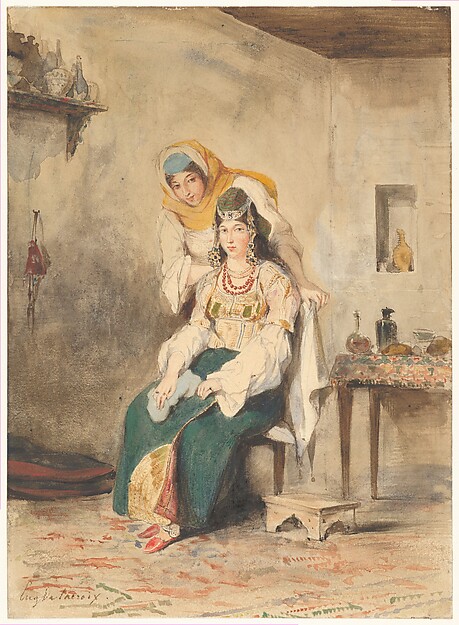
    Saada, the Wife of Abraham Ben-Chimol, and Préciada, One of Their Daughters, Eugène Delacroix, 1832

    Saada, the Wife of Abraham Ben-Chimol, and Préciada, One of Their Daughters

    1832 · Metropolitan Museum of Art

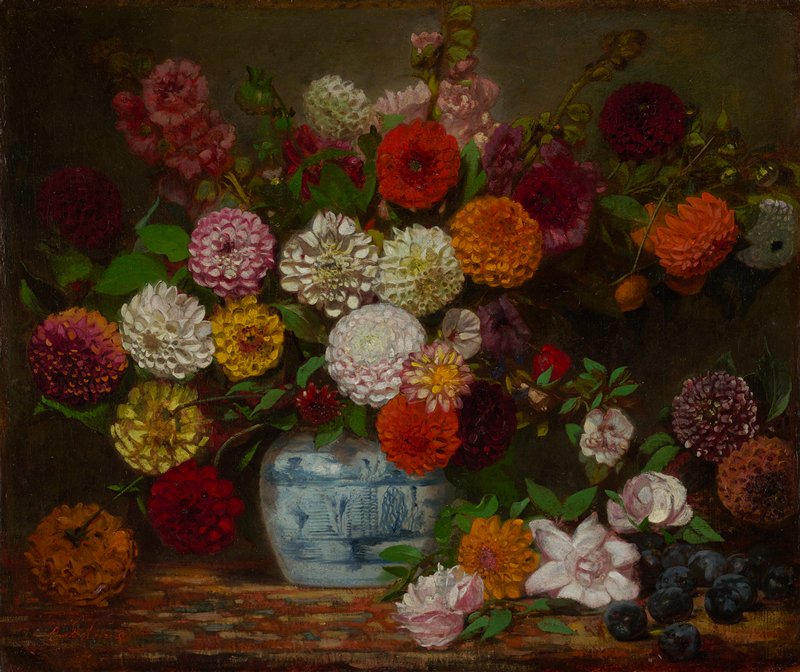
    Still Life with Dahlias, Zinnias, Hollyhocks and Plums, Eugène Delacroix, c. 1835

    Still Life with Dahlias, Zinnias, Hollyhocks and Plums

    c. 1835 · Minneapolis Institute of Art

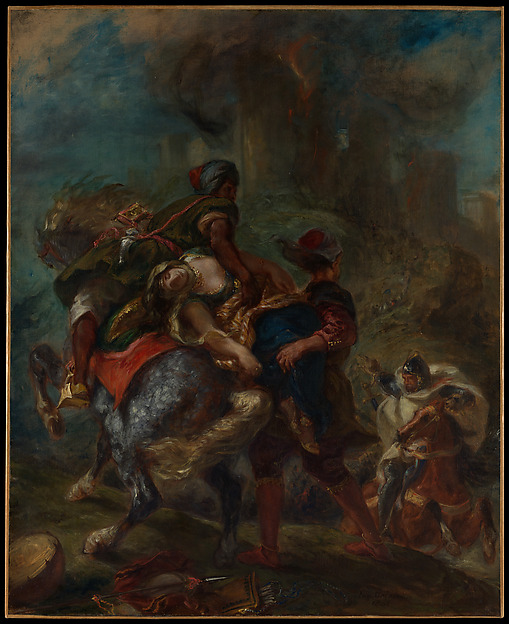
    The Abduction of Rebecca, Eugène Delacroix, 1846

    The Abduction of Rebecca

    1846 · Metropolitan Museum of Art

    Sunset, Eugène Delacroix, ca. 1850

    Sunset

    ca. 1850 · Metropolitan Museum of Art

    Le 28 juillet 1830. La Liberté guidant le peuple, Delacroix, Eugène, 2e quart du XIXe siècle (1830)

    Die Freiheit führt das Volk

    2e quart du XIXe siècle (1830) · Louvre

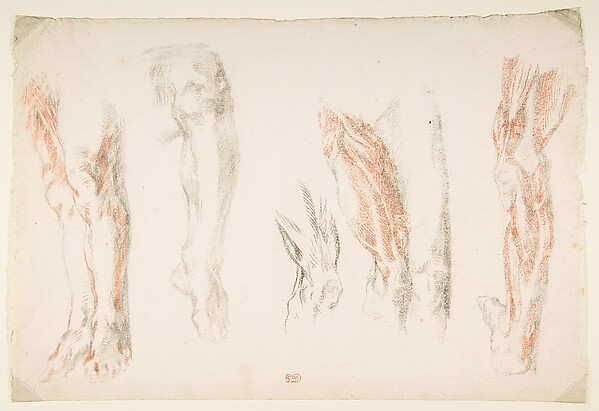
    Anatomical Studies of Legs, Eugène Delacroix, 1820–1863

    Anatomical Studies of Legs

    1820–1863 · Metropolitan Museum of Art

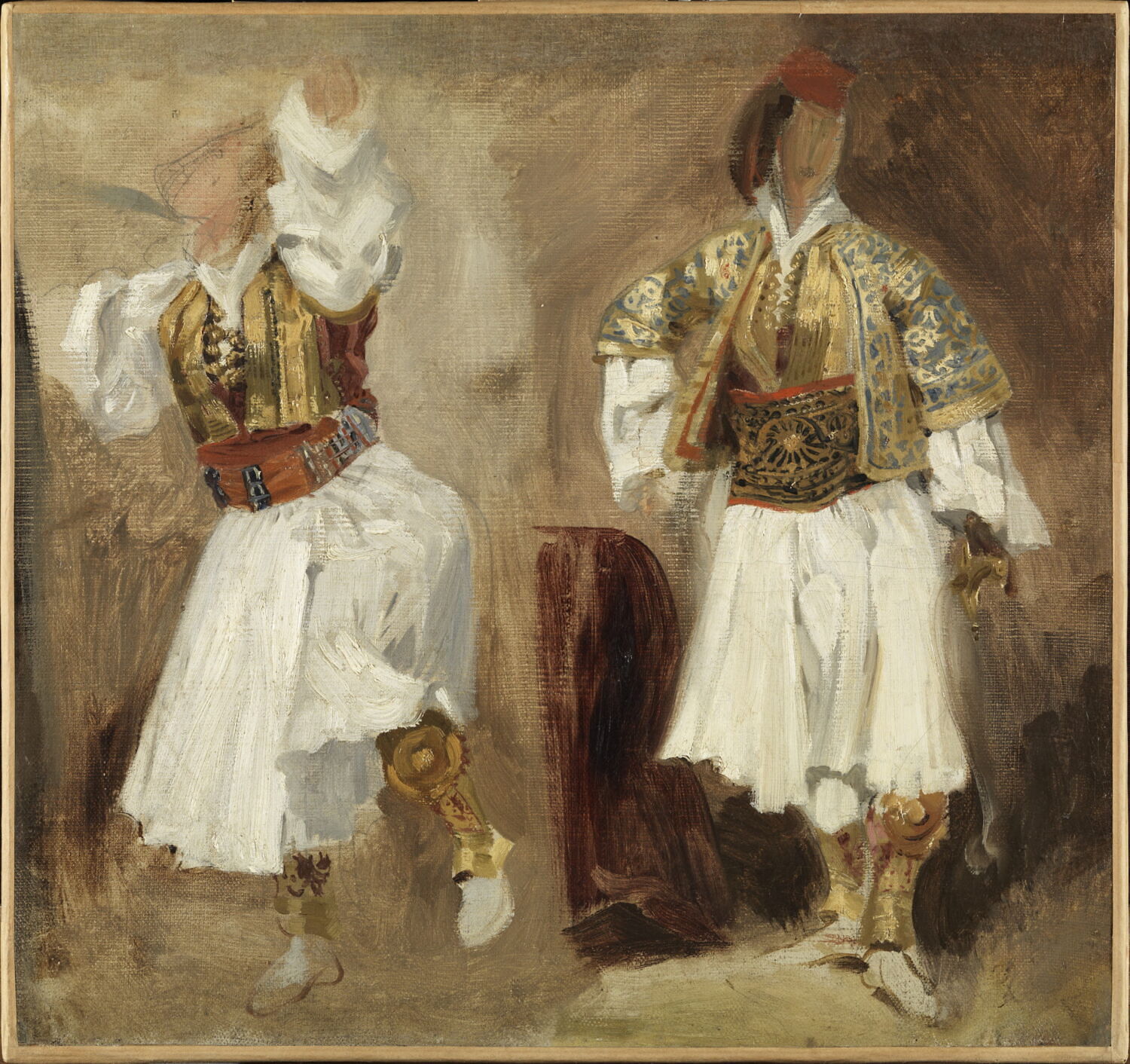
    Deux études de costumes souliotes, Delacroix, Eugène, 1e quart du XIXe siècle (1822)

    Deux études de costumes souliotes

    1e quart du XIXe siècle (1822) · Louvre

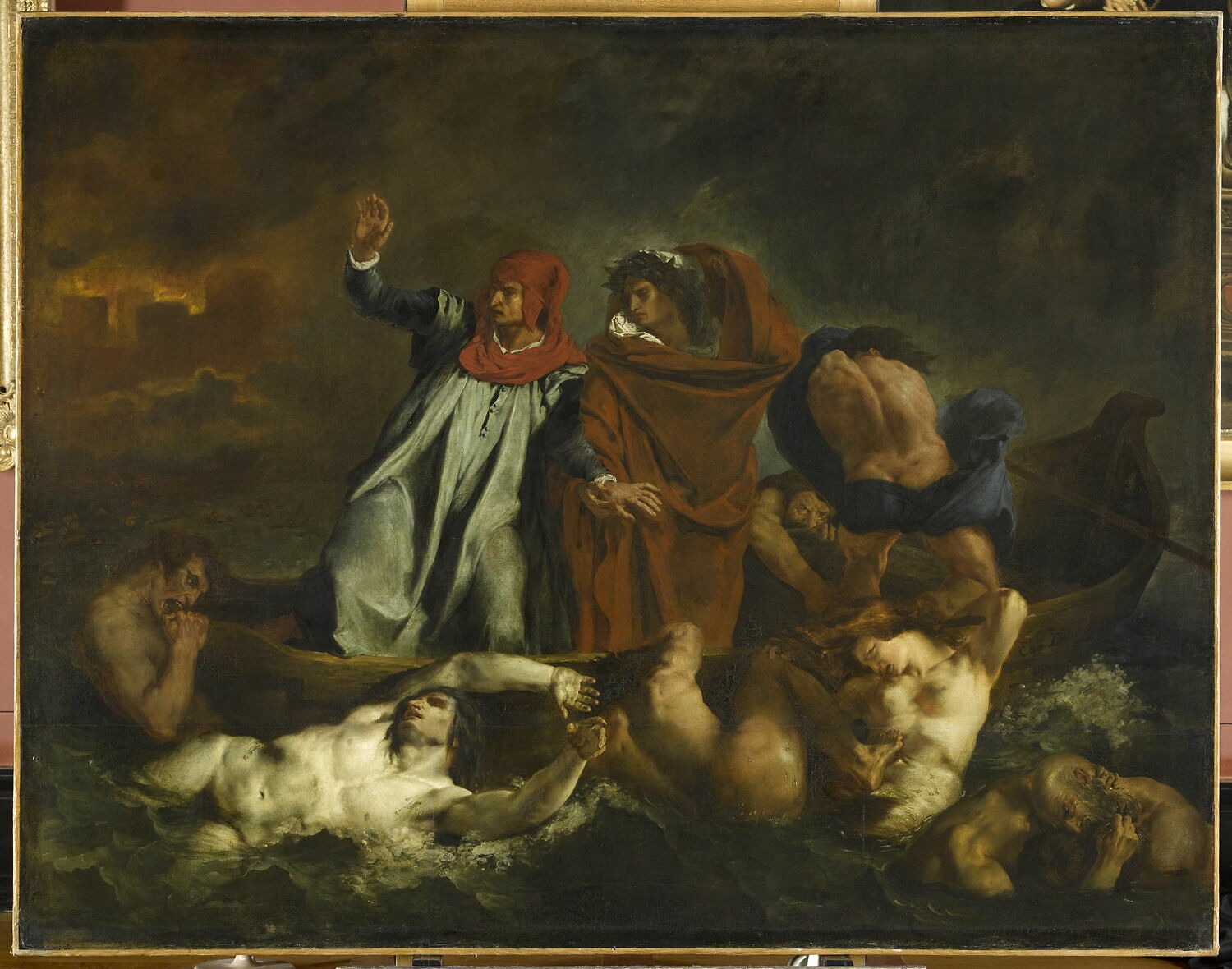
    Dante et Virgile, dit aussi La barque de Dante, Delacroix, Eugène, 1e quart du XIXe siècle (1822)

    Die Dantebarke

    1e quart du XIXe siècle (1822) · Louvre

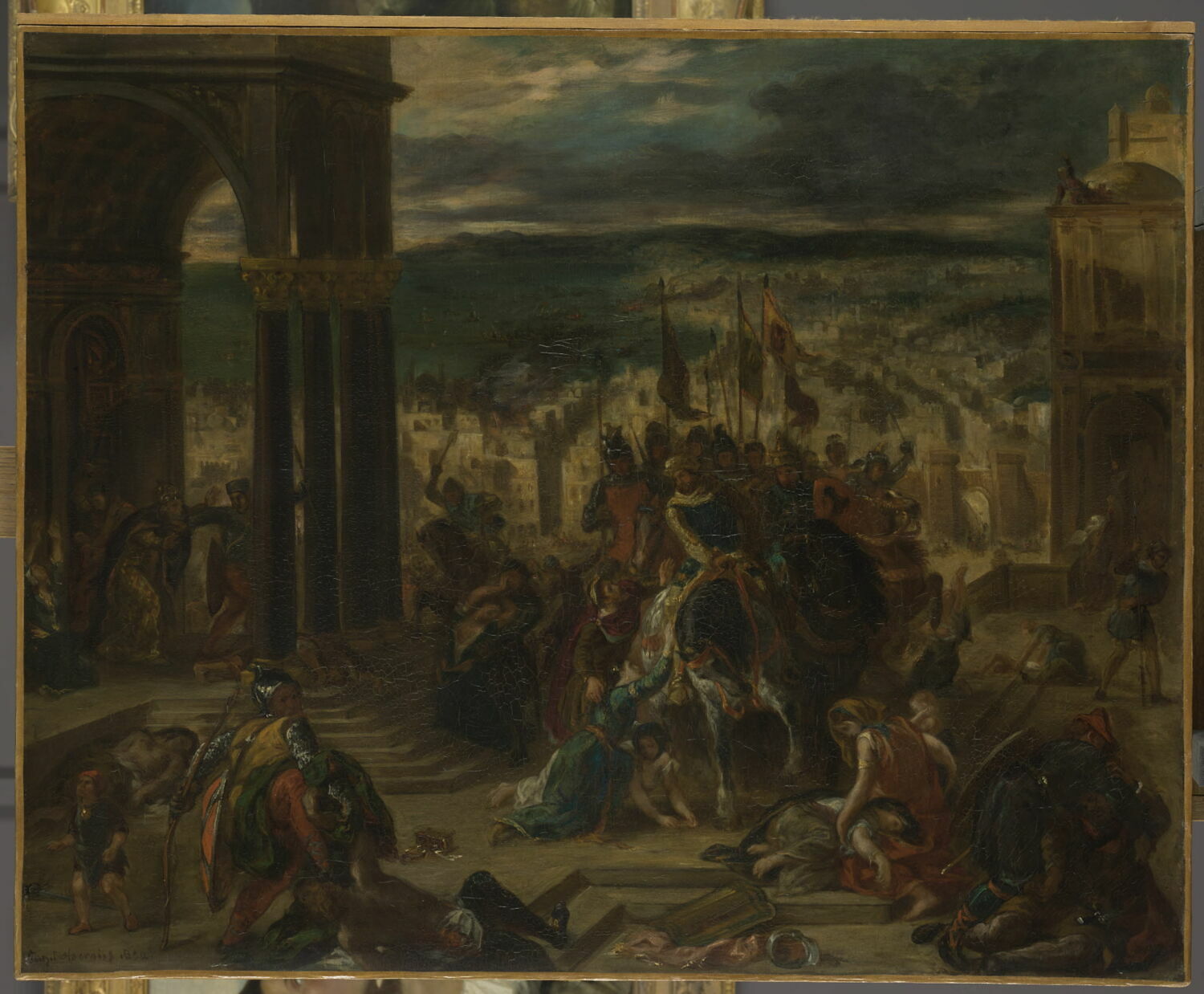
    Prise de Constantinople par les Croisés (12 avril 1204), dit aussi Entrée des Croisés à Constantinople, Delacroix, Eugène, 3e quart du XIXe siècle (1852)

    Eugène Delacroix

    Prise de Constantinople par les Croisés (12 avril 1204), dit aussi Entrée des Croisés à Constantinople, 3e quart du XIXe siècle (1852)

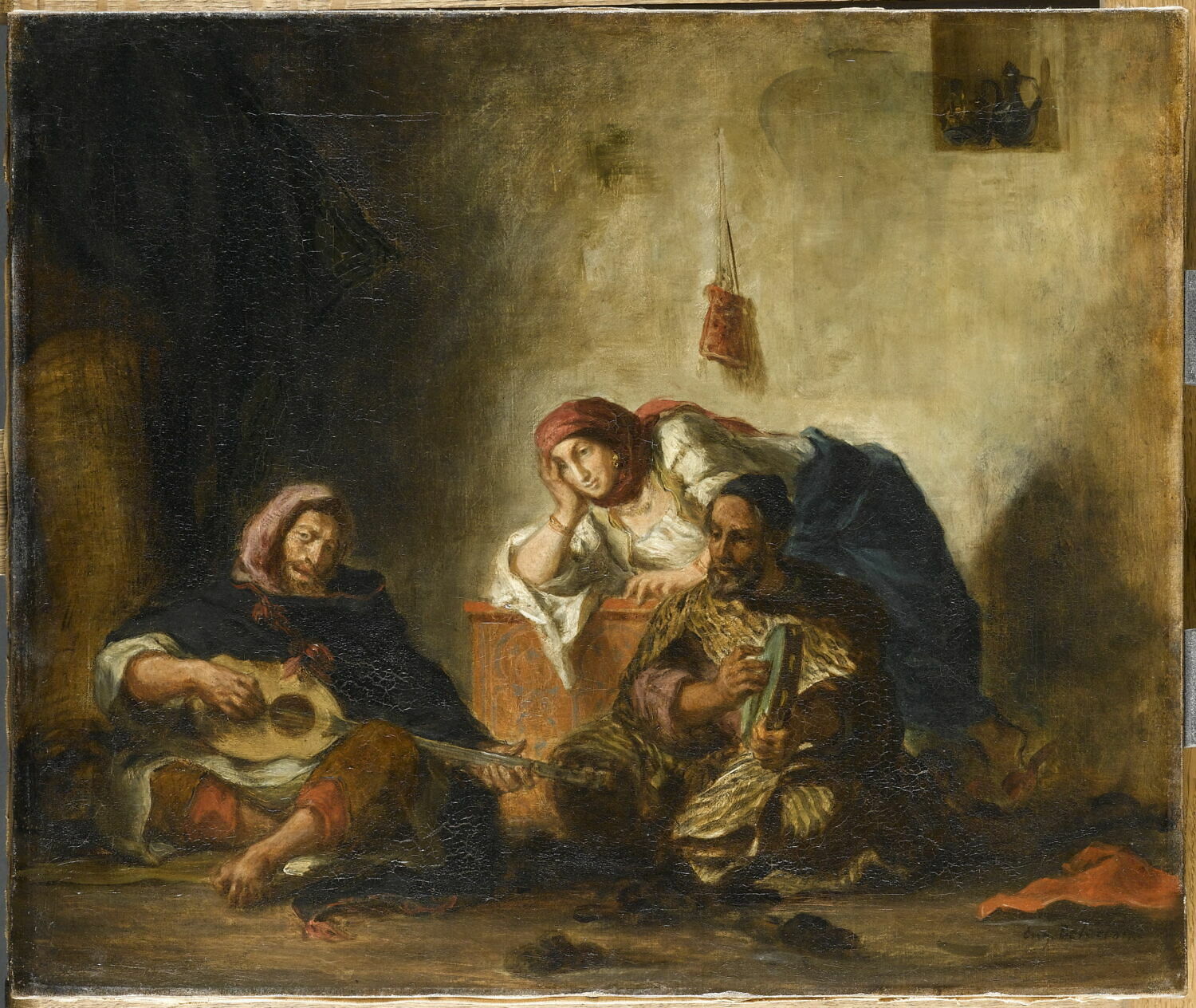
    Musiciens juifs de Mogador, Delacroix, Eugène, 2e quart du XIXe siècle (1847)

    Eugène Delacroix

    Musiciens juifs de Mogador, 2e quart du XIXe siècle (1847)

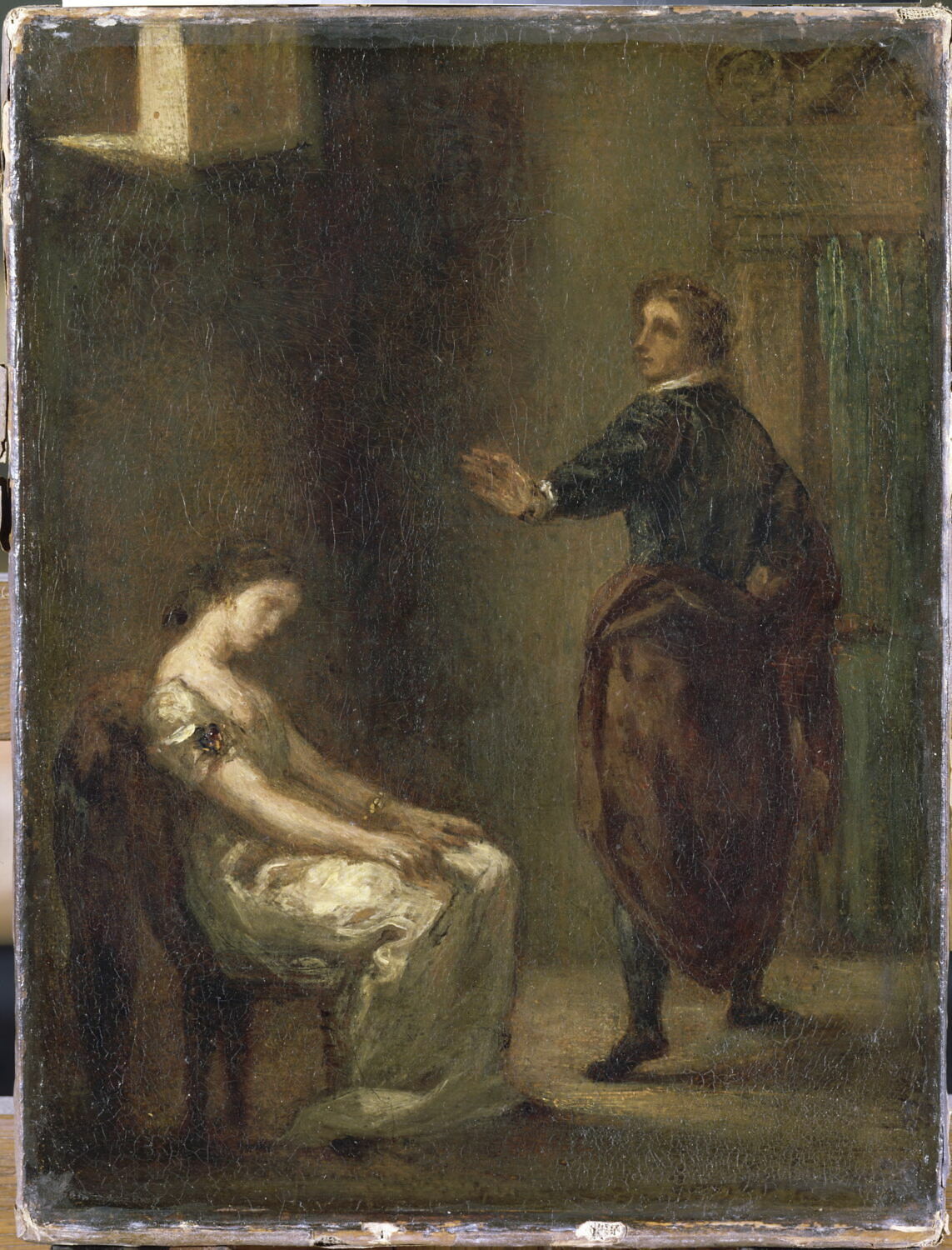
    Hamlet et Ophélie, Delacroix, Eugène, 2e quart du XIXe siècle (1840)

    Eugène Delacroix

    Hamlet et Ophélie, 2e quart du XIXe siècle (1840)

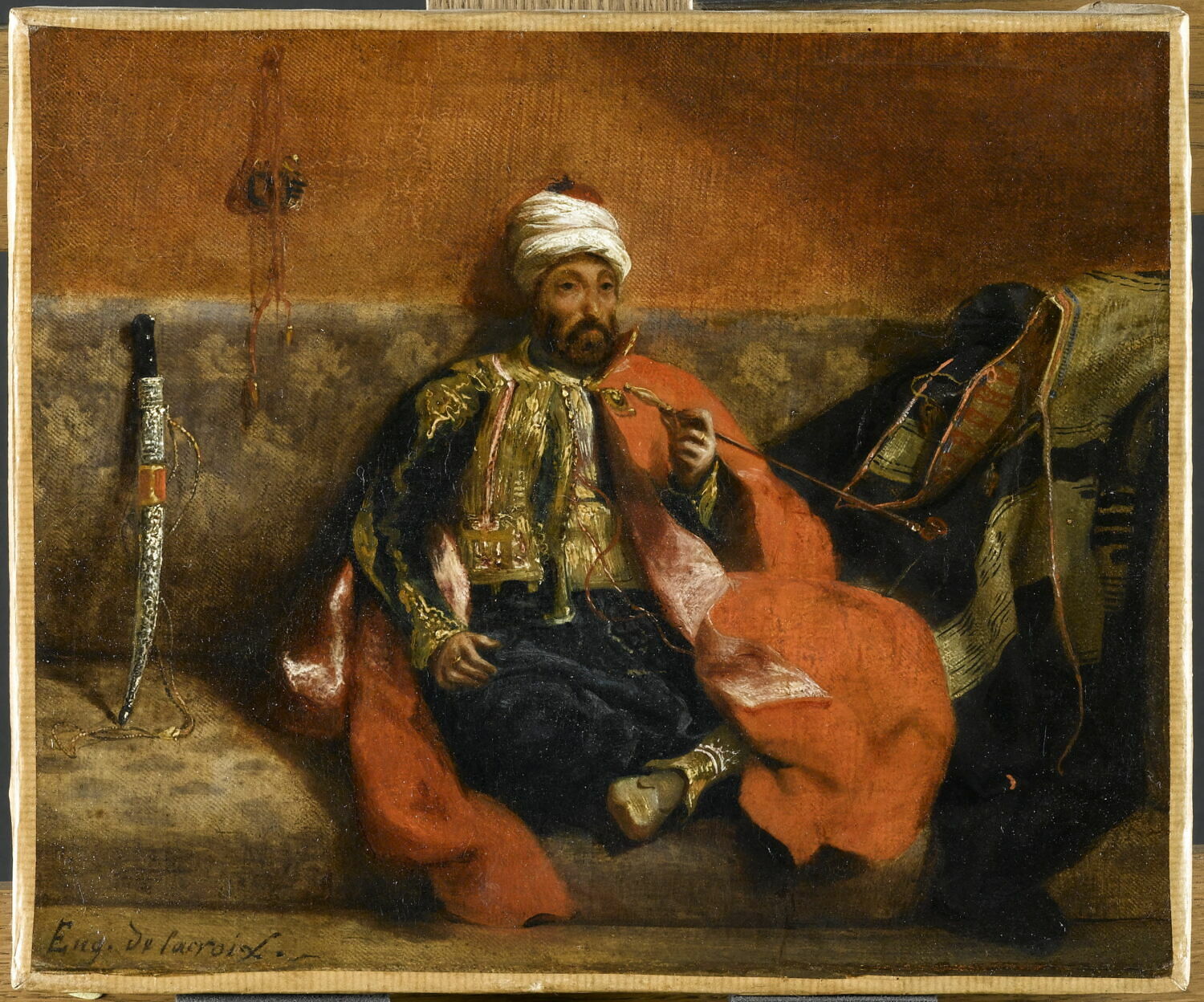
    Turc fumant, assis sur un divan, Delacroix, Eugène, 2e quart du XIXe siècle (1838)

    Eugène Delacroix

    Turc fumant, assis sur un divan, 2e quart du XIXe siècle (1838)

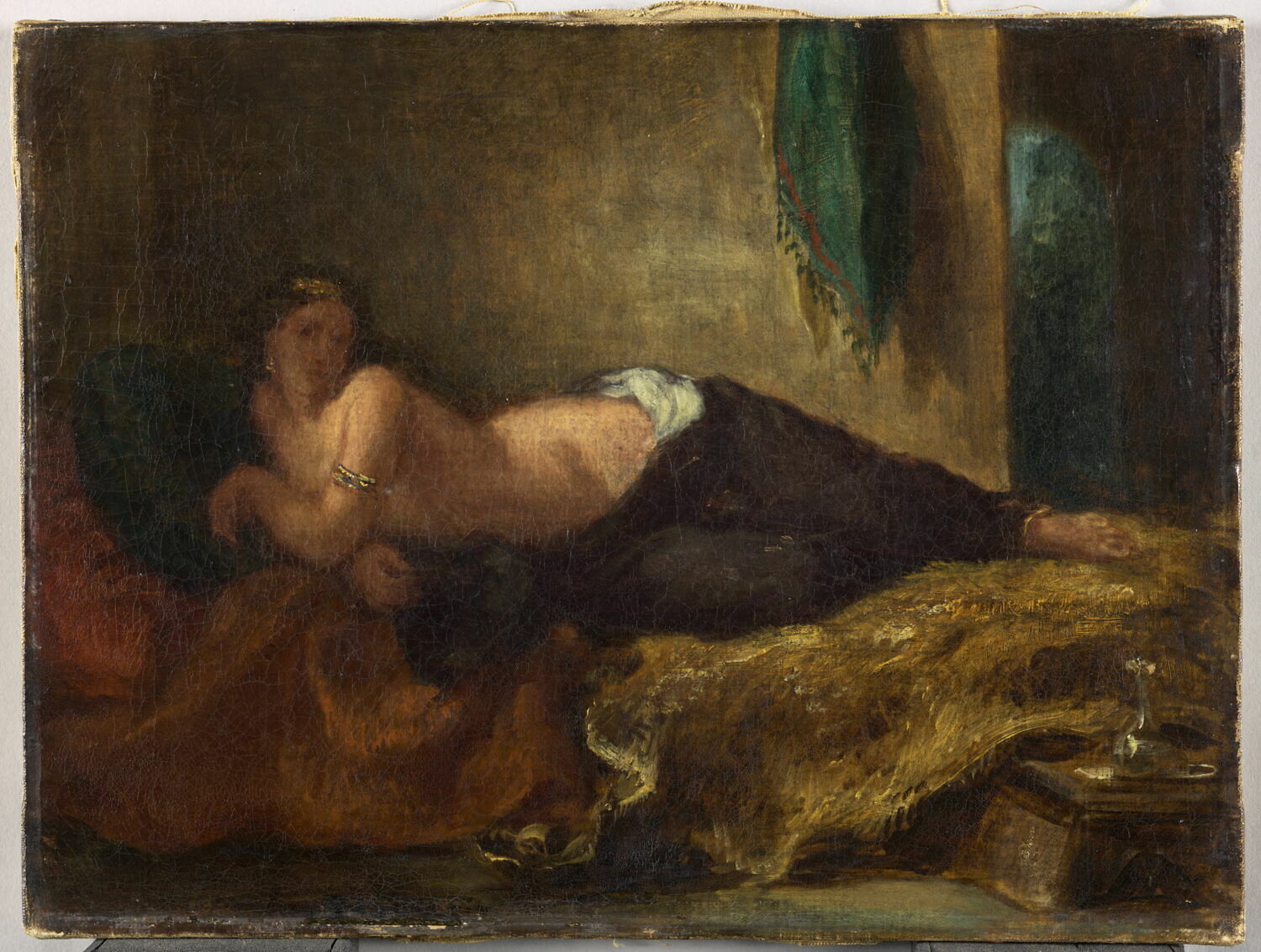
    Odalisque, Delacroix, Eugène, 2e quart du XIXe siècle (1838)

    Eugène Delacroix

    Odalisque, 2e quart du XIXe siècle (1838)

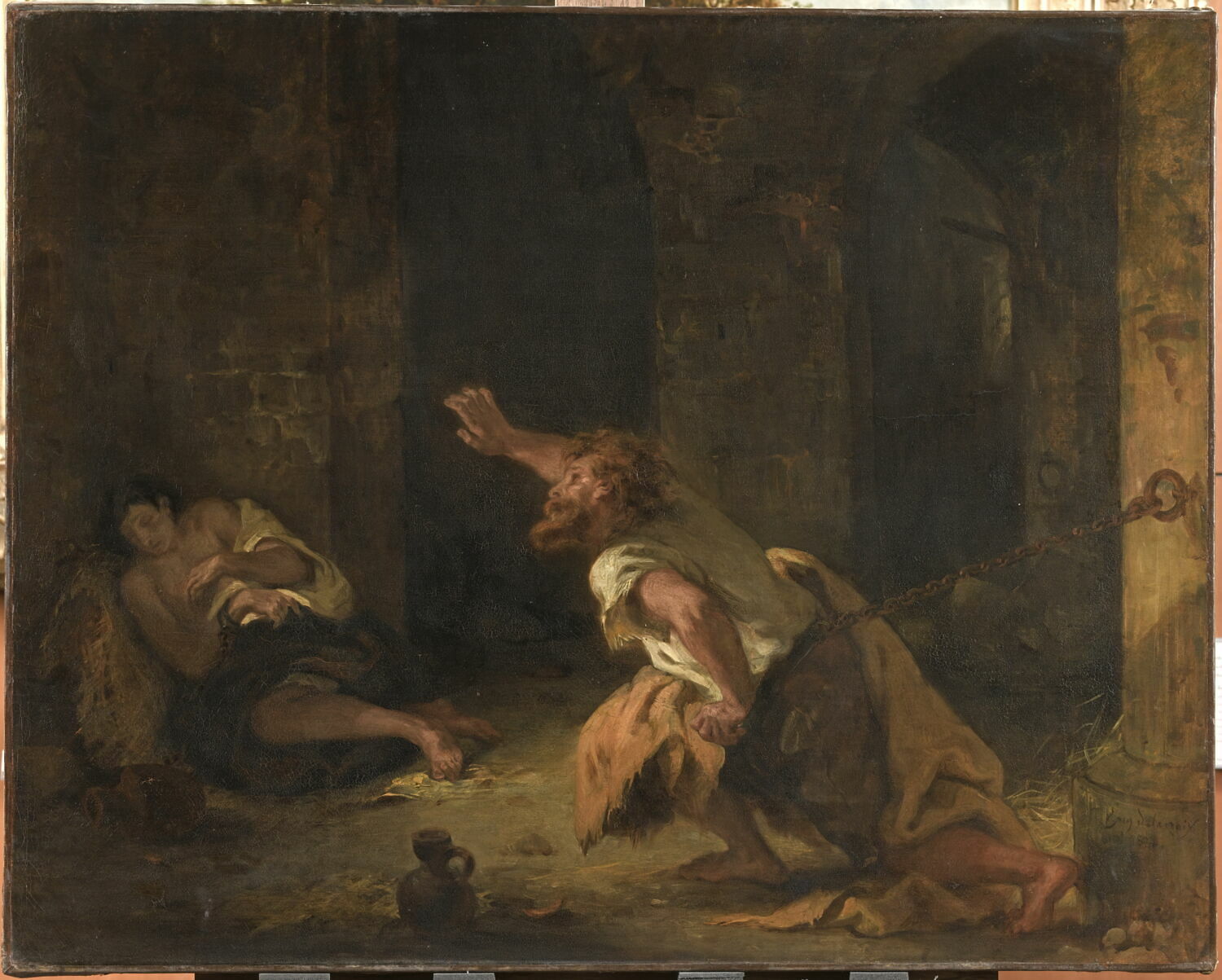
    Le prisonnier de Chillon, Delacroix, Eugène, 2e quart du XIXe siècle (1834)

    Eugène Delacroix

    Le prisonnier de Chillon, 2e quart du XIXe siècle (1834)

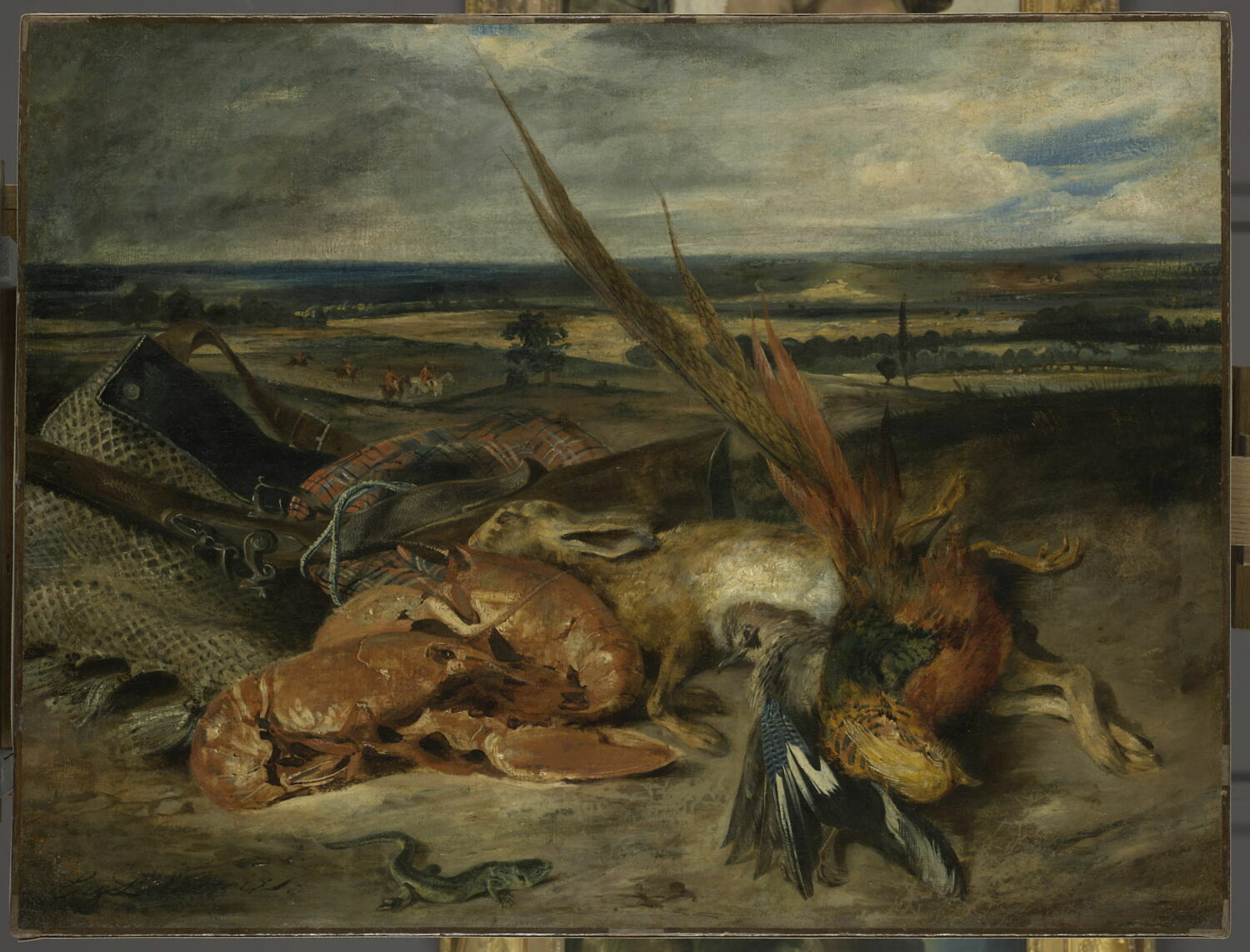
    Tableau de nature morte, dit Nature morte au homard et trophées de chasse et de pêche, Delacroix, Eugène, 2e quart du XIXe siècle (1826 - 1827)

    Eugène Delacroix

    Tableau de nature morte, dit Nature morte au homard et trophées de chasse et de pêche, 2e quart du XIXe siècle (1826 - 1827)

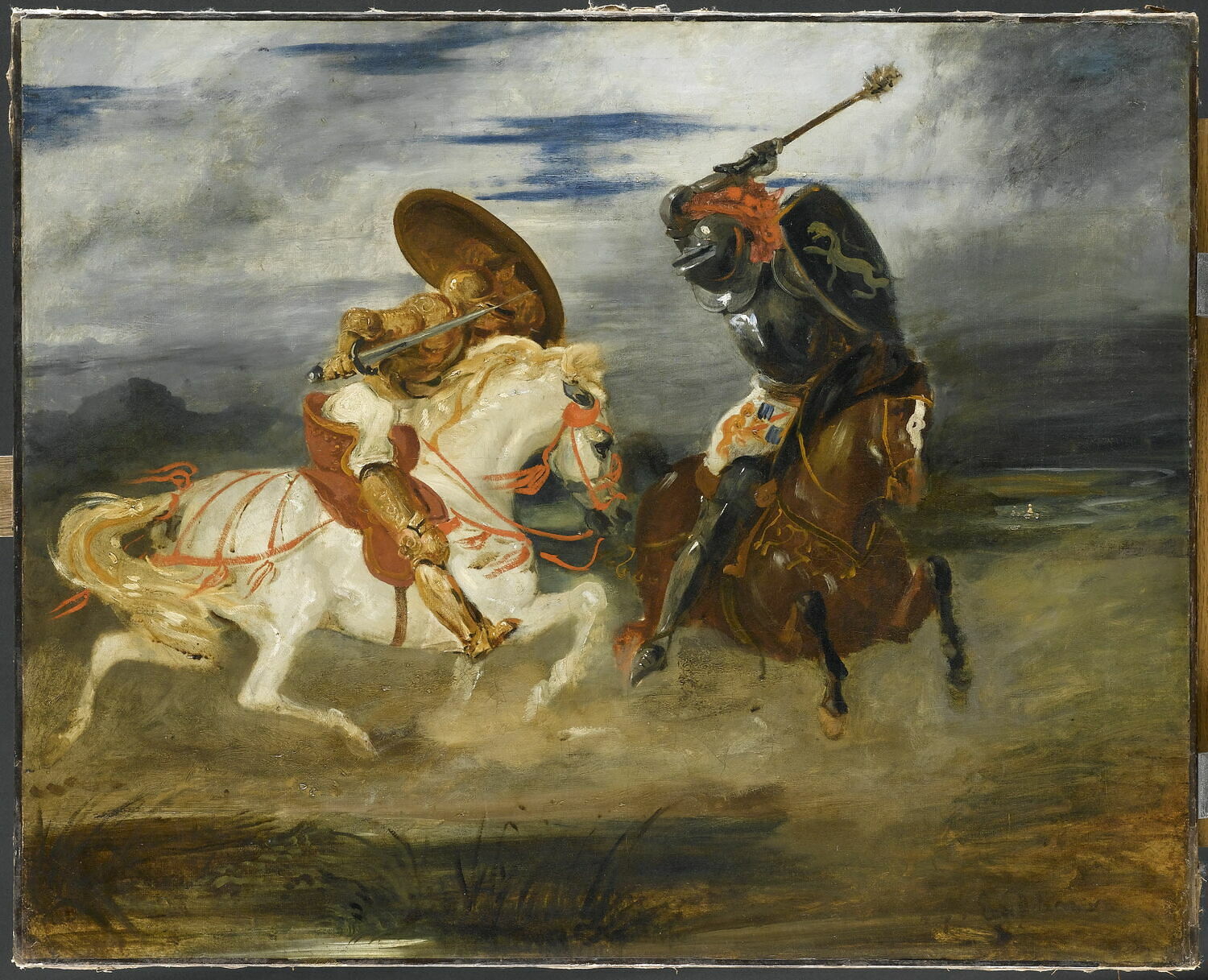
    Combat de chevaliers dans la campagne, Delacroix, Eugène, 2e quart du XIXe siècle (1825 - 1850)

    Eugène Delacroix

    Combat de chevaliers dans la campagne, 2e quart du XIXe siècle (1825 - 1850)