 Jusepe de RiberaSpanien, 1591–1652
Der Klumpfuß
Le Pied-Bot
Darf man es sehen?
Ja, es empfängt Besucher

Öffentlich ausgestellt. Wer dafür bürgt, steht unten.
- Geprüft
- Unverändert seit
- Quelle
- Sammlungsdaten des Museums selbst
About the painting
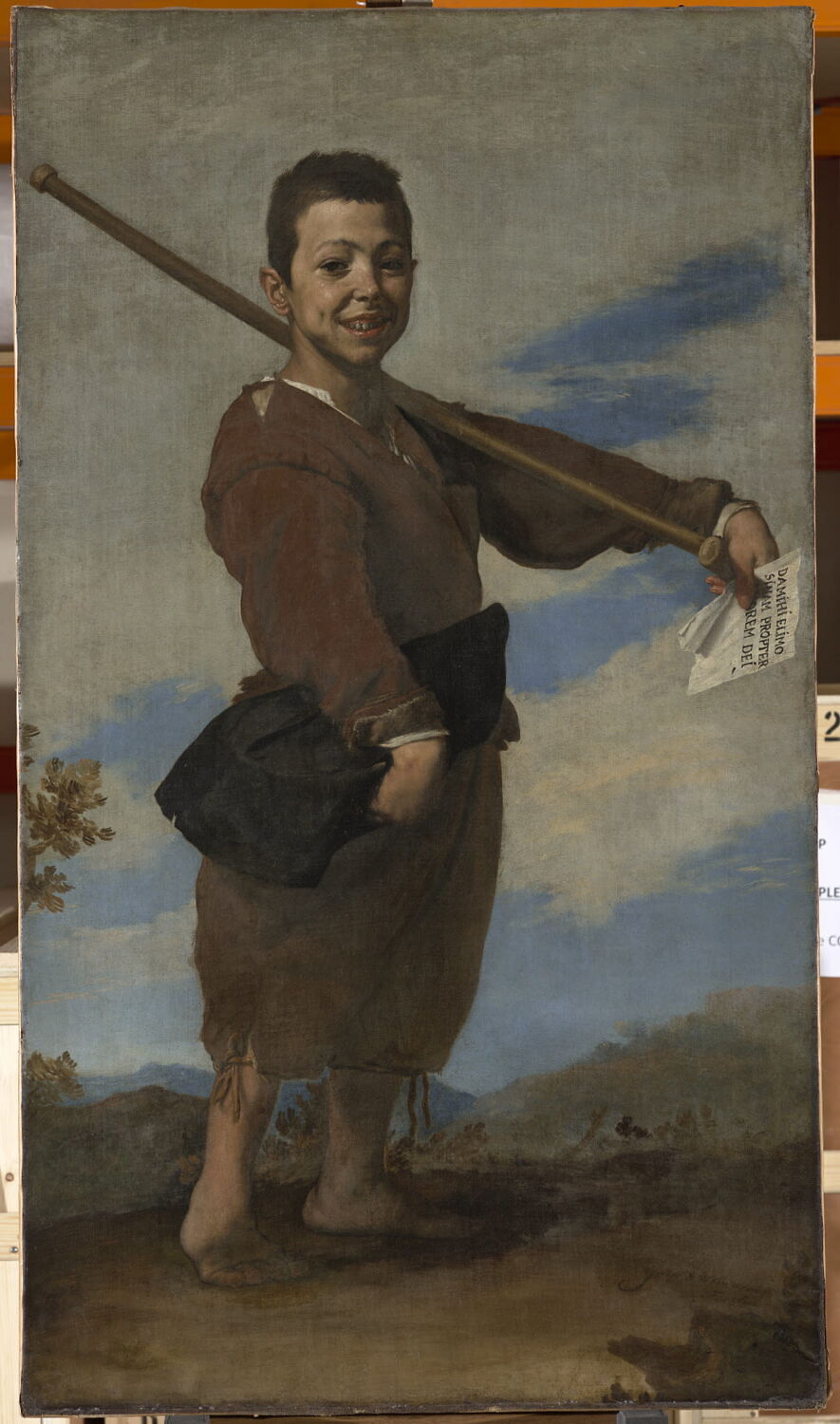
The Clubfoot (also known as The Club-Footed Boy) is a 1642 oil on canvas painting by Jusepe de Ribera. It is housed in the Musée du Louvre in Paris (part of the La Caze bequest of 1869), and was painted in Naples. Art historian Ellis Waterhouse wrote of it as "a touchstone by which we can interpret the whole of Ribera's art".
Commissioned by a Flemish dealer, the painting features a Neapolitan beggar boy with a deformed foot. Behind him is a vast and luminous landscape, against which the boy stands with a gap-toothed grin, wearing earth-toned clothes and holding his crutch slung over his left shoulder. Written in Latin on the paper in the boy's hand is the sentence "DA MIHI ELEMOSINAM PROPTER AMOREM DEI" ("Give me alms, for the love of God").
Angaben
- Inventarnummer
- MI 893
Quellen
- Louvre: the museum's own open data · abgerufen vor 10 Tagen
- Bild: Louvre — © 2022 GrandPalaisRmn (musée du Louvre) / Michel Urtado
Derweil im Leben von Jusepe de Ribera
Das ganze Leben1616–1656 · Wirkungsort
Naples
1643
His health begins to fail
From 1643 Ribera's health begins to deteriorate and his productivity declines; from 1644 ill health greatly limits his ability to work, although his workshop continues to produce pictures under his direction.
c. 1644
His daughter marries a Spanish nobleman
Around 1644 Ribera's daughter marries a Spanish nobleman in the administration, who dies soon after.