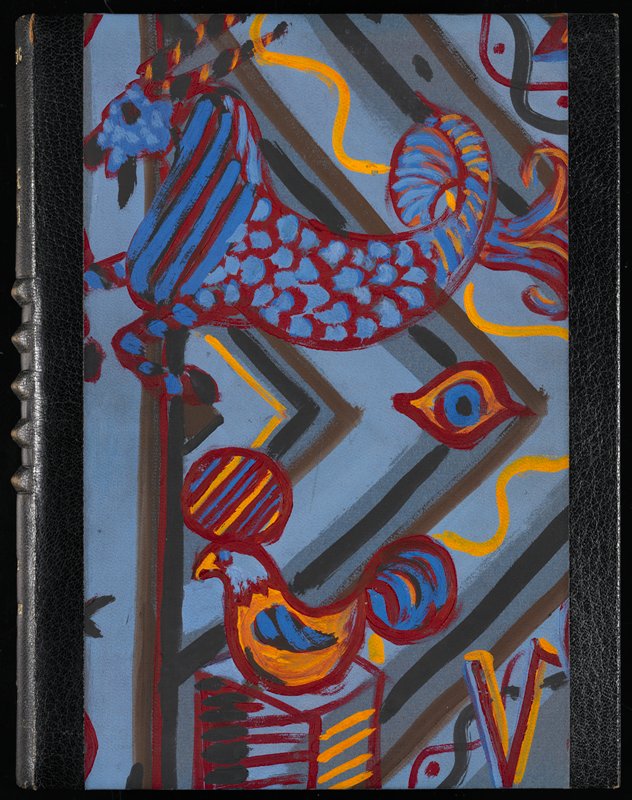
Le Chef-d'oeuvre inconnu
Kann ich es sehen?
Derzeit nicht ausgestellt
Wo ist „Le Chef-d'oeuvre inconnu“ heute? Sammlung: Minneapolis Institute of Art, Minneapolis. Derzeit nicht ausgestellt. Geprüft 29. September 2026.

Minneapolis, Vereinigte Staaten
Es gehört zur Sammlung, ist derzeit aber nicht ausgestellt.
- Geprüft
- Unverändert seit
- Quelle
- Das Museum
Über das Werk
This deluxe illustrated edition of Balzac’s Le Chef-d’oeuvre inconnu (The Unknown Masterpiece) is the collective product of a group of accomplished artists, writers, printers, and a visionary publisher working both individually and in concert to create a work of art of intellectual vigor, conceptual complexity, and compelling visual beauty. Ostensibly a limited-edition illustrated book with graphics by Picasso, the volume is in reality a rare example of creative “collaboration” in which a prominent artist—the American modernist painter John D. Graham—contributes original art to a work by another prominent artist.
Mehr lesen
The original volume was published in 1931 by Ambroise Vollard, the renowned Parisian publisher who had in 1926 enlisted Picasso to produce a series of etchings for this exclusive edition of Balzac’s novel, which also featured wood engravings by Georges Aubert after Picasso’s drawings. Vollard’s publication represents the definitive version of Balzac’s Le Chef-d’oeuvre inconnu, first issued by the author in 1837. Considered Balzac’s personal declaration of aesthetic faith, the short story explores the common problem facing artists caught between the creative impulse and the pursuit of formal and technical perfection. The story concerns the decade-long quest of an old painter named Frenhofer, who struggles to complete his ultimate masterpiece, a painting of a young model that he titled La belle noiseuse (The Beautiful Troublemaker). Despite his heroic efforts, Frenhofer is unable to attain absolute perfection and when he realizes that his artist friends see nothing in the painting, he burns his canvas and dies a madman.
Perhaps not surprisingly, Picasso was fascinated by Balzac’s story of creative passion and inner struggle, to the degree that he eventually moved into a Paris studio where, in Balzac’s novel, Frenhofer had met the young French artist Nicolas Poussin. Interestingly, Picasso’s etchings for the book, which were completed in 1927, do not illustrate Balzac’s story, but instead explore the deeper meanings he finds in the text, particularly the relationships of the artist with his model and spectator and spectacle, a recurrent theme in Picasso’s art.
Minneapolis Institute of Art
Angaben
- Inventarnummer
- 2012.60a-c
Im Katalog
Quellen
- Minneapolis Institute of Art
- Bild: Minneapolis Institute of Art — © Estate of Pablo Picasso / Artists Rights Society (ARS), New York