 Pietro PeruginoItalien, 1448–1523
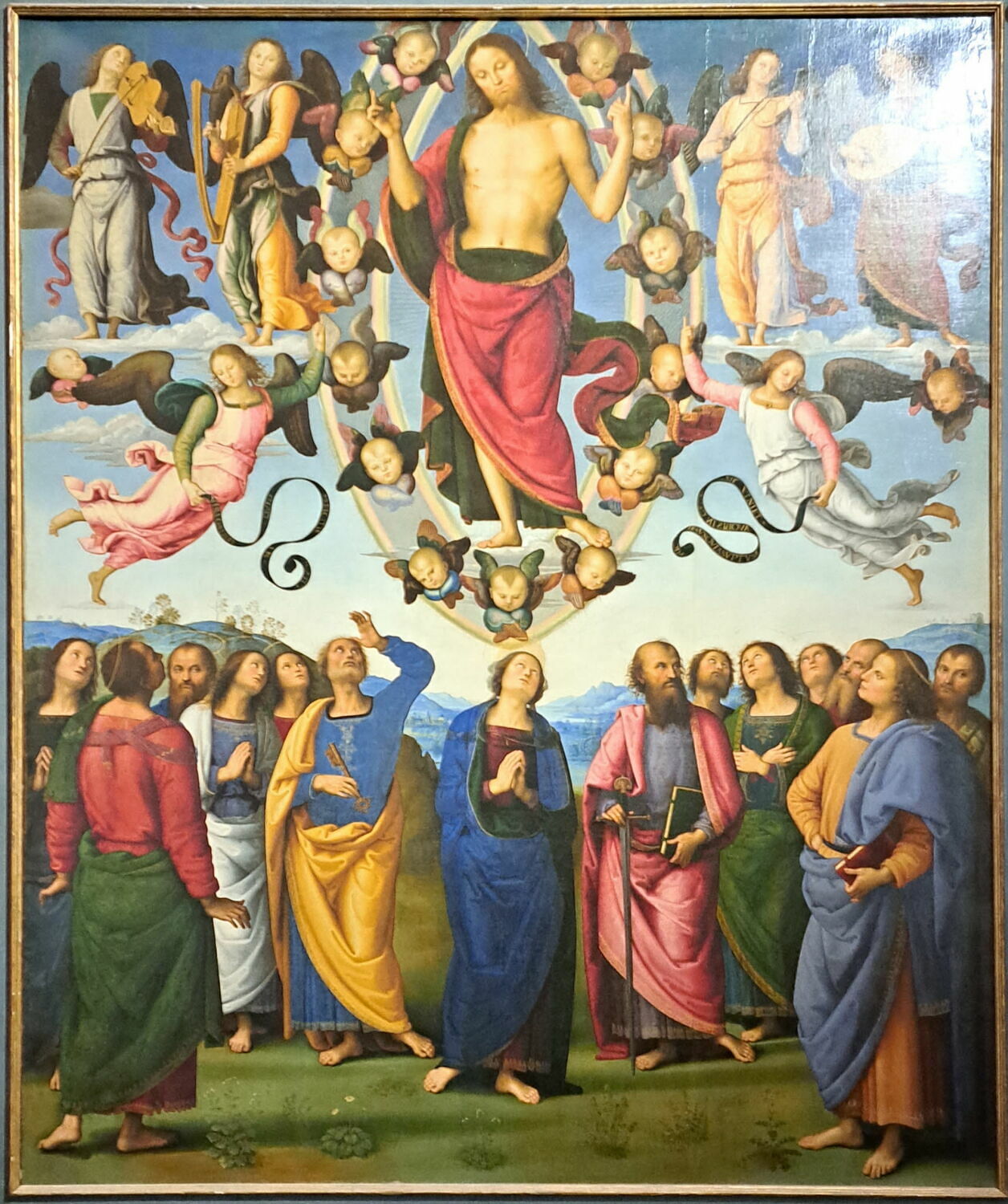
L'Ascension du Christ
Darf man es sehen?
Unbekannt: Das Museum schweigt sich aus

Louvre
Paris, Frankreich
Der Eigentümer ist bekannt. Ob es heute ausgestellt ist, sagt das Museum nicht, und Raten haben wir nicht gelernt.
- Unverändert seit
- Quelle
- Sammlungsdaten des Museums selbst
Über das Gemälde
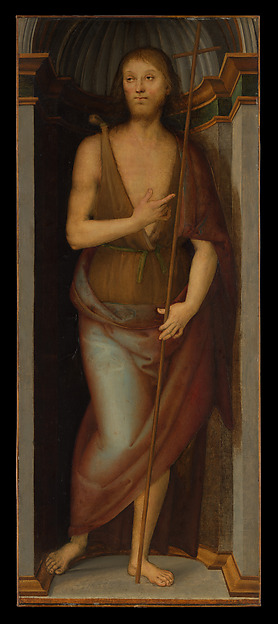
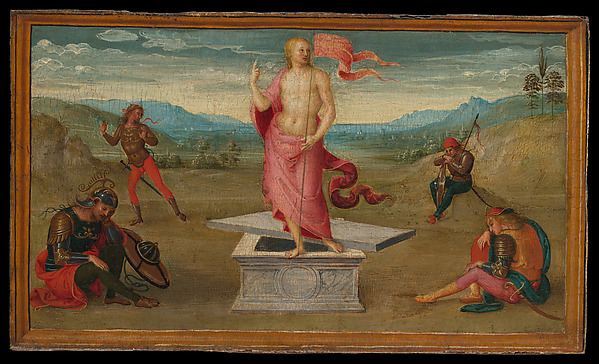
Die Himmelfahrt Christi (fr. L’Ascension du Christ, it. L’Ascensione di Cristo) und Segnender Gottvater mit Cherubim und Engeln (fr. Le Père éternel entre deux anges, it. L’Eterno benedicente) in Form einer Lünette sind zwei in Öl auf Pappelholz ausgeführte Gemälde des italienischen Renaissancemalers Pietro Perugino (* um 1450; † 1523) und seiner Werkstatt. Sie entstanden zwischen 1496 und 1499 als Haupttafel und obere Bekrönung des San-Pietro-Polyptychons (fr. Polyptique de Saint Pierre, it. Polittico di San Pietro), eines im Laufe der Zeit in seine einzelnen Elemente zerlegten monumentalen Altarretabels für die Basilika San Pietro in Perugia.
Die beiden großformatigen Tafeln kamen nach ihrer Beschlagnahmung durch die französischen Truppen im Jahr 1797 nach Paris und befinden sich im Musée des Beaux-Arts in Lyon.
Angaben
- Inventarnummer
- A 134
Im Katalog
Quellen
- Louvre: die offenen Daten des Museums · abgerufen vor 8 Tagen
- Bild: Louvre — © 2023 Musée du Louvre / Département des Peintures
Derweil im Leben von Pietro Perugino
Das ganze Leben1448
Born
c. 1470
Verrocchio's apprentice in Florence
Around 1470 (the date of his first stay in Florence is disputed) Perugino comes to the city and, according to Vasari, is apprenticed in the workshop of Andrea del Verrocchio alongside Leonardo da Vinci, Domenico Ghirlandaio, Lorenzo di Credi and Filippino Lippi; Piero della Francesca is thought to have taught him perspective. Together with the young Florentine artists he is among the first to take up oil painting, borrowed from the Flemish and still unknown in Umbria.
1472
Enrolled as a master in the Confraternity of St Luke
Perugino appears to have completed his apprenticeship: in 1472 he is enrolled as a master in the Confraternity of Painters of St Luke.
c. 1481
Summoned to Rome to paint the Sistine Chapel
Already a renowned master, Perugino is invited by Pope Sixtus IV to Rome, among the best artists of Italy — Botticelli, Ghirlandaio, Cosimo Rosselli, Luca Signorelli and others — to take part in painting the Sistine Chapel.
1486–1499
Two studios: in Florence and in Perugia
Between 1486 and 1499 Perugino works mainly between Florence and Perugia, maintaining a studio in each city. In the 1480s and 1490s he is one of the most celebrated artists of Italy.
1496
The money-changers' guild commissions the Cambio hall
The money-changers' guild of Perugia asks Perugino to decorate the Sala delle Udienze of the Collegio del Cambio, with the humanist scholar Francesco Maturanzio as consultant. The scheme — a vault with the seven planets and the signs of the zodiac, and sacred subjects on the walls — may have been finished by 1500; on the mid-pilaster Perugino placed his own bust-form portrait.