 Eugène VerboeckhovenBelgien, 1799–1881
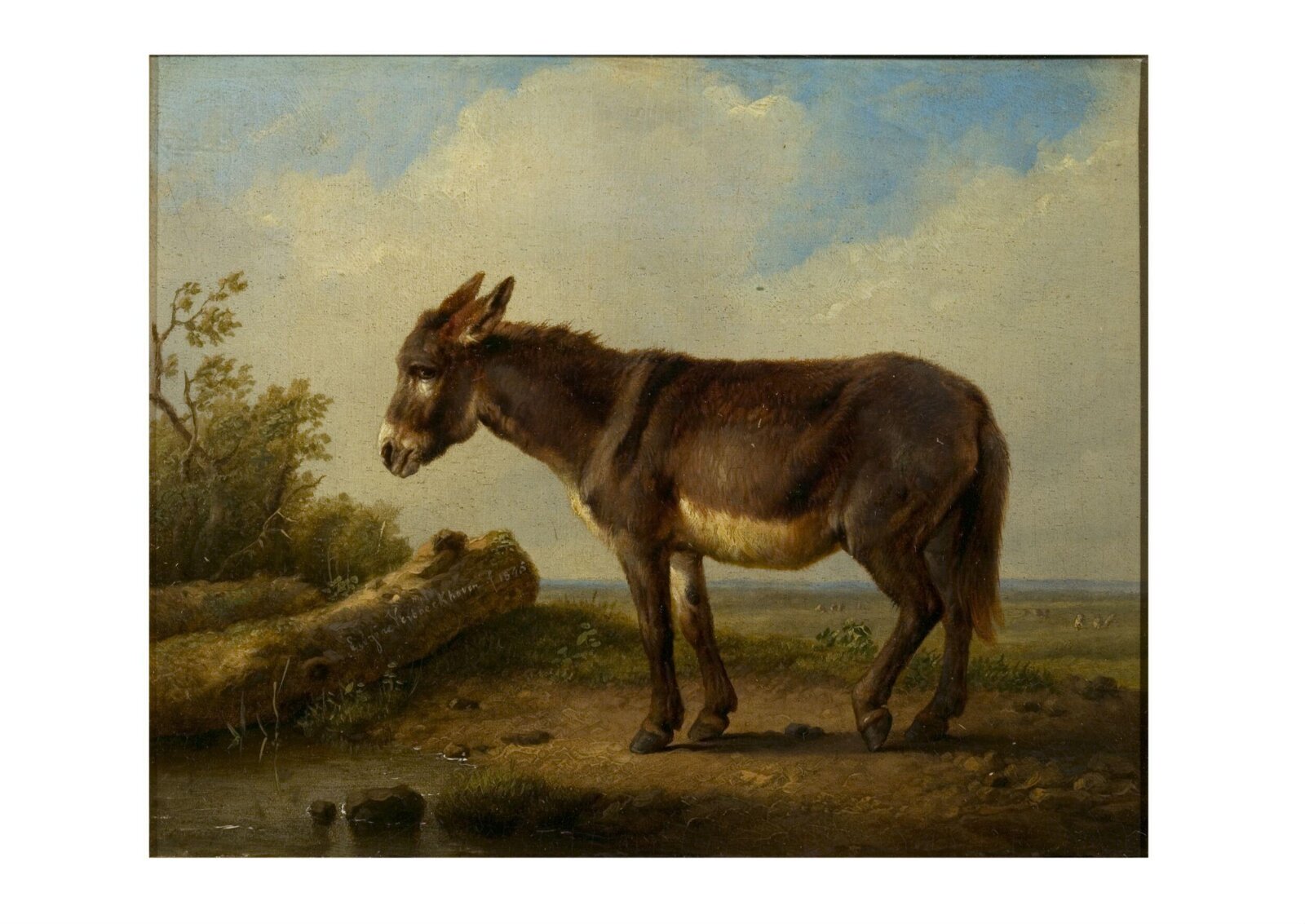
Landscape with donkey
Darf man es sehen?
Empfängt derzeit nicht

Victoria and Albert Museum
London, Vereinigtes Königreich
Es gehört zur Sammlung, ist derzeit aber nicht ausgestellt.
- Geprüft
- Unverändert seit
- Quelle
- Sammlungsdaten des Museums selbst
About the painting
Eugène Joseph Verboeckhoven (1798-1881) was taught at first by his father, the sculptor Barthélemy Verboeckhoven, before attending the Ghent Academy where he was a pupil of the landscape painter Balthasar-Paul Ommeganck (1755-1826). He moved to Brussels in 1827, where he became director of the Musée de Bruxelles and later a teacher at the Académie Royale. He had many pupils among whom Louis-Pierre Verwée (1807-1877), the brothers Charles (1815-1894) and Edmond Tschaggeny (1818-1873). He also painted staffage for other painters' landscapes such as Jean-Baptiste De Jonghe (1785-1844), Henri van Assche (1774-1841), Barend Cornelis Koekkoek (1803-1862) and Louis-Pierre Verwée. He was also a prolific engraver.
Read on
This painting, showing a donkey silhouetted against a white and blue sky, is a typical example of Verboeckhoven's depictions of animals in carefully arranged, flat landscapes. He also executed scenes of animals and farmers in the farmyard, of which the V&A's collection has an example (see 1528-1869). The artist was deeply influenced by the 17th-century imagery and the work of Paulus Potter, the great animal painter of the Golden Age.
Victoria and Albert Museum
Angaben
- Inventarnummer
- 1085-1886
What it shows
Im Katalog
Quellen
- Victoria and Albert Museum: the museum's own open data · abgerufen vor 11 Tagen
- Bild: Victoria and Albert Museum — © Victoria and Albert Museum, London