 Luca SignorelliItalien, 1450–1523
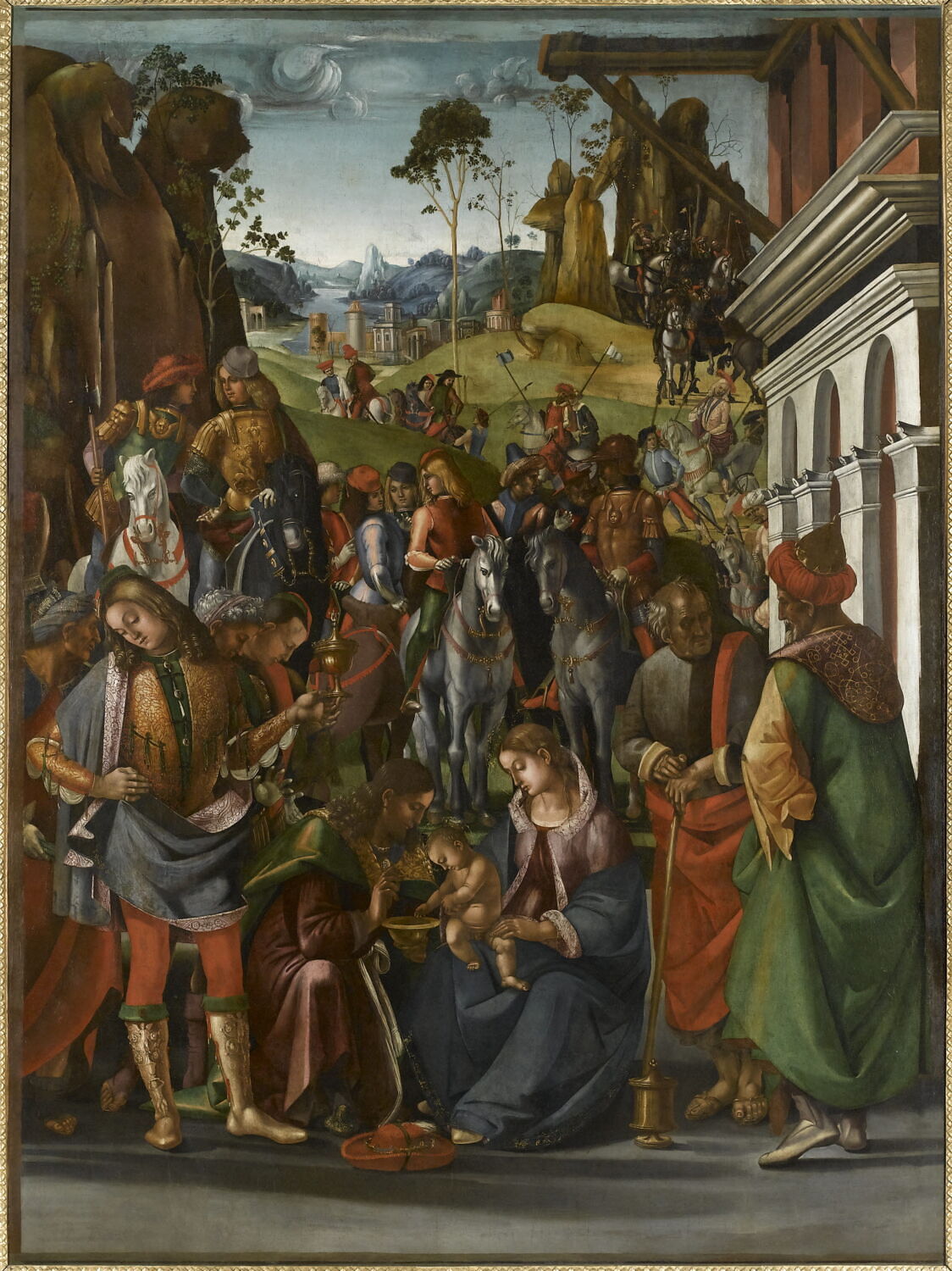
L'Adoration des Mages
Kann ich es sehen?
Unbekannt
Wo ist „L'Adoration des Mages“ heute? Sammlung: Louvre, Paris. Unbekannt.

Paris, Frankreich
Der Besitzer ist bekannt; ob das Werk derzeit ausgestellt ist, nicht.
- Unverändert seit
- Quelle
- Das Museum
Über das Gemälde
Adoration of the Magi is a painting in tempera on wood panel by Luca Signorelli (1450–1523) and his assistants, executed c. 1493–1494, and now in the Louvre in Paris. It was probably the first painting he produced in Città di Castello, and originally hung over the main altar of the monastery church of Sant'Agostino. The surface displayed within the frame is 331 cm by 245.5 cm. In late 2022 it was not on display.
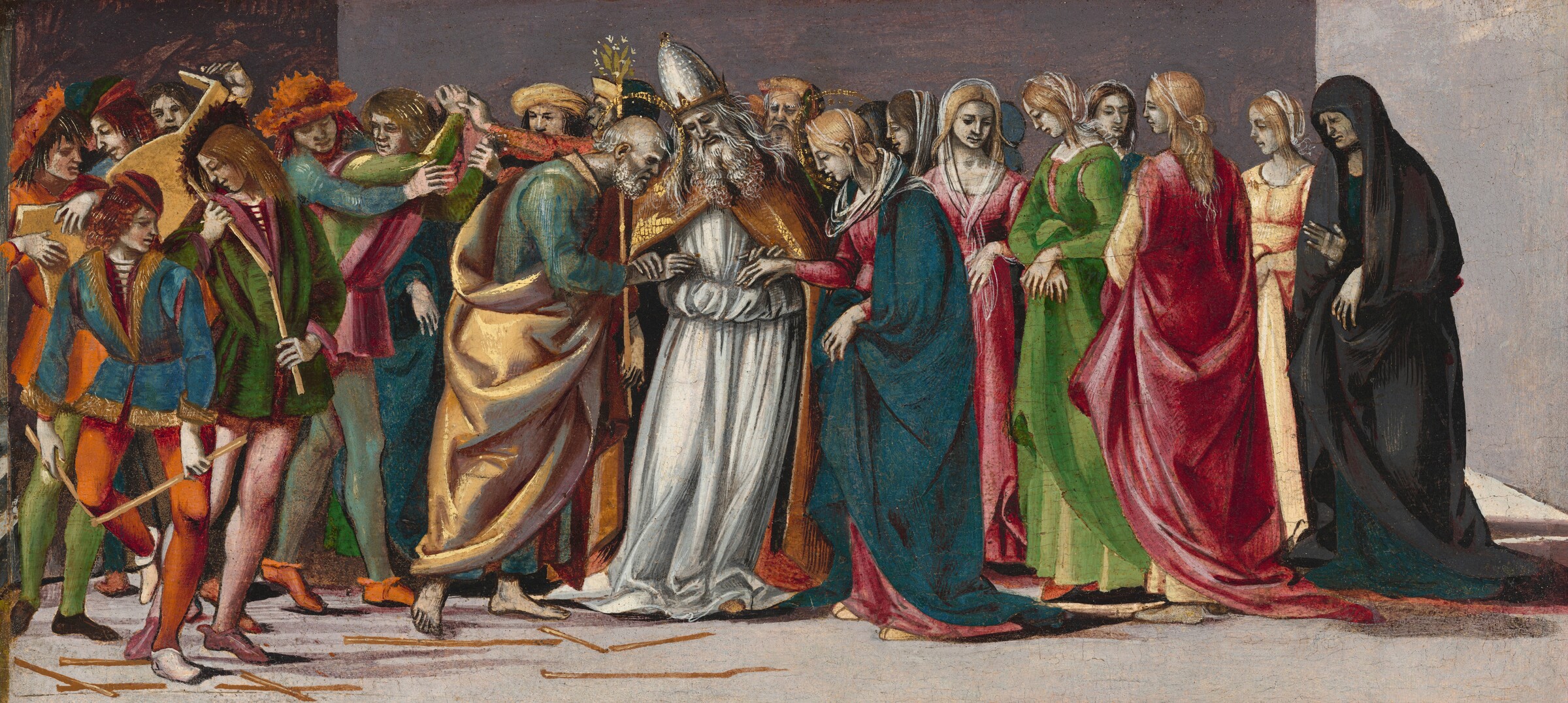
It was the main element in an altarpiece that is now dispersed. Four small predella panels now in other collections have been connected by art historians with the piece. These are now in a private collection in Scotland, the Virginia Museum of Fine Arts in Richmond, the National Gallery of Art in Washington, and the John G. Johnson Collection in the Philadelphia Museum of Art.
Mehr lesen
Signorelli was born in the town of Cortona in Tuscany, about 20 kilometres from Città di Castello in Umbria. In his early 40s he had returned to live in Cortona, after working in Florence, Siena and Rome (1478–1484, painting a now lost section of the Sistine Chapel). With an established reputation, he remained based in Cortona for the rest of his life, but often travelled to the cities of the region to fulfill commissions. This altarpiece comes a few years before the large set of frescos in Orvieto Cathedral which have always been regarded as his masterpiece. Probably trained by Piero della Francesca in Florence, as his cousin Giorgio Vasari wrote, his Quattrocento style was about to become rather out of date over the following years. The earliest documented painting by the young Raphael was the Baronci Altarpiece (1500–1501) for the same church for which this altarpiece was painted; this was badly damaged in an earthquake in 1789, and only fragments survive.
Angaben
- Inventarnummer
- MI 540
Im Katalog
Quellen
- Louvre
- Bild: Louvre — © 2006 GrandPalaisRmn (musée du Louvre) / Jean-Gilles Berizzi
Im Leben von Luca Signorelli
Das ganze Leben6 September 1479
Elected to Cortona's Council of Eighteen
Signorelli served his town all his life: after this election to the Council of Eighteen (Consiglio dei Diciotto) he was prior twelve times between 1480 and 1523, was elected ten more times to the Council of Eighteen and twelve times to the General Council.
c. 1484
Returns to live in Cortona
After working in Florence, Siena and Rome, Signorelli returned to live in Cortona in his early forties; with an established reputation, he remained based there for the rest of his life, often travelling to the cities of the region to fulfil commissions.
1488
Honorary citizen of Città di Castello
In 1488 Signorelli became an honorary citizen of Città di Castello in Umbria, where he worked and lived permanently in the last years of the 15th century.
1490s
At the head of a workshop in great demand
Signorelli worked across central Italy at the head of a much sought-after workshop, and his standing grew during the 1490s.
1497
Invited to paint at Monte Oliveto Maggiore
Fra Domenico Airoldi, abbot and general of the Olivetan order, invited Signorelli to paint the monastery with the “Story of Saint Benedict”. He completed the eight lunettes of the north side before leaving the work for his most important commission, in Orvieto; from 1505 Sodoma finished the cycle.
5 April 1499
Contract for the chapel frescoes in Orvieto
Signorelli undertook to complete the vault of the cathedral's Cappella Nuova, begun by Fra Angelico, for 200 ducats, and the walls for a further 600, with lodging and a monthly allowance of two measures of wine and two quarters of corn. The contract required him to consult the Masters of the Sacred Page on theological matters — the first recorded instance of an artist receiving theological advice.