 Annibale CarracciItalien, 1560–1609
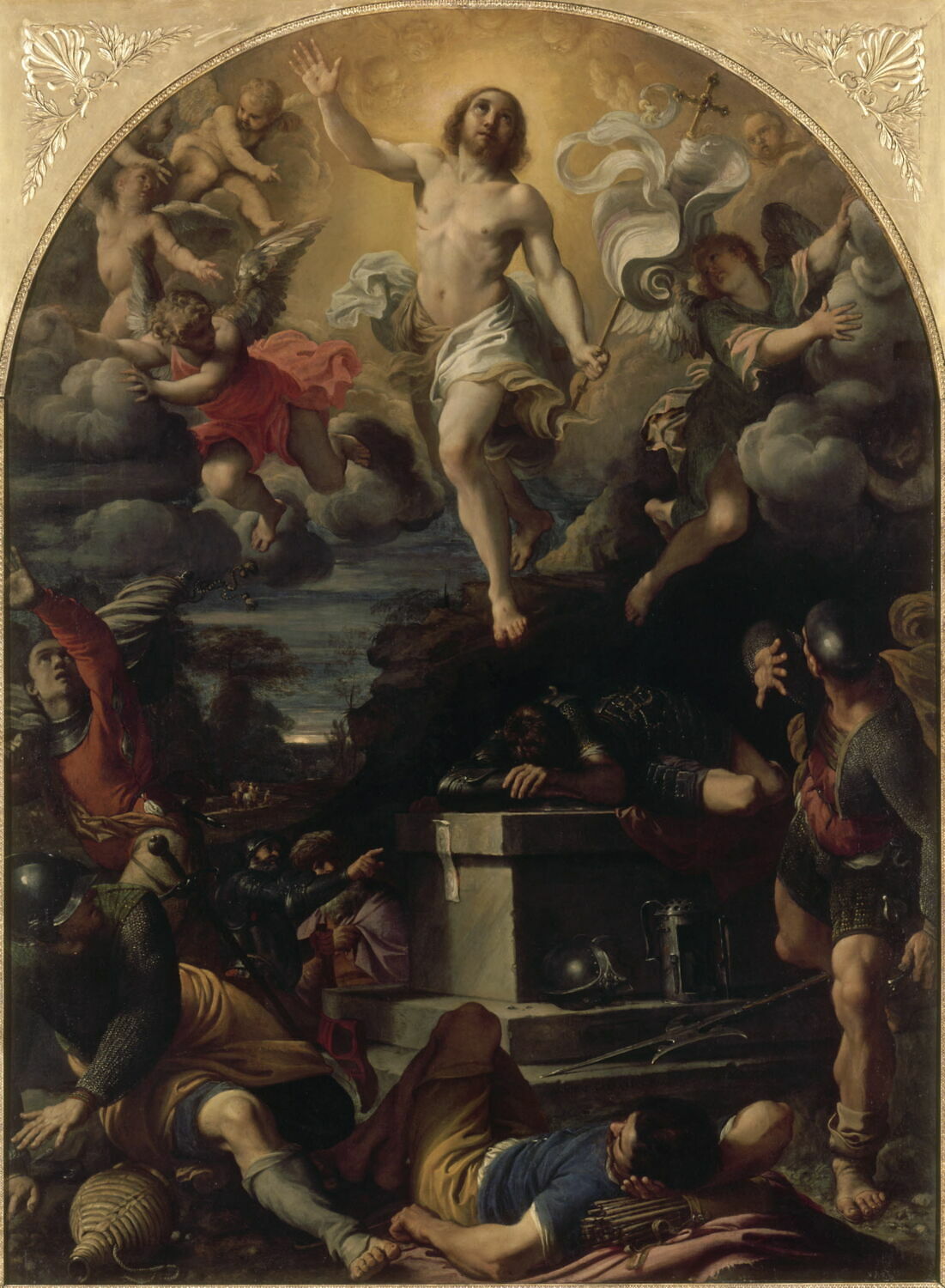
La Résurrection du Christ
Darf man es sehen?
Ja, es empfängt Besucher

Öffentlich ausgestellt. Wer dafür bürgt, steht unten.
- Geprüft
- Unverändert seit
- Quelle
- Das Museum
Über das Gemälde
Resurrection is a 1593 oil on canvas painting by the Italian Baroque artist Annibale Carracci, now in the Louvre in Paris, whose Cabinet des Dessins also houses a preparatory study for the work. It is also known as the Angelelli Resurrection after the Bolognese family which long owned it. It is signed and dated ANNIBAL CARRATIUS PINGEBAT. MDXCIII.
It was originally produced for the private chapel in the Palazzo Luchini in Bologna, a palace later ceded to the Angelelli family along with the painting, though they later gave the latter to the Corpus Domini monastery in Bologna, where it hung in the chapel dedicated to Catherine of Bologna. It had already reached a high price by the end of the 17th century, one of the highest recorded for that period. The work was seized by the French occupiers in 1797 and not returned to Italy after the end of the Napoleonic Wars.
Weiterlesen
The Resurrection became one of the most celebrated works by Annibale present in Bologna as well as one of the paradigms of the Bolognese school of painting between the sixteenth and seventeenth centuries.
According to Bellori, Annibale's compensation for the execution of the painting was modest, partly paid even with foodstuffs.
Angaben
- Inventarnummer
- INV 200
Im Katalog
Quellen
- Louvre
- Bild: Louvre — © 1998 GrandPalaisRmn (musée du Louvre) / René-Gabriel Ojéda
Derweil im Leben von Annibale Carracci
Das ganze Leben1578–1595 · Wirkungsort
Bologna
1594
Cardinal Farnese summons the brothers to Rome
In 1594 Cardinal Odoardo Farnese invited Annibale and his brother Agostino to Rome to decorate the Palazzo Farnese with frescoes on mythological subjects.
1595
Moves to Rome for good, into the Palazzo Farnese
Probably in September or October 1595 Carracci moved from Bologna to Rome for good and settled in the Palazzo Farnese.
1595–1609 · Wirkungsort
Rome