 Giovanni Francesco Barbieri, called GuercinoItalien, 1591–1666
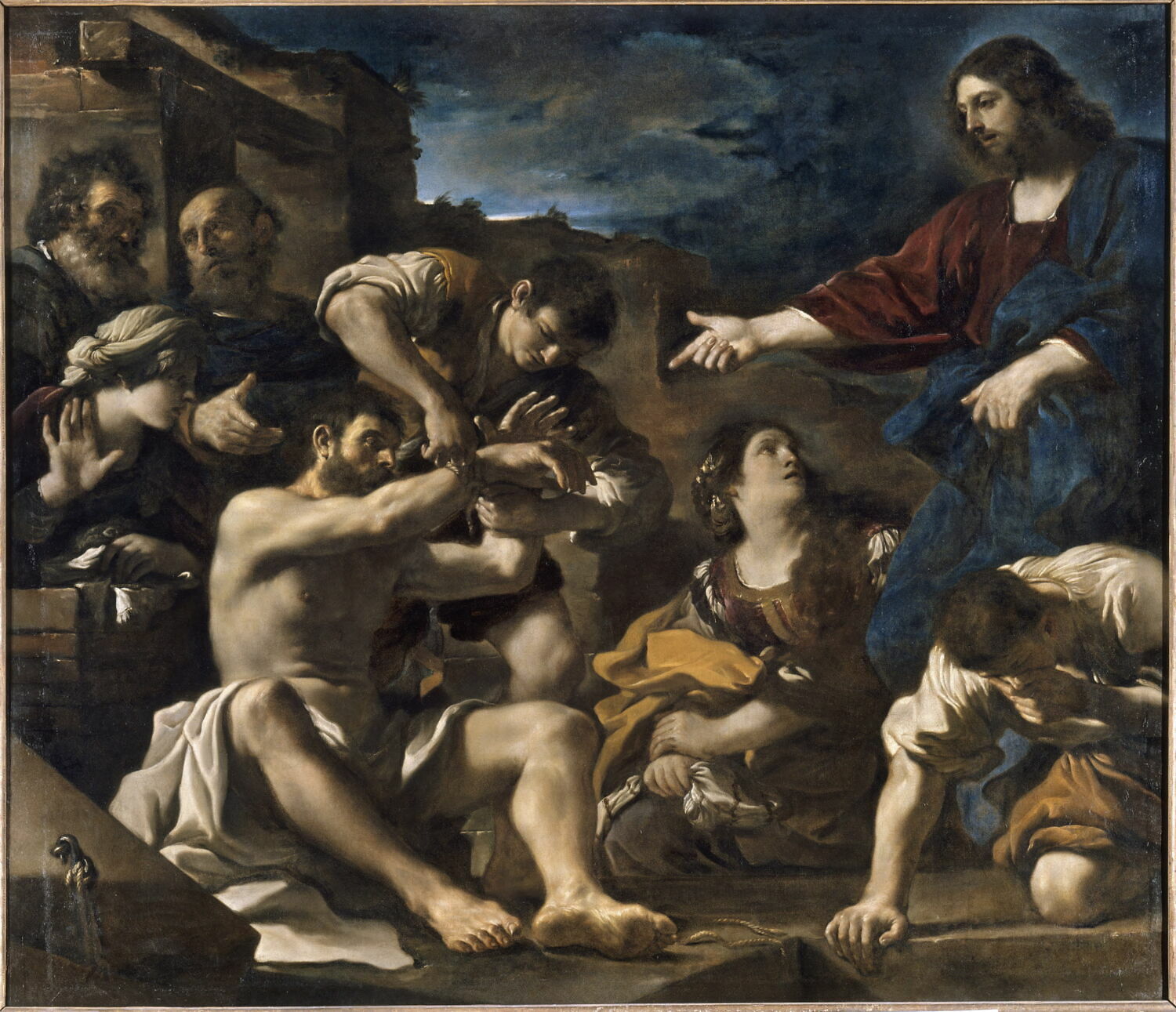
La Résurrection de Lazare
Kann ich es sehen?
Ja, derzeit ausgestellt
Wo ist „La Résurrection de Lazare“ heute? Louvre, Salle 712, Aile Denon, Niveau 1, Paris. Ja, derzeit ausgestellt. Geprüft 26. September 2026.

Geschlossen· öffnet um 9:00
Öffentlich ausgestellt.
- Geprüft
- Unverändert seit
- Quelle
- Das Museum
Über das Gemälde
The Raising of Lazarus is a 1619 oil-on-canvas painting by the Italian Baroque artist Guercino, now in the Louvre Museum in Paris. A preparatory sketch for the work is now in the Metropolitan Museum of Art,
In 1682 it was recorded as being in the Naples collection of the brothers Carlo and Francesco Garofali. It was still in that city when Vivant Denon bought it for Louis XVI for 26,000 livres in 1785 and after the French Revolution it was exhibited at the Muséum des Arts. J. M. W. Turner saw it during the Peace of Amiens in 1802 and a copy of it appears in his "Louvre Sketchbook".
Angaben
- Inventarnummer
- INV 77
Im Katalog
Quellen
- Louvre
- Bild: Louvre — © 1990 GrandPalaisRmn (musée du Louvre) / Gérard Blot
Im Leben von Giovanni Francesco Barbieri, called Guercino
Das ganze Leben1621
Moves to Rome, to the court of Gregory XV
Marchese Enzo Bentivoglio recommended Guercino to the newly elected Pope Gregory XV, the Bolognese Alessandro Ludovisi. His Roman years (1621–1623) were the most productive of his life; the portrait of the pope (now in the Getty Museum) dates from them.
1623
Returns to his native Cento
After the death of Pope Gregory XV, Guercino left Rome and returned to his hometown.
1623
Ottavio Leoni draws his portrait
The portrait emphasises the permanent squint that gave the artist his nickname. Guercino's right eye was apparently 'lazy' and he presumably had monocular vision — which did not stop him conveying depth remarkably well.