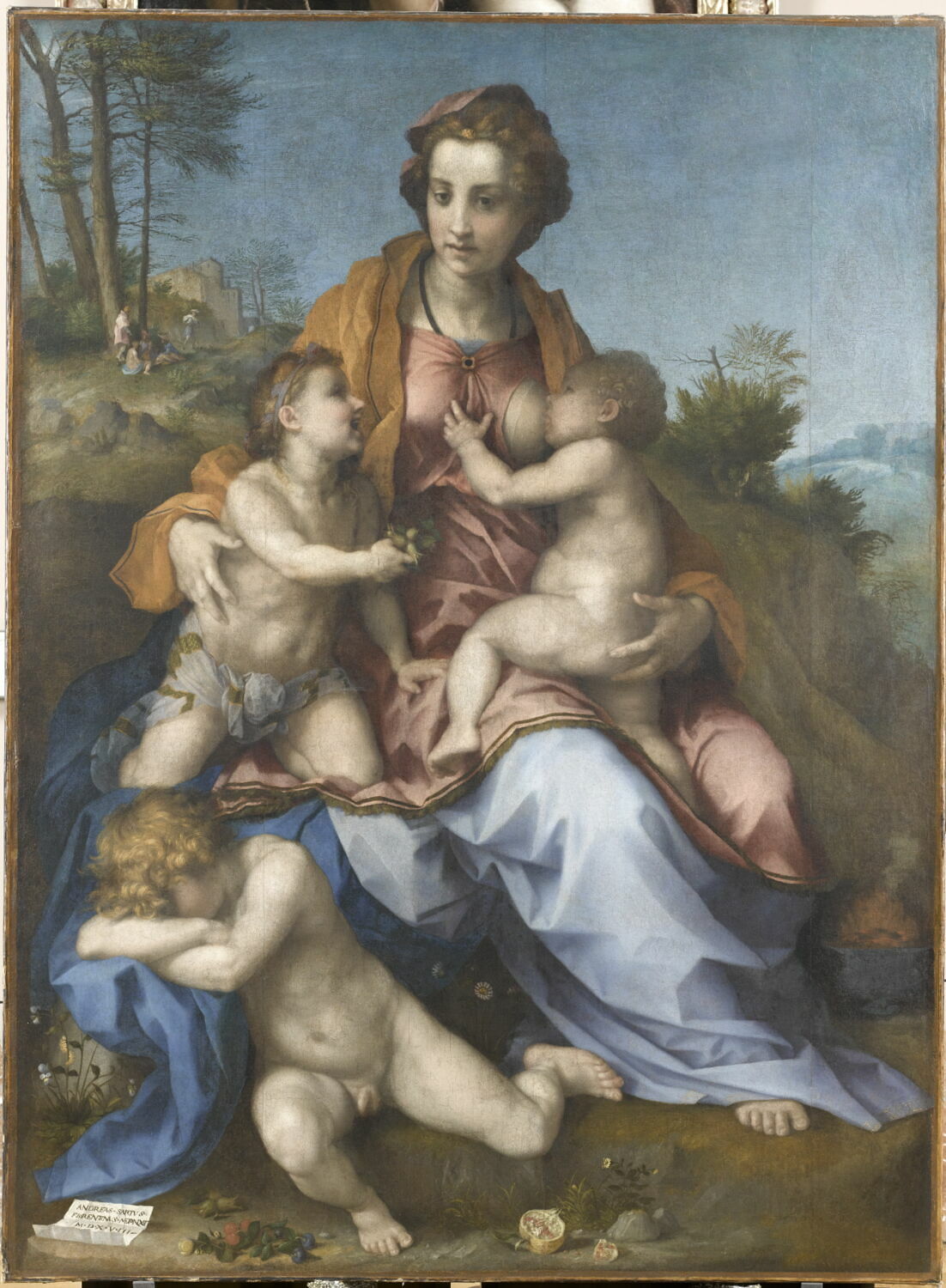
 Andrea del SartoItalien, 1486–1530
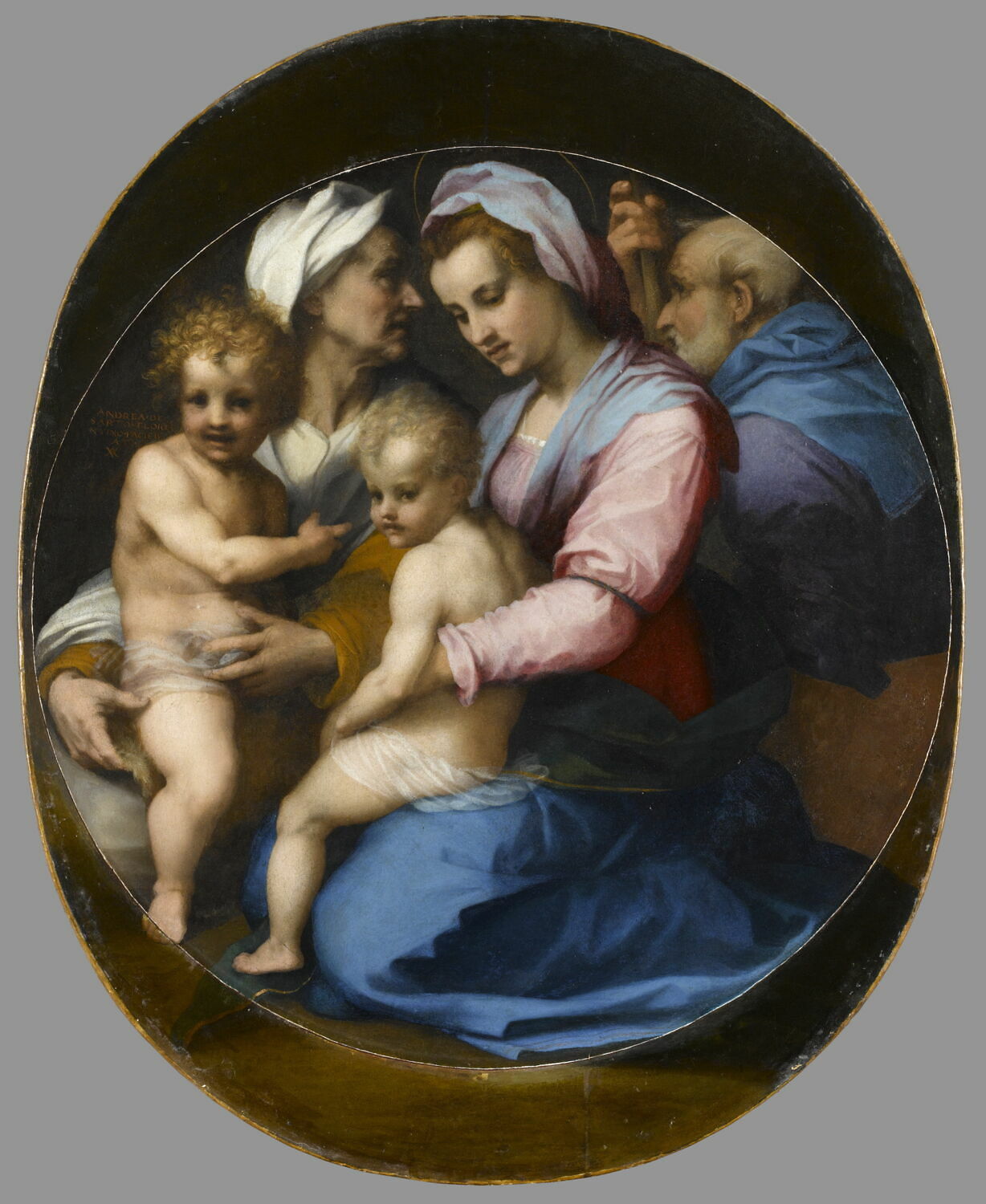
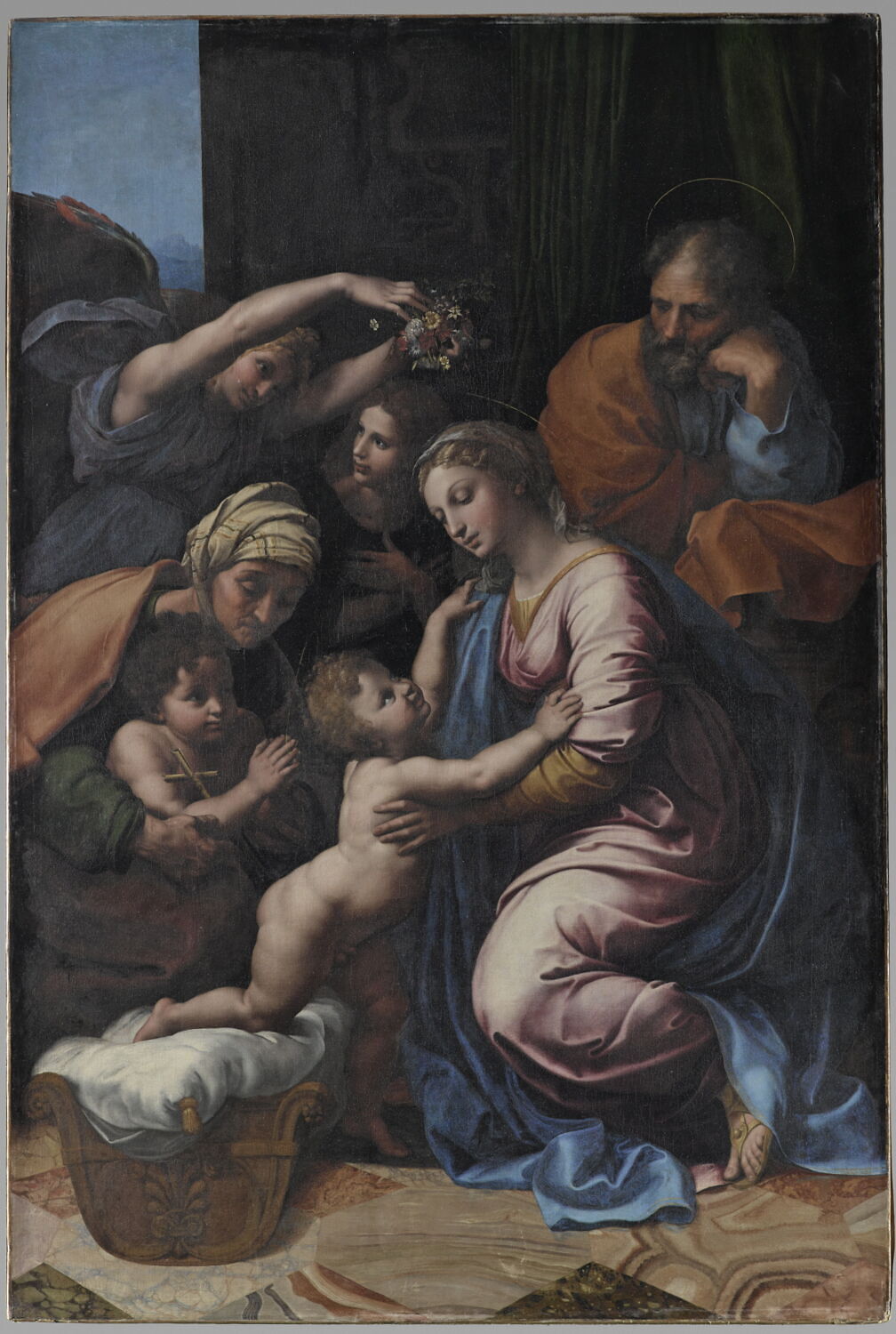
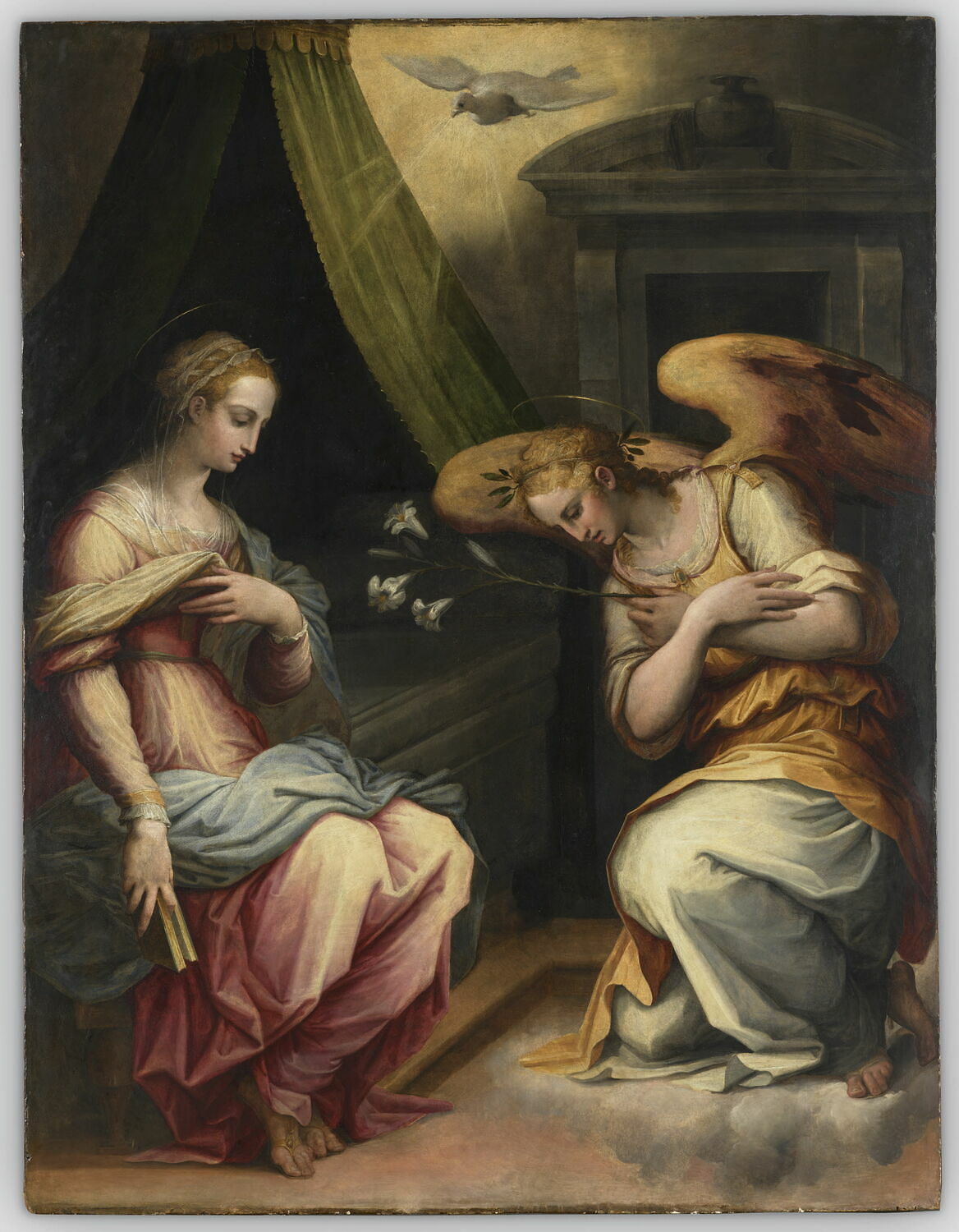
La Charité
Darf man es sehen?
Ja, es empfängt Besucher

Öffentlich ausgestellt.
- Geprüft
- Unverändert seit
- Quelle
- Das Museum
Angaben
- Inventarnummer
- INV 712
Im Katalog
Quellen
- Louvre
- Bild: Louvre — © 2011 GrandPalaisRmn (musée du Louvre) / Tony Querrec
Derweil im Leben von Andrea del Sarto
Das ganze Leben1510s
The first pupils: Rosso Fiorentino and Pontormo
In the 1510s Andrea himself acquires pupils, among them Rosso Fiorentino and Jacopo da Pontormo; their work develops their teacher’s sculptural drawing and decorative compositions and leads towards Florentine Mannerism.
1518
Married: Lucrezia del Fede
1518
At the court of François I in France
Before the end of 1516 a “Pietà” of Andrea’s composition, and afterward a “Madonna”, are sent to the French court, and in 1518 François I invites him: Andrea travels to Paris in June (by other accounts, in May, to the palace of Fontainebleau) with his pupil Andrea Squarzzella, leaving his wife Lucrezia in Florence. Court life evidently does not suit him; of his works in France only a portrait of the dauphin and “Charity” (now in the Louvre) are mentioned.
1519
Back from France, and the story of the king’s money
Already in 1519 Andrea returns to Florence; according to Vasari, Lucrezia writes to him demanding that he come back, and the king lets him go for a short absence, entrusting him with money to buy works of art for the French court — but Andrea spends it on a house in Florence and loses the chance to return. Some historians dismiss the story as apocryphal; it inspired Robert Browning’s poem “Andrea del Sarto Called the ‘Faultless Painter’” (1855).
1520
He begins building his own house
In 1520 Andrea begins building his own house in Florence at the corner of via San Sebastiano and via del Mandorlo; the building still stands four centuries later, and after its first owner several other artists lived in it, rebuilding it to their own needs.