Kazimir MalevichRussland, 1879–1935
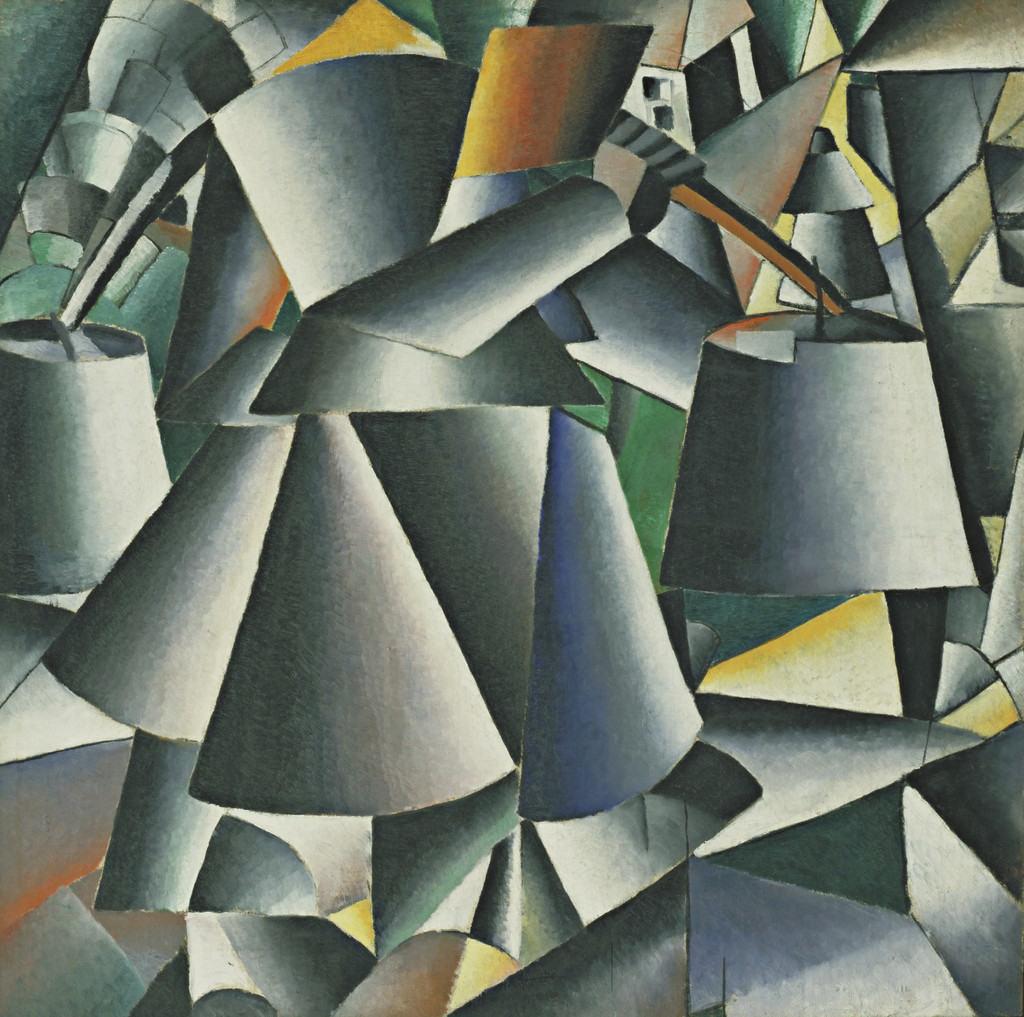
Косарь
Kann ich es sehen?
Unbekannt
Wo ist „Косарь“ heute? Sammlung: staatliches Kunstmuseum Nizhny Novgorod, Nischni Nowgorod. Unbekannt.
Nischni Nowgorod, Russland
Der Besitzer ist bekannt; ob das Werk derzeit ausgestellt ist, nicht.
- Unverändert seit
- Quelle
- Das Museum
Angaben
- Inventarnummer
- НГХМ-Ж-343
Im Katalog
Quellen
- Der Staatskatalog des Museumsfonds Russlands
- Bild: staatliches Kunstmuseum Nizhny Novgorod — © Нижегородский государственный художественный музей · Госкаталог музейного фонда РФ
Im Leben von Kazimir Malevich
Das ganze LebenDecember 1908 – 1909
The end of his first marriage and his marriage to Sofia Rafalovich
At Christmas 1908 his mother’s canteen was robbed and the family’s property inventoried and sold; relations between Malevich and his wife worsened, and Kazimira Zgleits moved with the children to the village of Meshcherskoye and then, leaving with a doctor, left the children with a stranger. Malevich found them at the home of the steward Mikhail Rafalovich, whose daughter Sofia soon became his common-law wife; in 1909 he divorced and married her, and from then on he constantly lived and worked in her father’s house at Nemchinovka.
1910
The first “Knave of Diamonds” exhibition
In December 1910 Malevich took part in the first exhibition of the “Knave of Diamonds” group, founded by Natalia Goncharova and Mikhail Larionov, who sought to combine the Western modernism of Cézanne with the traditions of Russian folk art; the “Knave”, he said, stood for youth, and “diamonds” for beautiful youth. In 1924 he claimed that this exhibition had severely shaken the aesthetic foundations of art in society and criticism.
1912
Meeting Mikhail Matyushin
In 1912 Malevich met the composer Mikhail Matyushin, the future composer of “Victory over the Sun” and publisher of his first Suprematist texts.
March – April 1912
The “Donkey’s Tail”: neo-primitivism
In March 1912 Malevich showed more than twenty neo-primitivist works at the “Donkey’s Tail” exhibition in Moscow (it ran until April), among them the peasant-inspired gouaches “Floor Polishers” and “Washerwoman”. That same year he took part in the exhibitions of the “Union of Youth” and the “Blue Rider” in Munich.
1913
“Target”, debates and “transrational realism”
In 1913 Malevich took part in the “Debate on Contemporary Painting” in St Petersburg and in the “First Evening of Speech-Makers in Russia” in Moscow, designed a number of Futurist publications and in March showed “Morning in the Country after Snowstorm” and “Knifegrinder” with Goncharova and Larionov at the “Target” exhibition; at the last “Union of Youth” exhibition he showed, next to neo-primitivist works, paintings he himself called “transrational realism” and “Cubo-Futurist realism”. In the spring he wrote to Matyushin that he had rejected reason because a different kind of reason — transrational — had arisen in him, with its own law, construction and meaning.
1914
The Paris Salon des Indépendants
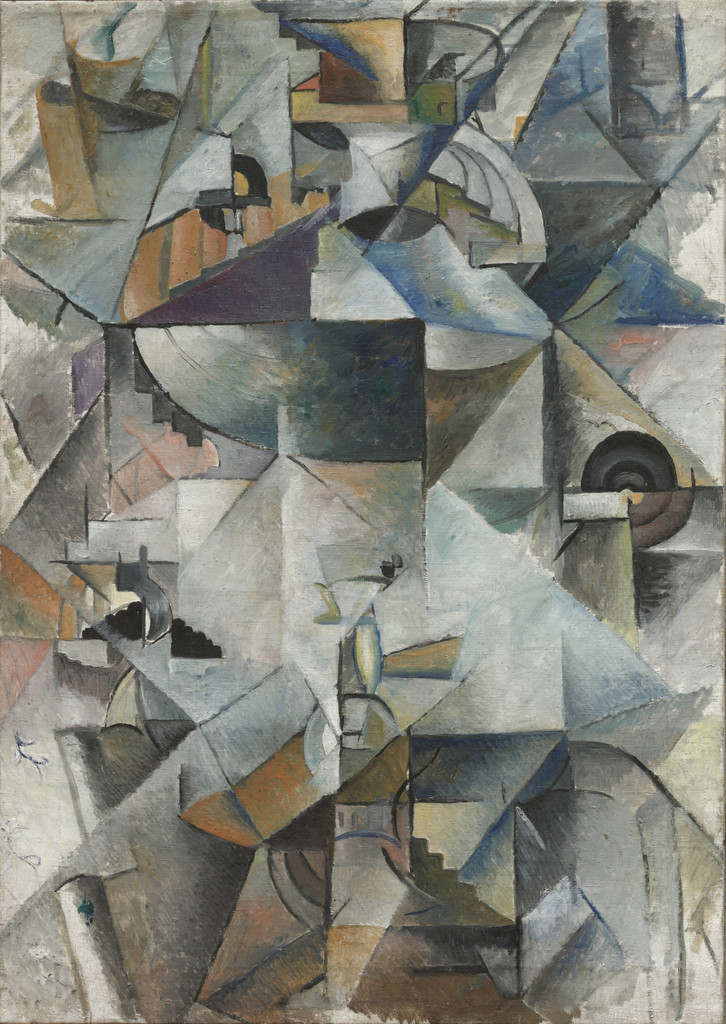
In March 1914, at Nikolai Kubin’s invitation, Malevich sent works, among them the Cubist “Samovar” (1913), to the Salon des Indépendants in Paris.