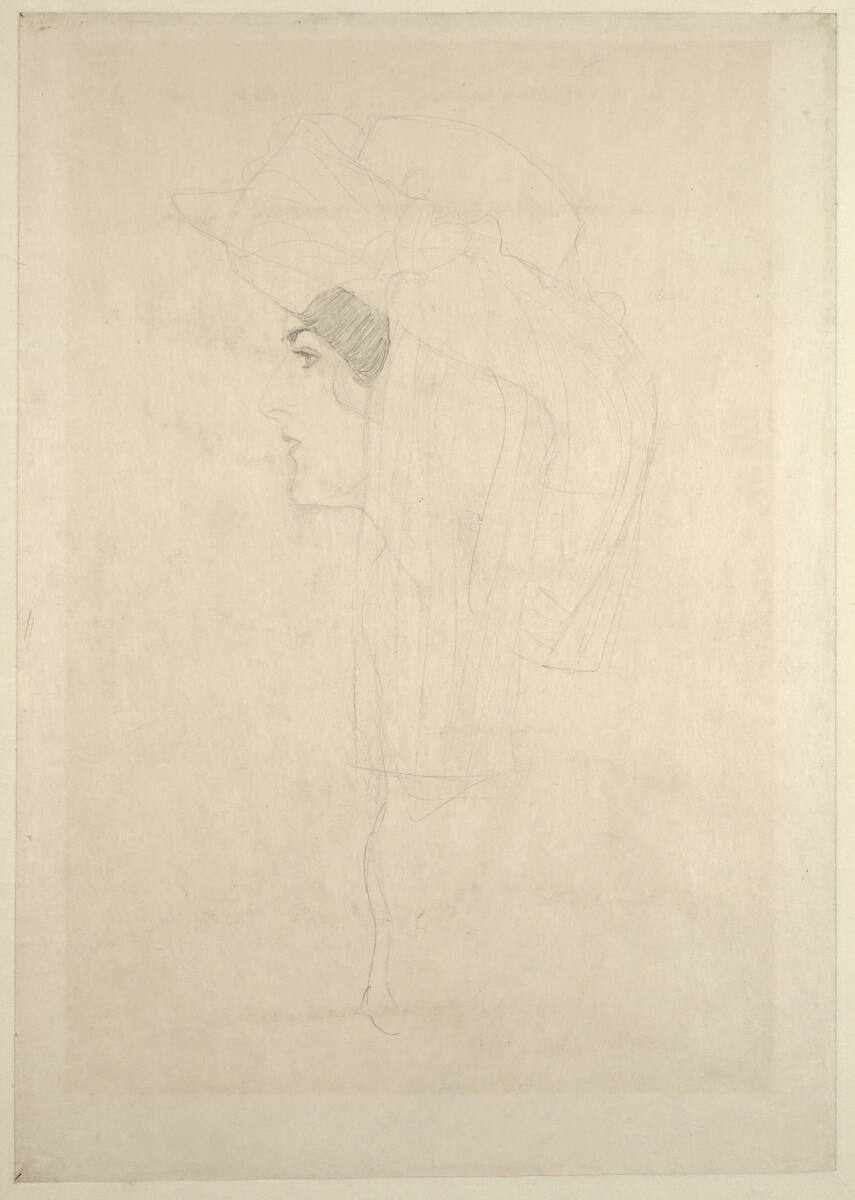
 Gustav KlimtÖsterreich, 1862–1918
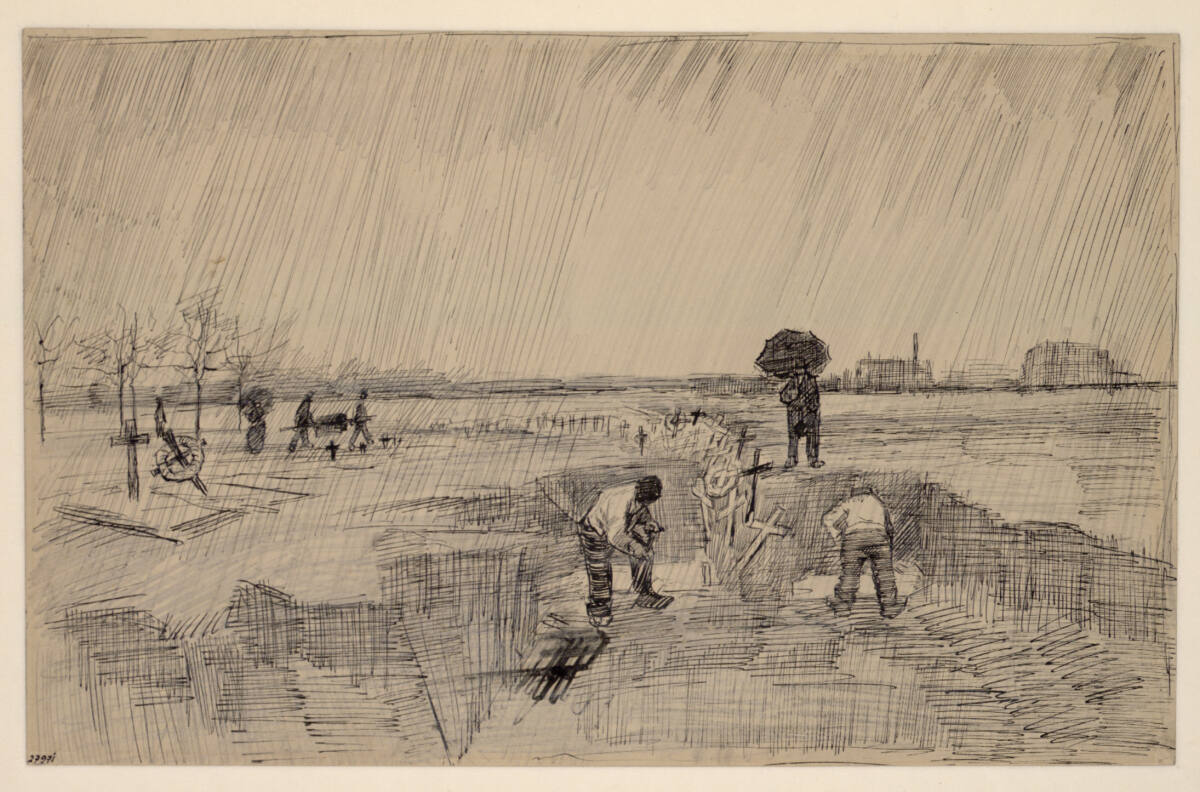
Kopf einer Dame mit Hut
Darf man es sehen?
Unbekannt

Wien, Österreich
Der Besitzer ist bekannt; ob das Werk derzeit ausgestellt ist, nicht.
- Unverändert seit
- Quelle
- Das Museum
Angaben
Im Katalog
Quellen
- Albertina
- Bild: Albertina — Public Domain Mark 1.0
Derweil im Leben von Gustav Klimt
Das ganze Leben1897–1917
Society portraits of Viennese ladies
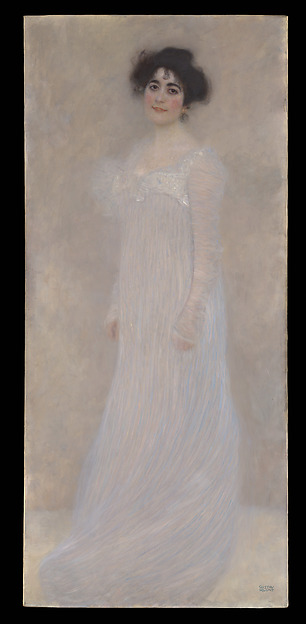
Over twenty years Klimt painted nearly twenty society portraits of women, which gave him financial independence; Carl Moll introduced him to many of the sitters, most of them from the Jewish upper bourgeoisie. In the portraits the ladies are hidden in sumptuous clothing, their heads and hands seeming to float detached from reality.
1900–1907
He returns the advance and keeps the paintings
The state commission refused to accept the three “Faculty Paintings”; Klimt told the minister he would return the 60,000-krone advance, refused to work for the Austrian state again and kept the pictures. The ministry demanded them, but Klimt did not open the door to the removal men — and the affair ended in his victory.
1902
Son born: Otto Zimmermann
1903
His first solo show at the Secession
The Secession's first solo exhibition was devoted to Klimt and proved exceptionally successful: the artist earned 36,000 kronen.
1905
Klimt and his group leave the Secession
Klimt and his “stylist” followers, who held that art should enter every sphere of life, fell out with the “naturalists”; the decision against Klimt's group was carried by a single vote. For the next three years the group had no joint exhibitions.
1906
The “Kunstschau” group
A year after the split Klimt formed the “Kunstschau” group, or “Klimt group”, which included Carl Moll, Otto Wagner and other leading Austrian artists.