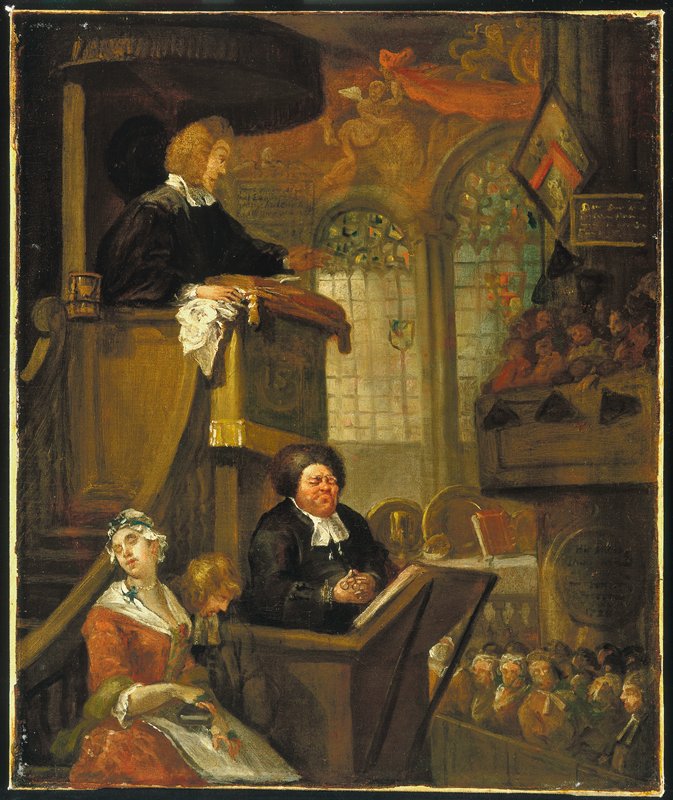
 William HogarthEngland, 1697–1764
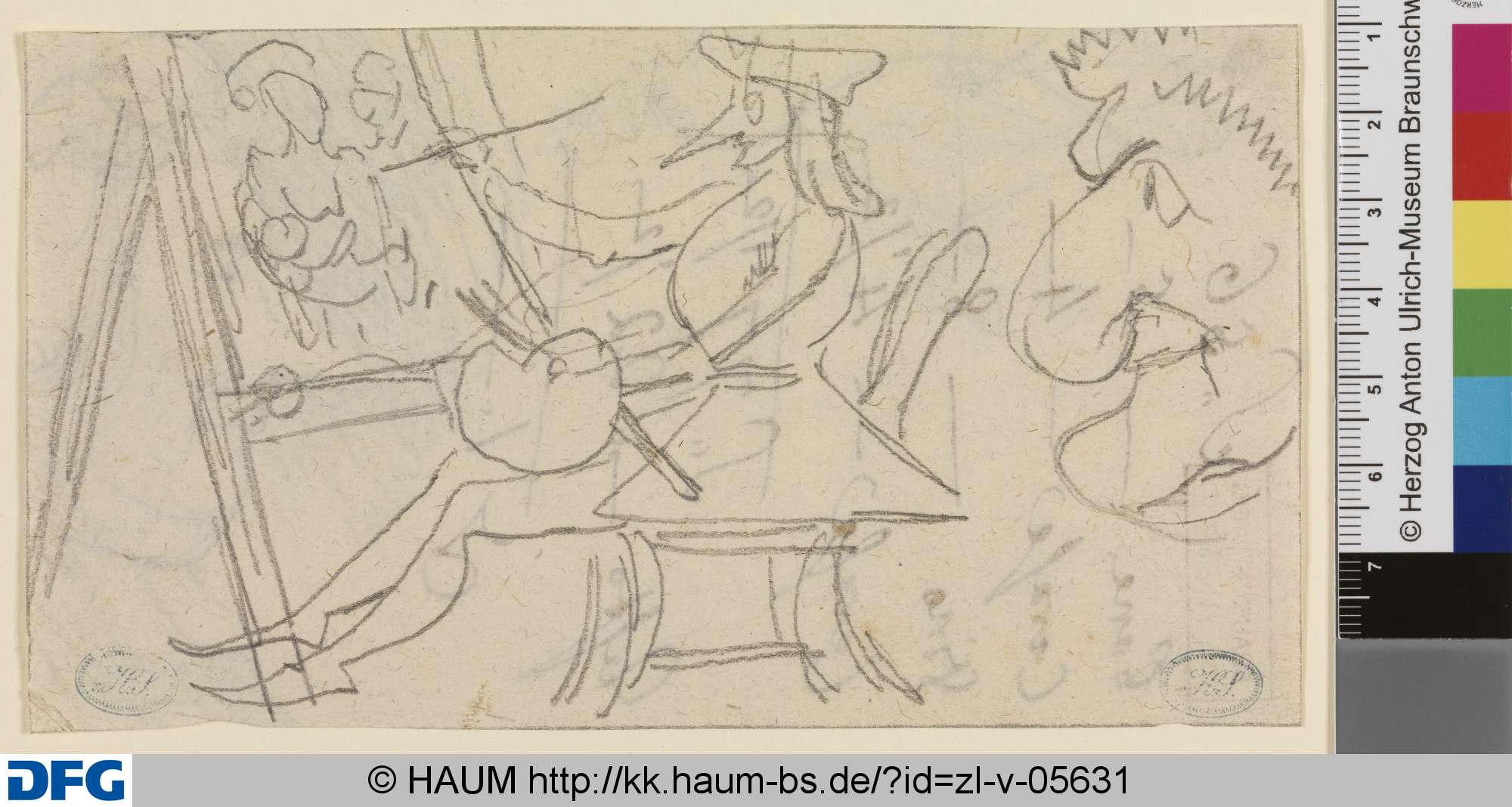
Karikatur eines Malers
Darf man es sehen?
Unbekannt: Das Museum schweigt sich aus

Herzog Anton Ulrich-Museum
Braunschweig, Deutschland
Der Eigentümer ist bekannt. Ob es heute ausgestellt ist, sagt das Museum nicht, und Raten haben wir nicht gelernt.
- Unverändert seit
- Quelle
- Sammlungsdaten des Museums selbst
Angaben
Im Katalog
Quellen
- Herzog Anton Ulrich-Museum: the museum's own open data · abgerufen vor 7 Tagen
- Bild: Herzog Anton Ulrich-Museum — CC BY-NC-SA 4.0
Derweil im Leben von William Hogarth
Das ganze Leben23 March 1729
A secret wedding to Jane Thornhill
Not hoping for Sir James’s consent — he saw the match as unequal, Hogarth being a rather obscure artist then — William and Jane married in secret at Paddington Church. Jane and her mother helped to reconcile him with his father-in-law: they hung the first paintings of “A Harlot’s Progress” in his house, and on learning the artist’s name Sir James admitted that a man who could produce such pictures could also keep a wife without a dowry.
1735
Founds the St Martin’s Lane Academy
In 1735 Hogarth founded the St Martin’s Lane Academy in London — in essence a drawing studio that grew out of a circle of painters, draughtsmen and engravers who met at Slaughter’s coffee house on St Martin’s Lane. It became a forerunner of the Royal Academy of Arts and spread new artistic ideas in England.
25 June 1735
“Hogarth’s Act”: copyright for engravings
When the success of the two series produced numerous pirated copies, Hogarth lobbied Parliament for a law protecting engravers: the Engravers’ Copyright Act, known as “Hogarth’s Act”, became law on 25 June 1735 — the first copyright law to cover visual works and to recognise the authorial rights of an individual artist.
1753
The treatise “The Analysis of Beauty”
In 1753 Hogarth published the treatise “The Analysis of Beauty”, in which he declared the S-shaped “line of beauty” — a serpentine line that conveys life and movement — the basis of harmony, and made it his emblem. His adherents praised the book as a fine statement on aesthetics, while enemies and rivals such as Paul Sandby mocked its obscurities and minor errors in endless caricatures.
1757
Serjeant Painter to the King
In 1757 George II appointed Hogarth Serjeant Painter to the King, successor to James Thornhill, who had held the post before him.
26. Oktober 1764
Died