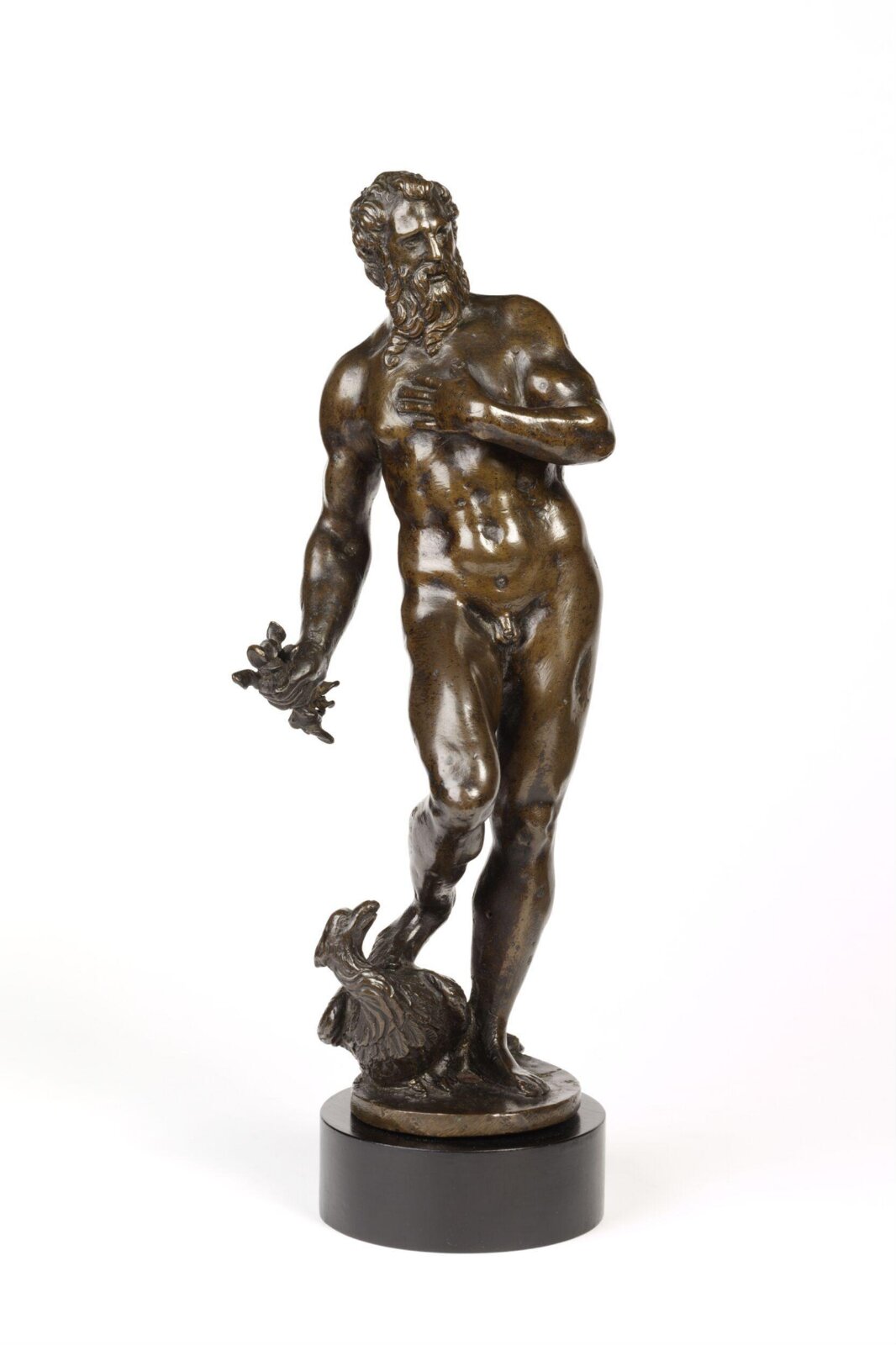
 Alessandro VittoriaItalien, 1525–1608
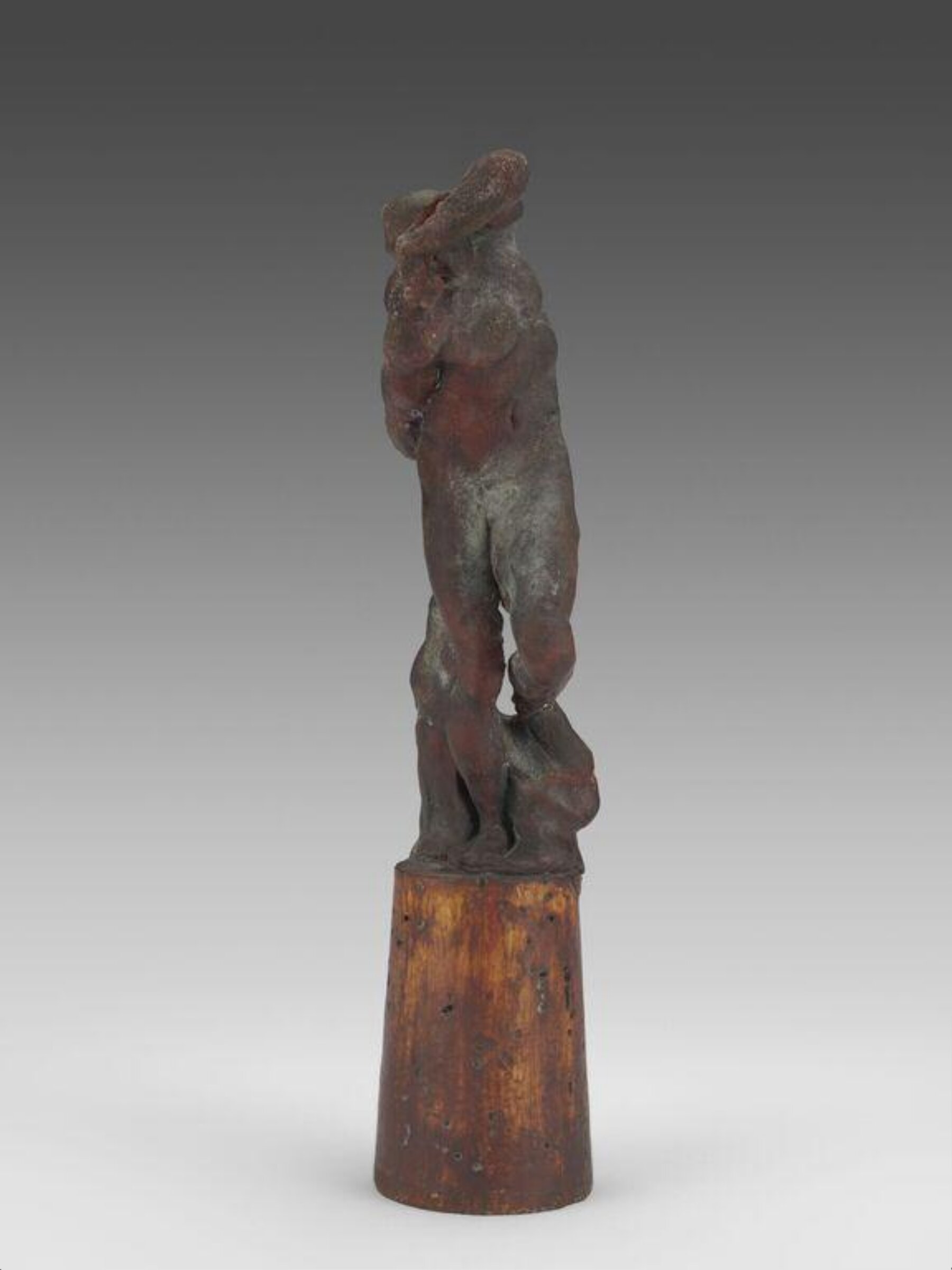
Jupiter
Darf man es sehen?
Ja, es empfängt Besucher

Öffentlich ausgestellt. Wer dafür bürgt, steht unten.
- Geprüft
- vor 9 Tagen
- Unverändert seit
- 25. Sept. 2026
- Quelle
- Sammlungsdaten des Museums selbst
About the sculpture
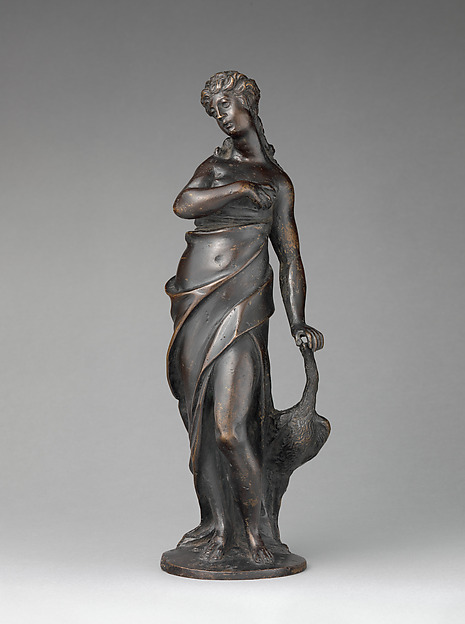
This statuette - a firedog figure - representing Jupiter, is made as a model in the circle of Alessandro Vittoria, in Venice in about 1560.
The figure originally surmounted a fire-dog and was not intended as an independent statuette. It is frequently paired with A.19-1961, a figure of Juno, which probably dates from a later period. It is one of numerous copies of a model by Alessandro Vittoria, the finest of which is in the Kunsthistorisces Museum, Vienna. Although possibly produced in Vittoria's workshop, such figures were also reproduced by artisan founders in Venice following the style of the leading sculptors of the day.
Read on
Firedogs or andirons were placed within the fireplace and would have been used to hold utensials which were required for tending the fire. Often, firedogs do not even appear on inventories, which indicates their status as standard household objects, not necessarily worthy of particular note.
Firedogs stand either side of the fireplace and hold burning logs above the floor in order to allow an updraft of air.
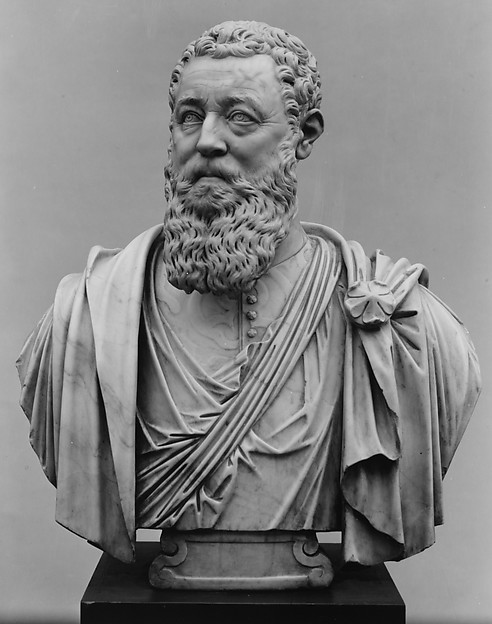
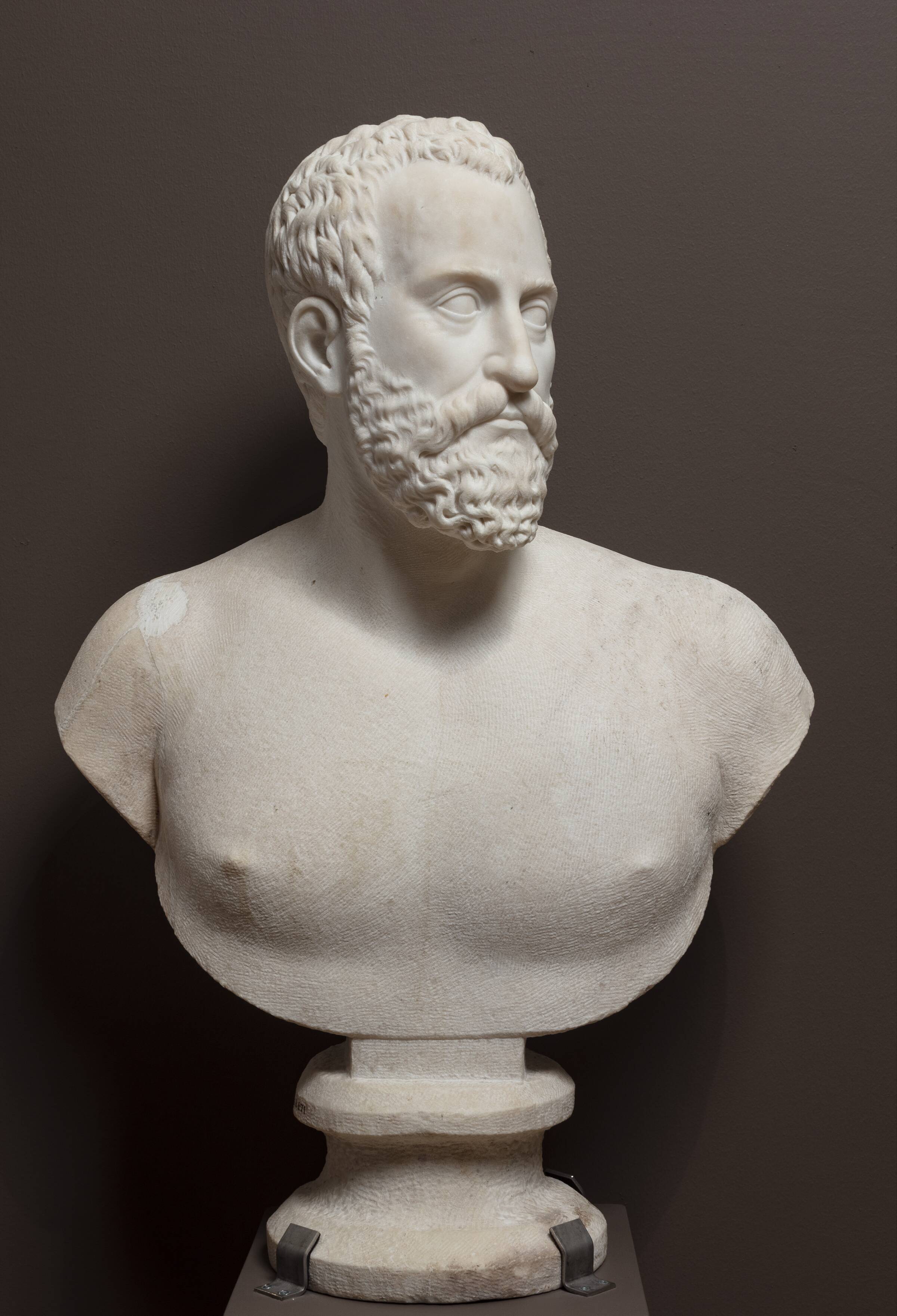
Vittoria (1525-1608) was an Italian sculptor, stuccoist and architect. In the second half of the 16th century he became one of the most important sculptors active in Venice. On his arrival in Venice in 1543 he worked for Jacopo Sansovino (1486-1570). He left Venice for Vicenza for a period of around 6 years. Apart from that and another short stay in 1576-77 when he worked in Brescia and Vicenca again to avoid the plague, he remained in Venice until his death. He is buried in the church of S. Zaccaria, where there is also a marble self-portrait bust as part of the monument. Portrait busts form a large part of his oevre.
Victoria and Albert Museum
Angaben
- Inventarnummer
- A.18-1961
What it shows
Im Katalog
Quellen
- Victoria and Albert Museum: the museum's own open data · abgerufen vor 9 Tagen
- Bild: Victoria and Albert Museum — © Victoria and Albert Museum, London