 Elisabetta SiraniItalien, 1638–1665
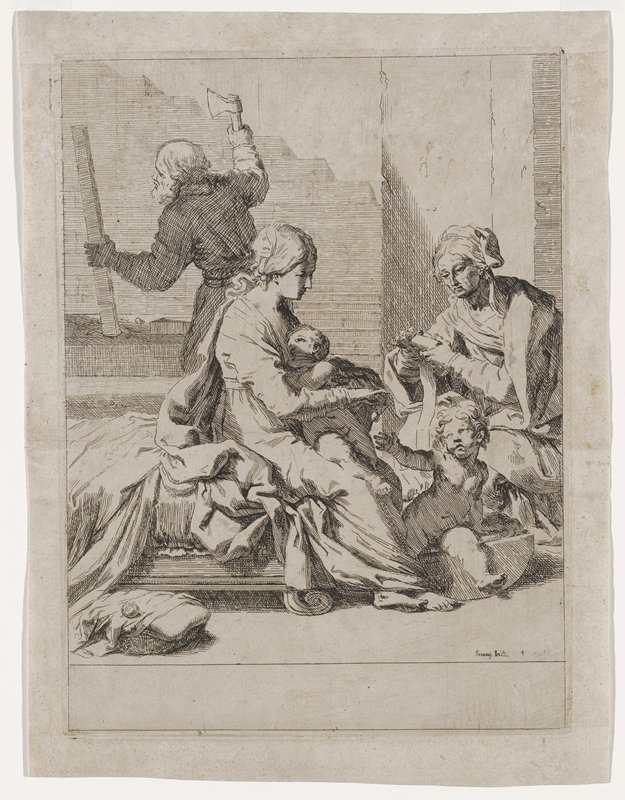
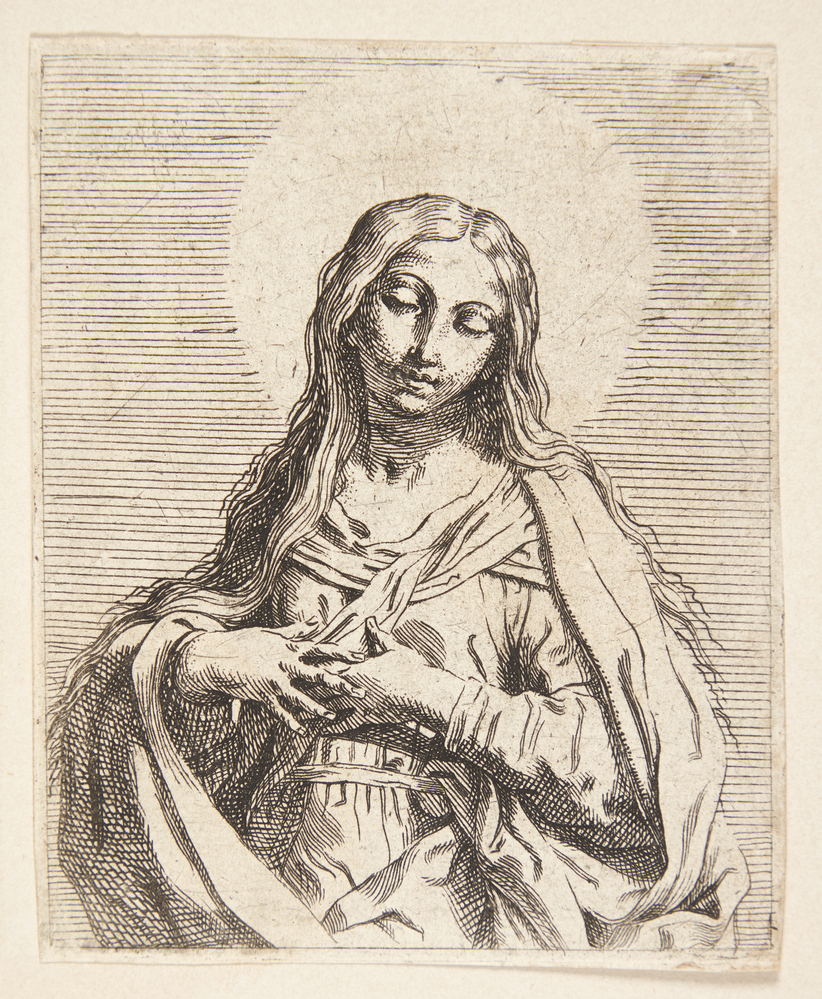
Jomfru Maria
Darf man es sehen?
Empfängt derzeit nicht

Statens Museum for Kunst
Kopenhagen, Dänemark
Es gehört zur Sammlung, ist derzeit aber nicht ausgestellt.
- Geprüft
- Unverändert seit
- Quelle
- Das Museum
Angaben
- Inventarnummer
- KKS2989
Im Katalog
Quellen
- Statens Museum for Kunst
- Bild: Statens Museum for Kunst — public domain
Derweil im Leben von Elisabetta Sirani
Das ganze Leben8. Januar 1638
Born
by 1654
Takes over the family workshop
By 1654 her father is incapacitated by gout and can no longer work, and Elisabetta takes over the running of the workshop: she becomes the family’s main breadwinner, living on teaching fees and portrait commissions. The studio thrives, helped by the progressive atmosphere of Bologna, where women artists were accepted and celebrated; her sisters Barbara and Anna Maria serve as her assistants.
28 February 1657
First major public commission
At nineteen she receives her first major public commission, from Daniele Granchi, prior of the Carthusian church of the Certosa di Bologna; she will go on to paint at least thirteen public altarpieces.
1660
Opens a painting school for women
She opens a school — the first school of painting for women in Europe outside a convent, open regardless of the women’s artistic and social connections; besides her younger sisters Barbara and Anna Maria she trains at least twelve young women, among them the wood-engraver Veronica Fontana, Caterina Pepoli, Maria Elena Panzacchi, Camelia Lanteri, Lucretia Forni, Veronica Franchi and Ginevra Cantofoli, who was portrayed as Sirani’s rival.
August 1665
Sudden illness and suspicions of poisoning
She falls suddenly ill; only days earlier the maidservant Lucia Tolomelli had asked to leave the family’s service, and suspicion of poisoning fell on her, though the charges were soon withdrawn. The likely cause is peritonitis after a ruptured ulcer, perhaps brought on by the strain of providing for the whole household.
28. August 1665
Died