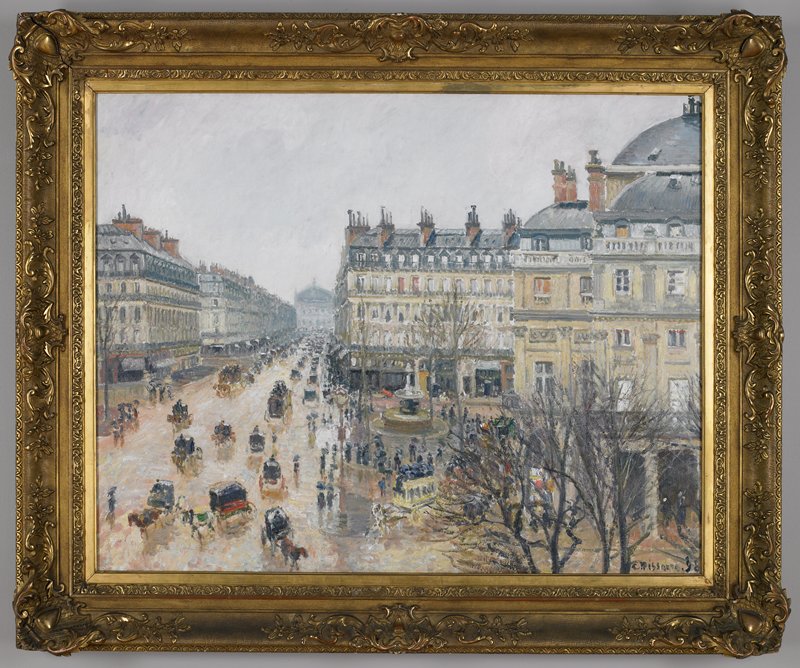
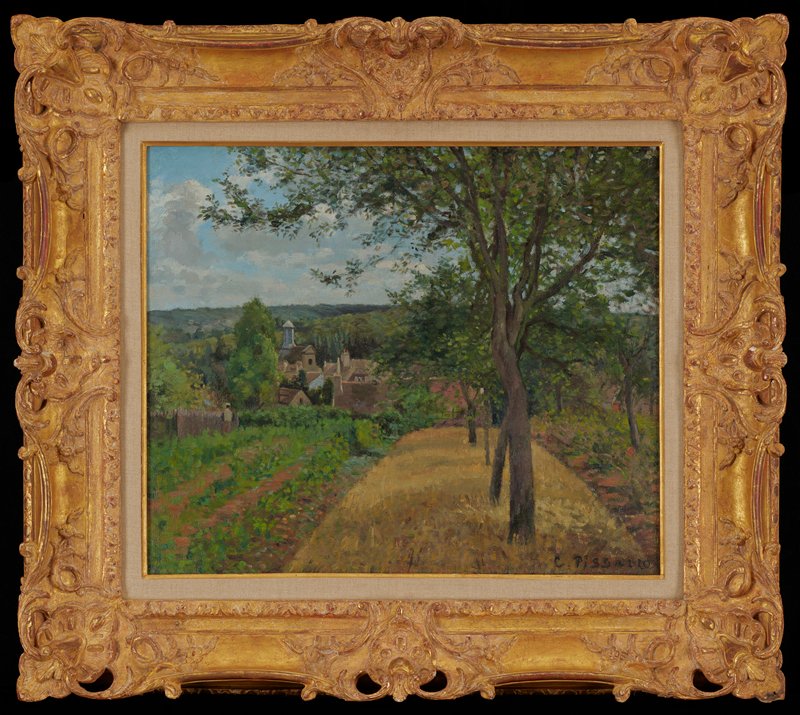
Camille Jacob PissarroFrankreich, 1830–1903
Het knollenveld
Kann ich es sehen?
Unbekannt
Wo ist „Het knollenveld“ heute? Sammlung: Rijksmuseum Amsterdam, Amsterdam. Unbekannt.

Amsterdam, Niederlande
Der Besitzer ist bekannt; ob das Werk derzeit ausgestellt ist, nicht.
- Quelle
- Das Museum
Angaben
- Inventarnummer
- RP-P-1959-121
Was es zeigt
Im Katalog
Quellen
- Rijksmuseum Amsterdam
- Bild: Rijksmuseum Amsterdam — public domain
Im Leben von Camille Jacob Pissarro
Das ganze Leben1872–1884
Life in Pontoise
Back in France, Pissarro lived in Pontoise from 1872 to 1884, where he painted a great many pictures, keeping in touch with fellow artists, above all Monet, Renoir and Cézanne.
1876
The critic Wolff and the “violet trees”
In his review of the Impressionist exhibition of 1876 the critic Albert Wolff demanded that someone make Pissarro understand that trees are not violet; Pissarro's authority among his Impressionist friends nevertheless remained consistently high.
21. November 1878
Son born: Ludovic Rodo Pissarro
1880s
A search for something new: peasant labour without idealisation
By the 1880s some Impressionists felt the movement had exhausted itself, and Pissarro returned to scenes of country life, showing people at work without idealising them; in 1882 Renoir called these works “revolutionary”.
1880s
Theo van Gogh asks him to take in Vincent
The art dealer Theo van Gogh asked Pissarro whether he would take his elder brother Vincent as a lodger in his house; according to his son Lucien, Pissarro was impressed by Van Gogh's work, foresaw his fame and explained to him different ways of seeking and expressing light and colour.
27. August 1881
Daughter born: Jeanne Bonin-Pissarro