ART WIKI32.963 ausgestellt
KarteSammlungKünstlerMuseenAusstellungenJournal
Anmelden

ART WIKI

Wo das Meisterwerk hängt und wann man vorgelassen wird.

Sammlungen: Art Institute of Chicago, Cleveland Museum of Art, Eremitage, Getty Villa, Harvard Art Museums, Hirshhorn Museum and Sculpture Garden, J. Paul Getty Museum, Louvre, Metropolitan Museum of Art, Minneapolis Institute of Art, Museum of Modern Art, National Gallery of Art, National Museum of Asian Art, National Portrait Gallery, Puschkin-Museum, Rijksmuseum Amsterdam, Russisches Museum, Smithsonian American Art Museum, Statens Museum for Kunst, Tretjakow-Galerie, Victoria and Albert Museum, Whitney Museum of American Art, Staatskatalog des Museumsfonds Russlands (274 Museen), Europeana (19 Museen), Wikidata (6 Museen), Paris Musées (12 Museen) und Joconde, die Museumsdatenbank des französischen Kulturministeriums (495 Museen). Die Bilder gehören ihren Rechteinhabern.

Rubriken

  • Karte
  • Suche
  • Sammlung
  • Meisterwerke
  • Jetzt ausgestellt
  • Künstler

Mehr

  • Museen & Galerien
  • Ausstellungen
  • Journal
  • Woher die Daten stammen
  • Datenschutz & Cookies
StartseiteKarteKatalog
  1. Sammlung/
  2. Rijksmuseum Amsterdam/
  3. Heilige Sebastiaan
Heilige Sebastiaan, Jusepe de Ribera, 1618 - 1622
Jusepe de Ribera, PorträtJusepe de RiberaSpanien, 1591–1652

Heilige Sebastiaan

1618 - 1622 · Print

Darf man es sehen?

Unbekannt

Rijksmuseum Amsterdam

Amsterdam, Niederlande

Der Besitzer ist bekannt; ob das Werk derzeit ausgestellt ist, nicht.

Quelle
Das Museum
Auf der KarteMuseumsseite

Über das Werk

In den Worten des Museums — auf Niederländisch

De heilige Sebastiaan, ten halven lijve, tegen een boom.

Rijksmuseum Amsterdam

Angaben

1618 - 1622
15911652
Inventarnummer
RP-P-OB-21.267

Was es zeigt

The martyr SebastianPossible attributes: arrow(s), bow, tree-trunk

Im Katalog

DruckgrafikBarock17. Jahrhundert

Quellen

  • Rijksmuseum Amsterdam
  • Bild: Rijksmuseum Amsterdam — public domain

Derweil im Leben von Jusepe de Ribera

Das ganze Leben
  1. 1609–1616 · Wirkungsort

    Parma

  2. 1613–1616

    Rome: fame, earnings and debts

    According to Giulio Mancini, Ribera begins by working for daily wages in other artists' workshops, then wins a strong reputation and large profits; Guido Reni is among the admirers of his work, and a painter of his kind had not been seen in Rome for years. But he is lazy at times, spends extravagantly and falls into debt.

  3. late 1616

    The permanent move to Naples

    In late 1616 Ribera moves to Naples, then ruled by Spain, for good — according to Mancini, to escape his creditors, since he lived beyond his means despite a high income. Many of his paintings will be taken back to Spain by returning Spaniards, but he himself never goes back.

  4. after 1616

    Viceroy Osuna and the signature “español”

    Ribera quickly attracts the attention of the Viceroy, Pedro Téllez-Girón, Duke of Osuna, who gives him several major commissions showing the influence of Guido Reni. His Spanish nationality aligns him with the small Spanish governing class of the city, and from this point he signs his work “Jusepe de Ribera, español” — “Spaniard”.

  5. November 1616

    Marrying a Neapolitan painter's daughter

    In November 1616 Ribera marries the sixteen-year-old Caterina Azzolino, daughter of the Sicilian-born Neapolitan painter Giovanni Bernardino Azzolino; her father's connections in the Neapolitan art world help establish Ribera at once as a major figure.

  6. 1616–1656 · Wirkungsort

    Naples

Mehr von Jusepe de Ribera

Alle Werke
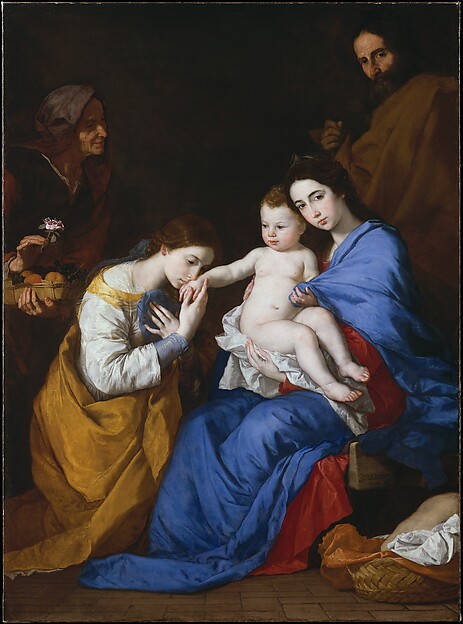
The Holy Family with Saints Anne and Catherine of Alexandria, Jusepe de Ribera, 1648

The Holy Family with Saints Anne and Catherine of Alexandria

1648 · Metropolitan Museum of Art

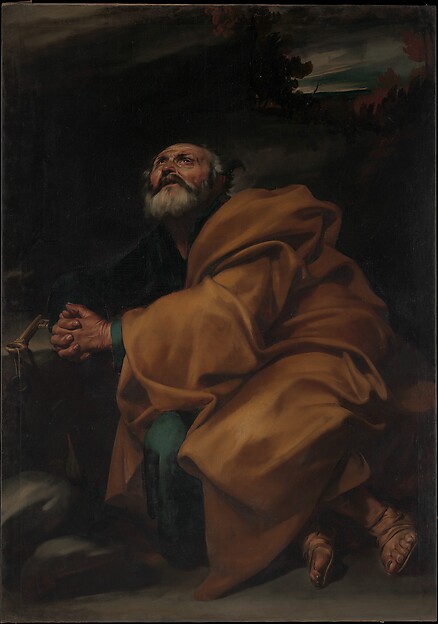
The Tears of Saint Peter, Jusepe de Ribera, ca. 1612–13

The Tears of Saint Peter

ca. 1612–13 · Metropolitan Museum of Art

St Jerome and the Angel, Jusepe de Ribera, 1626

St Jerome and the Angel

1626 · Eremitage

St Sebastian Cured by St Irene, Jusepe de Ribera, 1628

St Sebastian Cured by St Irene

1628 · Eremitage

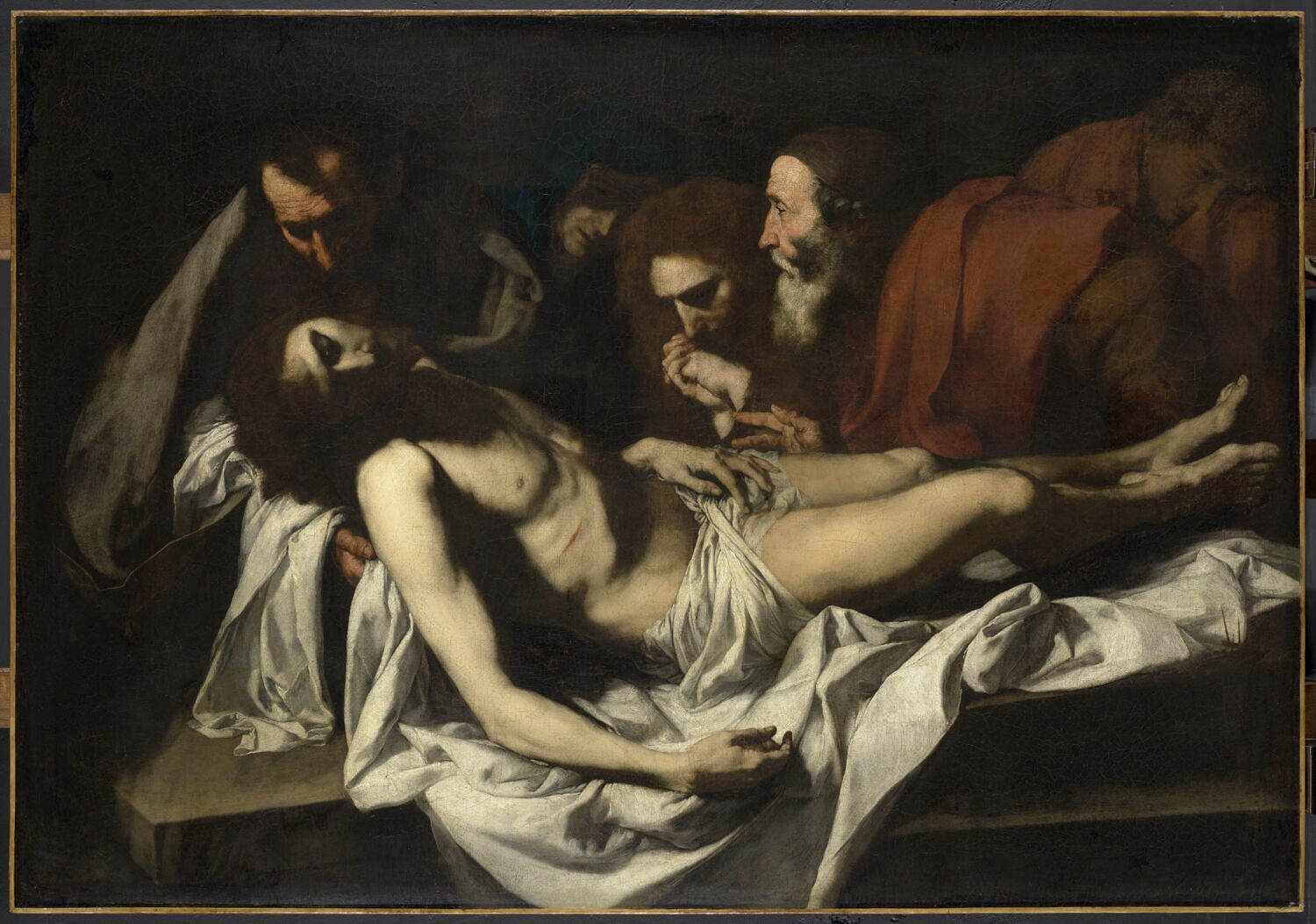
La Mise au tombeau, Ribera, Jusepe de, 2e quart du XVIIe siècle (vers 1628 - 1630)

La Mise au tombeau

2e quart du XVIIe siècle (vers 1628 - 1630) · Louvre

Ecce Homo, Jusepe de Ribera, 1630s

Ecce Homo

1630s · Eremitage

Euclid, Jusepe de Ribera, about 1630–1635

Euclid

about 1630–1635 · J. Paul Getty Museum

The Martyrdom of Saint Bartholomew, Jusepe de Ribera, 1634

The Martyrdom of Saint Bartholomew

1634 · National Gallery of Art

Nachbarn im Haus: Rijksmuseum Amsterdam

Museumsseite
Self-portrait, Vincent van Gogh, 1887

Vincent van Gogh

Self-portrait, 1887

La Corniche near Monaco, Claude Monet, 1884

Claude Monet

La Corniche bij Monaco, 1884

De Nachtwacht, Rembrandt van Rijn, 1642

Rembrandt van Rijn

Die Nachtwache, 1642

Portrait of a Woman, Probably Maria Trip (1619-1683), Rembrandt van Rijn, 1639

Rembrandt van Rijn

Porträt von Maria Trip, 1639

Still Life with Peacocks, Rembrandt van Rijn, c. 1639

Rembrandt van Rijn

Still Life with Peacocks, c. 1639

Landscape with a Stone Bridge, Rembrandt van Rijn, c. 1638

Rembrandt van Rijn

landschap met stenenbrug, c. 1638

Man in Oriental Dress, Rembrandt van Rijn, 1635

Rembrandt van Rijn

Man in Oriental Dress, 1635

Portrait of Haesje Jacobsdr van Cleyburg, Rembrandt van Rijn, 1634

Rembrandt van Rijn

Portrait of Haesje Jacobsdr van Cleyburg, 1634