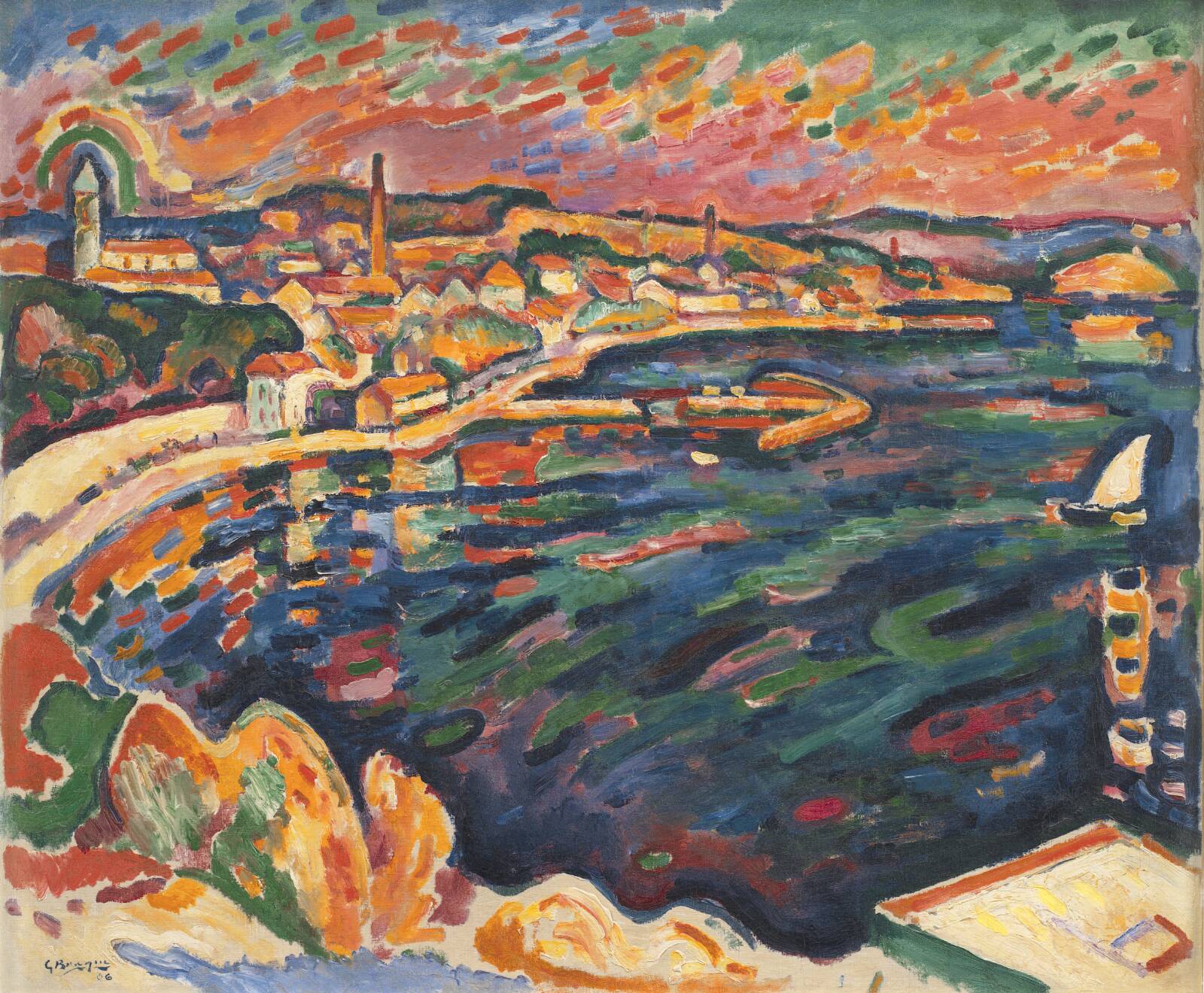
 Georges BraqueFrankreich, 1882–1963
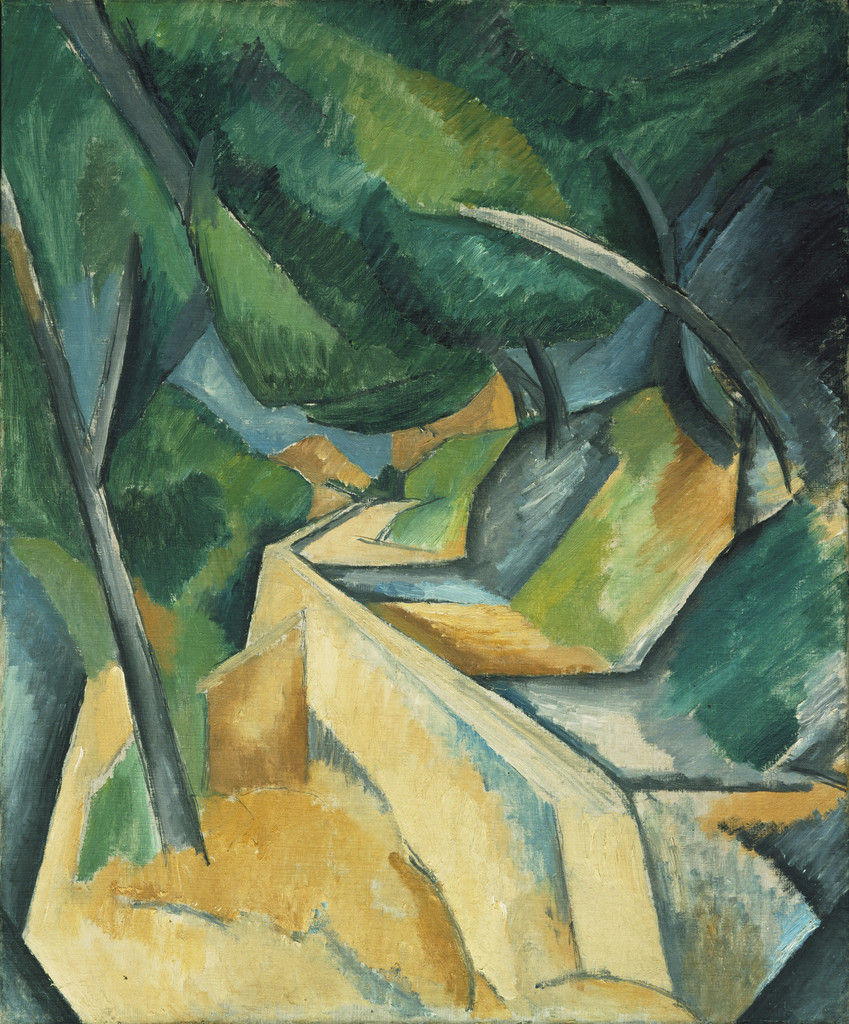
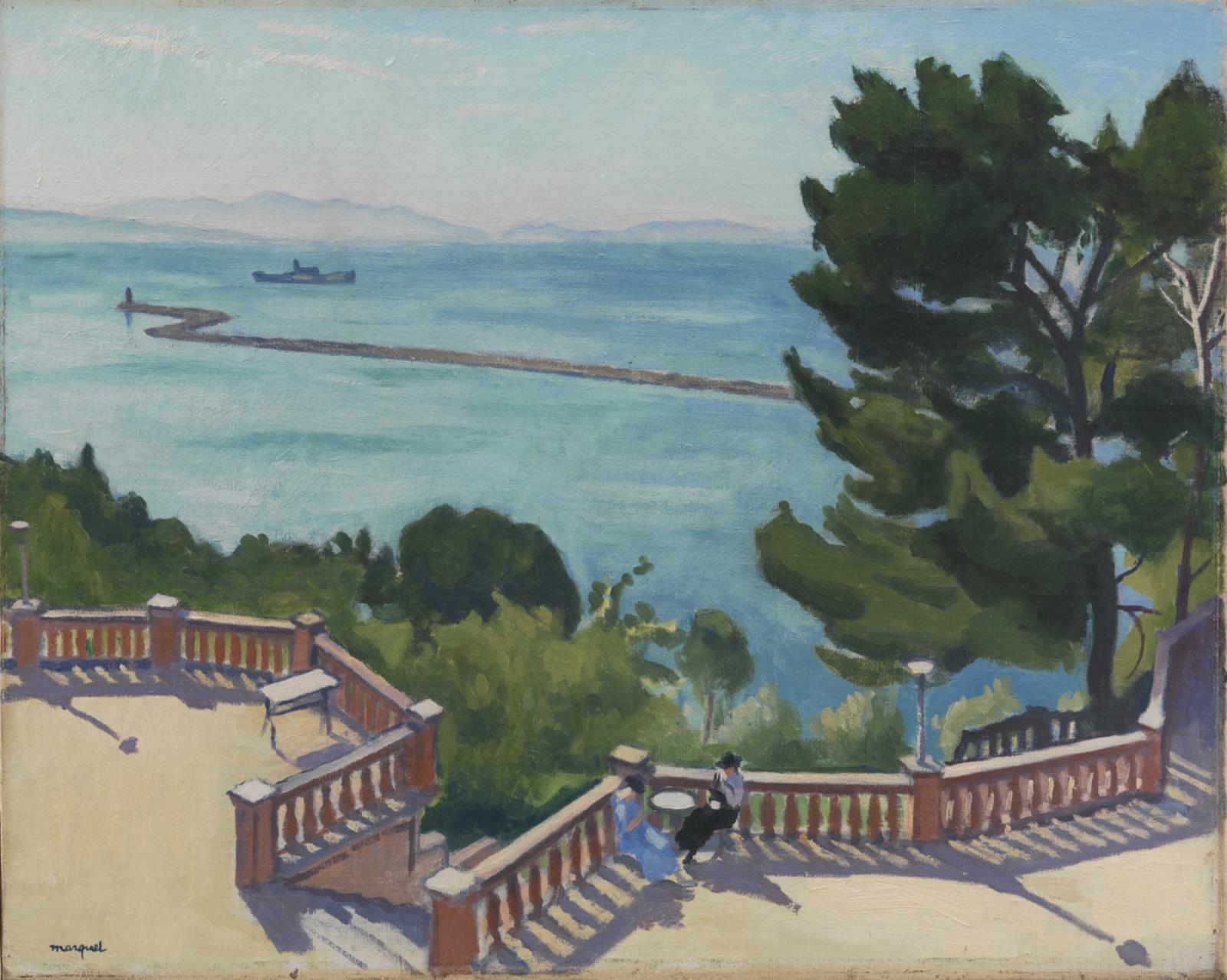
Havnen ved l'Estaque
Darf man es sehen?
Ja, es empfängt Besucher

Kopenhagen, Dänemark
Öffentlich ausgestellt.
- Geprüft
- Unverändert seit
- Quelle
- Das Museum
Angaben
- Inventarnummer
- KMS7384
Im Katalog
Kommen und Gehen
Ausgestellt · Saal 215
Statens Museum for Kunst · 28. Sept. 2026 — jetzt · Geprüft
War ausgestellt
Statens Museum for Kunst · 19. Aug. 2026 — 28. Sept. 2026 · Geprüft
Quellen
- Statens Museum for Kunst
- Bild: Statens Museum for Kunst — © the artist or rights holder
Derweil im Leben von Georges Braque
Das ganze Leben1903–1904
Académie Humbert: meets Marie Laurencin and Francis Picabia
The year after receiving his decorator's certificate, Braque enrolled at the Académie Humbert in Paris and painted there until 1904; there he met Marie Laurencin and Francis Picabia.
1905
Conversion to Fauvism
Braque's earliest works were Impressionist, but after seeing the Fauves — Matisse, Derain and others — exhibited in 1905, he adopted their brilliant colour. He worked most closely with his fellow natives of Le Havre, Raoul Dufy and Othon Friesz, developing a somewhat more subdued Fauvism.
1906
With Othon Friesz to L'Estaque and Antwerp
In 1906 Braque travelled with Friesz to paint in L'Estaque, in Antwerp and back home in Le Havre. The same year produced Seascape, L'Estaque, now in the Thyssen-Bornemisza Museum in Madrid.
1907
Success at the Salon des Indépendants
In May 1907 Braque successfully exhibited Fauvist works at the Salon des Indépendants.
October – November 1907
Meets Pablo Picasso
In the autumn of 1907 Braque visited Picasso's studio, and after the meeting sharply changed his manner, striving for economy of means and geometric forms (another view holds that the encounter rather accelerated and intensified his pursuit of Cézanne's ideas).
14 November 1908
Exhibition at Kahnweiler's and Vauxcelles's “cubes”
Reviewing Braque's exhibition at Kahnweiler's gallery, the critic Louis Vauxcelles called him a daring man who despises form, “reducing everything, places and figures and houses, to geometric schemas, to cubes”.