 David RobertsSchottland, 1796–1864
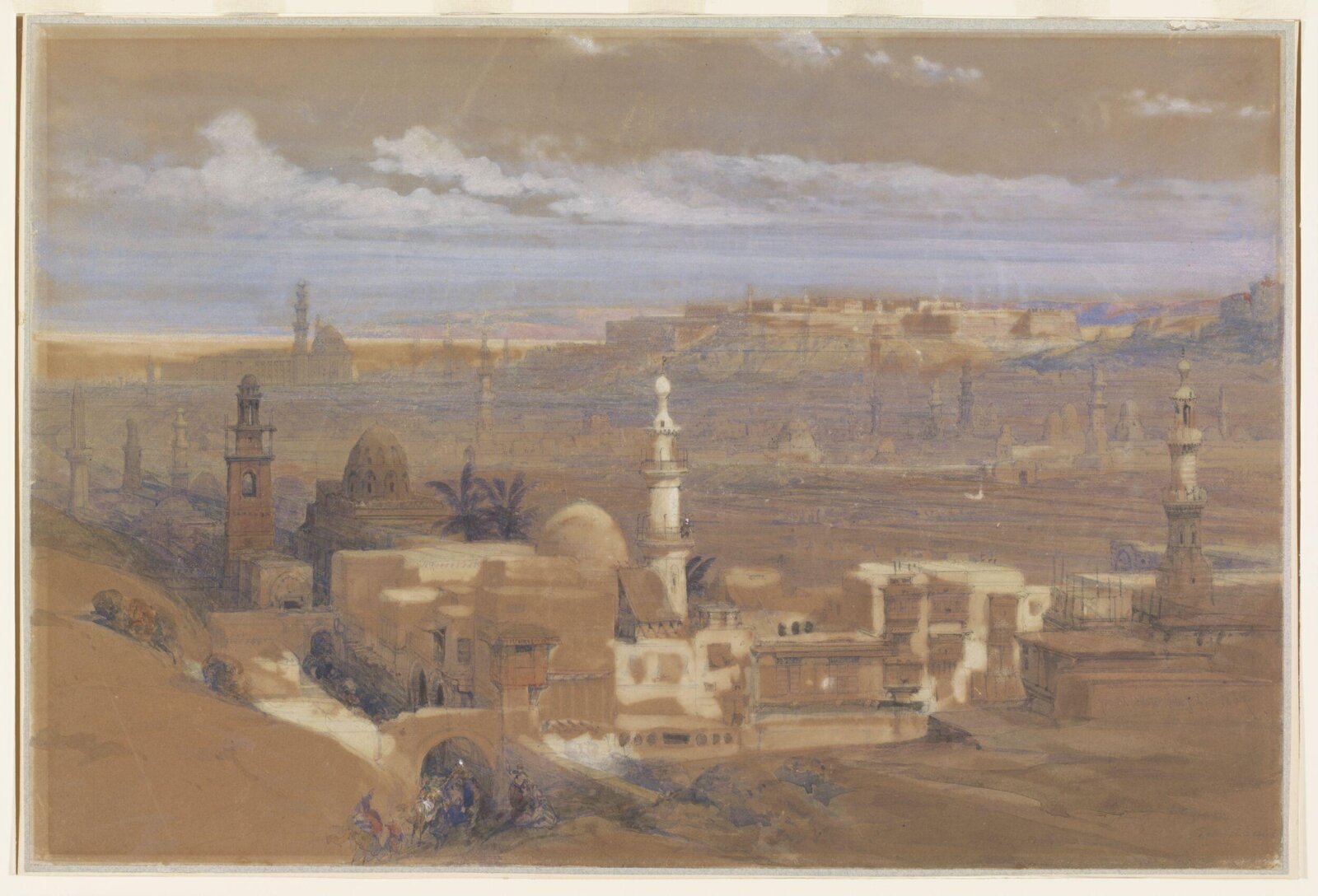
Grand Cairo
Darf man es sehen?
Empfängt derzeit nicht

Victoria and Albert Museum
London, Vereinigtes Königreich
Es gehört zur Sammlung, ist derzeit aber nicht ausgestellt.
- Geprüft
- vor 9 Tagen
- Unverändert seit
- 25. Sept. 2026
- Quelle
- Sammlungsdaten des Museums selbst
Über das Werk
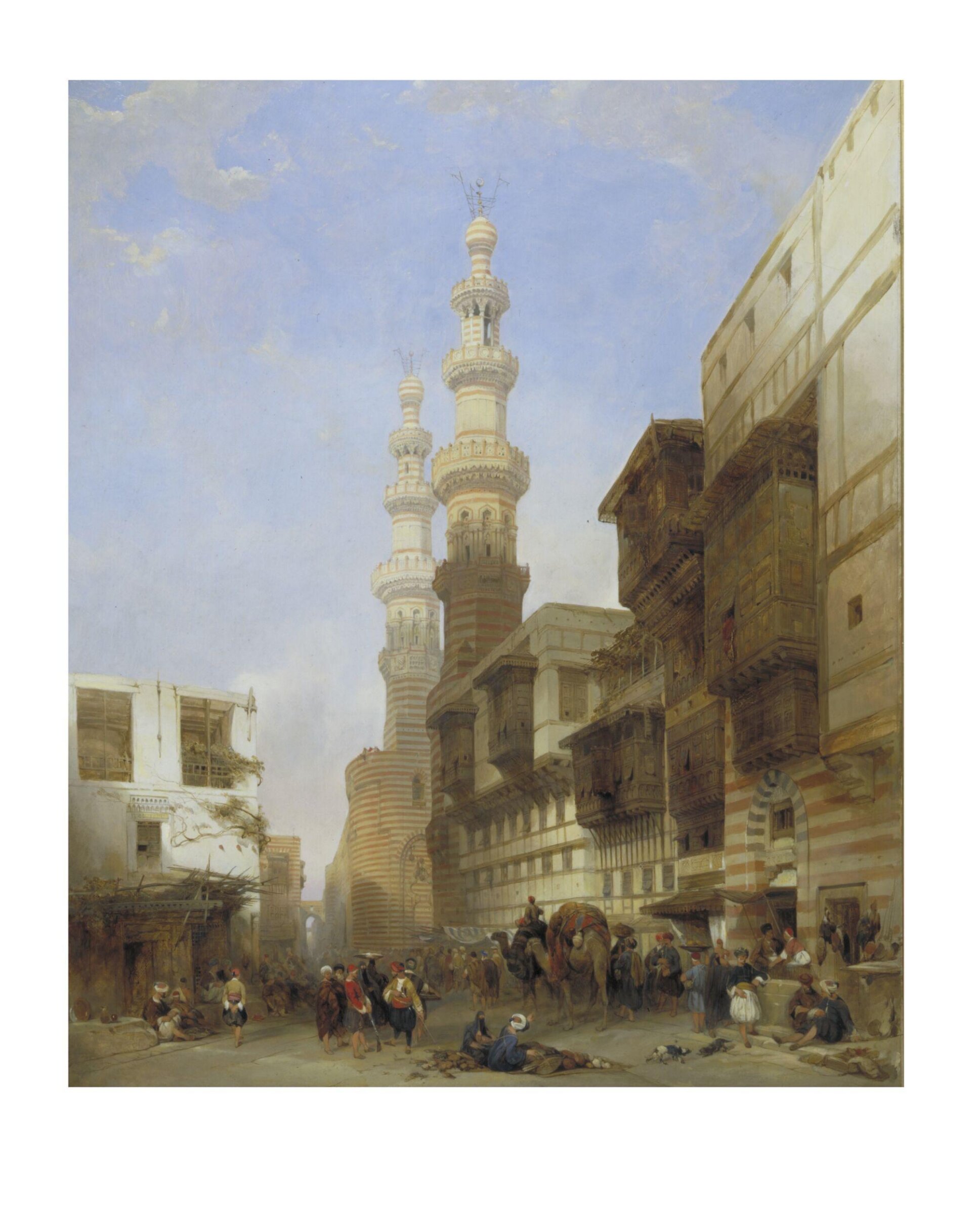
This view was reproduced as a lithograph by Louis Haghe in Roberts's Egypt & Nubia (1846-49; VoI. III) with the incorrect title, Cairo from the Gate of Citizenib, looking towards the Desert of Suez. The viewpoint is not in fact from Citizenib (modern Sayidah Zaynab) as Roberts thought, but from Tel Zaynum to the south of Cairo. The main monuments in the foreground are, from left to right, the tombs of Fatimah Khatun and of Sultan Khalil (still extant), an unidentified and now destroyed mosque or tomb, and, on the far right, the mosque of Sayidah Nafisah (since rebuilt). In the right background is the Citadel and on the left the Madrasah of Sultan Hassan. The high viewpoint, looking down on the varied contours of the domes and minarets of the city, and the delicate pink glow with which they are suffused, make this one of Roberts's most striking Eastern watercolours.
Read on
Roberts's images of the Near East are widely known now, as in his own time, through the series of lithographs published between 1842 and 1849 as The Holy Land, Syria, Idumea, Arabia, Egypt & Nubia. Each of the 247 lithographs was after a watercolour by Roberts that was worked up from sketches made during his tour of the Near East in 1838-39. He was among the earliest of many professional and independent European artists to visit the area in search of new and exotic pictorial material and when he left he knew that he carried 'one of the richest folios that ever left the East'. This claim was justified by the huge success not only of his publication but also of the numerous oils with oriental subjects that he painted as a result of his trip.
Victoria and Albert Museum
Angaben
- Inventarnummer
- SD.873
What it shows
Im Katalog
Quellen
- Victoria and Albert Museum: the museum's own open data · abgerufen vor 9 Tagen
- Bild: Victoria and Albert Museum — © Victoria and Albert Museum, London