Francois BoucherFrankreich, 1703–1770
Grafmonument van Watteau
Kann ich es sehen?
Unbekannt
Wo ist „Grafmonument van Watteau“ heute? Sammlung: Rijksmuseum Amsterdam, Amsterdam. Unbekannt.

Amsterdam, Niederlande
Der Besitzer ist bekannt; ob das Werk derzeit ausgestellt ist, nicht.
- Quelle
- Das Museum
Über das Werk
In den Worten des Museums — auf Niederländisch
Titelblad van een serie prenten naar Watteau. Het grafmonument van de schilder met een portret in een ovaal. Naast het portret vier gratieën, bovenaan een trompetterende engel. Op de tombe een vierregelige tekst in het Frans. Op de voorgrond liggen schildersmaterialen en een buste.
Rijksmuseum Amsterdam
Angaben
- Inventarnummer
- RP-P-1959-95
Was es zeigt
Im Katalog
Quellen
- Rijksmuseum Amsterdam
- Bild: Rijksmuseum Amsterdam — public domain
Im Leben von Francois Boucher
Das ganze Lebenc. 1720
Apprenticed to Galloche and Lemoyne
His father, having discovered his son's talent, placed him around 1720 as a pupil with Louis Galloche and François Lemoyne; Boucher spent only a few months with Lemoyne.
1720–1770 · Wirkungsort
Paris
1725–1731
Travel: Italy
1726–1728
Etchings for the Recueil Jullienne after Watteau
For the first two volumes of the Recueil Jullienne, which reproduced the works of Watteau, Boucher executed about a hundred etchings, including the frontispiece with Watteau's self-portrait; this work became a source of inspiration for him.
1727
Departure for Italy
Because of court intrigues he was able to travel to Italy only in 1727, thanks to the generosity of a third party; in Rome he was especially impressed by the decorative works of Pietro da Cortona and Giovanni Lanfranco.
1730–1740s
Major Official Commissions for Versailles
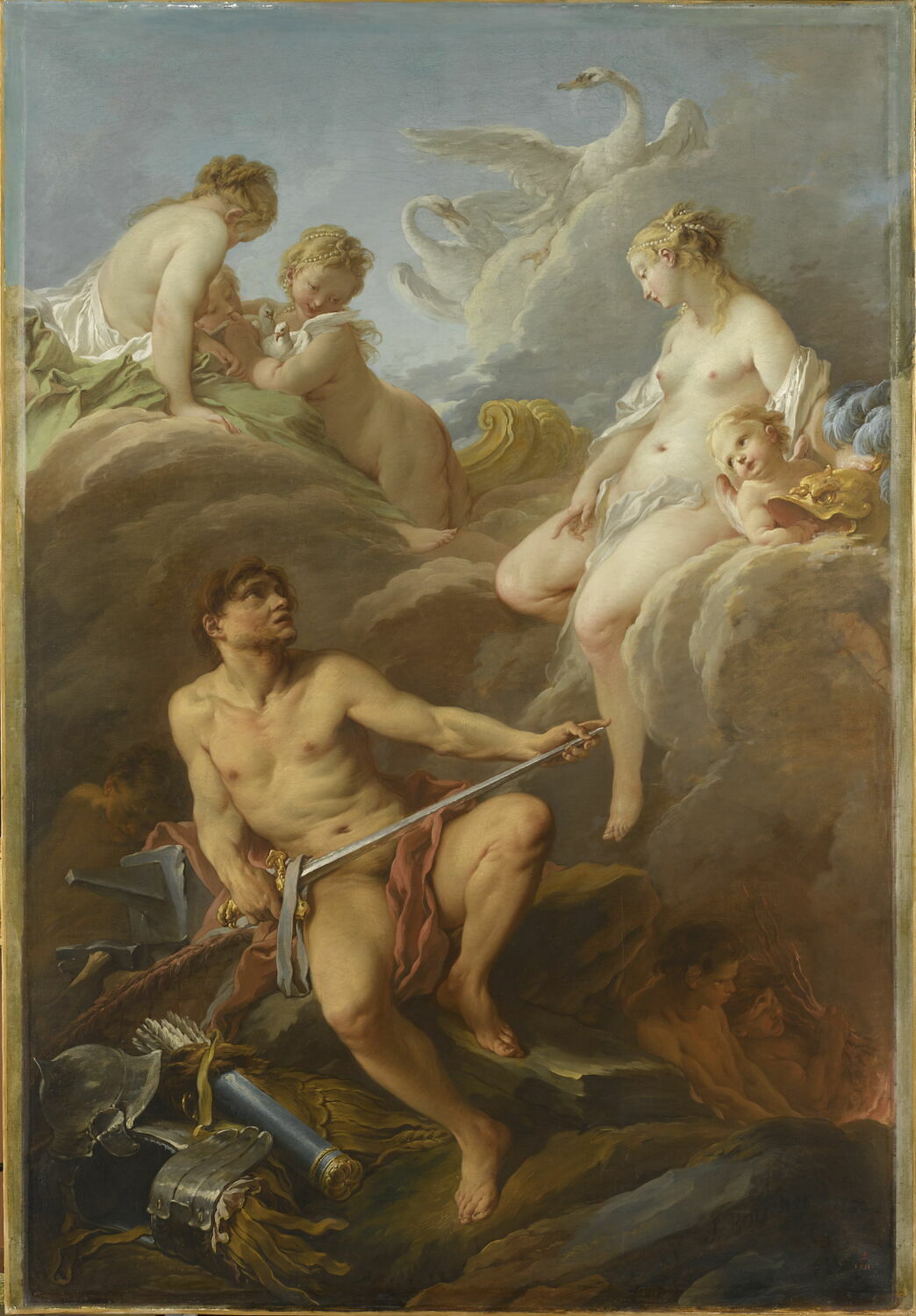
He received major commissions for the decoration of the apartments of Versailles: The Royal Virtues (1735) in the Queen's chamber, hunting scenes for the Petits Appartements (1736), Venus and Vulcan (1747) in the Dauphin's apartments, and History for the Royal Library (1743–1746).