Jackson PollockVereinigte Staaten, 1912–1956
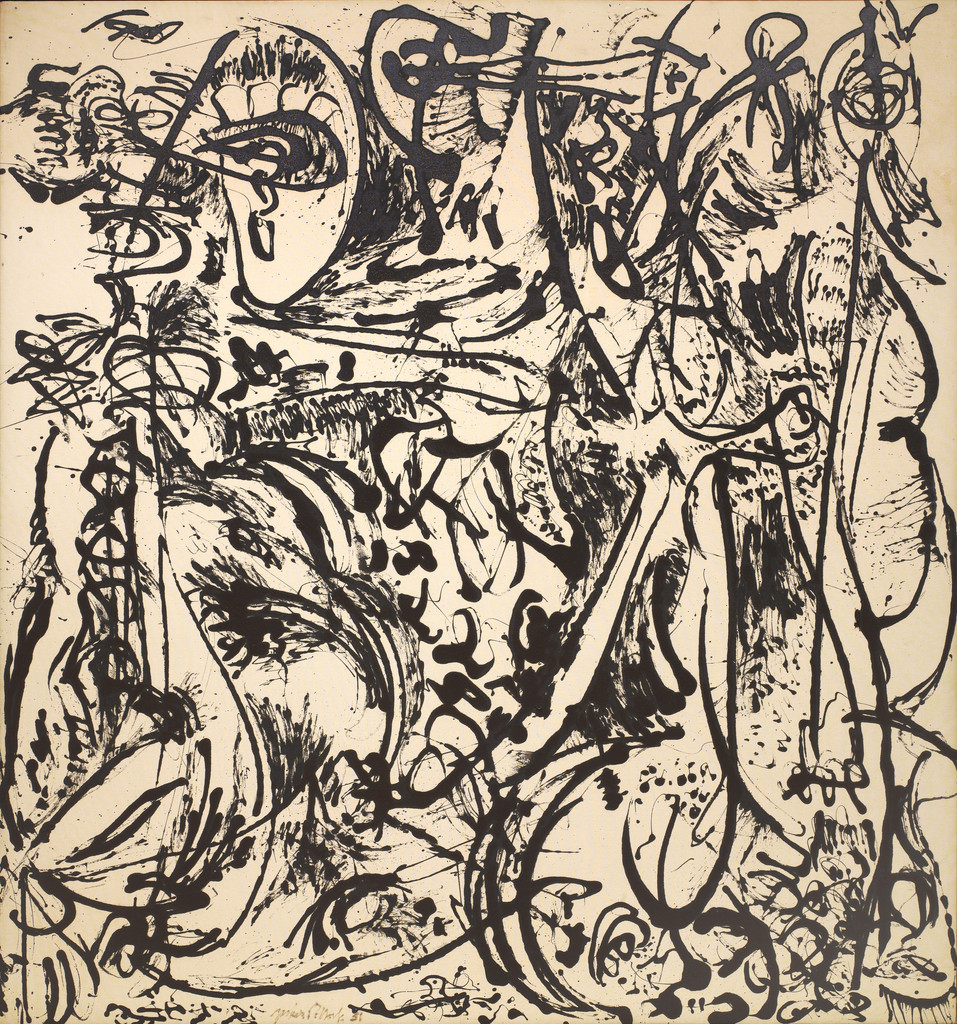
Gothic
Kann ich es sehen?
Derzeit nicht ausgestellt
Wo ist „Gothic“ heute? Sammlung: Museum of Modern Art, New York City. Derzeit nicht ausgestellt. Geprüft 10. November 2026.

New York City, Vereinigte Staaten
Es gehört zur Sammlung, ist derzeit aber nicht ausgestellt.
- Geprüft
- Quelle
- Das Museum
Über das Gemälde
Gothic, Jackson Pollocks Ölgemälde von 1944, gehört zur Sammlung des Museum of Modern Art in New York. Gesichter, Hände und vorspringende Gliedmaßen tauchen zwischen den schwarzen Linien auf. Pollock sagte, er habe die Komposition auf Picassos Les Demoiselles d'Avignon gegründet. Seine Leinwand ist über zwei Meter hoch, das dunkle Gerüst erinnert an die gruppierten Figuren und Bögen von Picassos Gemälde.
Angaben
- Inventarnummer
- 533.1984
Im Katalog
Quellen
- Museum of Modern Art
- Bild: Museum of Modern Art — © the artist or rights holder
Im Leben von Jackson Pollock
Das ganze Leben1938–1942
Jungian psychotherapy
From 1938 to 1941 Pollock underwent Jungian psychotherapy with Dr. Joseph L. Henderson, and from 1941 to 1942 with Dr. Violet Staub de Laszlo. Henderson engaged him through his art by encouraging him to draw, and Jungian concepts and archetypes found expression in his paintings.
1943
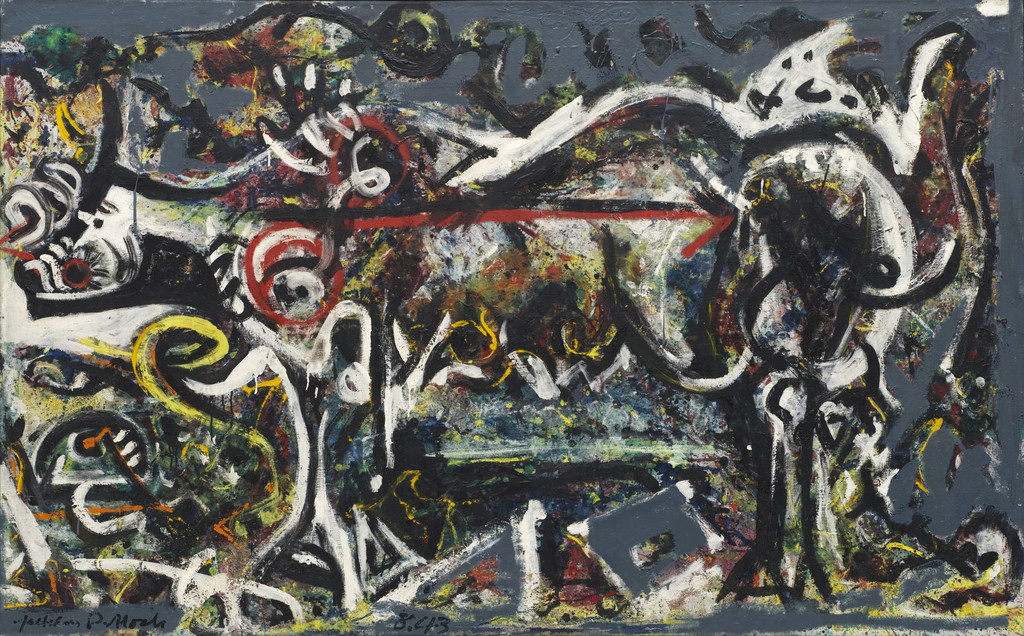
The Museum of Modern Art buys “She-Wolf”
In 1943 the Museum of Modern Art in New York bought his work “She-Wolf”; the first publications about Pollock appeared at the same time.
July 1943
Signs a contract with Peggy Guggenheim
In July 1943 Pollock signed a gallery contract with Peggy Guggenheim and received a commission for a huge mural for the entrance of her new townhouse.
1945
Married: Lee Krasner
October 1945
Marries Lee Krasner
In October 1945 Pollock and Krasner were married in a church with two witnesses present.
1945
Moves to Springs: a house and a barn studio
In November 1945 the couple left the city for Springs, in East Hampton on Long Island, and bought a wood-frame house and barn at 830 Springs Fireplace Road with a down-payment loan from Peggy Guggenheim. Pollock converted the barn into his studio.