 Mikhail Nesterov1862–1942
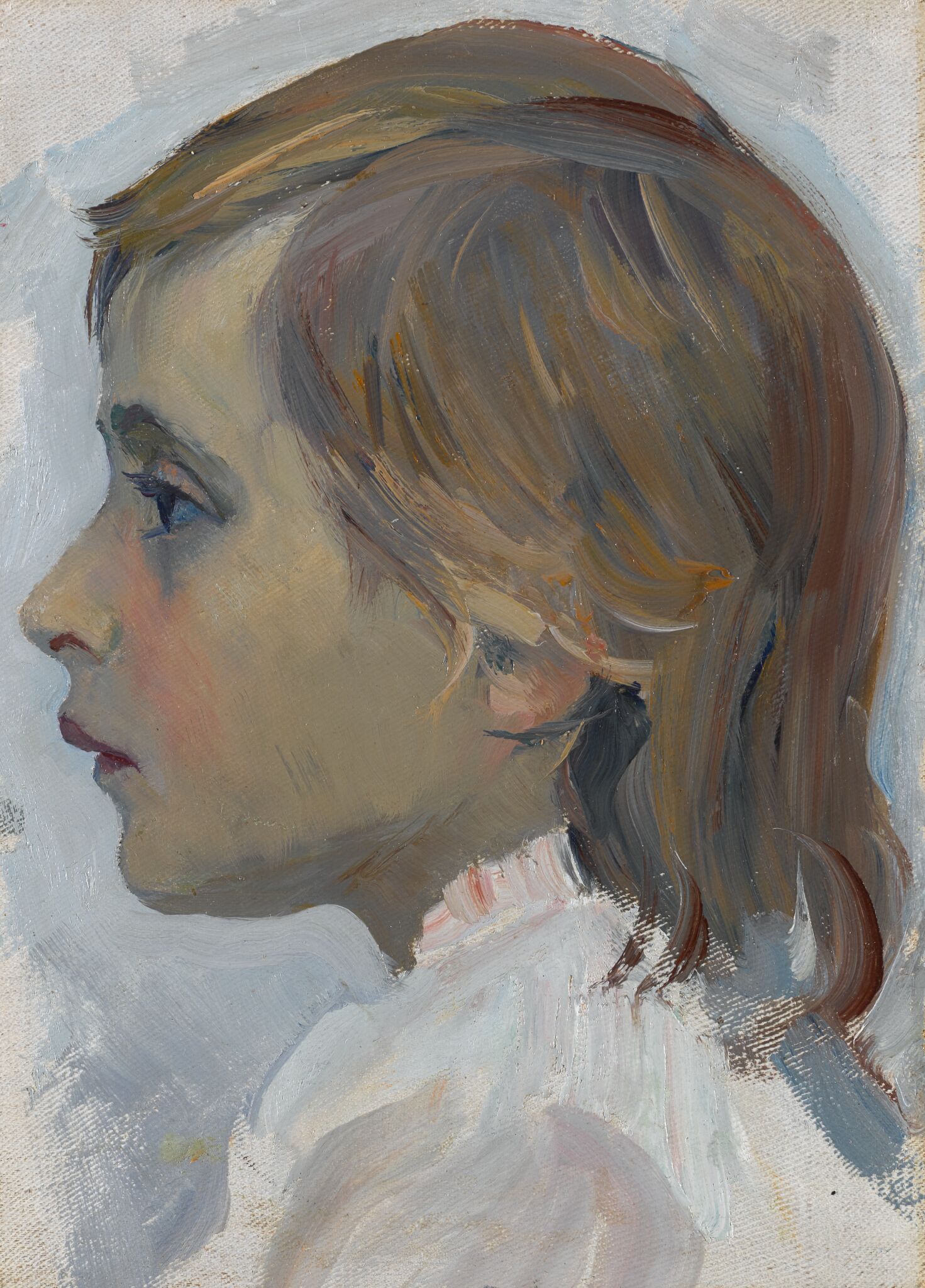
Голова девочки
Darf man es sehen?
Unbekannt: Das Museum schweigt sich aus

Tretjakow-Galerie
Moskau, Russland
Der Eigentümer ist bekannt. Ob es heute ausgestellt ist, sagt das Museum nicht, und Raten haben wir nicht gelernt.
- Unverändert seit
- 28. Sept. 2026
- Quelle
- Sammlungsdaten des Museums selbst
About the painting
In the museum's own words — the original
«Голова девочки» – портретный этюд, исполненный Михаилом Нестеровым для картины «Видение отроку Варфоломею», первой из созданного художником цикла, который он посвятил житию преподобного Сергия Радонежского (до пострига – отрок Варфоломей). В книге своих воспоминаний «Давние дни» Нестеров подробно рассказал об истории появления картины.
Read on
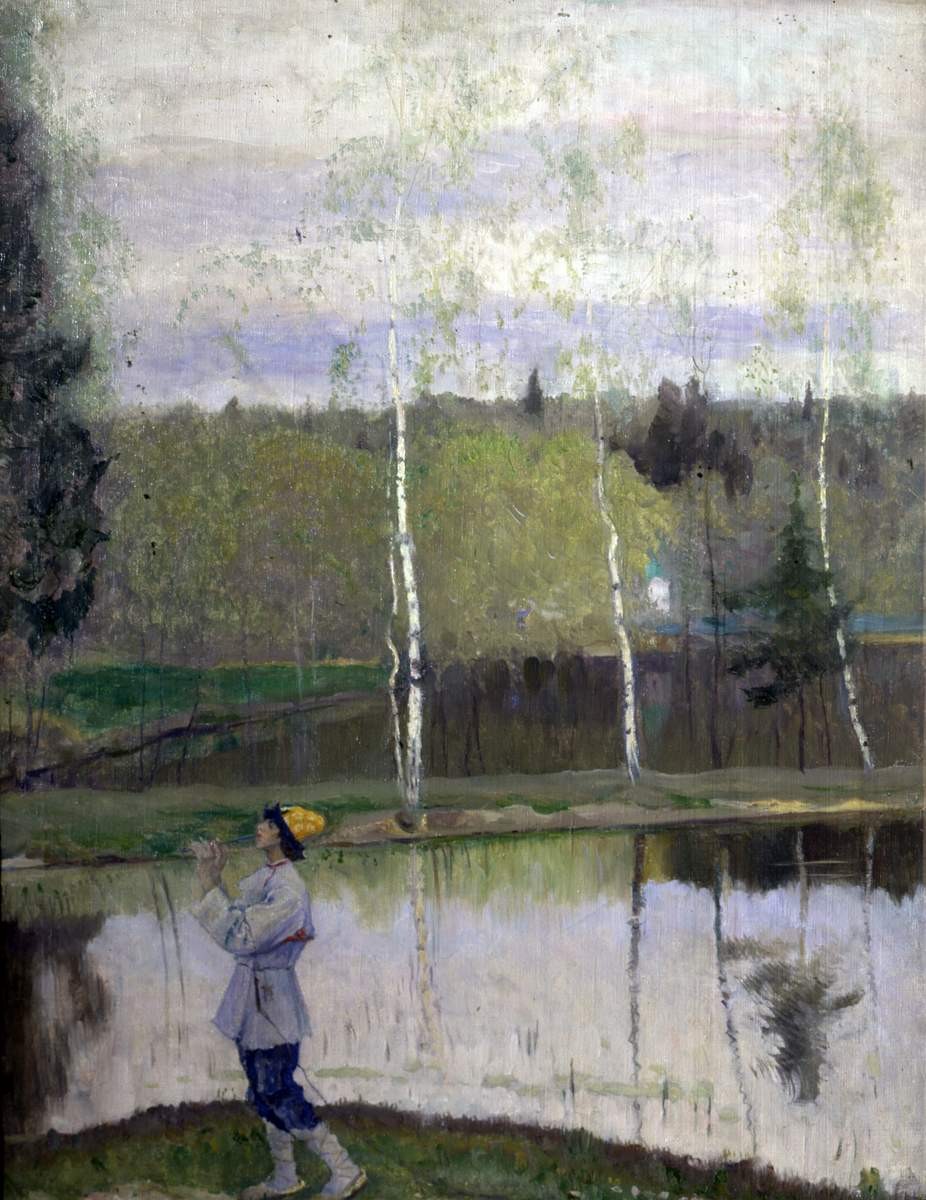
Работать над «Видением отроку Варфоломею» художник начал в конце лета 1889 года под Москвой, близ усадьбы Абрамцево, в тех местах, где родился и совершал свой подвижнический путь св. Сергий. Глядя на пейзаж, художник, по его словам, проникся чувством его подлинной «историчности». Ему оставалось найти модель для отрока, такую же убедительную, как пейзаж. Нестеров поселился в деревне Комякино и, присматриваясь к местной детворе, «написал фигуру мальчика, детали к картине, березки, осинки, первый план... Вся композиция картины жила перед глазами в набросках, а вот головы мальчика, что мерещился мне, не было». Однажды он увидел деревенскую девочку, хрупкую, коротко стриженую, с огромными удивленными глазами. Вспоминая эту встречу, Нестеров писал: «Я замер, как перед видением. Ее бледное, осунувшееся, с голубыми глазками личико было моментами прекрасно, и я это личико отожествлял со своим Варфоломеем». Нестеров быстро сделал этюд, затем эскиз всей композиции в масле и вскоре, натянув большой холст, начал писать картину.
Tretjakow-Galerie
Angaben
- Inventarnummer
- Ж-135
Quellen
- Tretjakow-Galerie: the museum's own open data · abgerufen vor 5 Tagen
- Bild: Tretjakow-Galerie — © State Tretyakov Gallery
Derweil im Leben von Mikhail Nesterov
Das ganze Leben1889
“The Hermit” at the 17th Peredvizhniki show
Shown at the 17th Peredvizhniki exhibition, “The Hermit” caused a stir and placed the young Nesterov among the most outstanding painters of the day; the word “mood” recurred in almost every review. Pavel Tretyakov bought the painting.
May 1889
First journey abroad
With the money from selling “The Hermit” to Tretyakov, Nesterov set off on his first trip abroad: Warsaw, Vienna, Venice, Florence, Rome, Naples with Pompeii and Capri, Paris, Munich, Berlin, Dresden. He brought back dozens of studies on lemon-wood panels, most of them from Capri; his travel diary (20 April – 24 July 1889) is kept in the Presidential Library.
May – July 1889
Carpaccio in Venice, Bastien-Lepage in Paris
In Venice Nesterov was struck above all by Vittore Carpaccio's “naive composition” and “childlike faith”, in Rome by Raphael's frescoes and the Sistine Chapel. In Paris he saw the painting of Puvis de Chavannes and Bastien-Lepage, whose “Joan of Arc”, art historians agree, decisively shaped the concept of “The Vision to the Youth Bartholomew”.
1890
Invited to paint St Volodymyr's Cathedral
Professor Adrian Prakhov, who was in charge of decorating St Volodymyr's Cathedral in Kiev, saw “The Youth Bartholomew” and invited its author. After some hesitation Nesterov agreed — and ended up devoting more than 22 years to church murals and icons.
1890
“The Vision to the Youth Bartholomew” causes a sensation
The painting, for which Nesterov made landscape studies near the Trinity-Sergius Lavra while living in the village of Komyakino near Khotkovo, provoked the most conflicting opinions, became the sensation of the 18th Peredvizhniki exhibition and was bought by Tretyakov. To the end of his days the artist considered it his finest work.
1890s
Studies Byzantine art
To master monumental painting, new to him, Nesterov travelled to Rome, Palermo, Constantinople and Ravenna, where he could study the traditions of Byzantine art (other accounts name Rome and Istanbul).