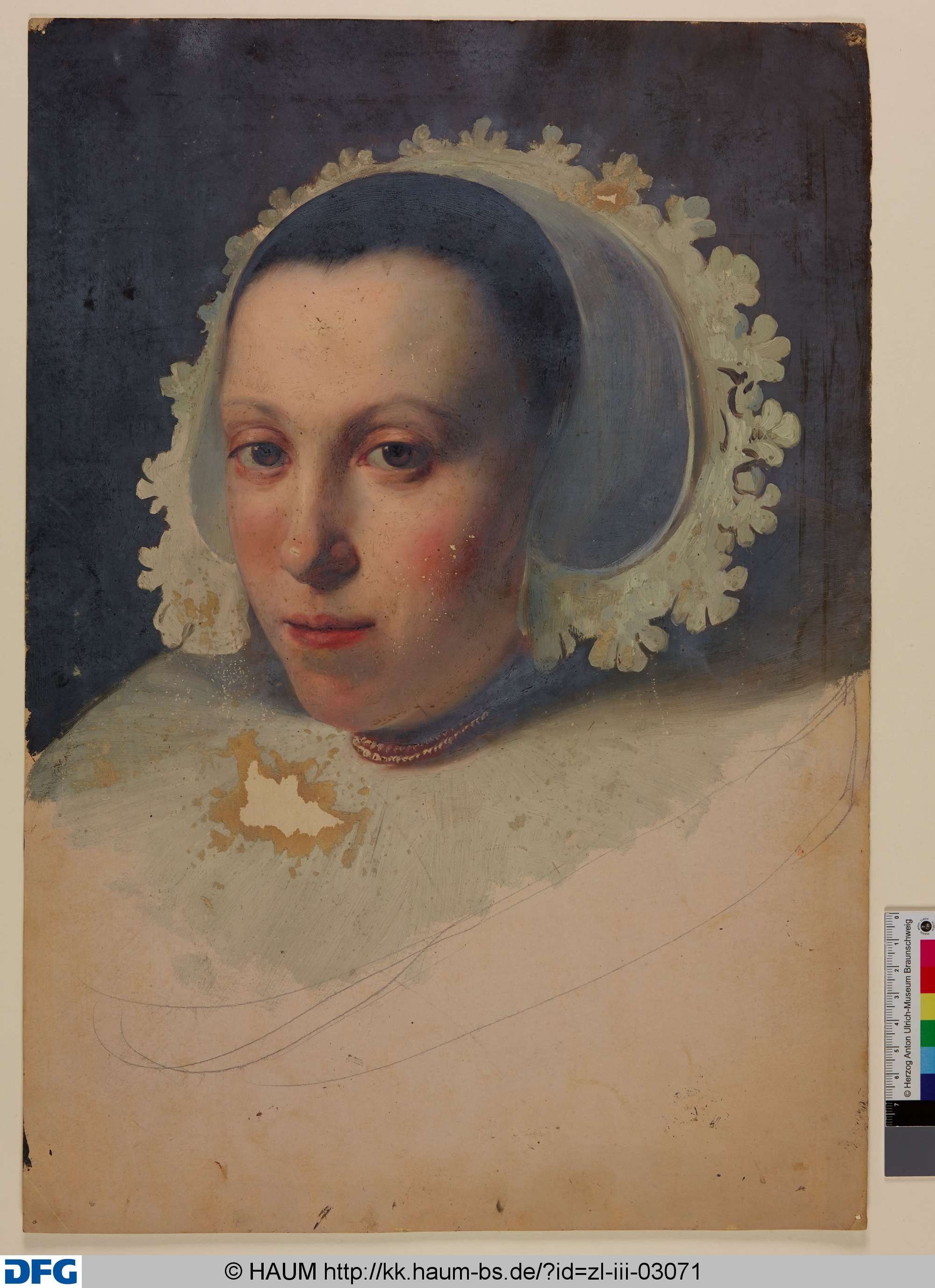
Jacques CallotFrankreich, 1592–1635
Gideons Heer trinkt
Darf man es sehen?
Unbekannt

Braunschweig, Deutschland
Der Besitzer ist bekannt; ob das Werk derzeit ausgestellt ist, nicht.
- Unverändert seit
- Quelle
- Das Museum
Angaben
Im Katalog
Quellen
- Herzog Anton Ulrich-Museum
- Bild: Herzog Anton Ulrich-Museum — CC BY-NC-SA 4.0
Derweil im Leben von Jacques Callot
Das ganze Leben1611
Studies etching with Tempesta in Florence
Having studied burin engraving in Rome with Philippe Thomassin, Callot moves to Florence, where he works with Antonio Tempesta, who teaches him the technique of line etching (by other accounts, he lived in Florence from 1612).
1614–1621
At the court of Cosimo II de’ Medici
Under Parigi’s direction Callot works at the court of the Grand Duke of Tuscany Cosimo II de’ Medici in the Uffizi, designing festivals and theatrical performances — later these give him themes for his series of grotesque prints; during his Florentine years he becomes an independent master and often works for the Medici.
1617
Switches to hard ground and repeated biting
From 1617 Callot uses, instead of the soft ground customary until then, the acid-resistant hard ground of Florentine joiners and furniture-makers; it allows the plate to be bitten repeatedly, with parts of the spatial planes successively covered by varnish, and gives broad tonal gradations; he is also credited with the échoppe, an etching needle with a slanted end that produces a swelling line.
1621
Returns to Nancy after the death of Cosimo II
After the death of Grand Duke Cosimo II de’ Medici, Callot responds to Duke Charles IV of Lorraine’s wish to see him at his court and returns to Lorraine, where he is received with flattering honours; staying in Nancy, he sends his prints all over Europe, and Rembrandt becomes a keen collector of them.
1627
In the Netherlands at Infanta Isabella’s invitation
At the invitation of the Infanta Isabella Callot visits the Netherlands; views of Holland, like those of Italy and France, and characteristic portraits of soldiers, circus performers and actors are reflected in his work.
25. März 1635
Died