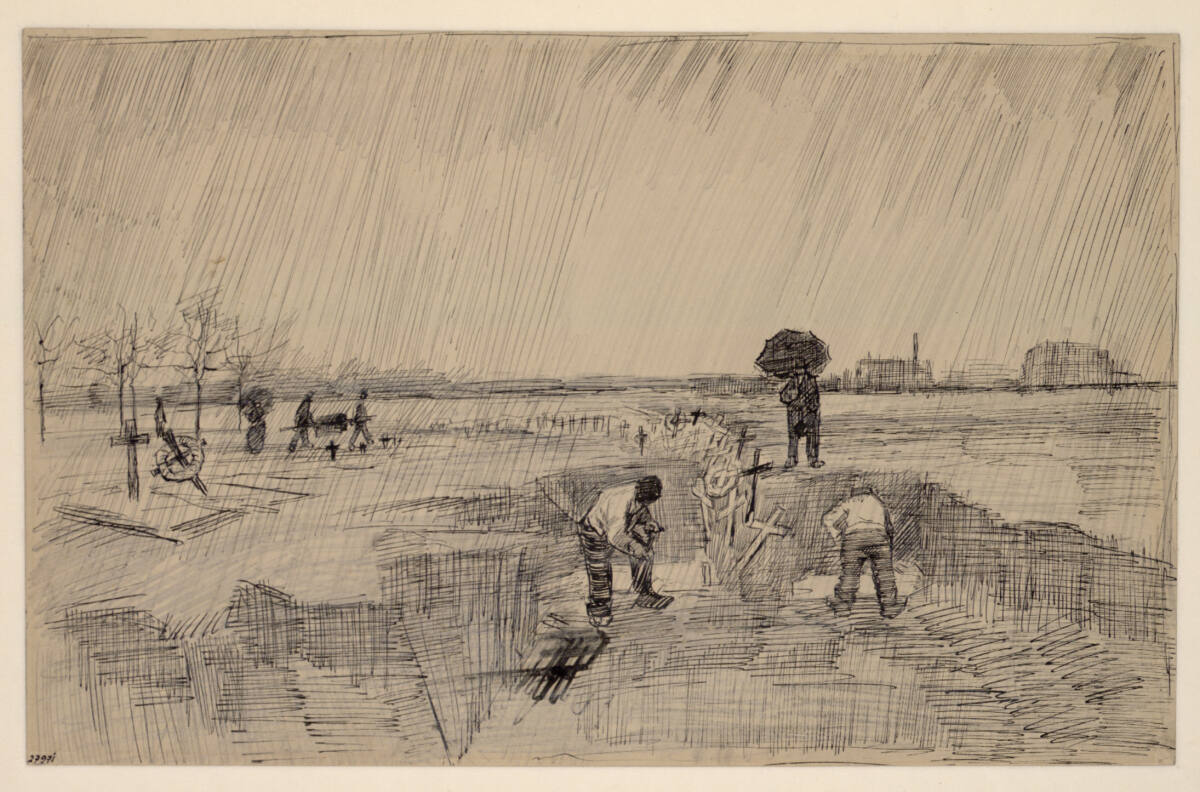
Max LiebermannDeutschland, 1847–1935
Gerhart Hauptmann
Darf man es sehen?
Unbekannt

Wien, Österreich
Der Besitzer ist bekannt; ob das Werk derzeit ausgestellt ist, nicht.
- Unverändert seit
- Quelle
- Das Museum
Angaben
Im Katalog
Quellen
- Albertina
- Bild: Albertina — Public Domain Mark 1.0
Derweil im Leben von Max Liebermann
Das ganze Leben1910
The Secession board rejects 27 Expressionist paintings
The generational conflict between Impressionists and Expressionists came to a head when the board under Liebermann rejected 27 Expressionist canvases: the former rebel who had fought academicism now appeared a conservative spokesman. That same year the Secession showed Picasso, Matisse, Braque and the Fauves for the first time.
16 November 1911
Steps down as president of the Secession
After criticism of his leadership that came even from his own ranks, Liebermann resigned; Max Beckmann, Max Slevogt and August Gaul left with him. The general assembly elected him honorary president and entrusted the leadership to Lovis Corinth — a decision that foreshadowed the end of the Secession and the decline of German Impressionism.
1913
Leaves the Secession after Cassirer's election
Liebermann tried to prevent the election of a non-artist, Paul Cassirer, as chairman; Cassirer barred from the 1913 exhibition the members who had voted against him, and when Corinth unexpectedly sided with them, Liebermann and the other founders left the Secession. In February 1914 the Free Secession was founded, continuing the tradition of the original Secession.
1917
Retrospective for his 70th birthday at the Prussian Academy
The Academy showed almost 200 paintings; the director of the National Gallery, Ludwig Justi, promised Liebermann a cabinet of his own, and Wilhelm II approved the exhibition and awarded him the Order of the Red Eagle, 3rd class. The honoree noted with satisfaction that the Kaiser had buried the hatchet against modern art.
1920
Elected president of the Academy of Arts
After the war and revolution Liebermann took over the Academy and tried to unite the various currents beneath its roof, Expressionism included: under him Max Pechstein, Karl Hofer, Heinrich Zille, Otto Dix and Karl Schmidt-Rottluff were admitted. He gave it a democratic structure and a free system of education.
1927
80th birthday: an exhibition and honours
Among those who congratulated Liebermann were Albert Einstein, Heinrich and Thomas Mann and Hugo von Hofmannsthal, and Berlin staged an exhibition of more than a hundred of his paintings; Interior Minister Walter von Keudell presented him with the Golden State Medal inscribed “For services to the state”.