Jan Davidsz. de Heem (1606-1684) was born in Utrecht but trained in Leyden before settling in the early 1630s in Antwerp. He returned to Utrecht quite often and had there a workshop with collaborators and pupils, the most famous being Abraham Mignon. Two of his sons also became painters: Cornelis de Heem and Jan Jansz. de Heem.
Weiterlesen
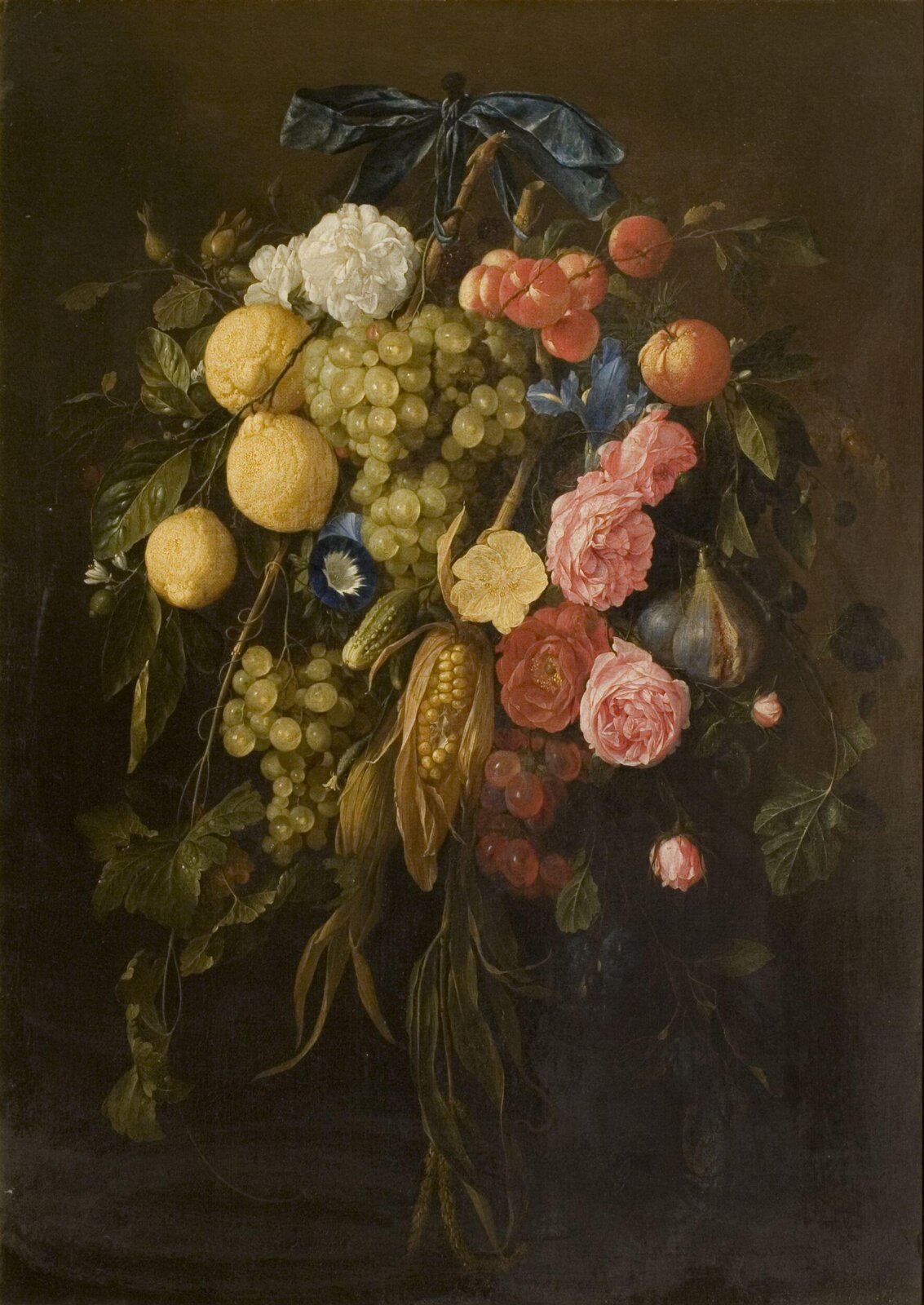
This painting shows a bunch of fruits and flowers tied to a nail by a blue ribbon and suspended against a neutral receding background that enables the festoon's colours to bright more intensely. The arrangement of fruits and flowers from different times of the year such as the orange usually grown during the winter and the figs from the end of the summer is typical of the artist's inventive trend that tend to combine every rare and precious items he could gather. The only incongruity is the lack of insects that usually creep across or fly around the composition. The freshness and the particularly realistic fruits and flowers contributed to Jan Davidsz. de Heem's popularity that made him one of the greatest 17th-century still-life painters.
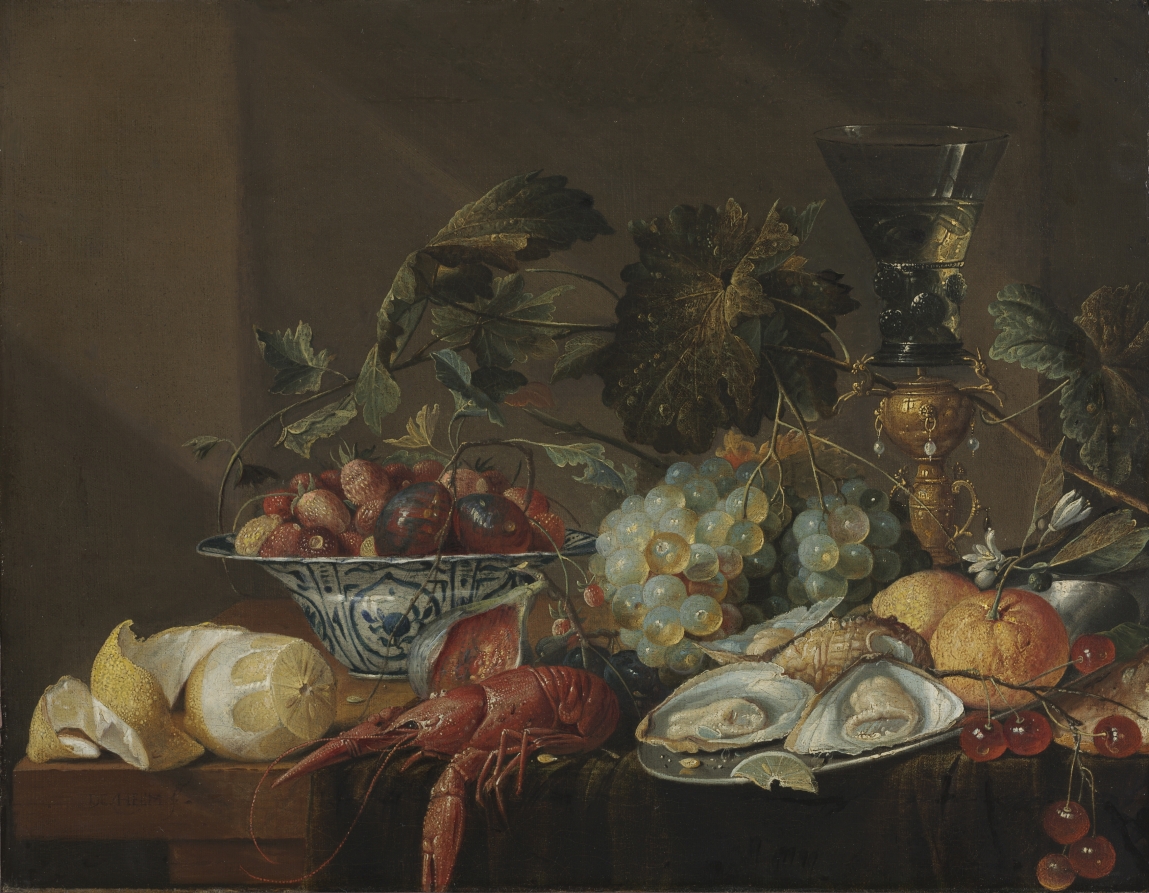
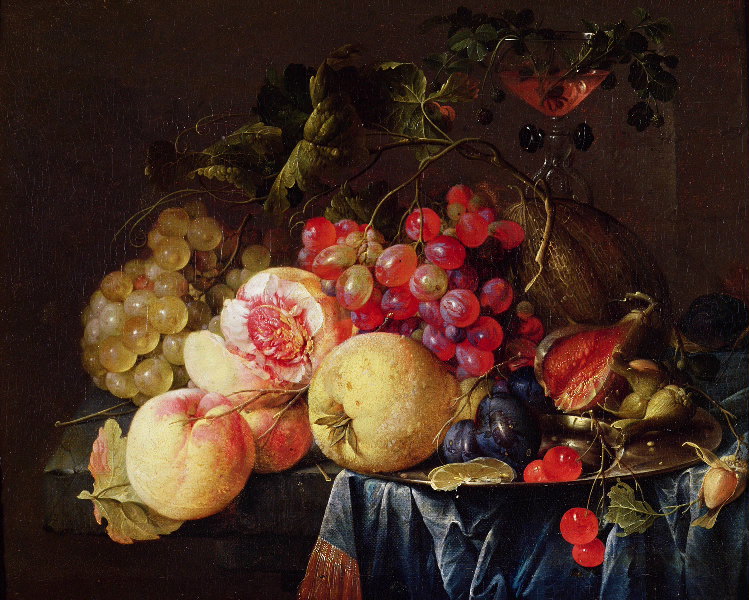
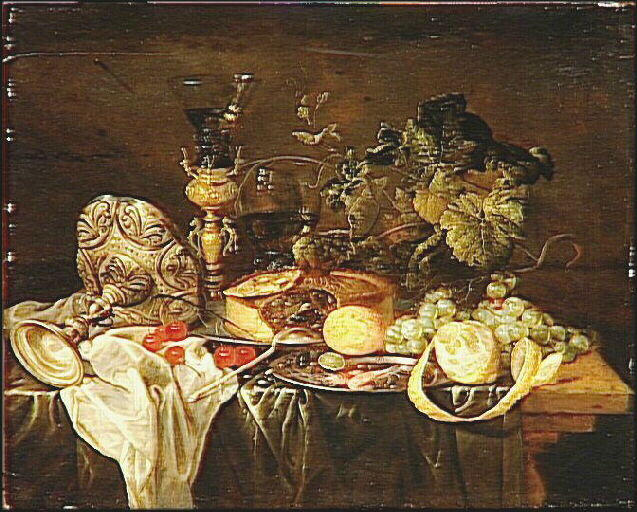
This painting is a good example of his ability to merge the colourful Flemish style with the relatively more sober and intimate traditional Dutch still-lifes, a genre painting that he began to execute in Leyden and developed chiefly in Antwerp from the 1640s onwards. This painting, signed and dated 1662, can be easily compared with similar compositions of the same period housed in the Museum Bredius and in the Musée des Beaux-Arts, Grenoble.