Max ErnstFrankreich, 1891–1976
Forest and Sun
Kann ich es sehen?
Ja, derzeit ausgestellt
Wo ist „Forest and Sun“ heute? Art Institute of Chicago, Saal 396, Chicago. Ja, derzeit ausgestellt. Geprüft 16. November 2026.

Chicago, Vereinigte Staaten
Jetzt geöffnet· bis 17:00
Öffentlich ausgestellt.
- Geprüft
- Unverändert seit
- Quelle
- Das Museum
Über das Gemälde
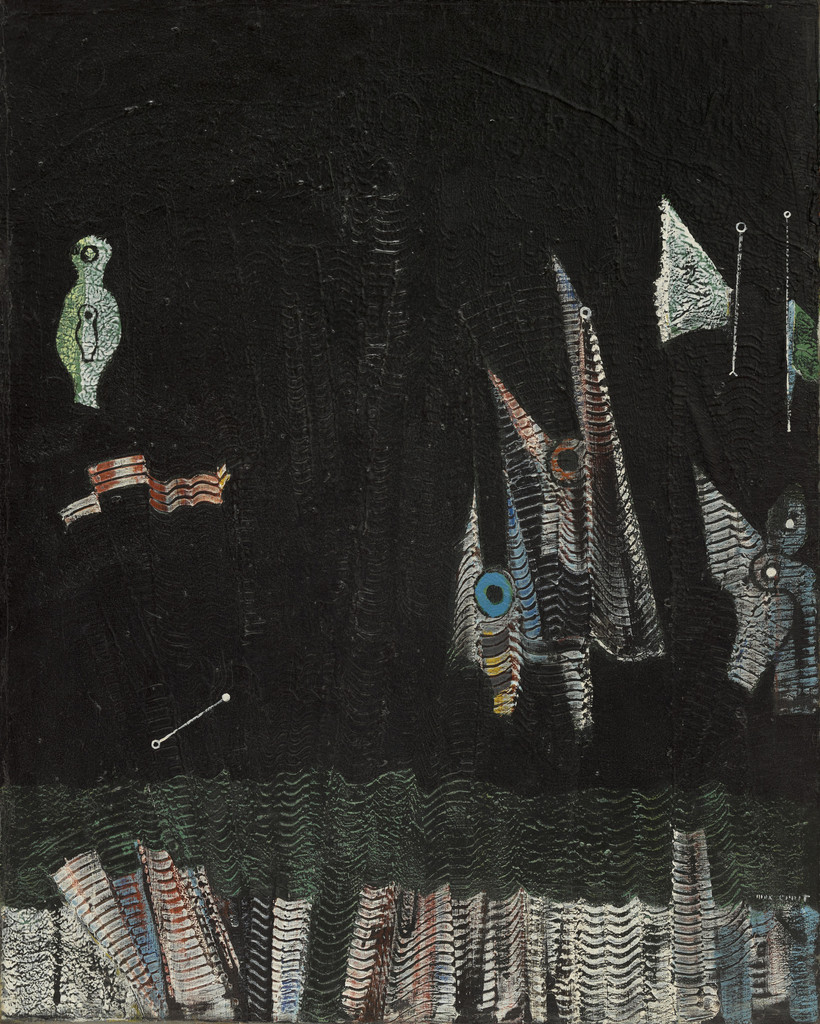
Max Ernst constructed a petrified woodland in Forest and Sun, painted in 1927 and now at the Art Institute of Chicago, Chicago. Rubbing a support over textured surfaces, his frottage method, supplied patterns for the trees. Scraping almost-dry paint, which he called grattage, produced the ringed sun. The forest recalls Ernst's childhood mixture of fascination and fear before the woods around his home. He made six versions of this theme. Here the arrangement of trunks suggests the capital M in his name. On view in gallery 396.
In den Worten des Museums
Among his many recollections of childhood, Max Ernst often recounted his fear and fascination with the forest that surrounded his home. He wrote of feeling “delight and oppression and what the Romantics called ‘emotion in the face of Nature.’” By expressing his thoughts in these terms, Ernst linked himself with the spiritual landscape tradition of Romanticism, which conceived of an invisible realm at work in the natural world.
Mehr lesen
This dark and mysterious forest scene dates to one of the most creative periods of Ernst’s career. Spurred by the Surrealist leader André Breton’s proclamation of “pure psychic automatism” as an artistic ideal, he developed the innovative technique of frottage, his term for the method of reproducing a relief design (like the surface of a piece of wood) by laying paper or canvas over it and rubbing it with a pencil, charcoal, or another medium. In Forest and Sun Ernst used this technique to create a petrified forest, which he imbued with a sense of primordial otherworldliness. By scraping away almost-dry paint on the canvas (a process he called grattage), the artist produced the encircled sun at the center of the composition. Ernst painted six variations of the forest and sun theme. As in the other five canvases, the tree trunks suggest a letter in the artist’s name: in this case, a capital M.
Art Institute of ChicagoCC BY 4.0
Angaben
- Inventarnummer
- 2007.276
Was es zeigt
Im Katalog
Ausstellungen
Ausgestellt · Saal 396
Art Institute of Chicago · 28. Sept. 2026 — jetzt · Geprüft
War ausgestellt · Saal 395
Art Institute of Chicago · 19. Aug. 2026 — 28. Sept. 2026 · Geprüft
Quellen
- Art Institute of Chicago
- Bild: Art Institute of Chicago — © the artist or rights holder
Im Leben von Max Ernst
Das ganze Leben1925
Vertrag mit Jacques Viot und ein Atelier in Montmartre
Zurück in Paris schloss Ernst einen Vertrag mit Jacques Viot, der ihm erlaubte, hauptberuflich zu malen, und 1925 bezog er ein Atelier in der 22 rue Tourlaque in Montmartre. Der Vertrag endete im Juni mit Viots rätselhaftem Verschwinden.
1926
„Histoire naturelle“: eine Mappe mit Frottagen
In der Druckerei von Jeanne Bucher veröffentlichte Ernst Histoire naturelle, eine Mappe mit Zeichnungen in Frottagetechnik, mit einer Einleitung von Hans Arp.
1926
Die erste große Ausstellung in der Galerie van Leer
1926 veranstaltete die Pariser Galerie van Leer Ernsts erste große Ausstellung; anstelle eines Vorworts druckte der Katalog Gedichte von Paul Éluard, Benjamin Péret und Robert Desnos.
1926
Diaghilews Ballett und Bretons Skandal
1926 gestalteten Ernst und Joan Miró Romeo und Julia für Sergei Diaghilews Truppe; Breton, empört über die Arbeit mit den Ballets Russes, machte bei der Premiere einen Skandal und warf Ernst und Miró zusammen mit Aragon in La Révolution surréaliste vor, die Idee des Surrealismus herabzusetzen. Die nächste Ausgabe brachte jedoch zwei Werke Ernsts mit einer Apologie von Éluard.
1927
Heirat mit Marie-Berthe Aurenche
1929
Der Collageroman „La Femme 100 têtes“
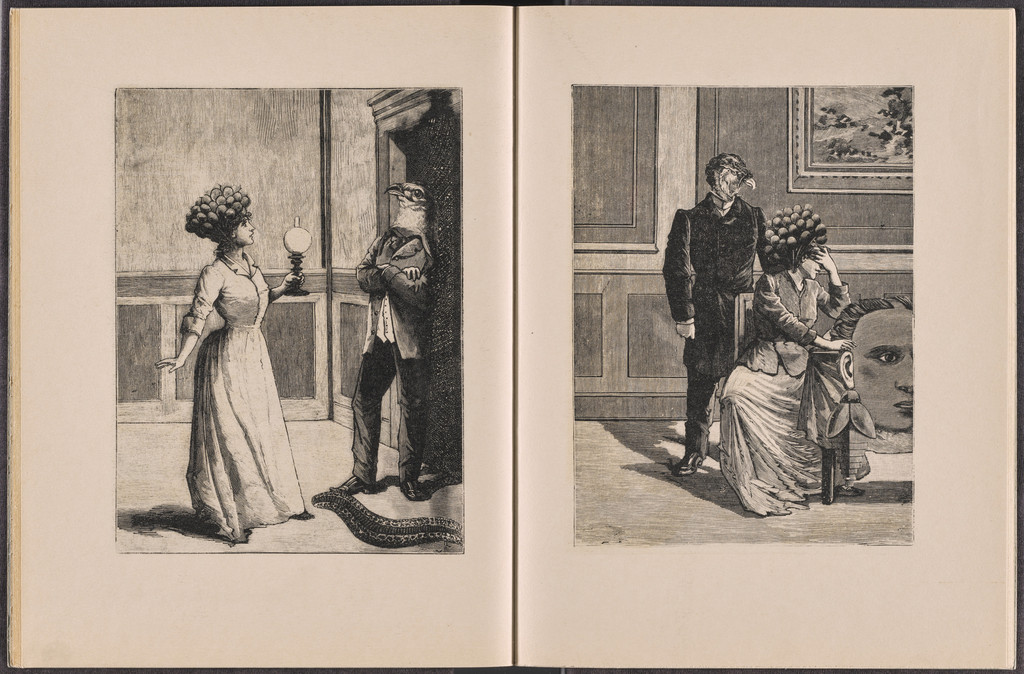
1929 erschien der grafische Roman La Femme 100 têtes, rund 150 Zeichnungen mit einem Text des Künstlers und einer Ansprache an den Leser von André Breton. Eine seiner Figuren war Loplop, der Vogelobere, der in Ernsts Werk immer wieder auftauchte.