 Robert RauschenbergVereinigte Staaten, 1925–2008
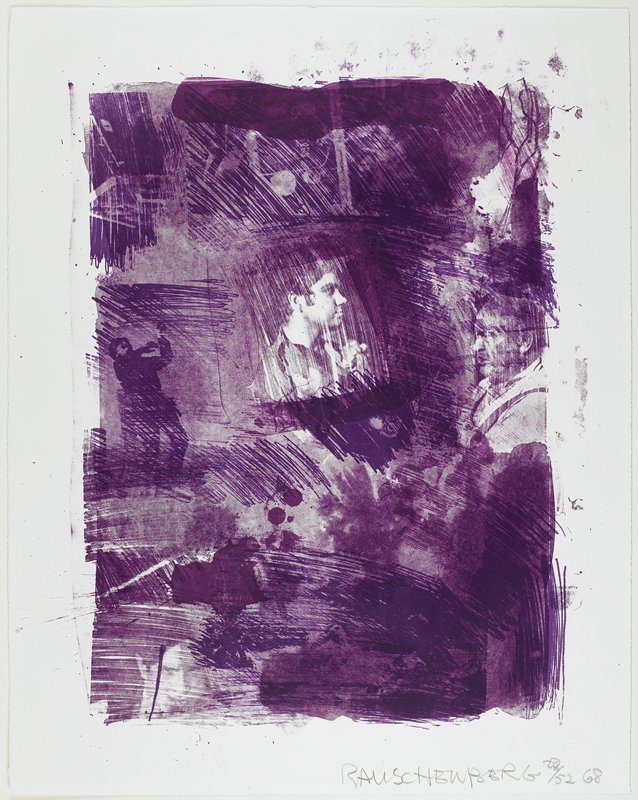
Flower Re-Run
Darf man es sehen?
Empfängt derzeit nicht

Minneapolis Institute of Art
Minneapolis, Vereinigte Staaten
Es gehört zur Sammlung, ist derzeit aber nicht ausgestellt.
- Geprüft
- Unverändert seit
- Quelle
- Sammlungsdaten des Museums selbst
Über das Werk
For this project, the second that Rauschenberg completed at the Gemini G.E.L. print workshop, the artist appropriated images from publicity stills and film clips from the 1967 Hollywood movie Bonnie and Clyde, which starred actors Faye Dunaway and Warren Beatty in the lead roles. Rauschenberg had been commissioned to produce a Time magazine cover featuring the movie. His interest in the theme derived from personal memories of the site of the movie and his friendship with Beatty and Michael Pollard, who also appeared in the film. This print is one of six editioned lithographs Rauschenberg produced for the Reels (B + C) series.
Minneapolis Institute of Art
Angaben
- Inventarnummer
- P.90.28.6
Im Katalog
Quellen
- Minneapolis Institute of Art: the museum's own open data · abgerufen vor 7 Tagen
- Bild: Minneapolis Institute of Art — Robert Rauschenberg, Flower Re-Run, from the Reels (B + C) series, 1968 © Robert Rauschenberg Foundation
Derweil im Leben von Robert Rauschenberg
Das ganze Leben1966
Founds E.A.T. with Billy Klüver
For “9 Evenings: Theatre and Engineering” at New York's 69th Regiment Armory Rauschenberg created the performance Open Score. The series was instrumental in the formation of Experiments in Art and Technology (E.A.T.), a non-profit for collaborations between artists and engineers which he and the Bell Laboratories scientist Billy Klüver officially launched in 1966.
27. Juni 1968 – 6. Oktober 1968
Exhibition: 4. documenta
26 July 1968
Buys a house on Captiva Island
On 26 July 1968 Rauschenberg bought the Beach House, his first property on Captiva Island off the Florida coast, though it did not become his permanent home until the autumn of 1970. Other accounts date the purchase to 1970.
1969
Watches the Apollo 11 launch at NASA's invitation
NASA invited Rauschenberg to witness the launch of Apollo 11. In response he created his “Stoned Moon” series of lithographs, combining diagrams and images from NASA's archives with his own drawings and handwritten text.
autumn 1970
Moves to Captiva for good
From the autumn of 1970 the Captiva house became Rauschenberg's permanent home and studio. The first works made there were the “Cardboards” (1971–72) and “Early Egyptians” (1973–74) series, from locally sourced cardboard and sand: instead of urban imagery he now favoured the natural fibres of fabric and paper.
1970
Sets up Change, Inc. to help artists
Rauschenberg created Change, Inc., a programme awarding one-time emergency grants of up to $1,000 to visual artists in financial need.