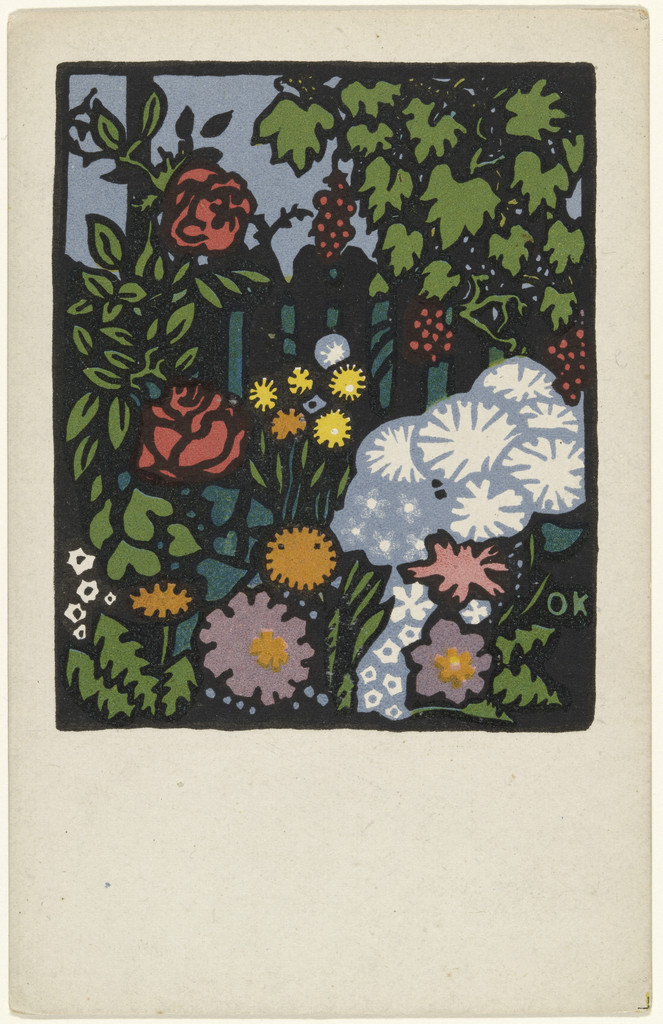
 Oskar KokoschkaÖsterreich, 1886–1980
Flower Garden (Blumengarten)
Kann ich es sehen?
Derzeit nicht ausgestellt
Wo ist „Flower Garden (Blumengarten)“ heute? Sammlung: Museum of Modern Art, New York City. Derzeit nicht ausgestellt. Geprüft 22. September 2026.

New York City, Vereinigte Staaten
Es gehört zur Sammlung, ist derzeit aber nicht ausgestellt.
- Geprüft
- Quelle
- Das Museum
Angaben
- Inventarnummer
- 389.1991
Im Katalog
Quellen
- Museum of Modern Art
- Bild: Museum of Modern Art — © the artist or rights holder
Im Leben von Oskar Kokoschka
Das ganze Leben1908
A scandalous debut at the Vienna Kunstschau
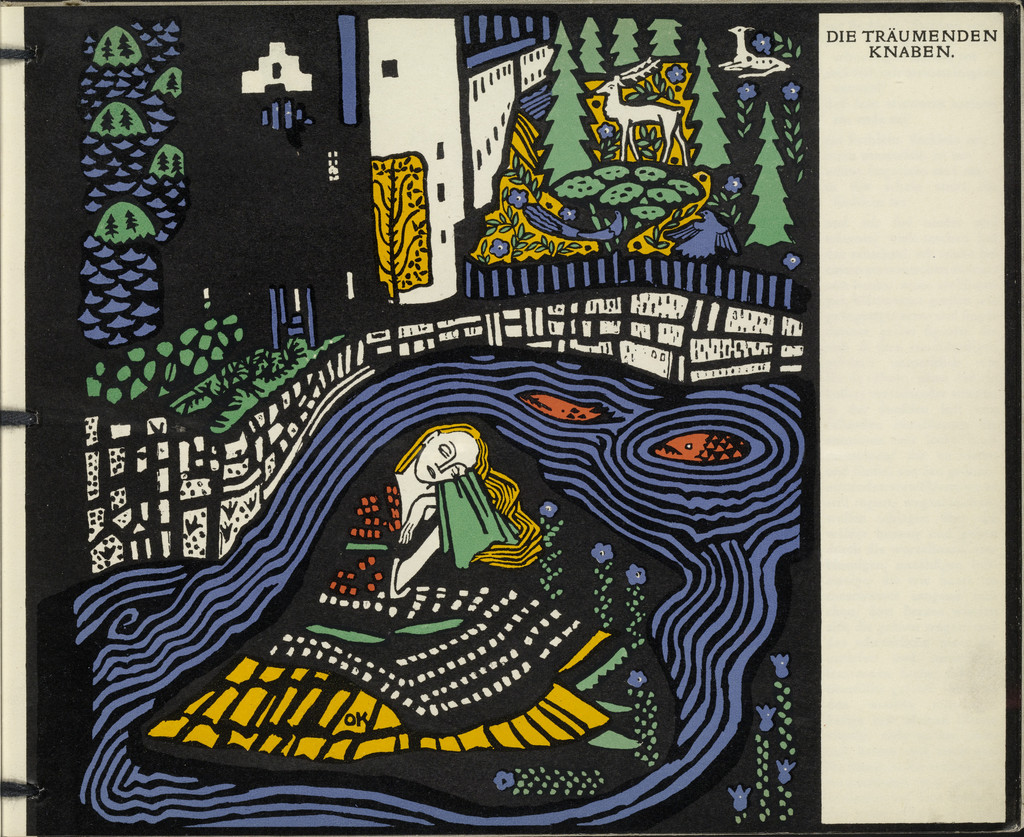
In 1908 Kokoschka was invited to submit works to the first Vienna Kunstschau. Instead of the colour pictures for a children’s book commissioned by Fritz Wärndorfer, director of the Wiener Werkstätte, he showed illustrations to his own poem “Die träumenden Knaben” and a tapestry, “The Dream Bearers” (now lost); the frank adolescent fantasies provoked a backlash from conservative officials and he was expelled from the school, but found his place in the Viennese avant-garde.
1908
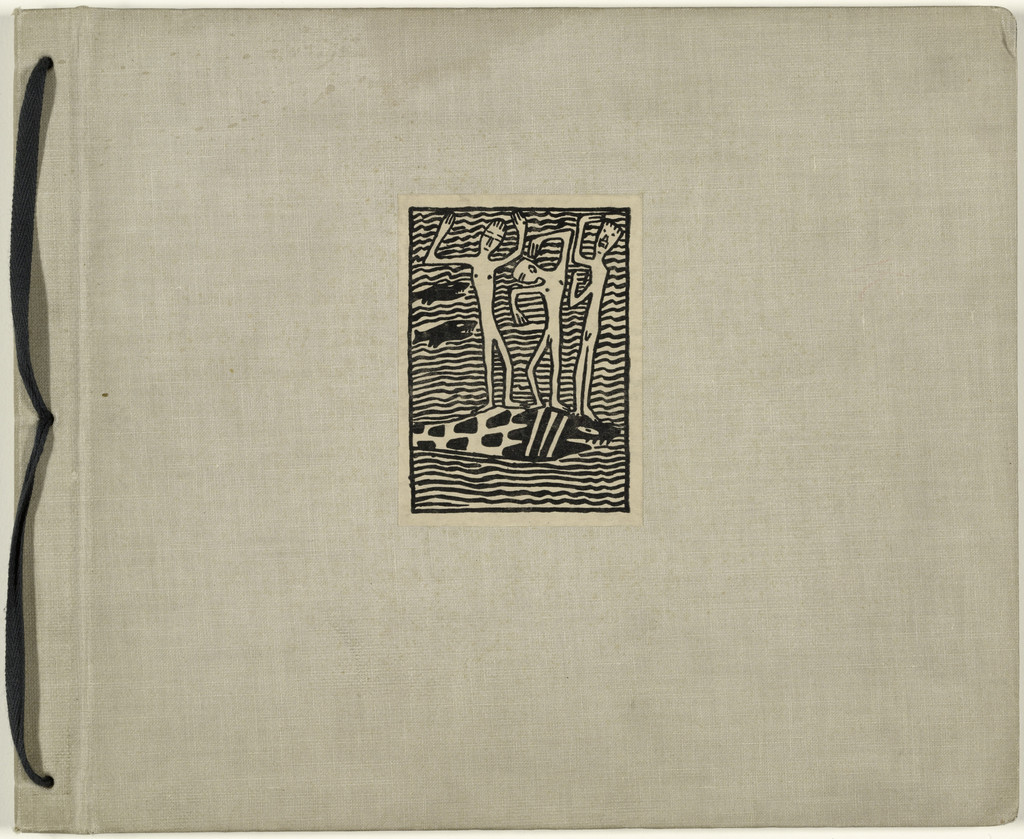
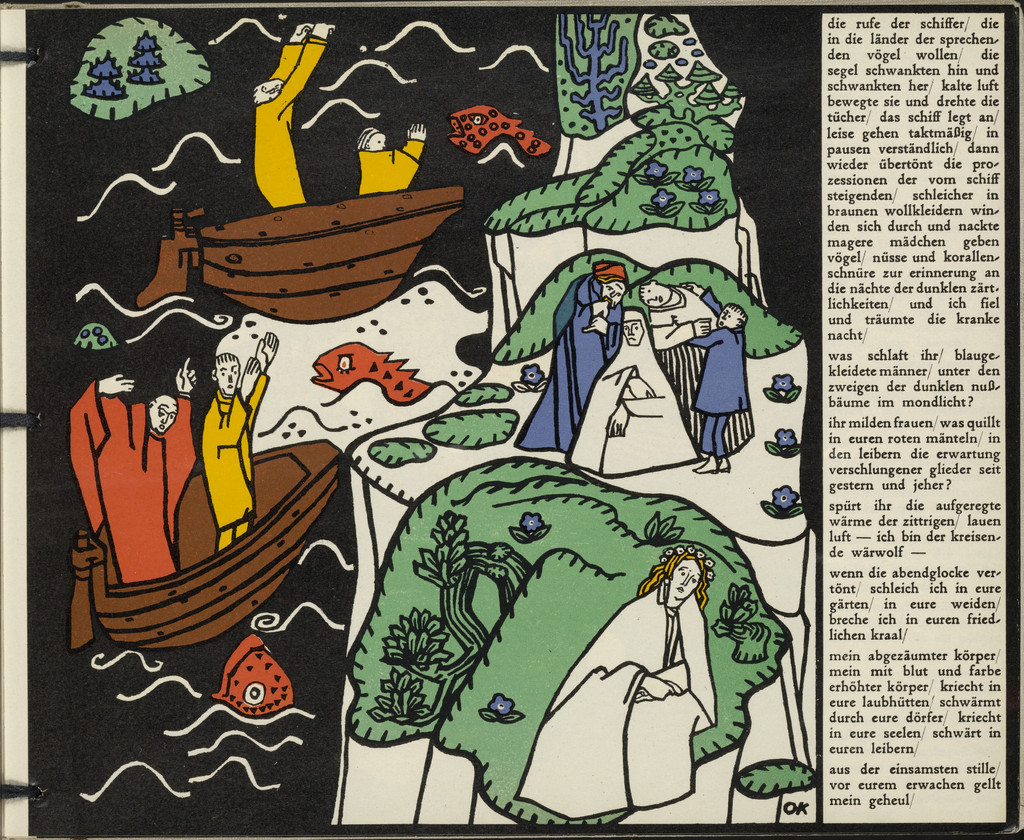
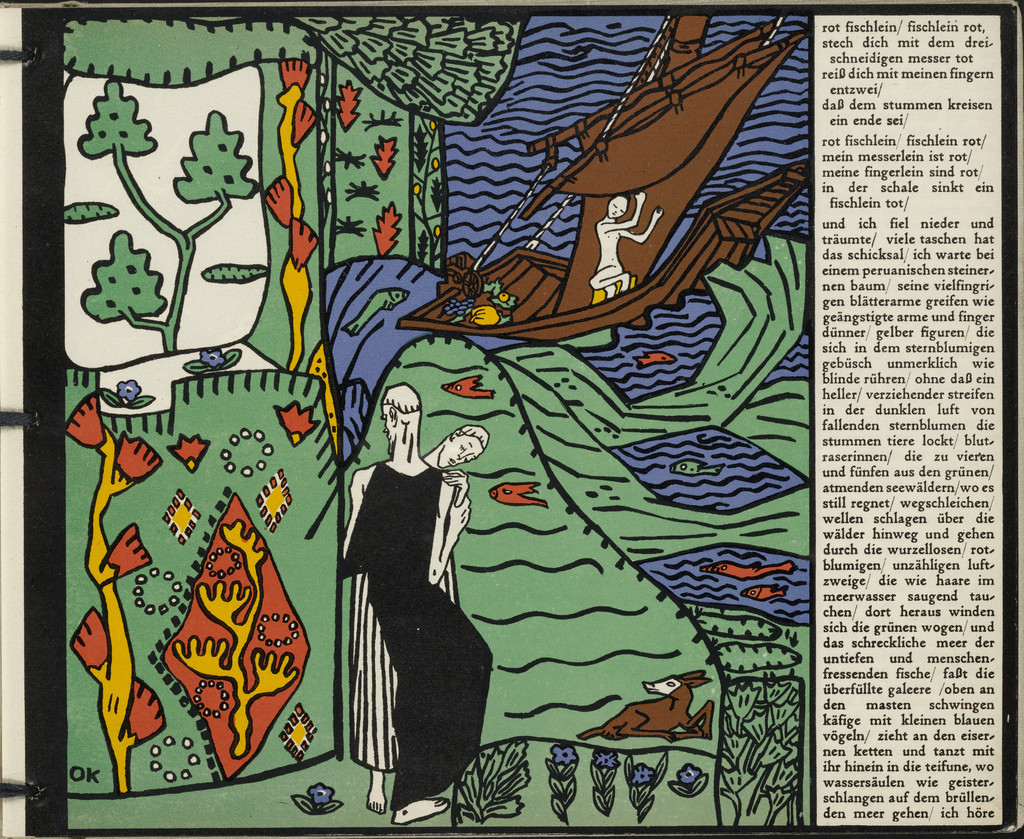
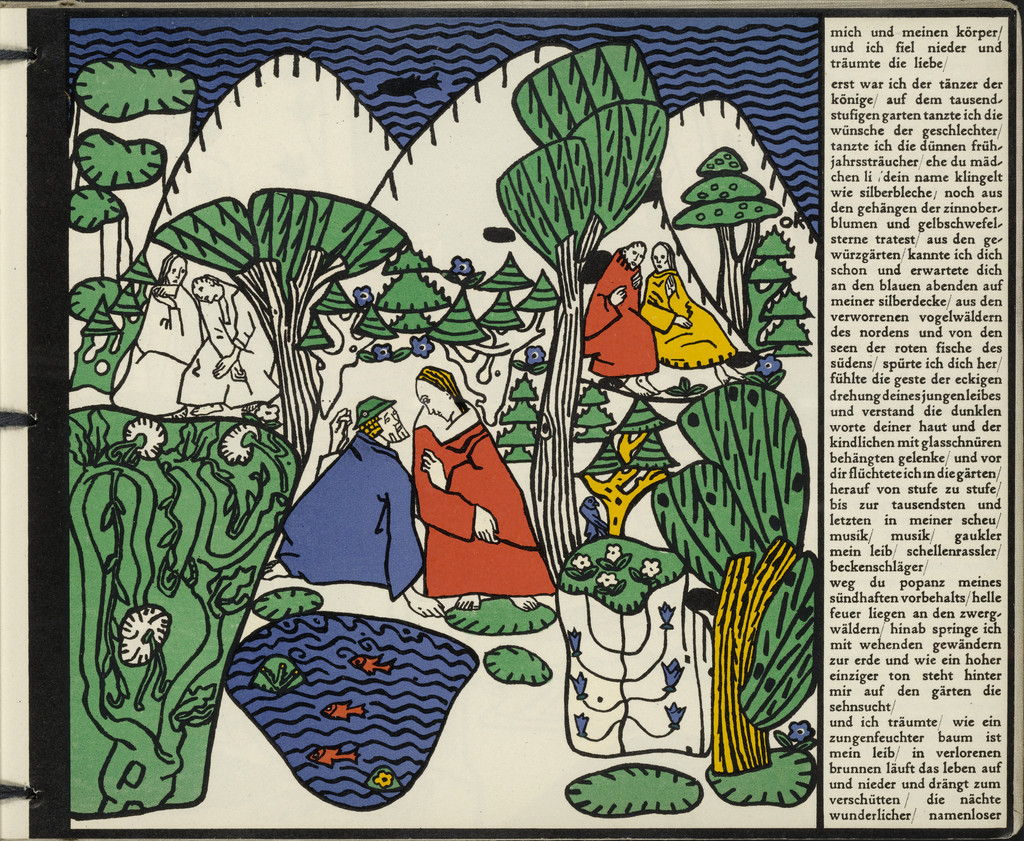
The book “Die träumenden Knaben” with lithographs
Kokoschka published the poem, written a year earlier, with the Wiener Werkstätte, with two small black-and-white and eight larger colour lithographs, and dedicated it to Gustav Klimt. Of the five hundred copies only a small proportion were bound and sold; the poem is an autobiographical adolescent fantasy about his love for a Swedish classmate, Lilith.
1909
The scandalous staging of “Murderer, the Hope of Women”
Kokoschka’s play “Murderer, the Hope of Women” was first staged in 1909, and the production on a Viennese stage caused a scandal. The play is often called the first Expressionist drama; Paul Hindemith made an opera of it in 1921.
1909–1914
Adolf Loos: patron and commissioner of portraits
The architect Adolf Loos befriended Kokoschka, introduced him to the Viennese avant-garde and ordered portraits of his clients and friends, agreeing to buy the work if the sitter declined. This left Kokoschka complete artistic freedom; he painted the bulk of his portraiture between 1909 and 1914.