
 Robert FrankVereinigte Staaten, 1924–2019
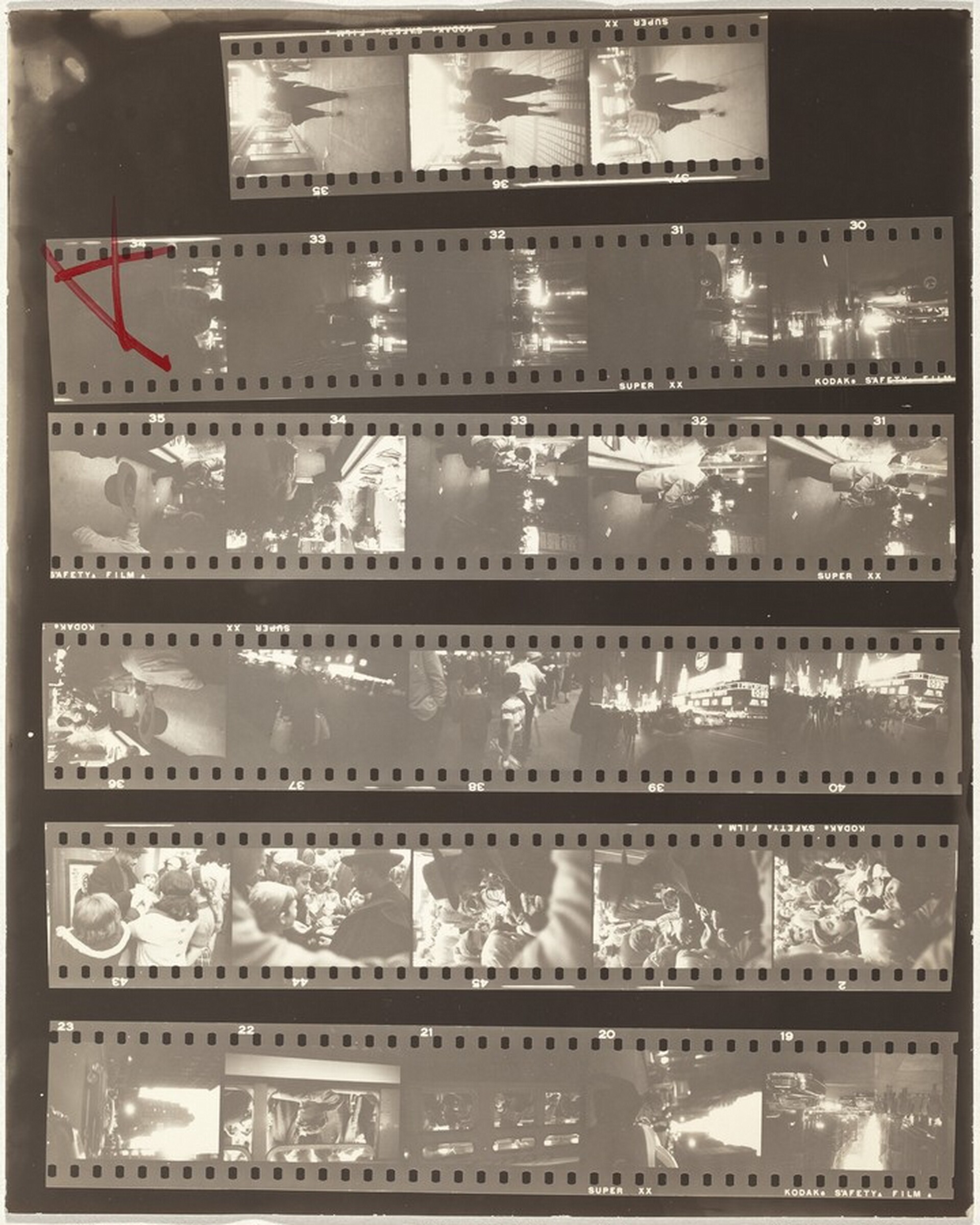
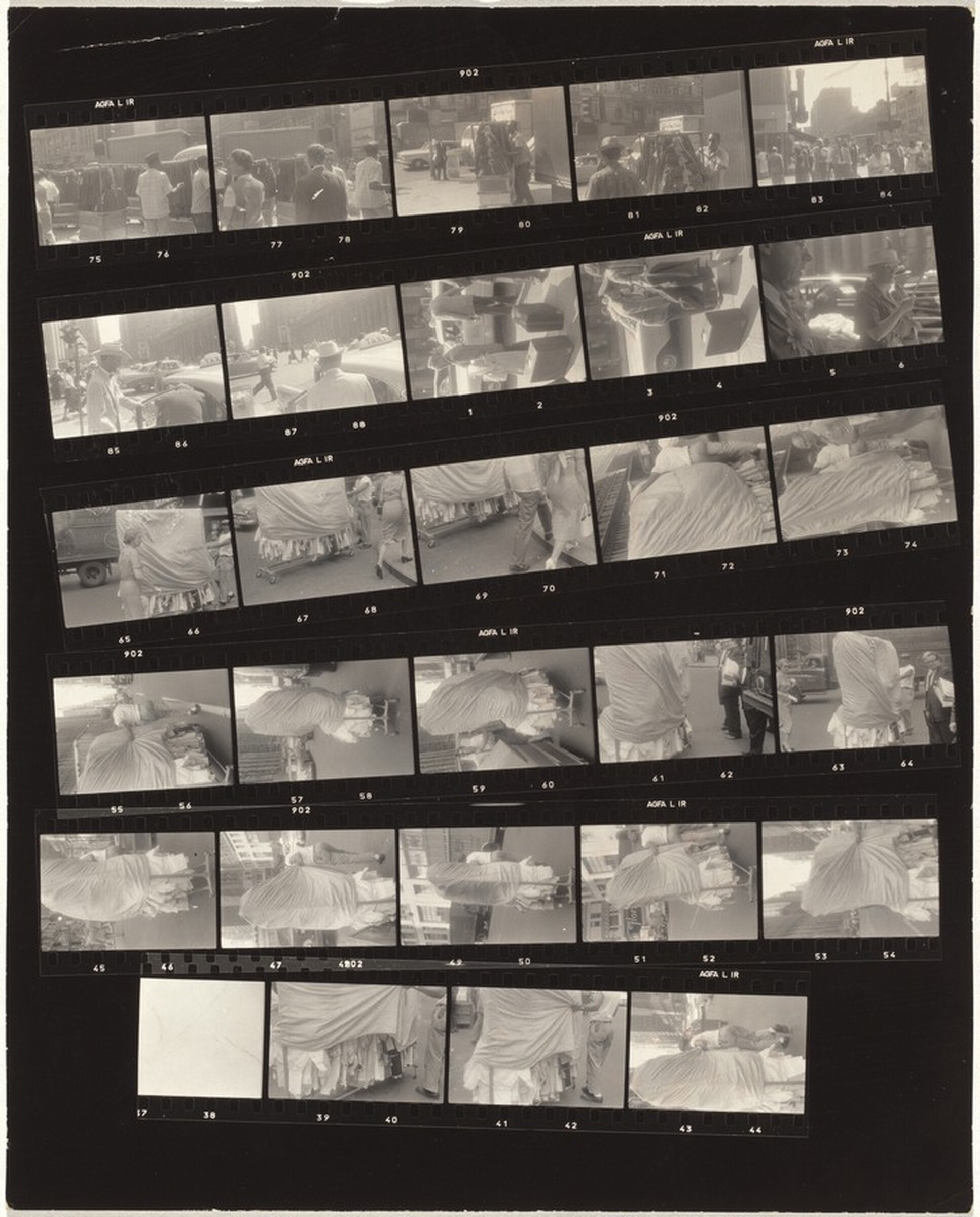
Family III
Darf man es sehen?
Empfängt derzeit nicht

National Gallery of Art
Washington, D.C., Vereinigte Staaten
Es gehört zur Sammlung, ist derzeit aber nicht ausgestellt.
- Geprüft
- Unverändert seit
- Quelle
- Sammlungsdaten des Museums selbst
Angaben
- Inventarnummer
- 1994.37.663
Was es zeigt
Im Katalog
Quellen
- National Gallery of Art: die offenen Daten des Museums · abgerufen vor 8 Tagen
- Bild: National Gallery of Art — © the artist or rights holder
Derweil im Leben von Robert Frank
Das ganze Leben1950–1953
Disillusionment with America and a brief move to Paris
Though initially optimistic about American society and culture, Frank’s perspective quickly changes as he confronts the fast pace of American life and what he sees as an overemphasis on money: he now sees America as an often bleak and lonely place, and his dissatisfaction with the control editors exercise over his work colors the experience. He continues to travel, moving his family briefly to Paris.
1953
Back in New York and the “New York School”
He returns to New York and works as a freelance photojournalist for magazines including McCall’s, Vogue and Fortune. Associating with photographers such as Saul Leiter and Diane Arbus, he helps form what Jane Livingston has termed the New York School of photographers of the 1940s and 1950s.
26. Mai 1953 – 23. August 1953
Exhibition: Postwar European Photography
1955
Seven photographs in “The Family of Man”
Edward Steichen includes seven of his photographs, many more than most other contributors, in the world-touring MoMA exhibition The Family of Man, which will be seen by 9 million visitors; they include a woman kissing her swaddled baby, a bowed old woman in Peru, a rheumy-eyed miner in Wales, and six laughing women in the window of the White Tower Hamburger Stand in New York City.
1955–1957
Across America on a Guggenheim Fellowship
Inspired by Jakob Tuggener’s Fabrik, Bill Brandt’s The English at Home and Walker Evans’s American Photographs, and on the recommendation of Evans, Alexey Brodovitch, Alexander Liberman, Edward Steichen and Meyer Schapiro, he secures a Guggenheim Fellowship in 1955 to travel across the United States and photograph all strata of its society, from Detroit and Dearborn to Savannah, Miami Beach and St. Petersburg, New Orleans, Houston, Los Angeles, Reno, Salt Lake City, Butte and Chicago. Over two years of road trips, part of them with his family, he takes 28,000 shots, of which he selects 83 for The Americans.
1955–1957
Jailed in Arkansas
In a small Arkansas town he is taken to the police station and put in jail: it comes out that he is Jewish because of a letter from the Guggenheim Foundation, and the sheriff says they will have to find somebody who speaks Yiddish. Frank later recalled that it was scary and nobody knew where he was; elsewhere in the South a sheriff told him he had “an hour to leave town”, and these incidents may have contributed to the dark view of America found in his work.




![Ginevra de' Benci [obverse], Leonardo da Vinci, c. 1474/1478](https://api.nga.gov/iiif/8f29e3c9-a289-4d53-abf0-31a66e9e98fa/full/!2400,2400/0/default.jpg)
![Wreath of Laurel, Palm, and Juniper with a Scroll inscribed Virtutem Forma Decorat [reverse], Leonardo da Vinci, c. 1474/1478](https://api.nga.gov/iiif/ff62e8d0-45c4-498f-ad36-6358de827e04/full/!2400,2400/0/default.jpg)


