 Nicholas RoerichRussland, 1874–1947
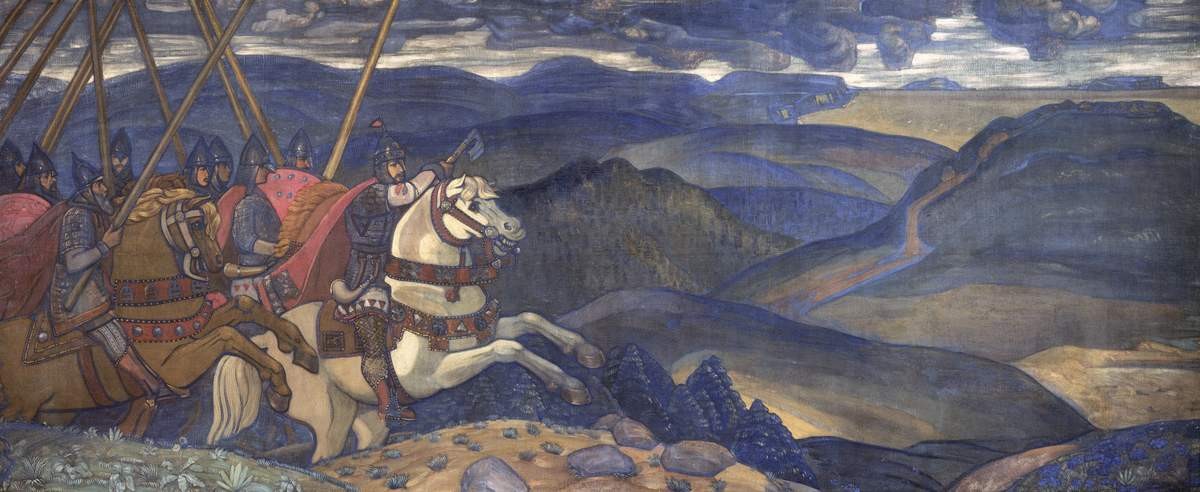
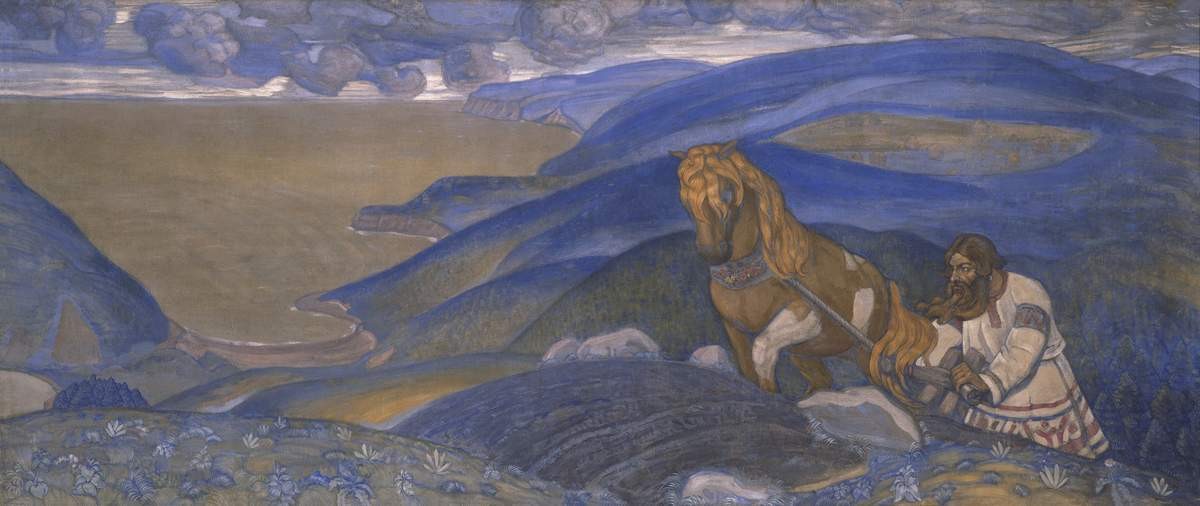
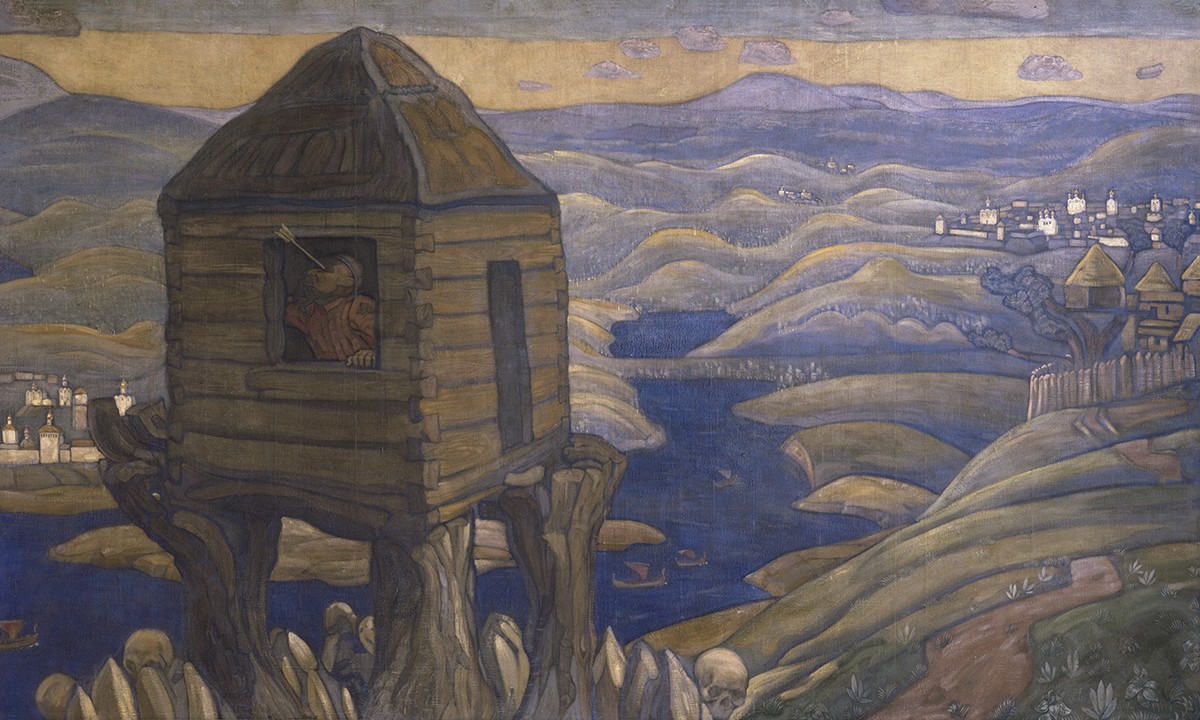
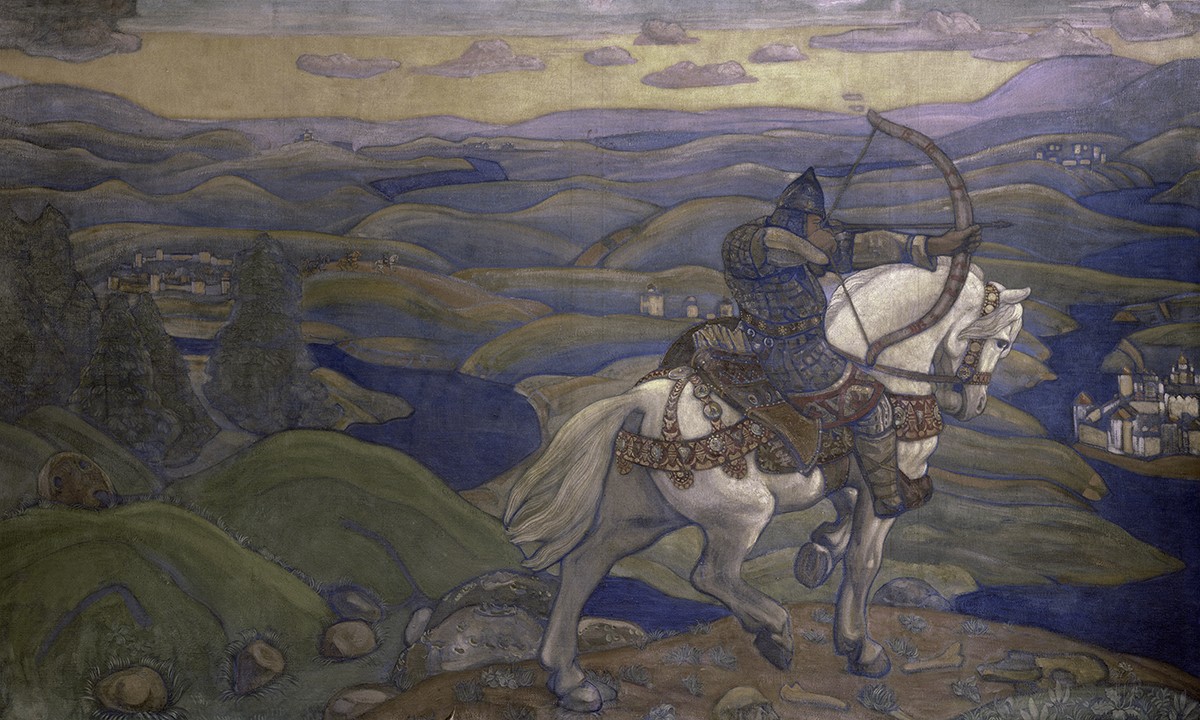
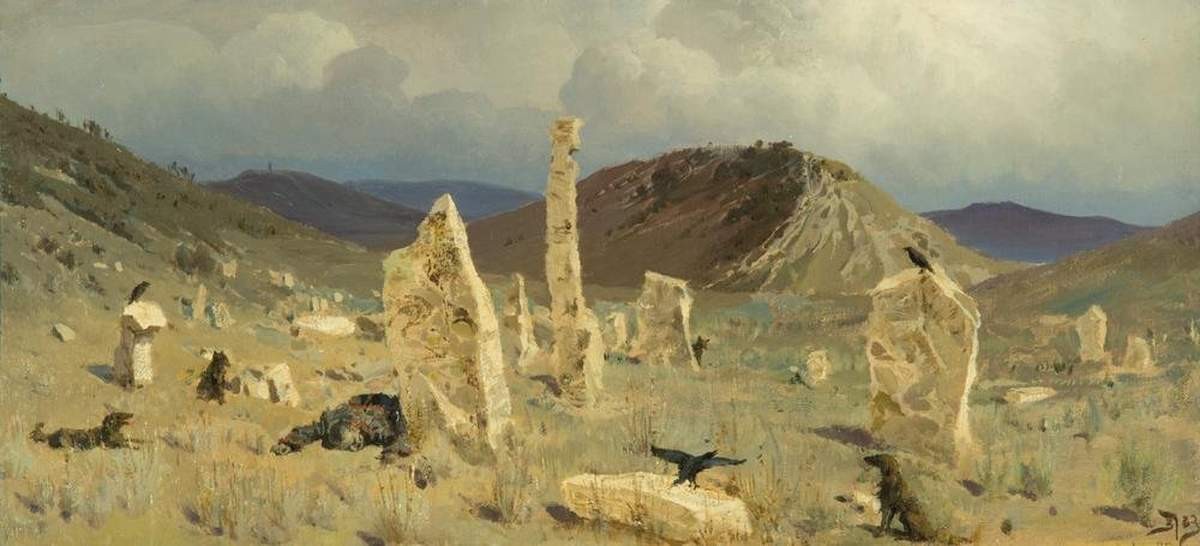
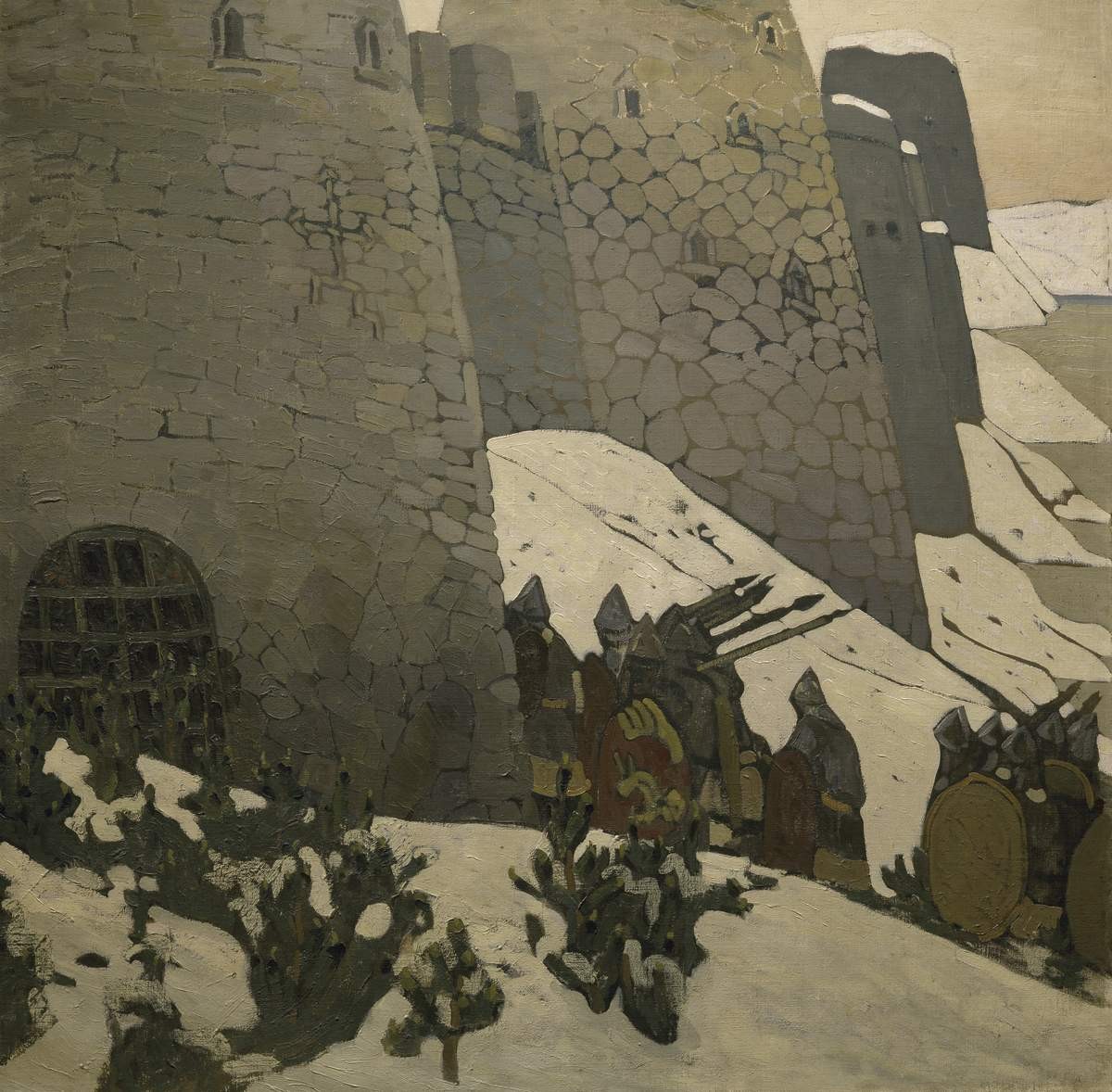
Дозор
Kann ich es sehen?
Unbekannt
Wo ist „Дозор“ heute? Sammlung: Russisches Museum, Sankt Petersburg. Unbekannt.

Sankt Petersburg, Russland
Der Besitzer ist bekannt; ob das Werk derzeit ausgestellt ist, nicht.
- Unverändert seit
- Quelle
- Das Museum
Über das Gemälde
In den Worten des Museums — auf Russisch
Воспитанник Академии художеств и юридического факультета Петербургского университета, Рерих с детства любил историю, изучал жизнь и обряды древних славян. Уже в юности он участвовал в археологических экспедициях под Петербургом, Новгородом и в других городах России. Археологические находки, которые он видел своими глазами, держал в руках, пробуждали фантазию, помогали воссоздавать на холсте воображаемую реальность. Евгения Петрова. Николай Рерих. В поисках Шамбалы. СПб, 2020. С. 5.
В длинном ряду картин, этюдов, рисунков, декоративных эскизов воскресает забытая жизнь древней земли: каменный век, кровавые тризны, обряды далекого язычества, сумраки жутко-таинственных волхований; времена норманнских набегов; удельная и Московская Русь... [ «Золотое руно». М., 1907. № 4 ] Современники Рериха: Сергей Маковский. Н. К. Рерих // Николай Рерих. 1874-1947. СПб, 2014. С. 9-10.
Russisches Museum
Angaben
- Inventarnummer
- Ж-2003
Was es zeigt
Im Katalog
Quellen
- Russisches Museum
- Bild: Russisches Museum — © State Russian Museum
Im Leben von Nicholas Roerich
Das ganze Leben1898–1903
Lecturer at the Archaeological Institute
From 1898 Roerich works with the St Petersburg Archaeological Institute: he teaches a course titled “Artistic Technique as Applied to Archaeology”, directs training excavations and compiles the “Archaeological Map of St Petersburg Province”. He digs in the provinces of St Petersburg, Pskov, Novgorod, Tver, Yaroslavl and Smolensk.
1903–1904
A “journey through antiquity”: over forty towns
With his wife Roerich visits more than forty towns with ancient monuments to study the roots of Russian culture. The result is about 90 architectural studies, a collection of photographs of old Russia and articles in which he is among the first to raise the question of the great artistic value of early Russian icon painting and architecture.
1904
Talashkino, Maria Tenisheva's estate
After touring the towns along the Volga and visiting Mozhaisk and the Savvino-Storozhevsky Monastery, Roerich ends his trip at Talashkino near Smolensk, the estate of Maria Tenisheva. Together with Malyutin, Vrubel, Benois, Korovin and Repin he puts into practice projects to revive ancient Russian traditions and folk crafts; his collaboration with Tenisheva will last until 1917 and their friendship until her death.
1904–1905
Neolithic sites on the Valdai and a Stone Age collection
In 1904, with Prince Putyatin, Roerich finds several Neolithic sites on the Valdai Hills near Lake Piros, and from 1905 he builds a collection of Stone Age antiquities, which is highly praised that same year at the French Prehistoric Congress in Périgueux. By 1910 it holds more than 30,000 items from Russia, Germany, Italy and France; today they are in the Hermitage.
1906
Exhibitions abroad and the Salon d'Automne
From 1906 Roerich regularly takes part in exhibitions abroad: Paris, Venice, Berlin, Rome, Brussels, Vienna and London get to know his work, and his paintings are bought by the Luxembourg Museum, the National Museum in Rome, the Louvre and other museums. In 1907 he is elected a member of the Société du Salon d'Automne in France.
1906
Director of the Society's Drawing School
On taking up his post as director of the Drawing School, Roerich enlarges its premises, opens new classes and workshops — for icon painting, ceramics, chasing and weaving — restores the rights of the teaching council and founds a Museum of Russian Art at the school; he hopes to reorganise it as a Free People's Academy.