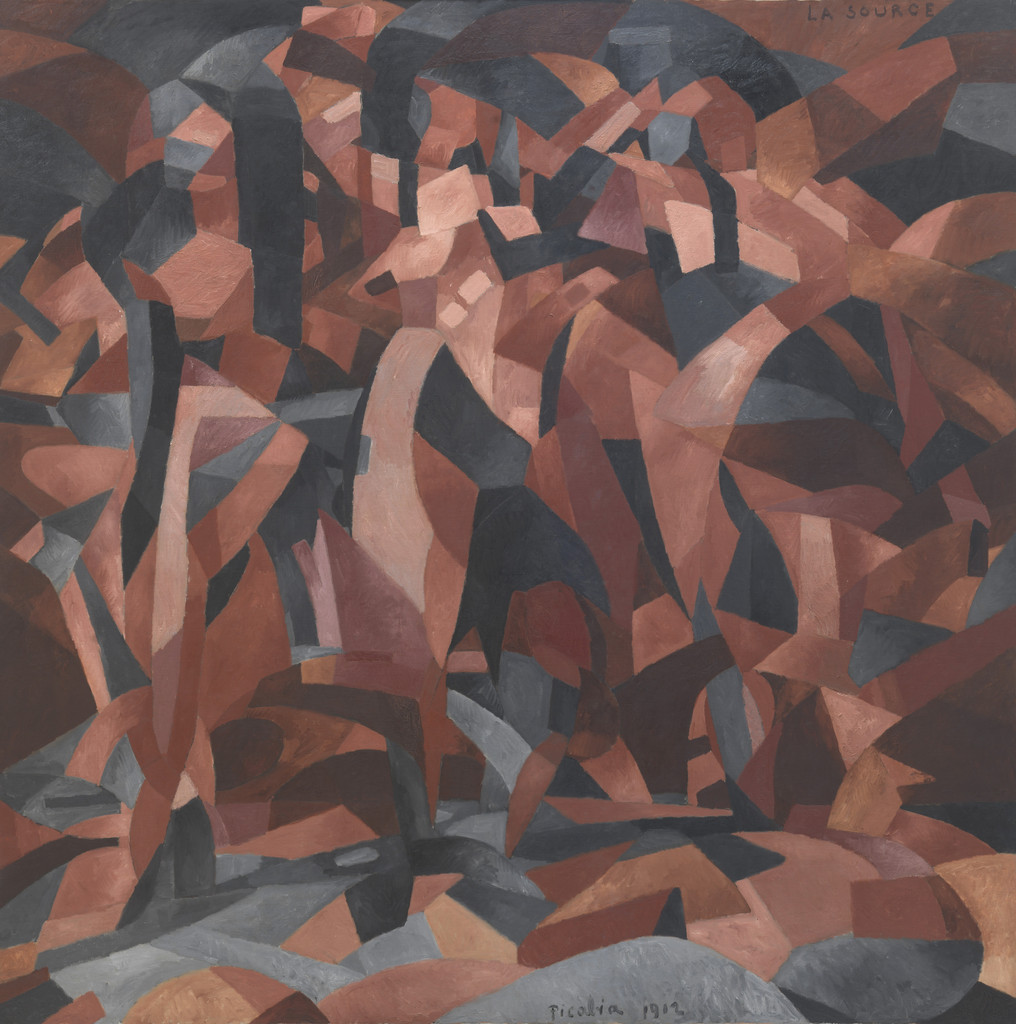
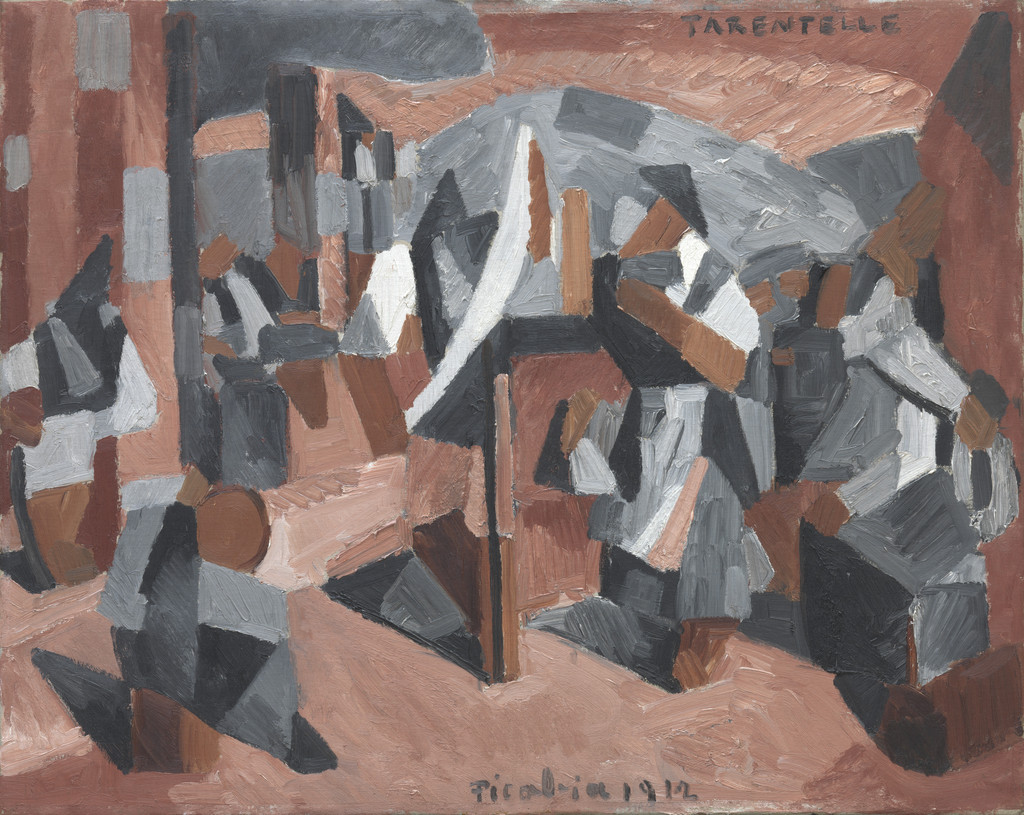
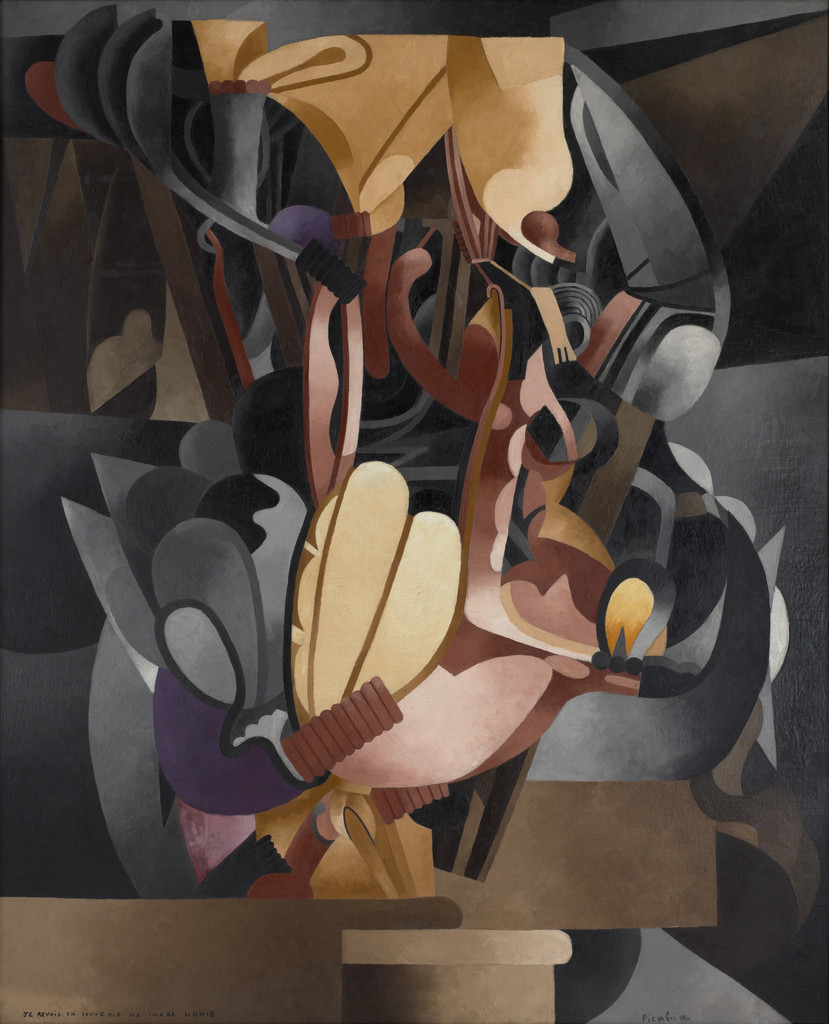
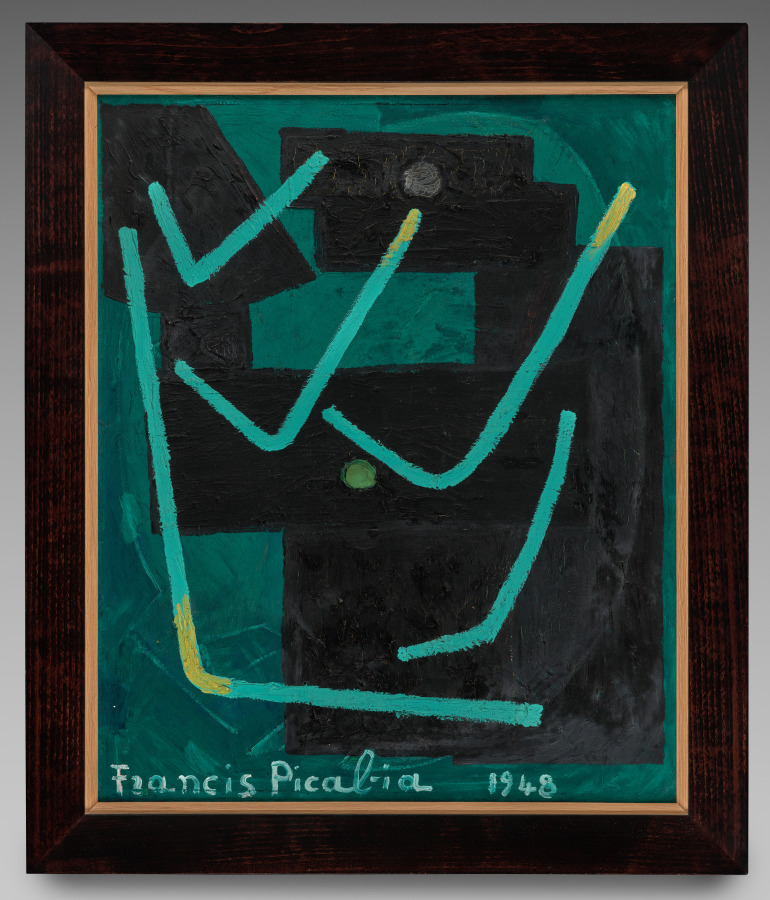
![Dances at the Spring [II], Francis Picabia, Saint Cloud, spring or summer 1912](https://www.moma.org/media/W1siZiIsIjI0MzcwNiJdLFsicCIsImNvbnZlcnQiLCItcmVzaXplIDEwMjR4MTAyNFx1MDAzZSJdXQ.jpg?sha=23222488b29840d2)
 Francis PicabiaFrankreich, 1879–1953
Dances at the Spring [II]
Kann ich es sehen?
Derzeit nicht ausgestellt
Wo ist „Dances at the Spring [II]“ heute? Sammlung: Museum of Modern Art, New York City. Derzeit nicht ausgestellt. Geprüft 22. September 2026.

New York City, Vereinigte Staaten
Es gehört zur Sammlung, ist derzeit aber nicht ausgestellt.
- Geprüft
- Quelle
- Das Museum
Angaben
- Inventarnummer
- 1412.1974
Im Katalog
Quellen
- Museum of Modern Art
- Bild: Museum of Modern Art — © the artist or rights holder
Im Leben von Francis Picabia
Das ganze Leben1910
Meets Marcel Duchamp
His meeting with Marcel Duchamp in 1910 had a decisive influence on Picabia's personality and art: he moved from Fauvism to Cubism and geometric abstraction. Other accounts have them becoming friends around 1911 in the Puteaux Group.
18. Januar 1910
Daughter born: Laure Marie Catalina Martinez-Picabia
c. 1911
The Puteaux Group: friendship with Apollinaire
Around 1911 Picabia joined the Puteaux Group, whose members he had met at Jacques Villon's studio; there he became friends with Marcel Duchamp and close friends with Guillaume Apollinaire, while the group also included Gleizes, La Fresnaye, Léger and Metzinger.
1913
The only Cubist at the Armory Show
The wealthy Picabia was the only Cubist to attend the Armory Show in New York in person, where he showed four paintings; the press was largely hostile, but he was widely interviewed and at once became a major name in New York's art circles.
17 March – 5 April 1913
Solo show at Stieglitz's gallery 291
Alfred Stieglitz gave him the solo show Exhibition of New York Studies by Francis Picabia at his gallery 291 — abstract works made over a few months in New York under the impression of Kandinsky and other abstract art at the Armory Show.
1913
Back in Paris, he breaks with the Cubists
On returning to Paris in April 1913, Picabia formally broke with the Cubists.