 Auguste RodinFrankreich, 1840–1917
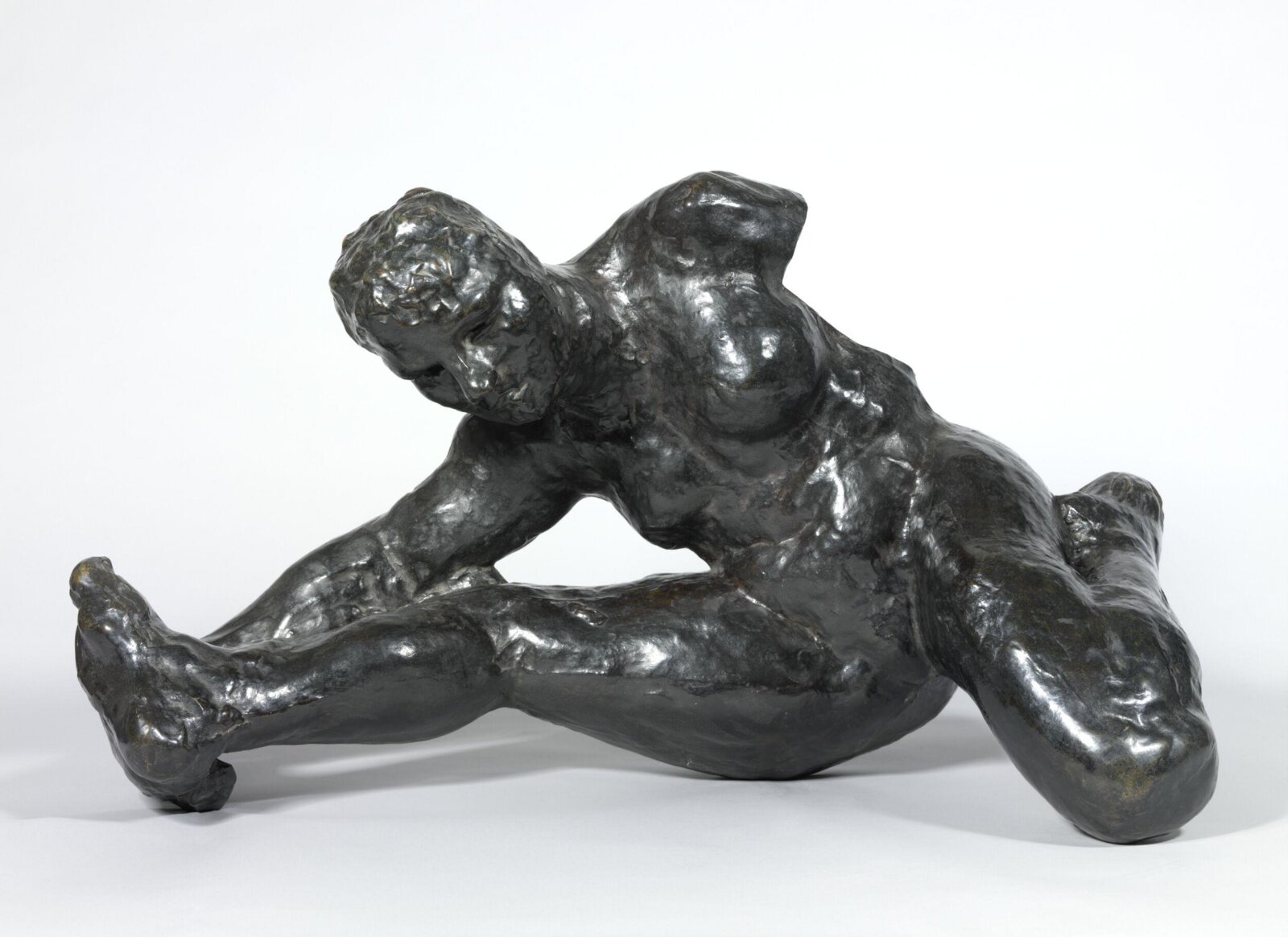
Crouching woman
Darf man es sehen?
Ja, es empfängt Besucher

Victoria and Albert Museum
London, Vereinigtes Königreich
SaalSculpture, Room 21, The Dorothy and Michael Hintze Galleries
Öffentlich ausgestellt. Wer dafür bürgt, steht unten.
- Geprüft
- Unverändert seit
- Quelle
- Das Museum
Über die Skulptur
In his early work, Rodin strove for anatomical realism, but by the 1890s he adopted a more conceptual approach to his work that anticipated developments in 20th-century sculpture. This figure comprises parts of several different figures - head, limbs and torso - assembled and then cast as a single figure.
This figure is related to Rodin's studies for Iris, Messenger of the Gods, which was intended to surmount a second but uncompleted version of the monument to Victor Hugo commissioned in 1891. The head, limbs and torso, however, were originally completely separate, pre-existing elements. The fusion of these separately conceived pieces disturbs the equilibrium of the sculpture and creates a sense of dynamic unease.
Weiterlesen
The head exists in an enlarged form in the Musée Rodin, with the title of Large Head for Iris, though it was also called Head of Demeter. A cast of the enlarged version was also given to the V&A as part of Rodin's 1914 gift (See Head of Iris, Museum no. A.41-1914).
Victoria and Albert Museum
Angaben
- Inventarnummer
- A.40-1914
Im Katalog
Quellen
- Victoria and Albert Museum
- Bild: Victoria and Albert Museum — © Victoria and Albert Museum, London
Derweil im Leben von Auguste Rodin
Das ganze Leben1889
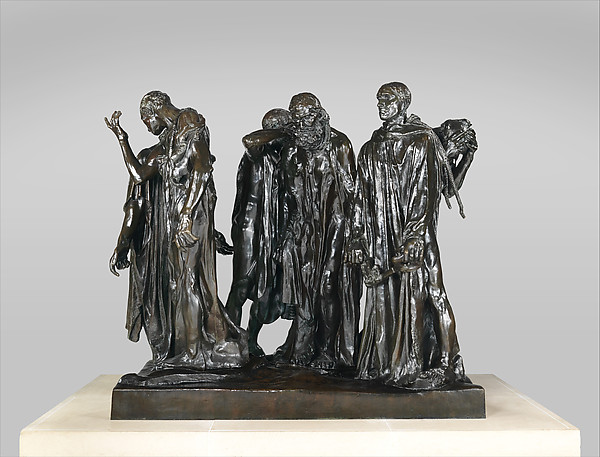
Rodin and Monet at the Georges Petit gallery
“The Burghers of Calais” was the main event of a joint exhibition of Rodin and Claude Monet: thirty-six sculptures by Rodin and seventy paintings by Monet.
1890
Vice-president of the Société Nationale des Beaux-Arts
When the Société Nationale des Beaux-Arts was revived in 1890, Rodin became its vice-president.
1890s–1900s
Young sculptors in Rodin's studio
His income let him hire gifted young sculptors, among them Antoine Bourdelle, Charles Despiau, Jules Desbois, François Pompon and Aristide Maillol. Constantin Brancusi left after two months, convinced that nothing grows under a big tree.
1891
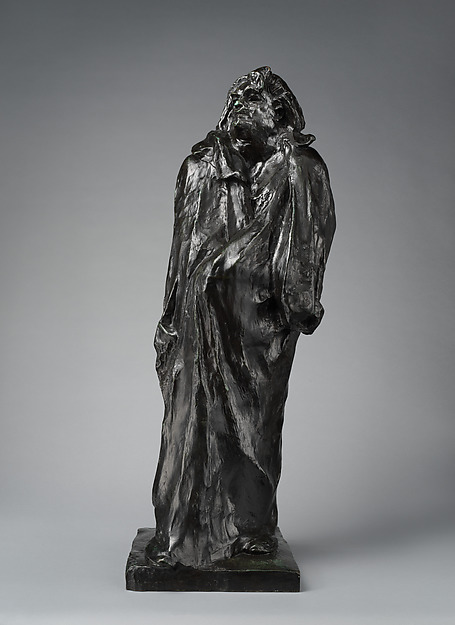
Commission for the Balzac monument
The Société des Gens de Lettres, largely through the personal efforts of its president, Émile Zola, commissioned a monument to Balzac to be delivered in two years. Rodin pictured a massive standing figure with a large head and a body hidden in drapery, but he missed the deadline.
19. Januar 1892 · Auszeichnung
Officer of the Legion of Honour
1893
Chicago: nudes behind a drape
Through the curator Sarah Hallowell, Rodin sent “Cupid and Psyche”, “Sphinx” and “Andromeda” to the Chicago World's Fair; the nudes caused such controversy that they were hidden behind a drape, with special permission needed to see them. Even so, the financier Charles Yerkes bought two large marbles and was probably the first American to own a Rodin.