Gustave DoréFrankreich, 1832–1883
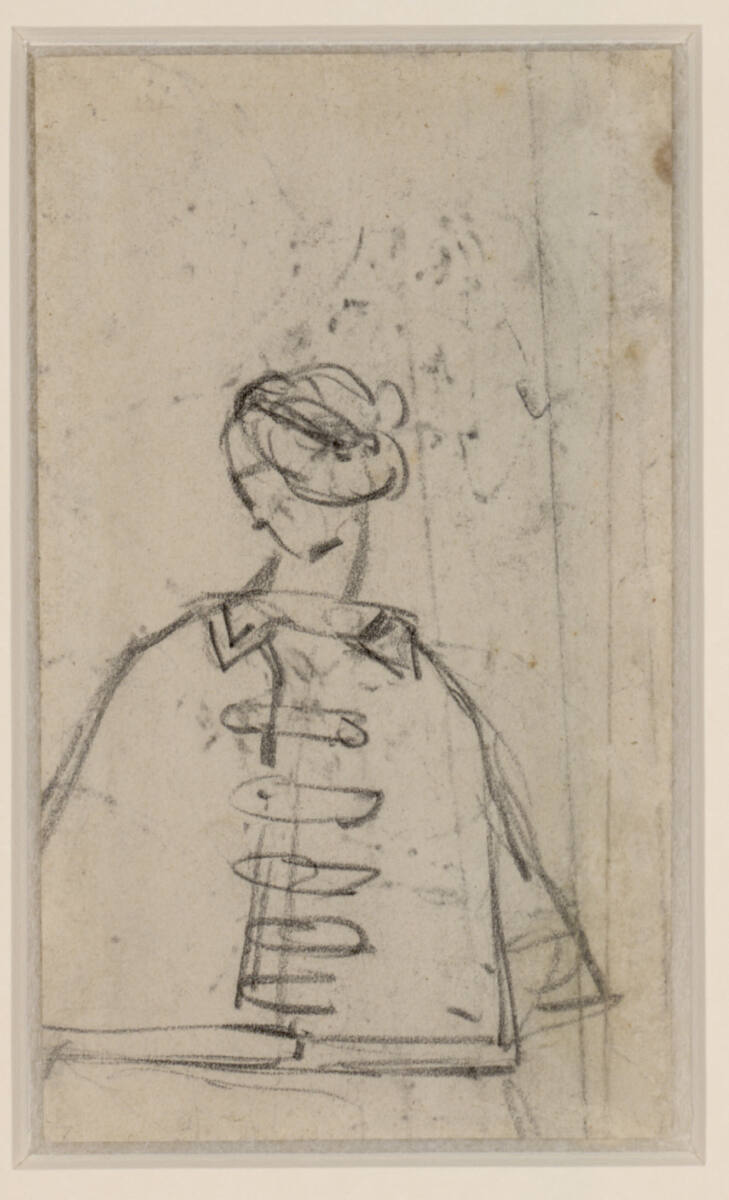
Consultation; Les contes drolatiques
Kann ich es sehen?
Unbekannt
Wo ist „Consultation; Les contes drolatiques“ heute? Sammlung: Maison de Balzac, Paris. Unbekannt.

Paris, Frankreich
Der Besitzer ist bekannt; ob das Werk derzeit ausgestellt ist, nicht.
- Unverändert seit
- Quelle
- Das Museum
Angaben
- Inventarnummer
- BAL 2021.9
Im Katalog
Quellen
- Maison de Balzac
- Bild: Maison de Balzac — CC0 Paris Musées / Maison de Balzac; Ministère de la Culture (France), base Joconde
Im Leben von Gustave Doré
Das ganze Leben1853
A commission for Byron and British publishers
In 1853 Doré is asked to illustrate the works of Lord Byron; this commission is followed by additional work for British publishers, including a new illustrated Bible.
1853
The Philippson Bible with his illustrations
In 1853 a Bible in Ludwig Philippson's translation, with illustrations by Doré, is published.
1854
“The History of Holy Russia” amid the Crimean War
With the outbreak of the Crimean War Doré's first independent album-book appears — an anti-Russian war pamphlet, the “Picturesque, Dramatic and Caricatural History of Holy Russia”, in 500 drawings with commentary drawn from the texts of Nestor, Karamzin, Ségur and other historians.
1854–1855
Rabelais, “The Parisian Menagerie” and Balzac
In 1854 Doré's illustrations to “Gargantua and Pantagruel” appear, together with an album of lithographs, “The Parisian Menagerie”, grotesque sketches of Paris life; in 1855 his drawings for Balzac's “Droll Stories” are published.
1856
Twelve plates for “The Legend of the Wandering Jew”
In 1856 Doré produces twelve folio-size illustrations of “The Legend of the Wandering Jew”, a short poem by Pierre-Jean de Béranger derived from a novel by Eugène Sue of 1845; the series propagated longstanding antisemitic views of the time.