ART WIKI32.963 ausgestellt
KarteSammlungKünstlerMuseenAusstellungenJournal
Anmelden

ART WIKI

Wo das Meisterwerk hängt und wann man vorgelassen wird.

Sammlungen: Art Institute of Chicago, Cleveland Museum of Art, Eremitage, Getty Villa, Harvard Art Museums, Hirshhorn Museum and Sculpture Garden, J. Paul Getty Museum, Louvre, Metropolitan Museum of Art, Minneapolis Institute of Art, Museum of Modern Art, National Gallery of Art, National Museum of Asian Art, National Portrait Gallery, Puschkin-Museum, Rijksmuseum Amsterdam, Russisches Museum, Smithsonian American Art Museum, Statens Museum for Kunst, Tretjakow-Galerie, Victoria and Albert Museum, Whitney Museum of American Art, Staatskatalog des Museumsfonds Russlands (274 Museen), Europeana (19 Museen), Wikidata (6 Museen), Paris Musées (12 Museen) und Joconde, die Museumsdatenbank des französischen Kulturministeriums (495 Museen). Die Bilder gehören ihren Rechteinhabern.

Rubriken

  • Karte
  • Suche
  • Sammlung
  • Meisterwerke
  • Jetzt ausgestellt
  • Künstler

Mehr

  • Museen & Galerien
  • Ausstellungen
  • Journal
  • Woher die Daten stammen
  • Datenschutz & Cookies
StartseiteKarteKatalog
  1. Sammlung/
  2. National Gallery of Art/
  3. Children's Warbler
Children's Warbler, Robert Havell after John James Audubon, 1828
John James Audubon, PorträtJohn James AudubonVereinigte Staaten, 1785–1851

Children's Warbler

1828 · Print

Darf man es sehen?

Empfängt derzeit nicht

National Gallery of Art

Washington, D.C., Vereinigte Staaten

Es gehört zur Sammlung, ist derzeit aber nicht ausgestellt.

Geprüft
vor 3 Tagen
Unverändert seit
19. Aug. 2026
Quelle
Das Museum
Auf der KarteMuseumsseite

Angaben

1828 · mit 43 Jahren
17851851
Inventarnummer
1945.8.35

Was es zeigt

PflanzenFlowersBirdLeaf

Im Katalog

DruckgrafikKupferstichKlassizismusRomantik19. JahrhundertAmerican

Quellen

  • National Gallery of Art
  • Bild: National Gallery of Art — Museum open access

Derweil im Leben von John James Audubon

Das ganze Leben
  1. May – 21 July 1826

    Across the ocean with a portfolio of drawings: Liverpool

    Audubon left the United States in May 1826 and arrived in Liverpool on 21 July, going straight with a letter of introduction to the wealthy Richard Rathbone and getting to know his whole family. The exhibition of his work at the Royal Institution lasted a month, and after William Roscoe's urging the free first week gave way to paid admission: Audubon earned £100 and sold several oil copies of his drawings.

  2. November 1826

    An agreement with Lizars to publish in Edinburgh

    In Edinburgh friends introduced Audubon to the engraver William Lizars, who spent several days looking at the watercolours and decided to publish them after seeing the portrait of the peregrine falcon. They reached an agreement in November 1826, but in several months only ten images were ready, and their quality did not satisfy Audubon.

  3. spring 1827

    London: the engraver Robert Havell Jr.

    In the spring of 1827 in London Audubon learned of a strike at Lizars's workshop and began looking for a new engraver: this is how he met Robert Havell Sr. and his son Robert Havell Jr. With the help of the younger Havell four volumes of “The Birds of America” were produced.

  4. January 1827

    Edinburgh: a meeting with Walter Scott

    In January 1827, after Audubon's watercolour exhibition opened at the Royal Society of Edinburgh, the meeting with Walter Scott that he had dreamed of took place, although the writer had just been declared bankrupt and had lost his wife. Scott wrote that he wished he had gone to see the drawings, but had heard so much about them that he resolved not to see them; Audubon showed him his paintings during a second visit.

  5. February 1828

    Elected to the Linnean Society of London

    In February 1828 Audubon was elected to the Linnean Society in London and wrote several articles for scientific journals; because of his poor English the articles raised a mass of questions whose answers took up much of his time. In May a London journal published William Swainson's review of the first numbers of “The Birds of America”.

  6. October 1830

    Begins publishing the “Ornithological Biography”

    Having toured the British Isles with his wife, Audubon settled in Edinburgh in October 1830 and began publishing the “Ornithological Biography”, the text describing the species shown in “The Birds of America”. The five volumes, issued in 1831–1838, run to more than three thousand pages.
Mehr von John James Audubon

Alle Werke
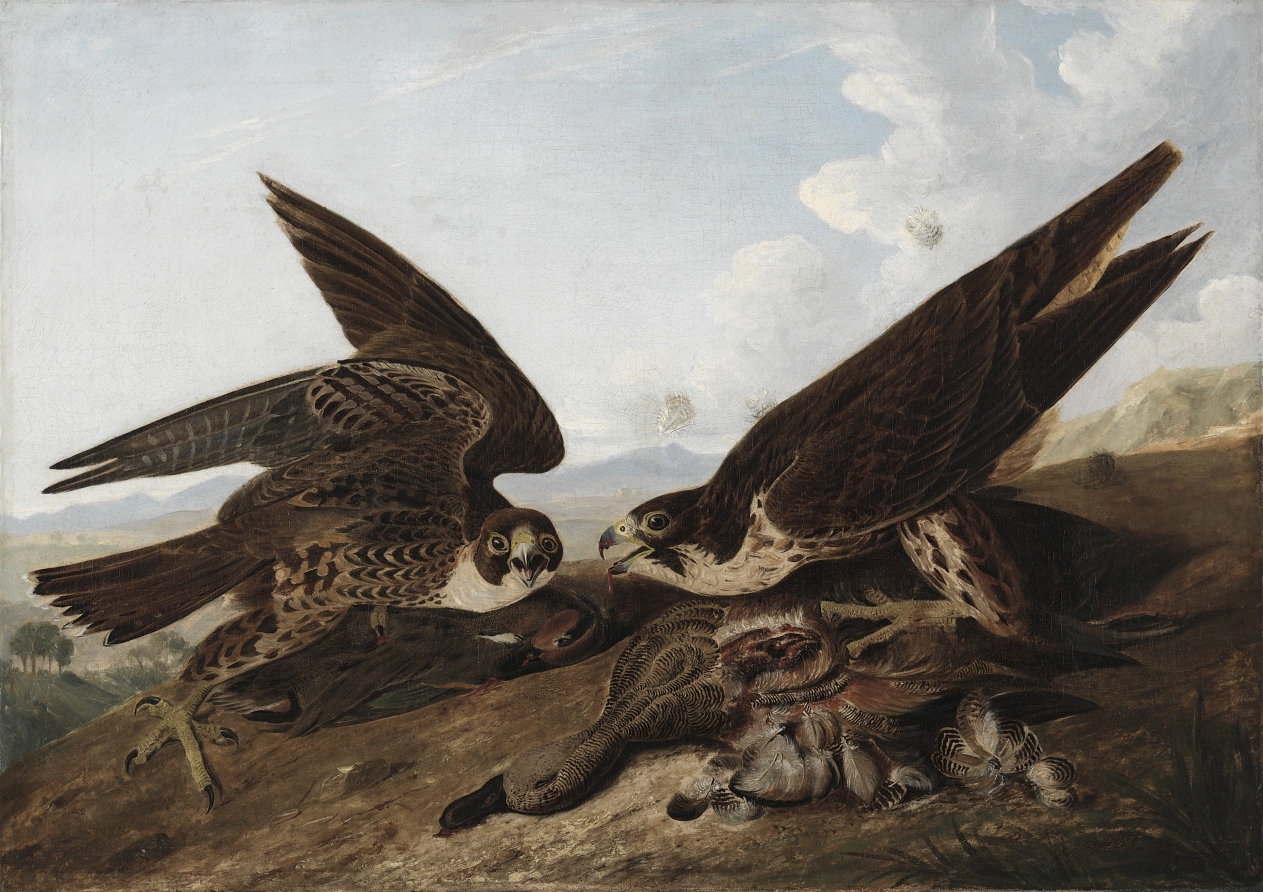
Peregrine Falcons (Duck Hawks), John James Audubon, c. 1827

Peregrine Falcons (Duck Hawks)

c. 1827 · Cleveland Museum of Art

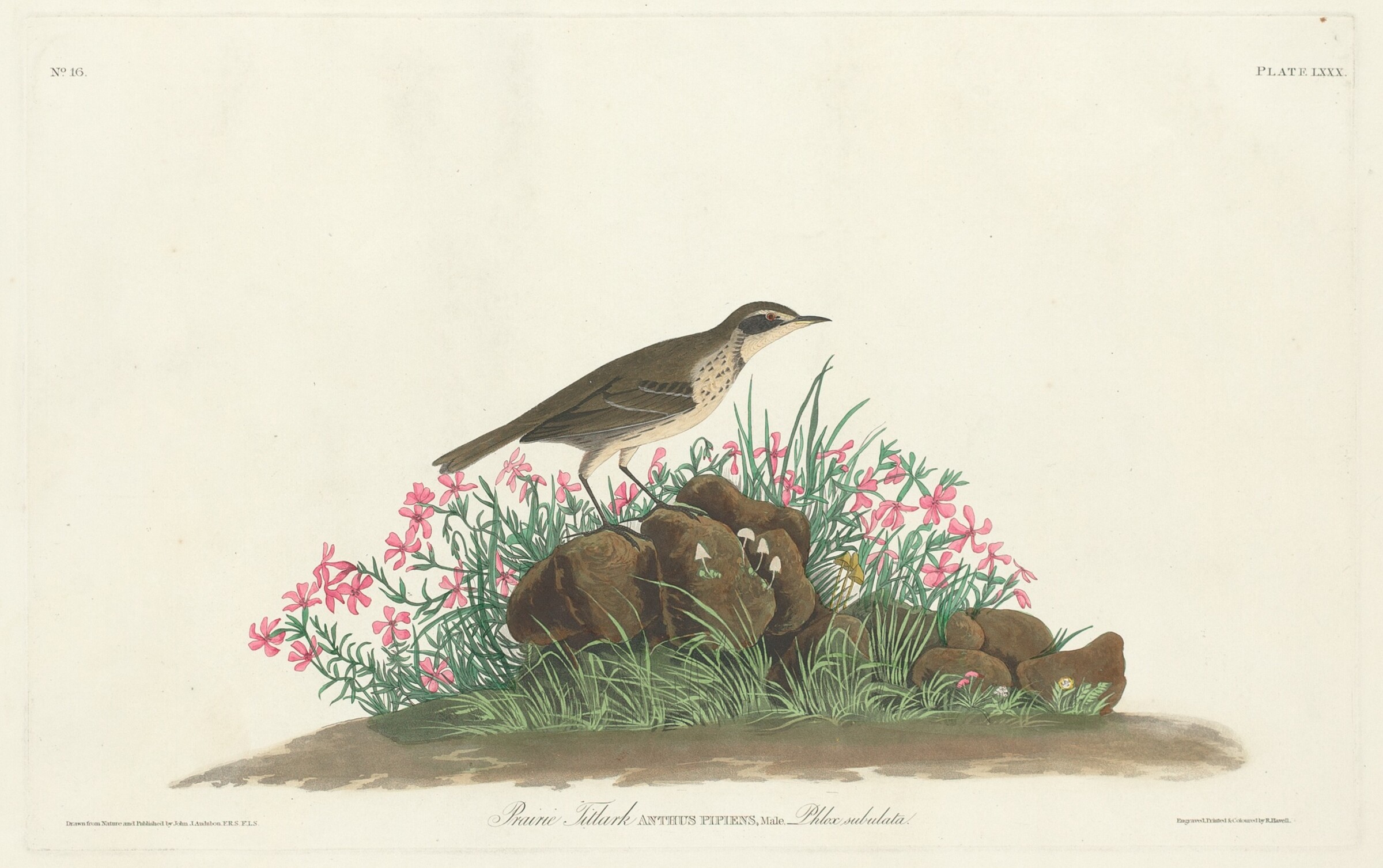
Prairie Titlark, Robert Havell, Jr. after John James Audubon

Prairie Titlark

Nicht ausgestellt · National Gallery of Art

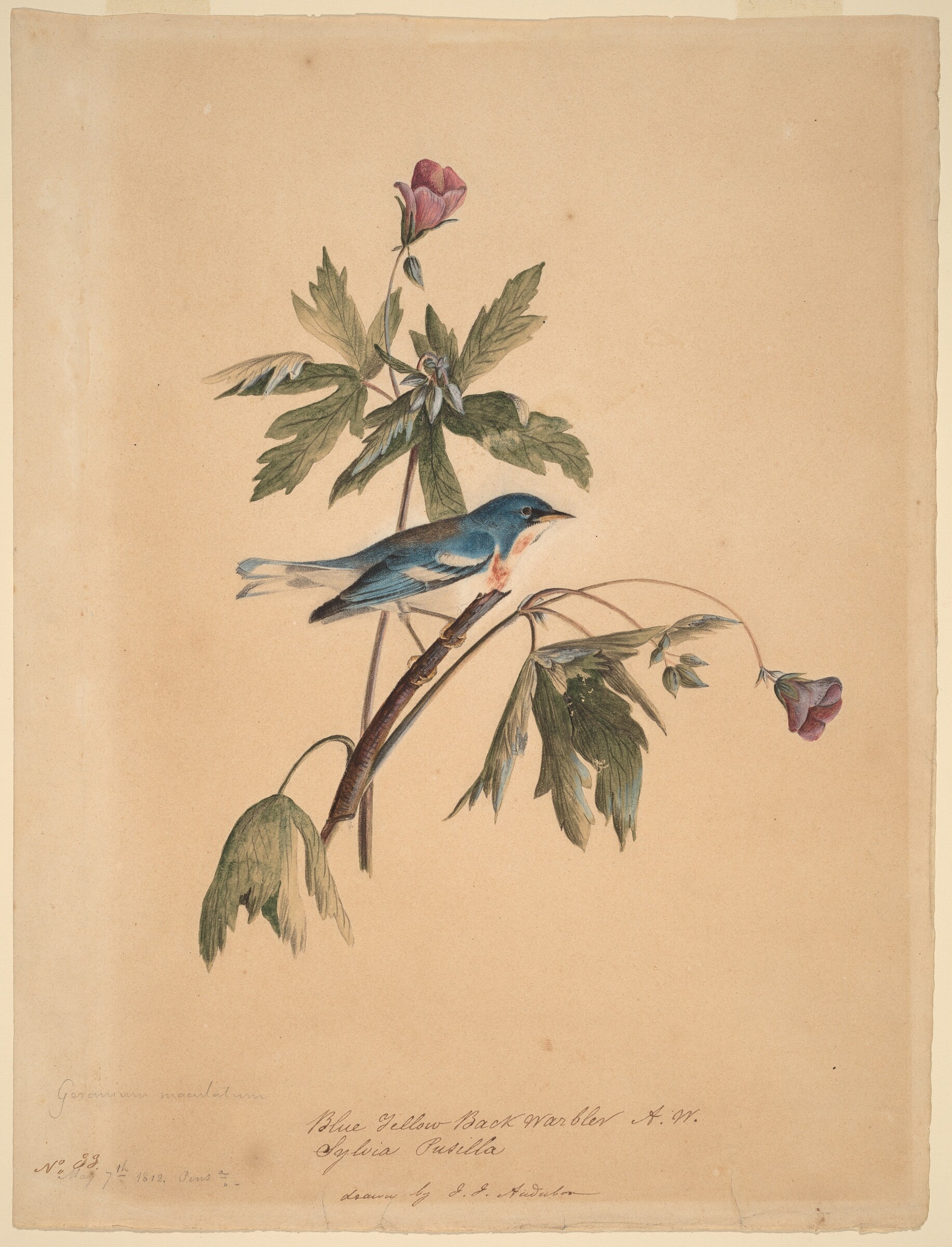
Blue Yellow Back Warbler, John James Audubon, 1812

Blue Yellow Back Warbler

1812 · Nicht ausgestellt · National Gallery of Art

Hermit Thrush, John James Audubon, 1820

Hermit Thrush

1820 · Nicht ausgestellt · National Gallery of Art

Prairie Warbler, Robert Havell after John James Audubon, 1827

Prairie Warbler

1827 · Nicht ausgestellt · National Gallery of Art

Song Sparrow, Robert Havell after John James Audubon, 1827

Song Sparrow

1827 · Nicht ausgestellt · National Gallery of Art

Snow-Bird, Robert Havell after John James Audubon, 1827

Snow-Bird

1827 · Nicht ausgestellt · National Gallery of Art

Great American Cock, William Home Lizars after John James Audubon, 1827

Great American Cock

1827 · Nicht ausgestellt · National Gallery of Art

Nachbarn im Haus: National Gallery of Art

Museumsseite
Ginevra de' Benci [obverse], Leonardo da Vinci, c. 1474/1478

Leonardo da Vinci

Bildnis der Ginevra de’ Benci, c. 1474/1478

Wreath of Laurel, Palm, and Juniper with a Scroll inscribed Virtutem Forma Decorat [reverse], Leonardo da Vinci, c. 1474/1478

Leonardo da Vinci

Wreath of Laurel, Palm, and Juniper with a Scroll inscribed Virtutem Forma Decorat [reverse], c. 1474/1478

Green Wheat Fields, Auvers, Vincent van Gogh, 1890

Vincent van Gogh

Green Wheat Fields, Auvers, 1890

Girl in White, Vincent van Gogh, 1890

Vincent van Gogh

Junges Mädchen, vor einem Weizenfeld stehend, 1890

Roses, Vincent van Gogh, 1890

Vincent van Gogh

Roses, 1890

Self-Portrait, Vincent van Gogh, 1889

Vincent van Gogh

Self-Portrait, 1889

Farmhouse in Provence, Vincent van Gogh, 1888

Vincent van Gogh

Bauernhof in der Provence, 1888

La Mousmé, Vincent van Gogh, 1888

Vincent van Gogh

La Mousmé, 1888

Zum selben Thema · Pflanzen

Alle Werke zum Thema
Marie-Thérèse Looking at Her Sculpted Body (Marie-Thérèse regardant son corps sculpté), Pablo Picasso, 1933

Pablo Picasso

Marie-Thérèse Looking at Her Sculpted Body (Marie-Thérèse regardant son corps sculpté), 1933

Nicht ausgestellt · National Gallery of Art

Pike (Pique), Pablo Picasso, 1959

Pablo Picasso

Pike (Pique), 1959

Nicht ausgestellt · National Gallery of Art

The Frog (Les Grenouilles), Pablo Picasso, 1936

Pablo Picasso

The Frog (Les Grenouilles), 1936

Nicht ausgestellt · National Gallery of Art

Young Bacchus with a Tambourine, with a Bacchante (Jeune Bacchus au tambourin, avec un Bacchante), Pablo Picasso, 1934

Pablo Picasso

Young Bacchus with a Tambourine, with a Bacchante (Jeune Bacchus au tambourin, avec un Bacchante), 1934

Nicht ausgestellt · National Gallery of Art

Drinker Caressing a Reclining Woman, Pablo Picasso, 1938

Pablo Picasso

Drinker Caressing a Reclining Woman, 1938

Nicht ausgestellt · National Gallery of Art

Flowers, Andy Warhol, 1970

Andy Warhol

Flowers, 1970

Nicht ausgestellt · National Gallery of Art

Apollo and Marsyas, Master of the Die after Raphael, 1530s

Raphael

Apollo and Marsyas, 1530s

Nicht ausgestellt · National Gallery of Art

A Young and an Old Bacchant, Marcantonio Raimondi, after Raphael or Giulio Romano, ca. 1514–36

Raphael

A Young and an Old Bacchant, ca. 1514–36

Nicht ausgestellt · National Gallery of Art