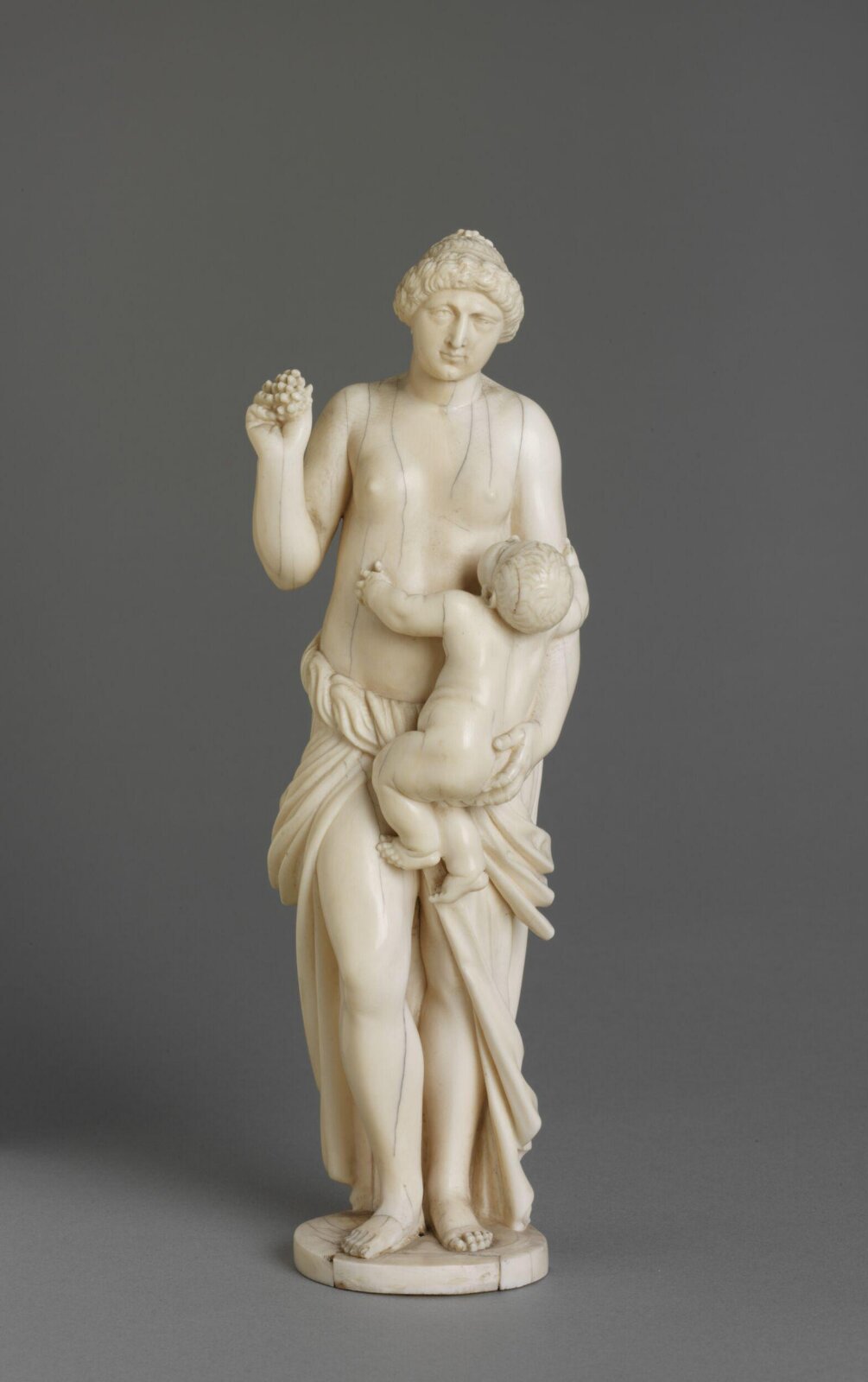
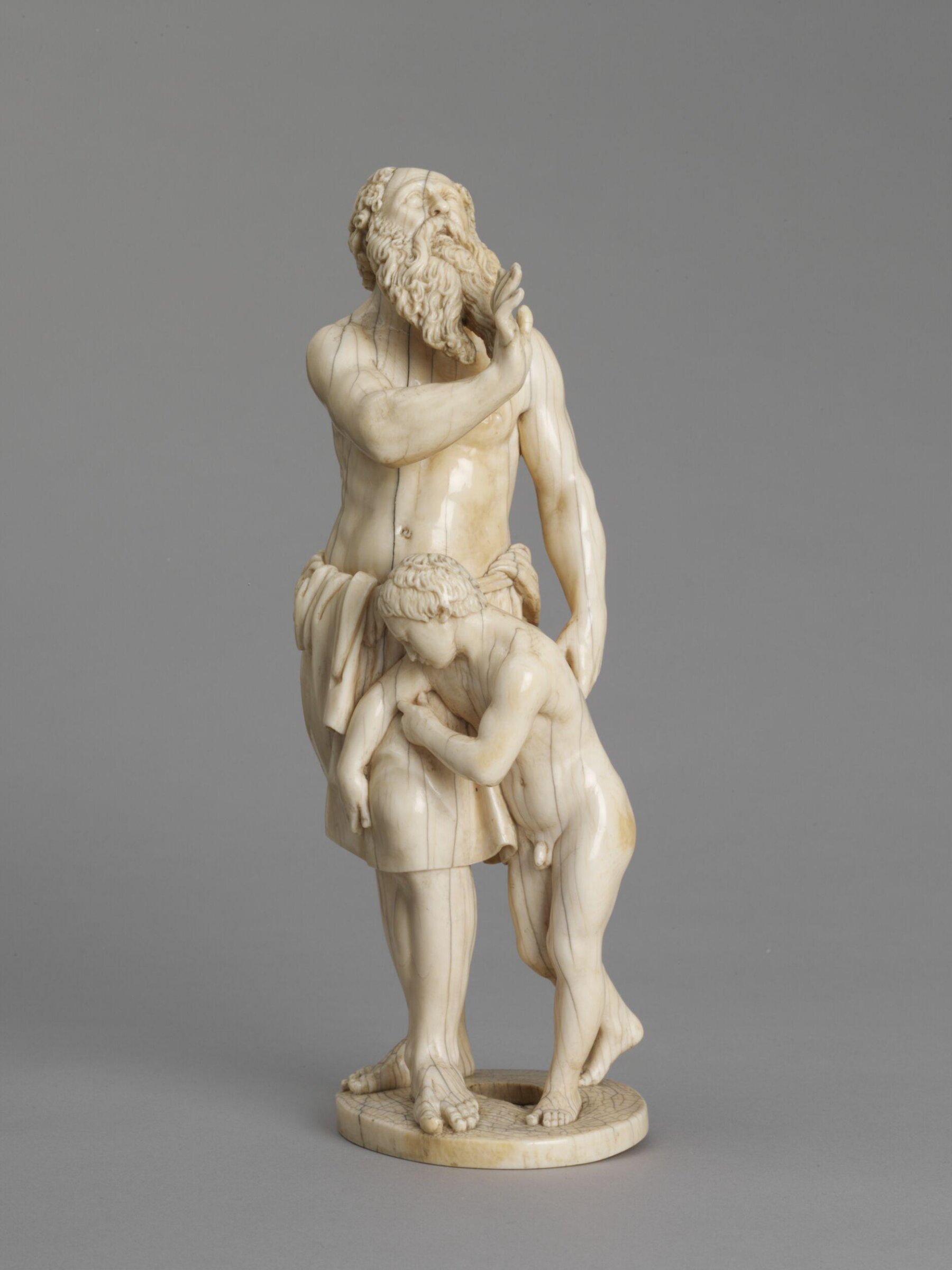
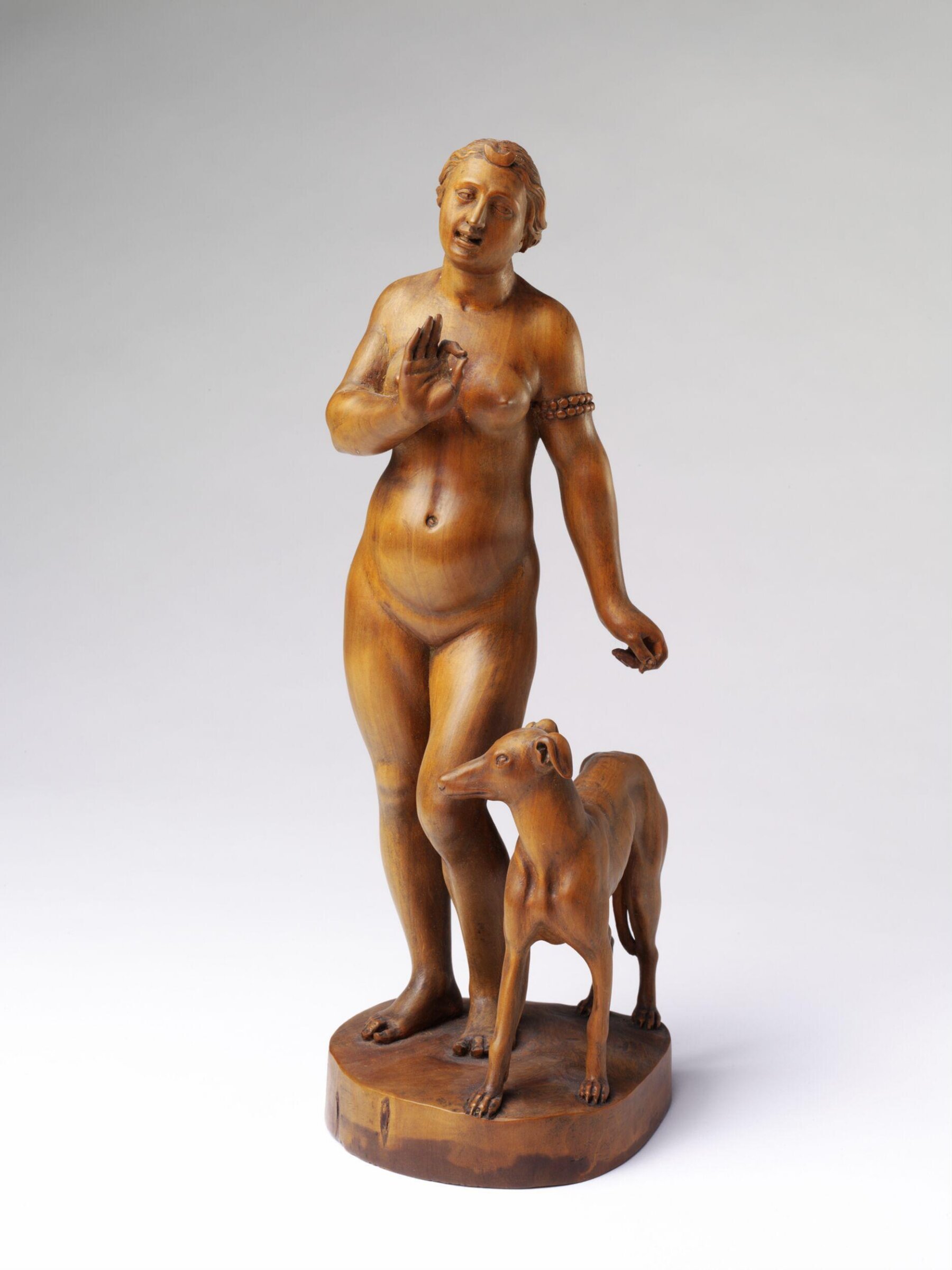
This statuette in ivory was almost certainly made by Leonhard Kern in Germany in about 1620-1645. The group represents Charity. The head and figure type are closely analogous to other works by Kern, such as the Three Graces in the Württembergisches Landesmuseum, Stuttgart and the Abundance in the Kunsthistorisches Museum in Vienna as well as the Abundance in the V&A's own collection (A.38-1949). The figure is probably an allegory of Charity, the child an indirect reference to the Christ child. The grapes represent earthly charity and also perhaps refer to the Eucharist.
Read on
Charity (lat. Caritas), literally means 'love', love in the sense of lovingness and kindness towards all others and is the foremost of the virtues. Charity is often represented with a flame, often coming out of some kind of vase, or she holds a candle. Often she is suckling to infants, or she is surrounded by three to four infants, one usually at the breast.
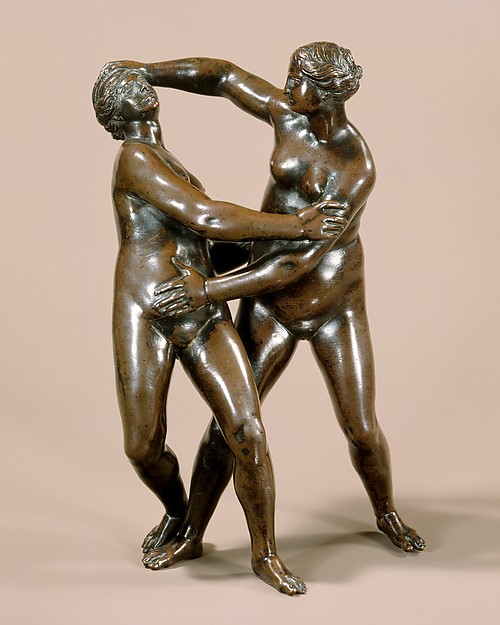
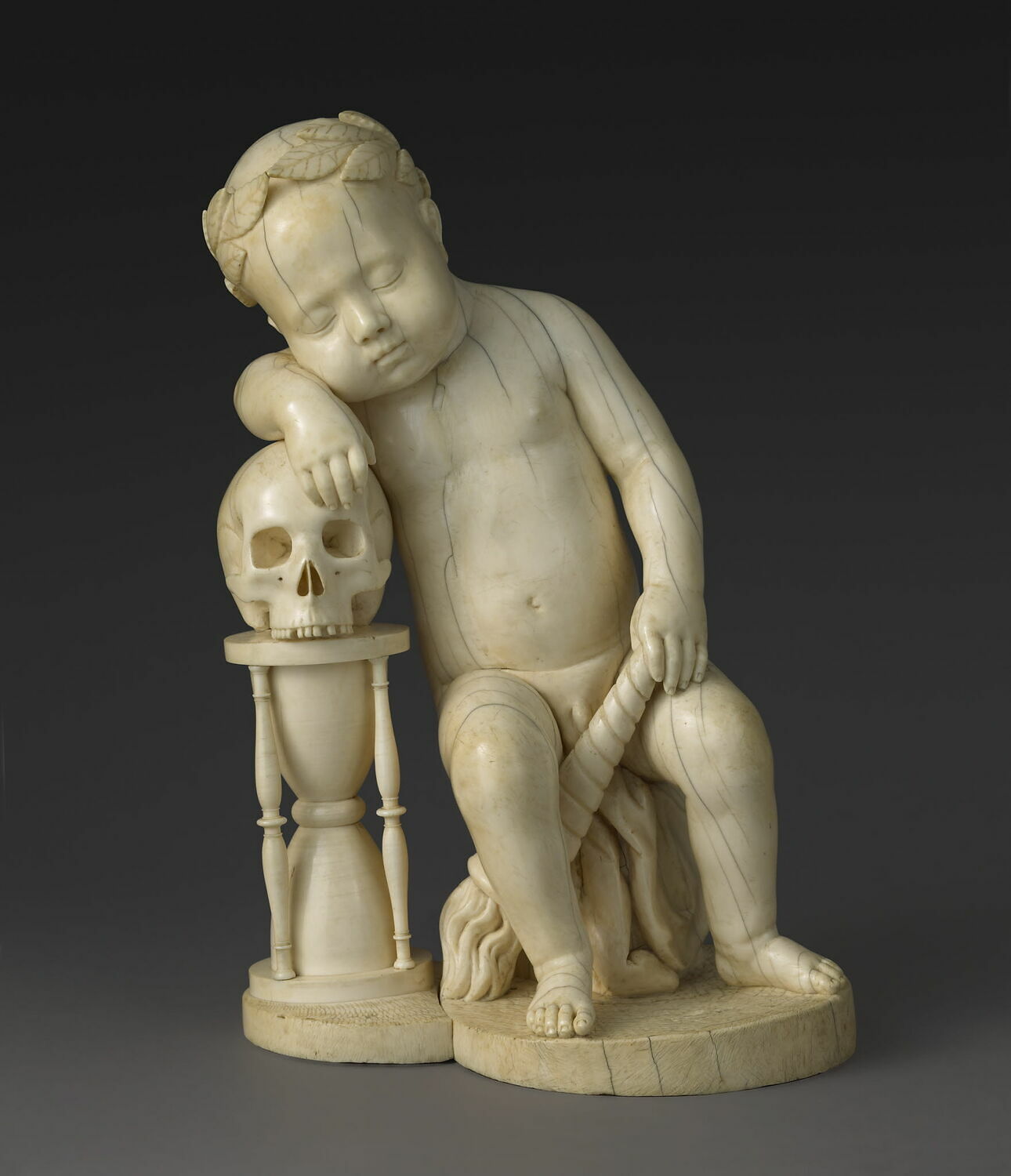
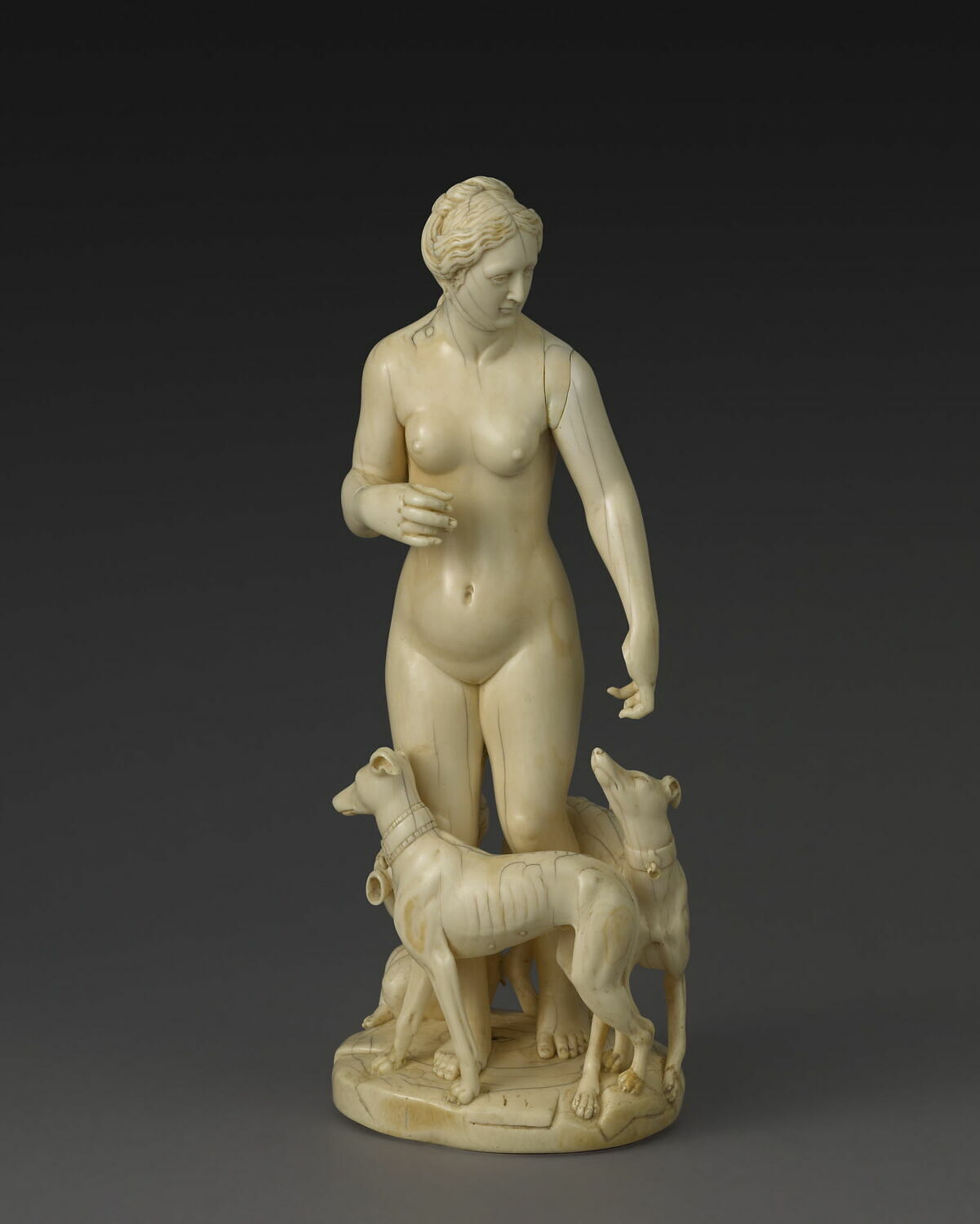
Kern (1588-1662) trained under his brother Michael Kern (1580-1649) and then spent four years travelling mainly in Rome, Naples and Venice, though he also visited North Africa and Slovenia. His figures, often nudes, are distinctive in style, being both monumental and individualistic, inspired by South Netherlandish Sources, such as Rubens, but fusing them with Italianate poses. His female nudes are frequently shown with elaborate coiffures.