 Beatrix Potter1866–1943
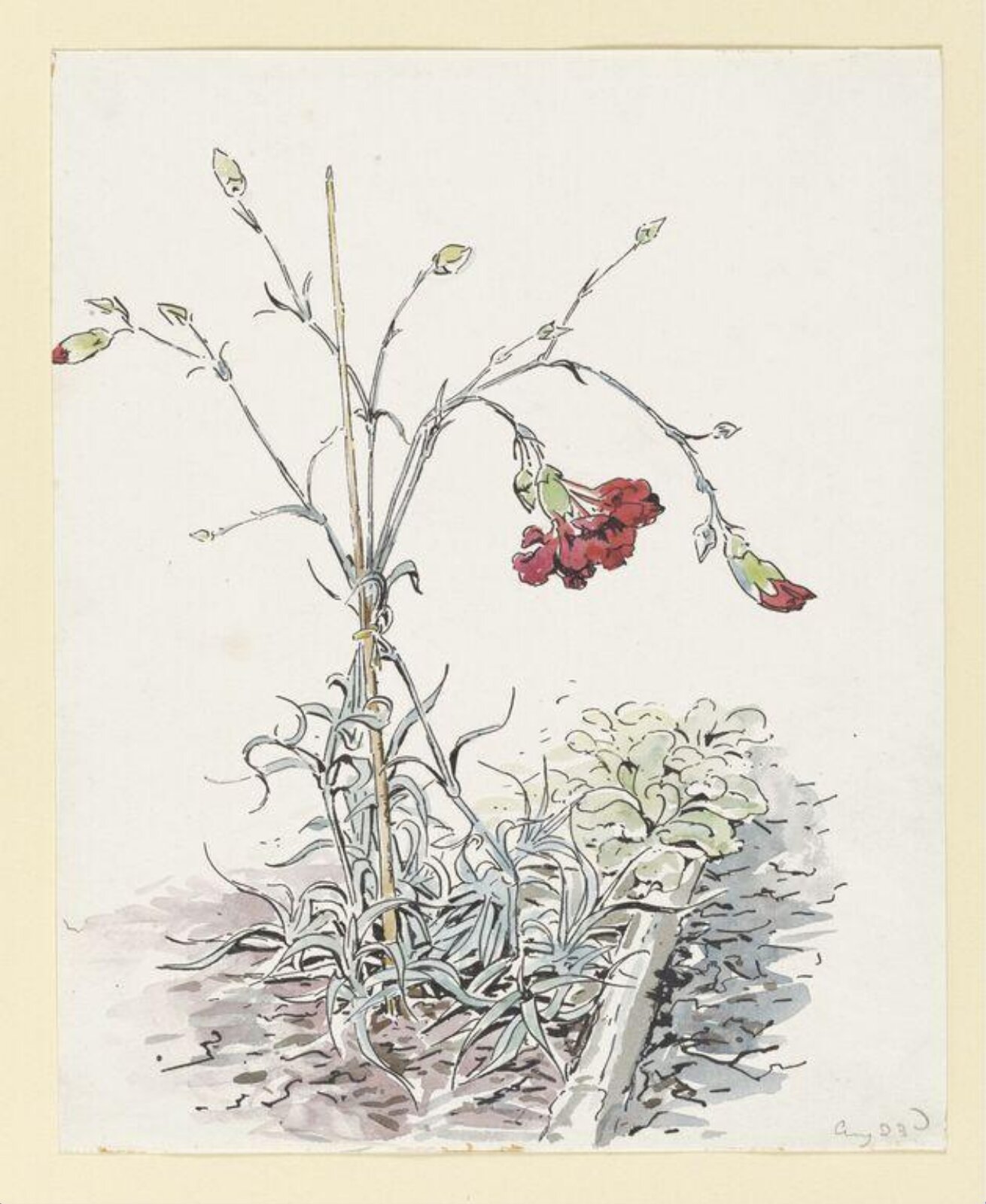
Carnations
Darf man es sehen?
Empfängt derzeit nicht

Victoria and Albert Museum
London, Vereinigtes Königreich
Es gehört zur Sammlung, ist derzeit aber nicht ausgestellt.
- Geprüft
- vor 7 Tagen
- Unverändert seit
- 25. Sept. 2026
- Quelle
- Sammlungsdaten des Museums selbst
Über das Werk
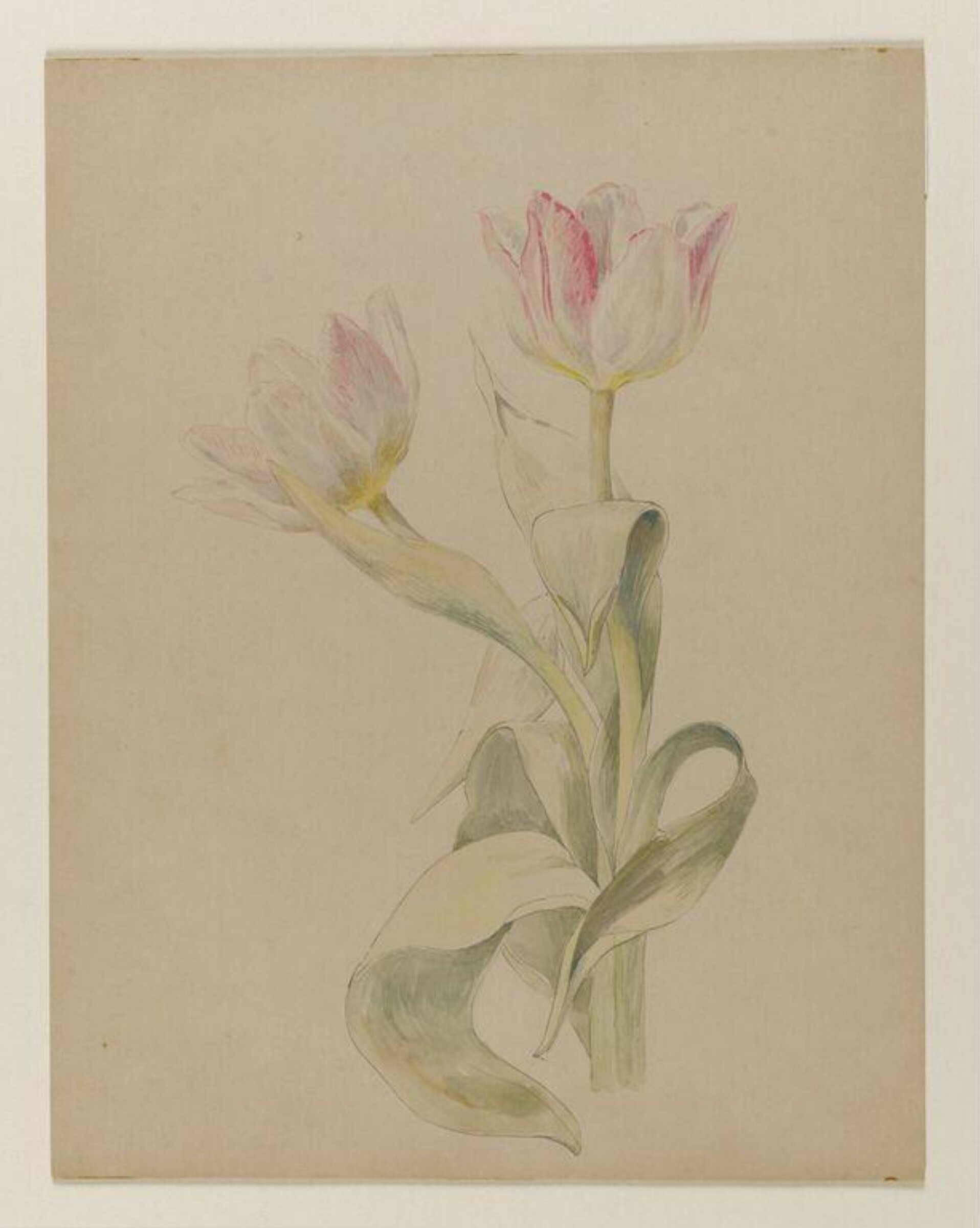
Beatrix Potter (1866-1943) made this drawing of carnations in a flower bed as a background study for the originally proposed (but not eventually used) frontispiece of The Tale of Benjamin Bunny. The Tale of Benjamin Bunny was first published in September 1904 in a print run of 20,000 copies; these copies lasted only a month before a reprint was needed. The book was reviewed in The Times Literary Supplement on 28 October; the reviewer was unsure about the text of Potter’s latest story but felt ‘no hesitation in calling her pencil perfect’, a review Potter herself found ‘most amusing’. There are other studies for the originally proposed frontispiece in the Linder Bequest, two of which include the rabbits, Benjamin and Peter.
Read on
Beatrix Potter is one of the world's best-loved children's authors and illustrators. She wrote the majority of the twenty-three Original Peter Rabbit Books between 1901 and 1913. The Tale of Peter Rabbit (Frederick Warne, 1902) is her most famous and best-loved tale.
Victoria and Albert Museum
Angaben
- Inventarnummer
- BP.488
What it shows
Im Katalog
Quellen
- Victoria and Albert Museum: the museum's own open data · abgerufen vor 7 Tagen
- Bild: Victoria and Albert Museum — © Victoria and Albert Museum, London
Derweil im Leben von Beatrix Potter
Das ganze Leben1900–1901
A dummy book of the rabbit tale, printed at her own expense
In 1900 Beatrix revised her tale of the four little rabbits and made a dummy book of it — it has been suggested, in imitation of Helen Bannerman’s 1899 bestseller; no one would buy it. So in December 1901 she had it printed at her own expense for family and friends — in black and white, with a coloured frontispiece.
2 October 1902
“The Tale of Peter Rabbit” is published
Several publishers had turned the manuscript down, Frederick Warne & Co among them, but the firm, eager to enter the booming market for small-format children’s books, reconsidered on the advice of the artist L. Leslie Brooke; it declined Rawnsley’s verse version in favour of Beatrix’s own prose, and she agreed to colour her illustrations, choosing the new Hentschel three-colour process. “The Tale of Peter Rabbit” appeared on 2 October 1902 and was an immediate success.
1903
A patented Peter Rabbit toy: the birth of character merchandising
In 1903 Beatrix made and patented a Peter Rabbit doll — he became the first fictional character made into a patented soft toy, and so the oldest licensed character. Painting books, board games, wallpaper, figurines, baby blankets and china tea-sets followed under licence from her publisher Warne, earning her an independent income, and Harrods catalogues list Peter merchandise from at least 1910.
1905
Engagement to Norman Warne, and his death
In 1905 Beatrix and her publisher Norman Warne became unofficially engaged; her parents objected because Warne was “in trade” and so socially unsuitable. The engagement lasted only a month: Warne died of a blood disease at the age of 37.
1905
Buys Hill Top Farm in Near Sawrey
In 1905, with the proceeds of her books and a small legacy from an aunt, Beatrix bought Hill Top Farm in Near Sawrey in the Lake District, six miles west of Lake Windermere. She and Warne may have hoped it would be their holiday home, but after his death she went ahead with the purchase, as she had always wanted to own that farm and live in “that charming village”.
1905–1913 · Ausbildung
governance