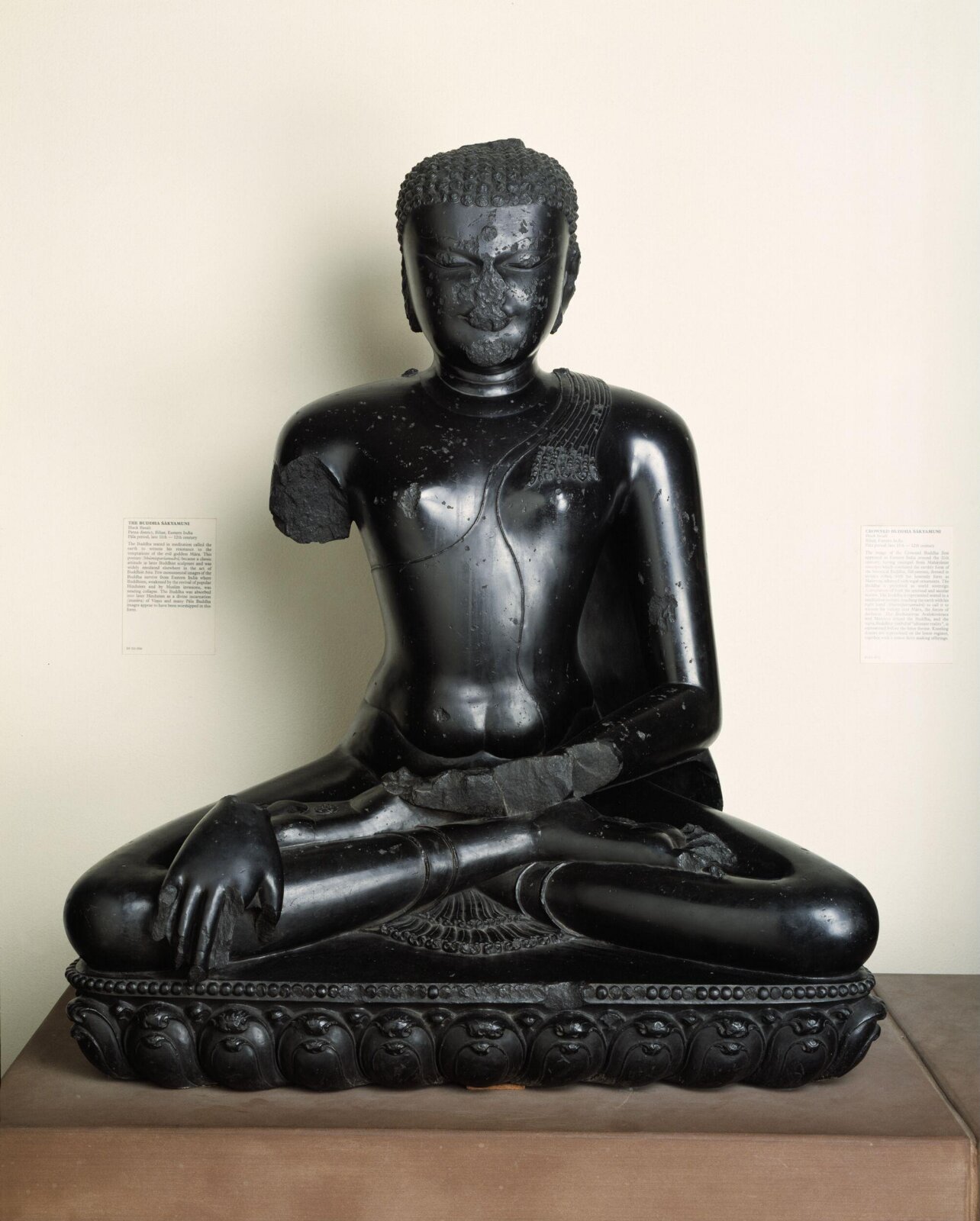
Buddha Shakyamuni
Darf man es sehen?
Ja, es empfängt Besucher

Victoria and Albert Museum
SaalSouth-East Asia, Room 47cLondon, Vereinigtes Königreich
Öffentlich ausgestellt. Wer dafür bürgt, steht unten.
- Geprüft
- vor 8 Tagen
- Unverändert seit
- 25. Sept. 2026
- Quelle
- Sammlungsdaten des Museums selbst
About the sculpture
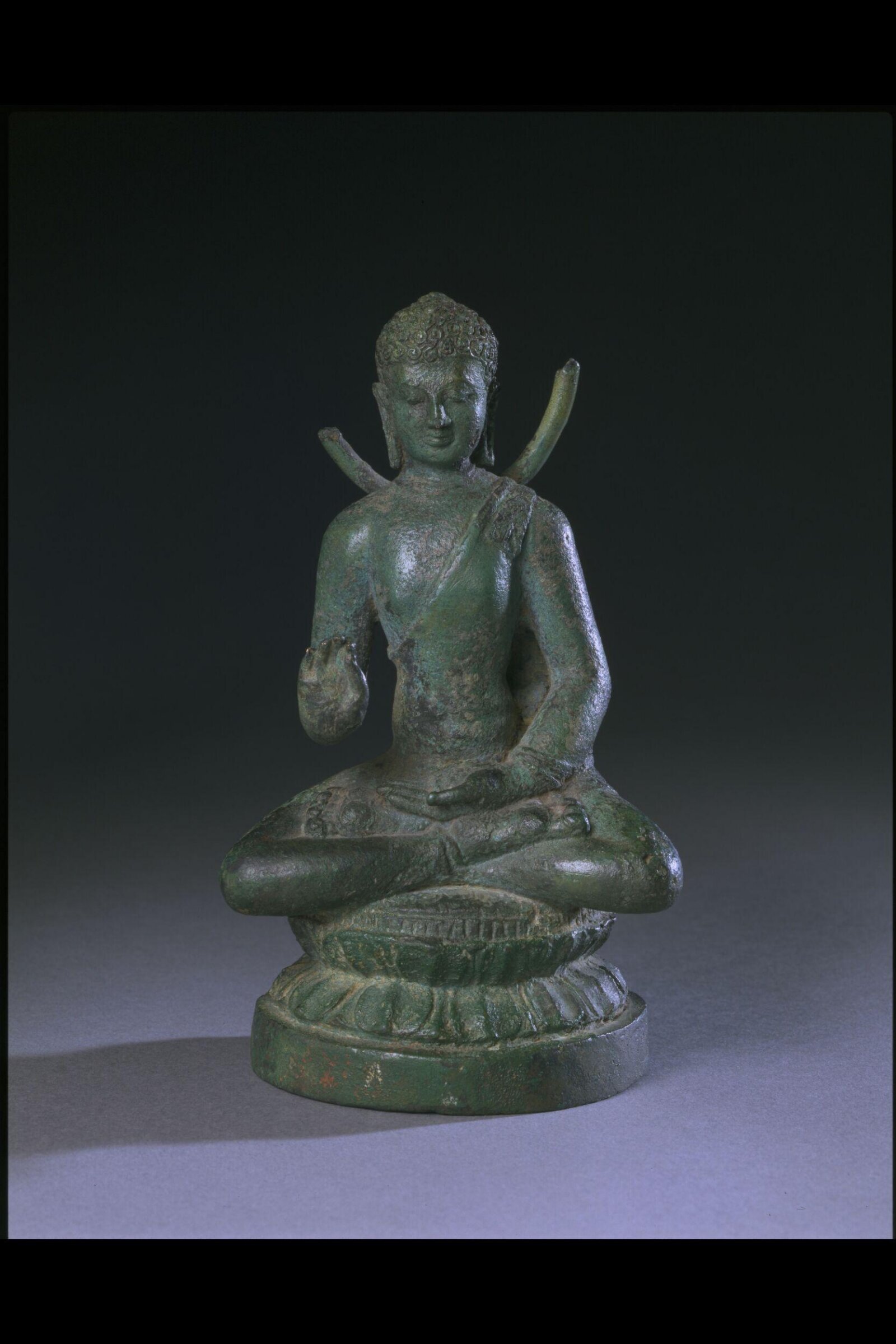
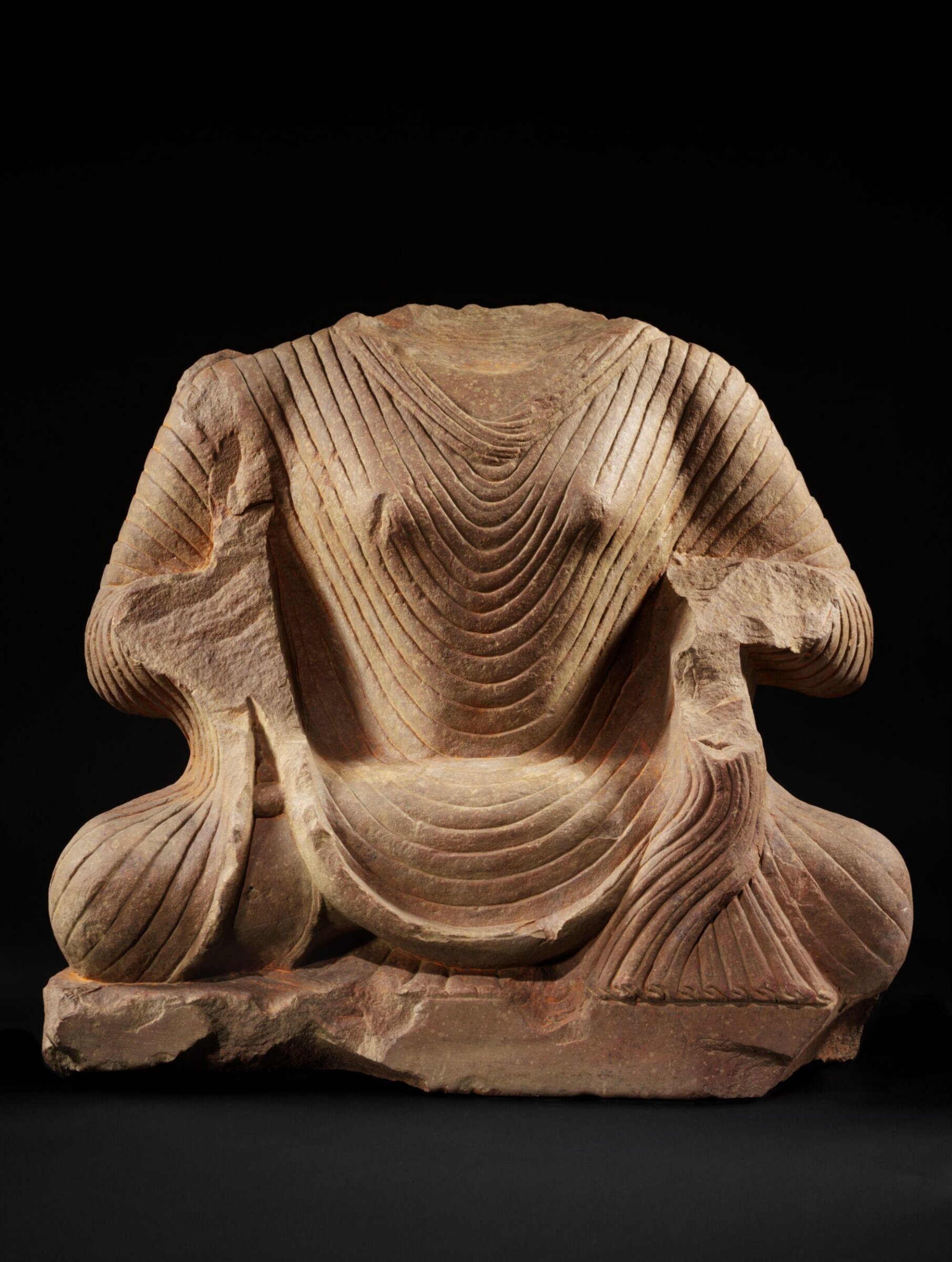
There are few large-scale images of the Buddha in eastern India and this example is among the finest to have been preserved. It shows the Buddha seated in meditation on a lotus throne (‘padmasana’) with a ‘vajra’ (thunderbolt). These features identify it specifically as a ‘diamond throne’ (‘vajrasana’).
The gesture of the lowered hand position (‘bhumisparsa-mudra’) is significant. It confirms that Shakyamuni is calling the earth to witness his resistance of the temptations of the demonic goddess Mara and the forces of worldly attachments. The combination of the ‘diamond throne’ and the mudra confirm that this image is intended to depict the historical Buddha at Bodhgaya, immediately prior to his Enlightenment.
Read on
This posture became a classic attitude in later Buddhist sculpture and was widely emulated elsewhere in the art of Buddhist Asia. Few monumental images of the Buddha survive from eastern India. Buddhism, weakened by the arrival of popular Hinduism and by Muslim invasions, was nearing collapse in the region at this time. Later, medieval Hinduism re-absorbed the Buddha as a divine incarnation (‘avatara’) of Vishnu, and many Buddha images of the Pala period (about 760-1142) appear to have been worshipped in this form.
Victoria and Albert Museum
Angaben
- Inventarnummer
- IM.112-1916
What it shows
Im Katalog
Quellen
- Victoria and Albert Museum: the museum's own open data · abgerufen vor 8 Tagen
- Bild: Victoria and Albert Museum — © Victoria and Albert Museum, London