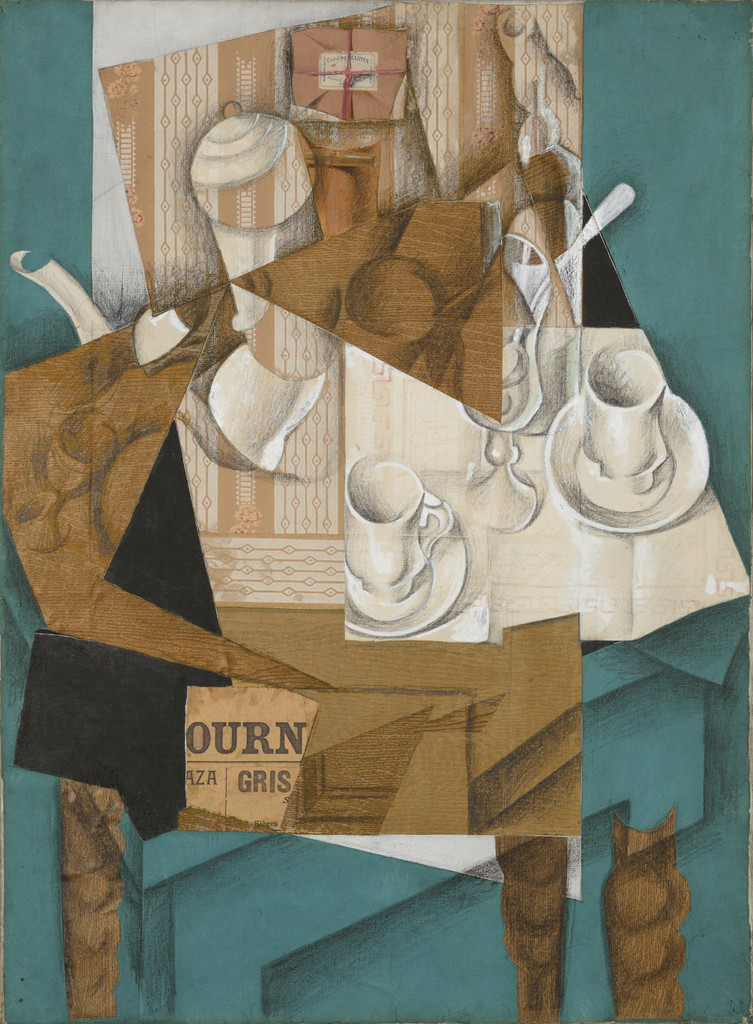
 Juan GrisSpanien, 1887–1927
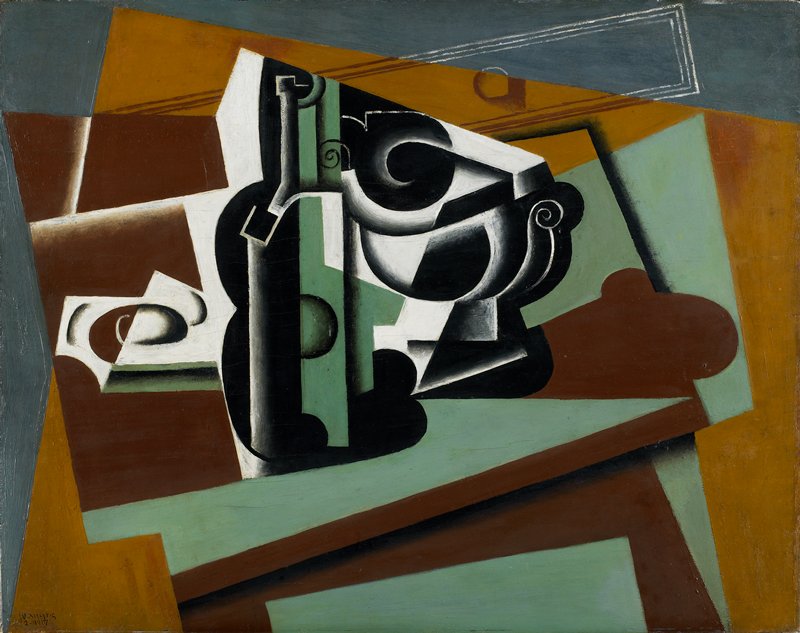
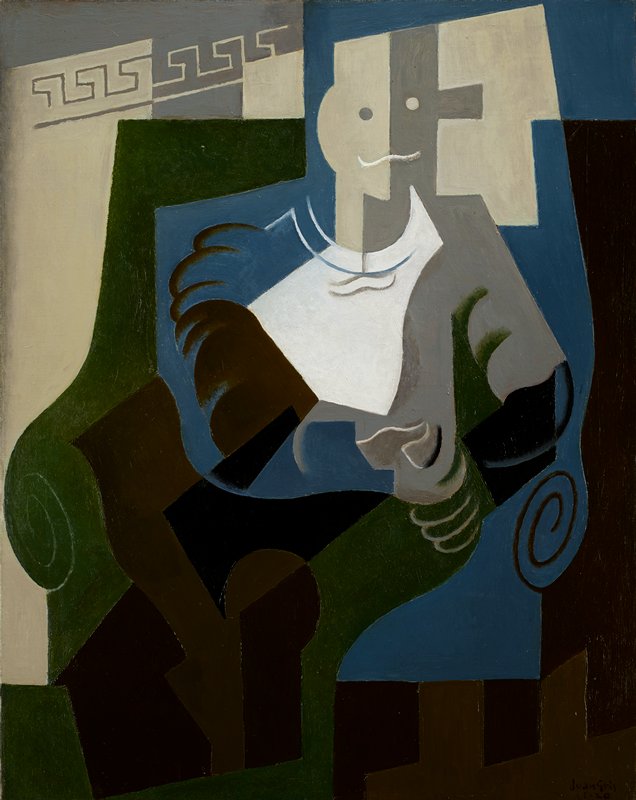
Breakfast (Le Petit déjeuner)
Darf man es sehen?
Empfängt derzeit nicht

New York City, Vereinigte Staaten
Es gehört zur Sammlung, ist derzeit aber nicht ausgestellt.
- Geprüft
- Quelle
- Das Museum
Angaben
- Inventarnummer
- 248.1948
Im Katalog
Quellen
- Museum of Modern Art
- Bild: Museum of Modern Art — © the artist or rights holder
Derweil im Leben von Juan Gris
Das ganze Leben1910s–1920s
The pupil Picasso “wished away”
Gris regarded Picasso as a teacher, but according to Gertrude Stein in The Autobiography of Alice B. Toklas, Picasso treated him with undisguised irritation: Gris was the only person Picasso wished away. At first Gris was spoken of only as Picasso’s follower, but when he became an independent artist and one of the leaders of Cubism, Picasso grew jealous.
1912
A contract with Daniel-Henry Kahnweiler
That same year he signed a contract that gave Daniel-Henry Kahnweiler exclusive rights to his work.
1912
Shows of 1912: Barcelona, Berlin, Rouen, Paris
In 1912 he exhibited at the Exposició d’art cubista at the Galeries Dalmau in Barcelona, the first declared group exhibition of Cubism anywhere; at the Der Sturm gallery in Berlin; at the Salon de la Société Normande de Peinture Moderne in Rouen; and at the Salon de la Section d’Or in Paris, where he showed with the painters of the Puteaux Group.
1912
Debut at the Salon des Indépendants: “Hommage à Pablo Picasso”
In 1912 he exhibited for the first time, at the Salon des Indépendants, with a painting entitled Hommage à Pablo Picasso.
1912
Meets Josette Herpin
In 1912 Gris met Charlotte Augusta Fernande Herpin (1894–1983), known as Josette. In late 1913 or early 1914 they began living together at the Bateau-Lavoir, where they stayed until 1922; Josette became his second companion and unofficial wife.
1913–1918
From Analytical to Synthetic Cubism
At first Gris painted in the style of Analytical Cubism, a term he himself later coined; after 1913 he converted to Synthetic Cubism, making extensive use of papier collé, or collage, an evolution that ran through 1914–1918. Unlike Picasso and Braque, whose Cubist works were practically monochromatic, he painted in bright harmonious colours in daring, novel combinations, in the manner of his friend Matisse.