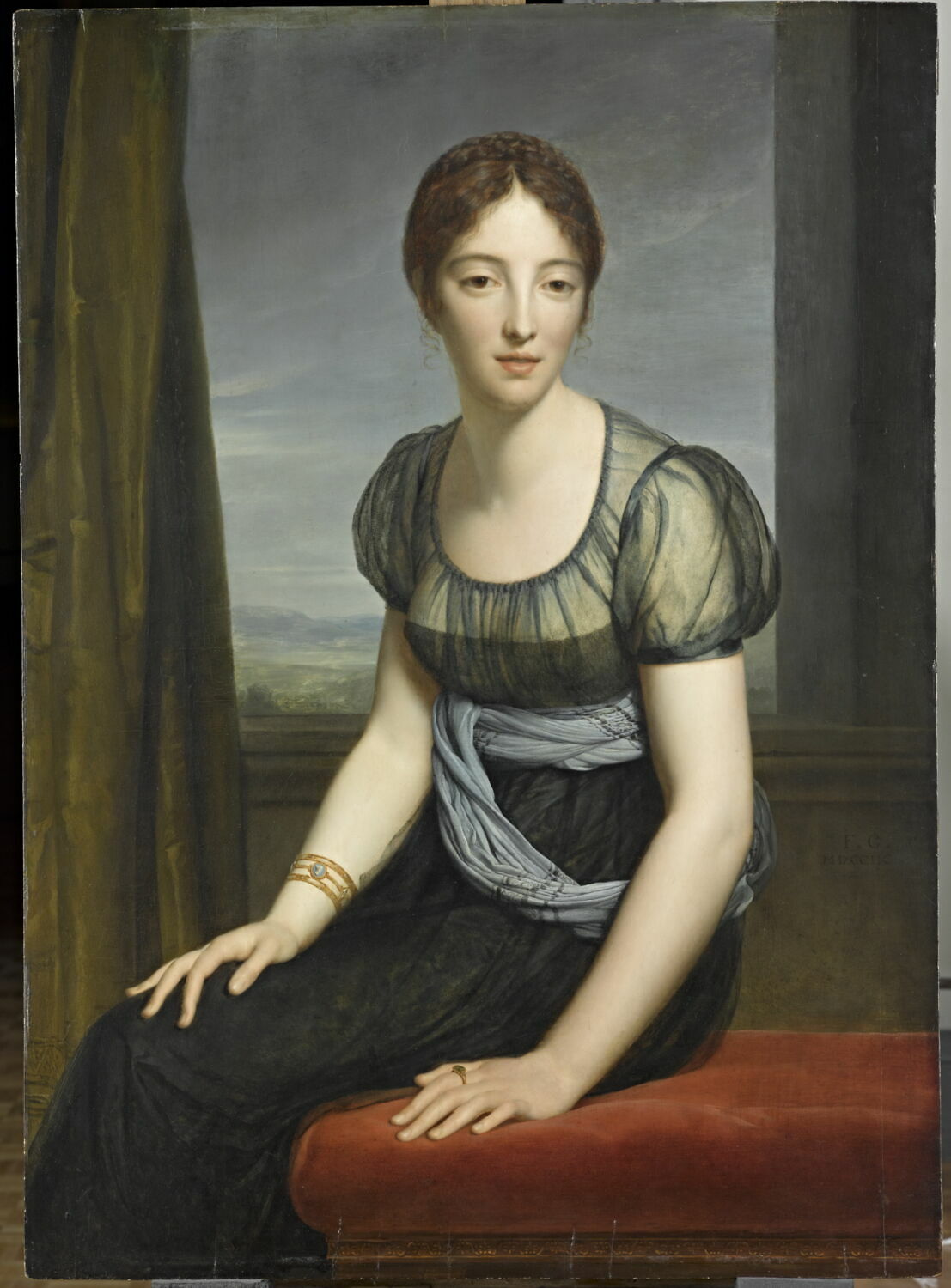
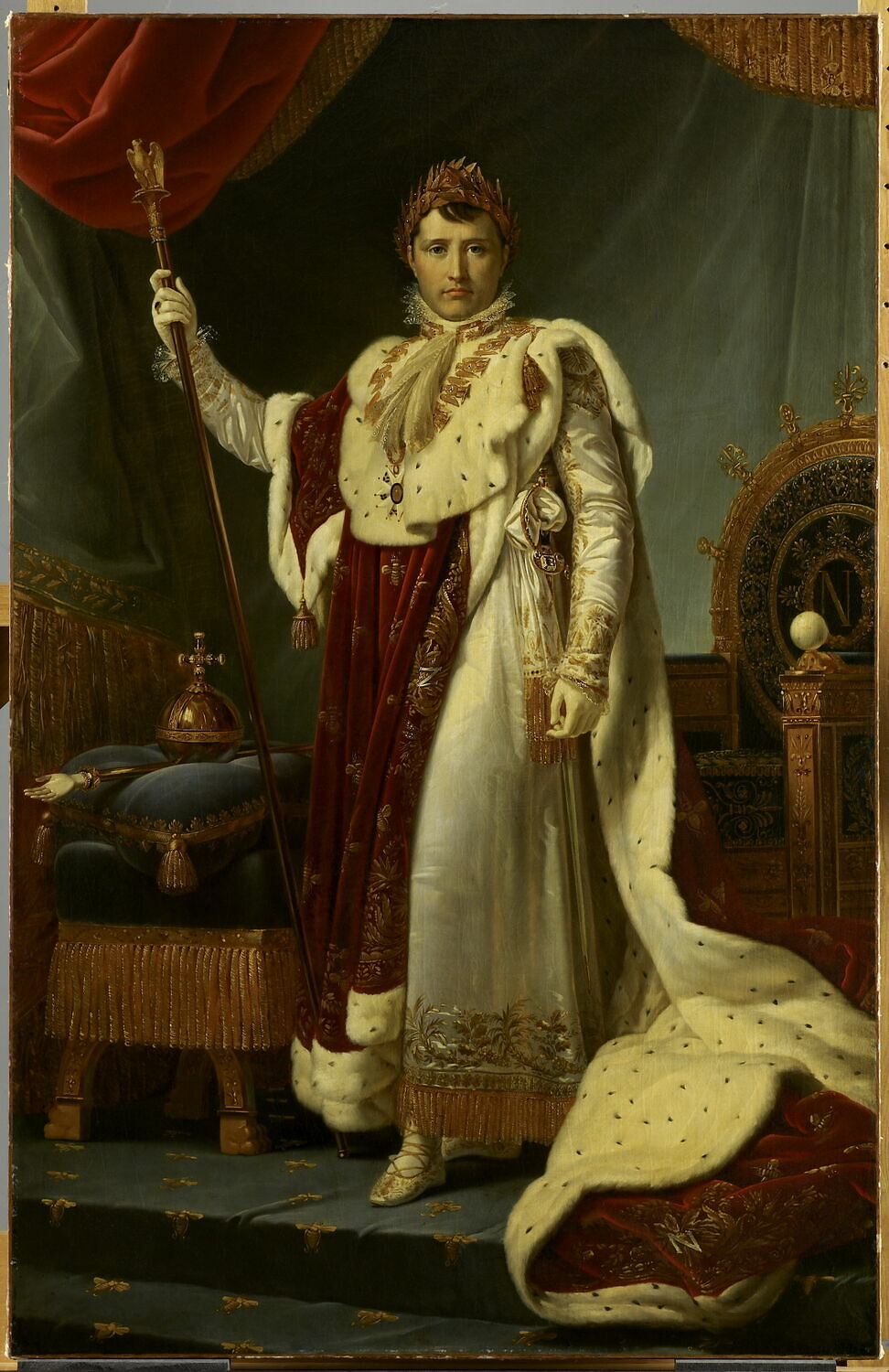
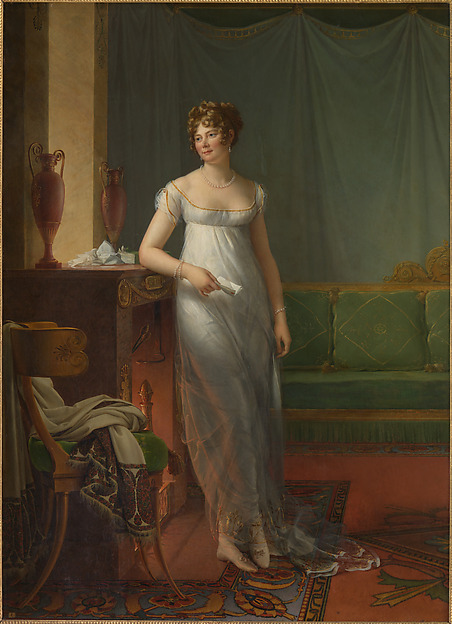
François GérardFrankreich, 1770–1837
Belisarius
Darf man es sehen?
Ja, es empfängt Besucher
Öffentlich ausgestellt.
- Geprüft
- Unverändert seit
- Quelle
- Das Museum
Über das Gemälde
Along a winding dirt path, the blind Belisarius carries his young guide. The boy has been bitten by a snake, which remains coiled around his bleeding leg. With his right arm wrapped limply around Belisarius's neck and his eyes closed, the youth balances precariously between life and death. Belisarius's eyes are also closed, but guided by his stick he moves forward with determination and purpose. He rises heroically against the spectacular sunset, a monumental figure creating a powerful outline against the sky. But the flaring sunset also signals a chill night and the uncertainty of the path ahead. Belisarius was a popular Byzantine general of the Roman Empire whose promising career was sabotaged by the jealous Emperor Justinian I. In 1767, a novel by Jean-François Marmontel revived interest in Belisarius.
Mehr lesen
In Marmontel's novel, the emperor has the heroic general blinded, reducing Belisarius to begging. He is eventually rediscovered and aided by former officers and his family. This dramatic tale of patriotism, injustice, and redemption was widely embraced in revolutionary and post-revolutionary France and was a popular subject for artists--including Jacques-Louis David (François Gérard's teacher), Jean-Antoine Houdon, and Jean-Baptiste Stouf (whose sculpture [*Belisarius*](https://www.getty.edu/art/collection/objects/225277/jean-baptiste-stouf-belisarius-french-about-1785-1791/?dz=0.5000,0.5000,0.60#8fb947da1d5e84c9e4f28e4fd82237a3f31db0c0) is also in the Museum's collection). For this painting, Gérard both drew and departed from Marmontel's retelling of Belisarius's life. The general's young companion is present in Marmontel's novel.
But to stress the bravery and pathos of the subject, Gérard introduced the incapacitating snakebite. While Belisarius was typically depicted in the act of begging, Gérard shows him standing and erect, his muscular form in sharp contrast to his guide's weakening body. The prominent helmet hanging from Belisarius's belt emphasizes the general's heroic past and underscores the injustice of his fall from favor.
J. Paul Getty Museum
Angaben
- Inventarnummer
- 2005.10
Im Katalog
Quellen
- J. Paul Getty Museum
- Bild: J. Paul Getty Museum — Open Content
Derweil im Leben von François Gérard
Das ganze Leben1790s
Lodgings and a studio in the Louvre, a commission from Didot
Thanks to David’s patronage Gérard received lodgings and a studio in the Louvre and a commission for a series of illustrations (La Fontaine, Virgil) for the publisher Didot.
1792–1837 · Wirkungsort
Paris
1795
“Belisarius” at the Salon of 1795
Spurred on by the successes of his rival and friend Girodet at the Salons of 1793 and 1794, and aided by the miniaturist Jean-Baptiste Isabey, Gérard painted “Belisarius”, which at the Salon of 1795 showed his continuity with David.
1798
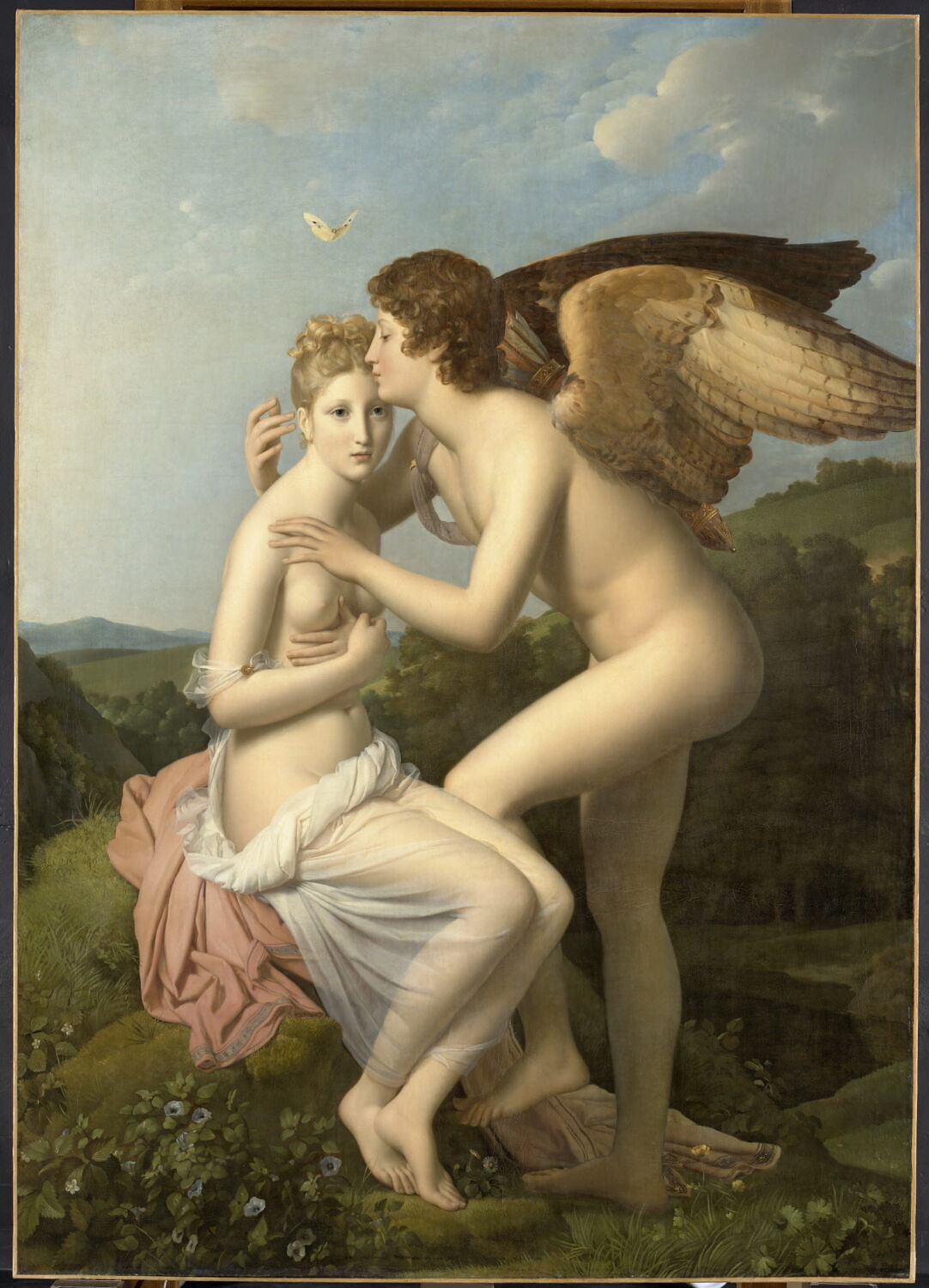
Salon of 1798: “Cupid and Psyche”
“The First Kiss of Cupid and Psyche”, painted in 1797 with the money from Isabey, brought Gérard the fame he had longed for; the many portraits of high society that followed established his reputation.