La'l
Baqi Muhammed Khan
Darf man es sehen?
Empfängt derzeit nicht

Victoria and Albert Museum
London, Vereinigtes Königreich
Es gehört zur Sammlung, ist derzeit aber nicht ausgestellt.
- Geprüft
- Unverändert seit
- Quelle
- Das Museum
Über das Gemälde
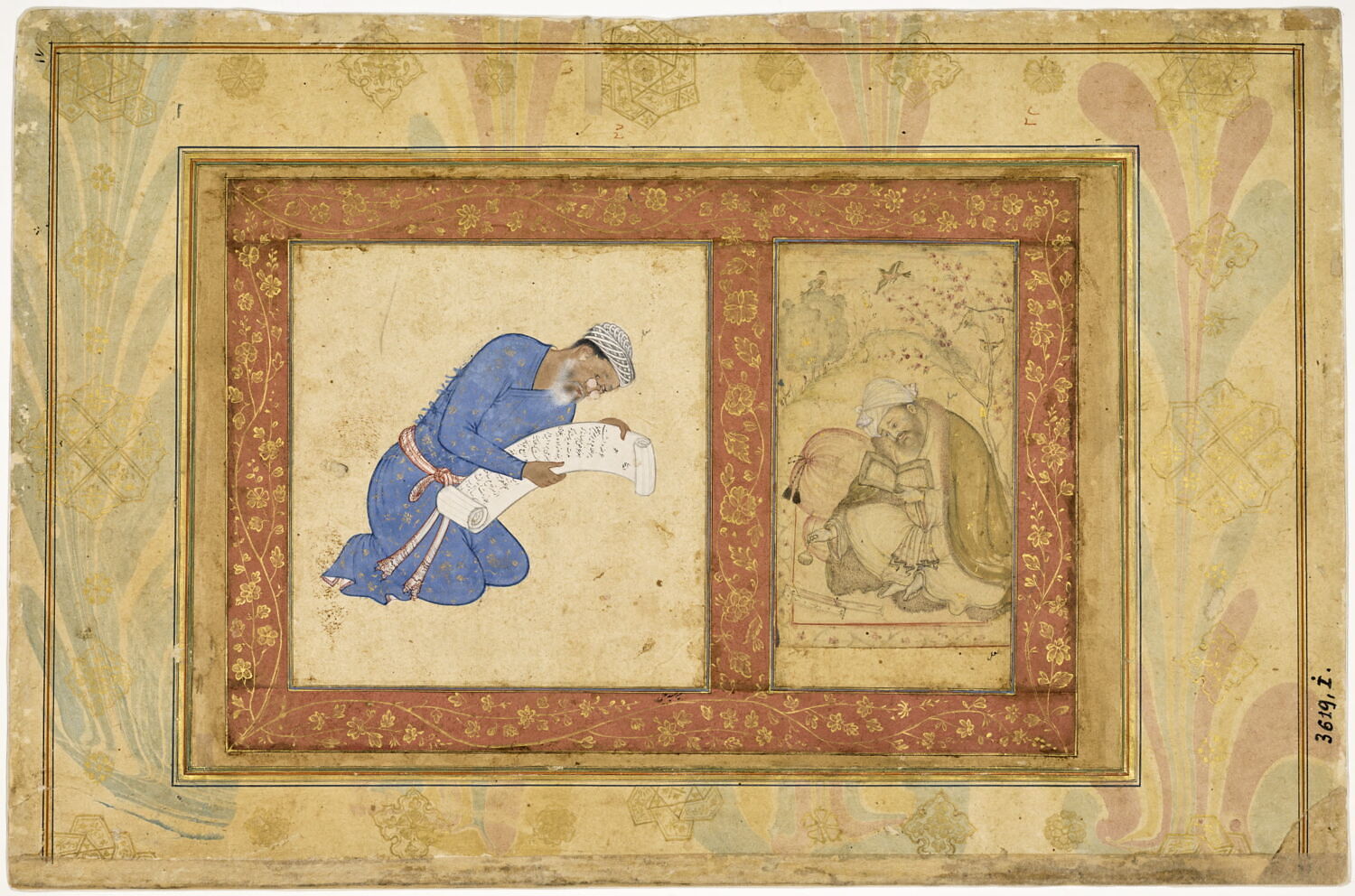
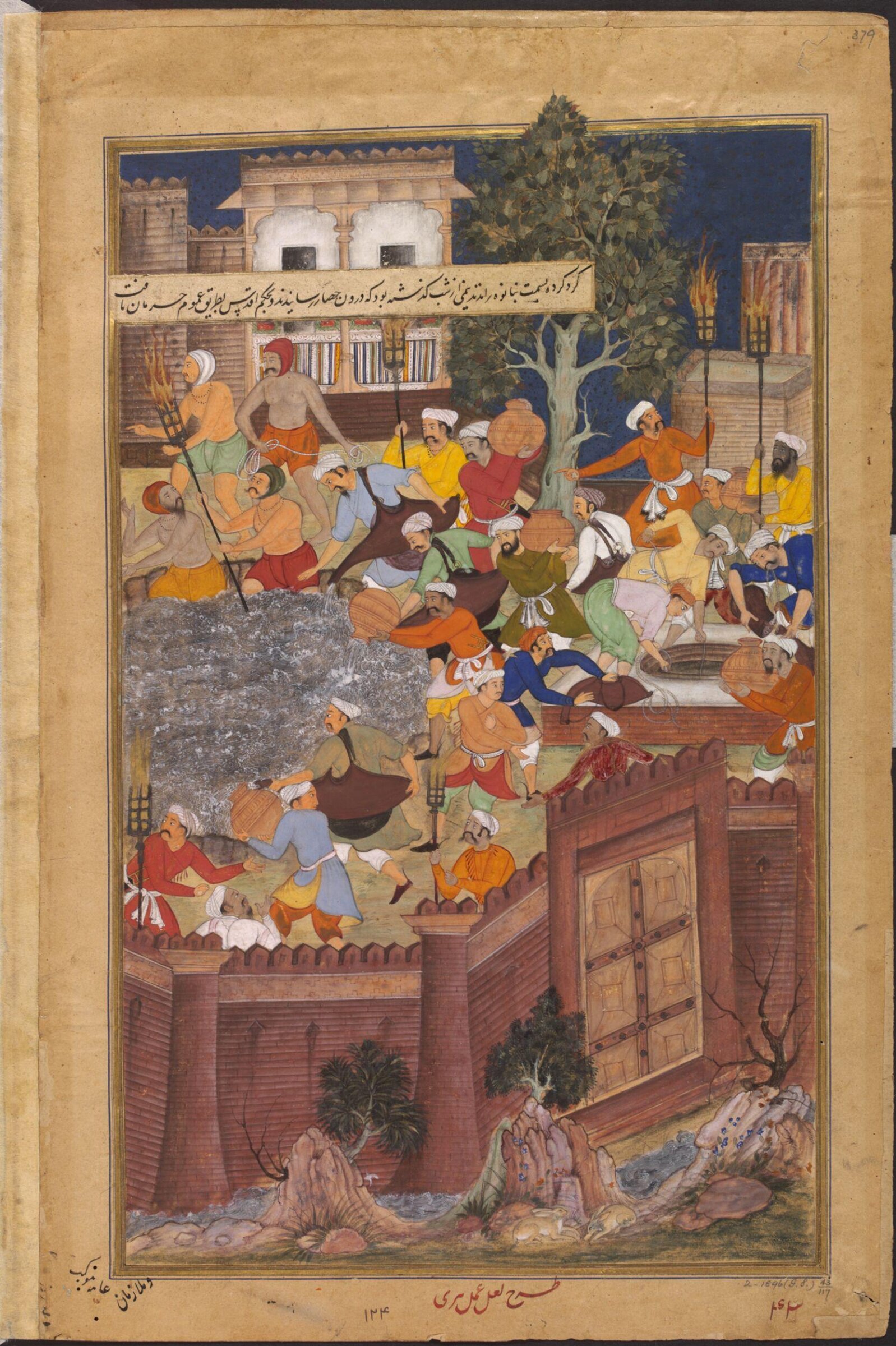
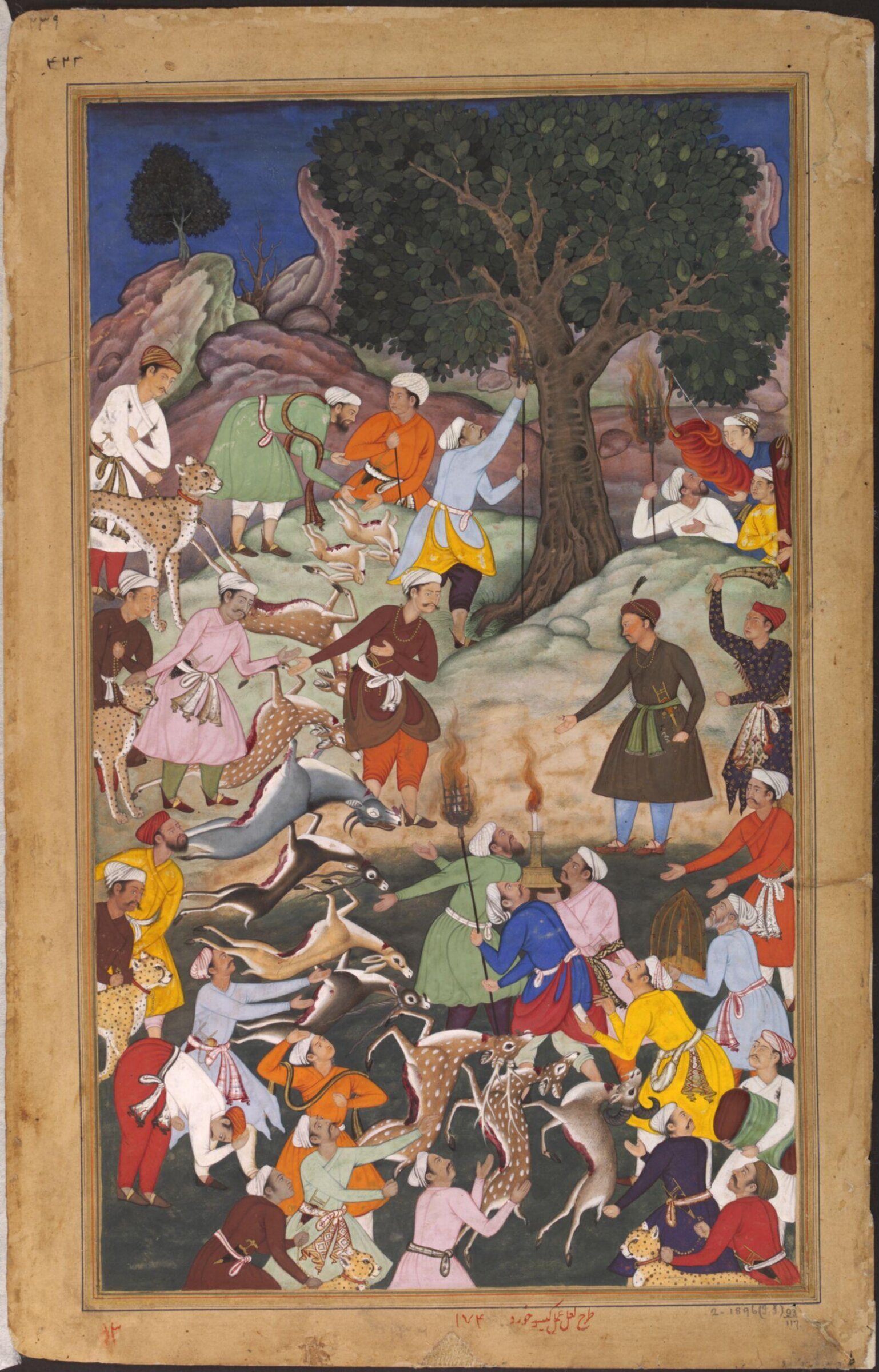
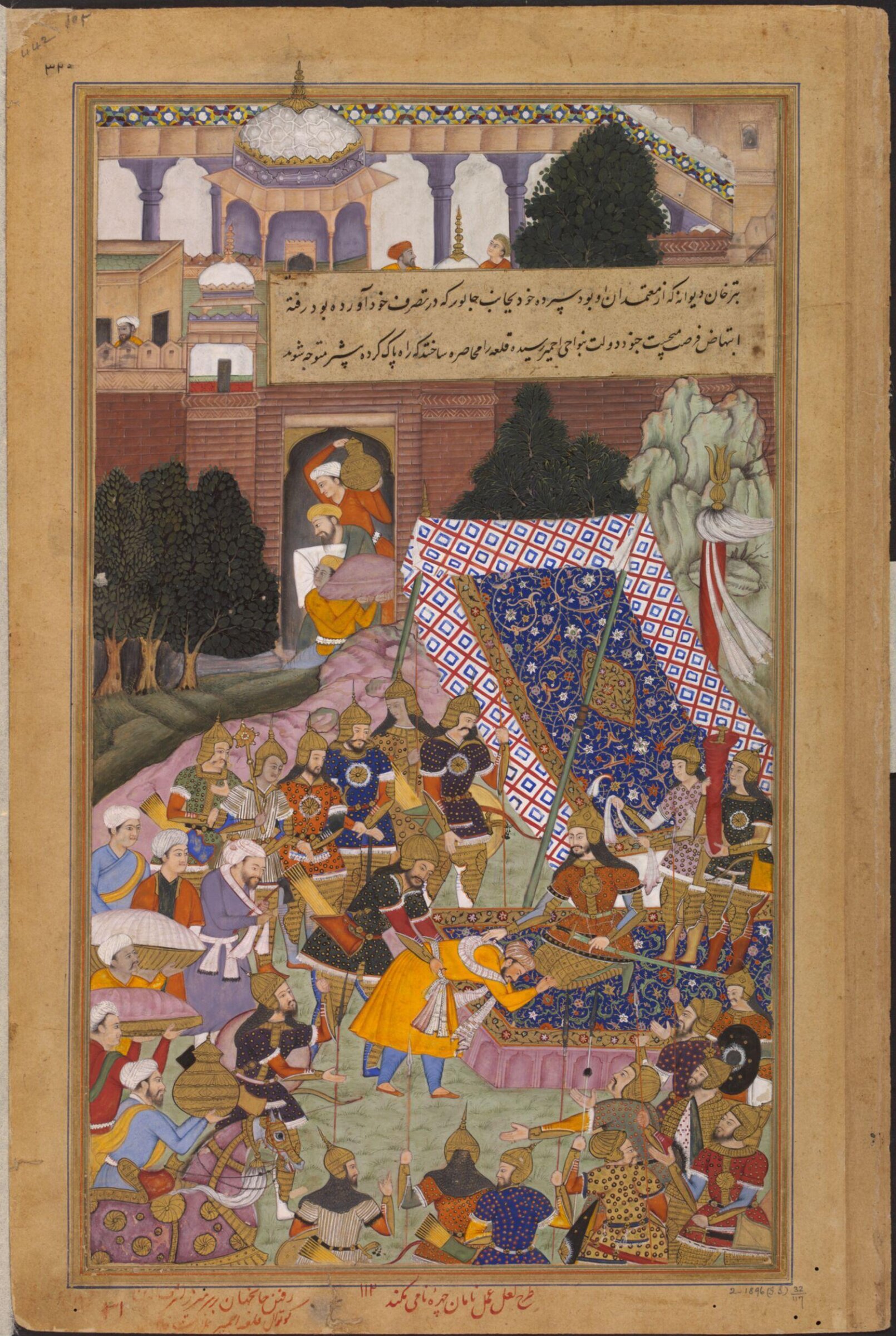
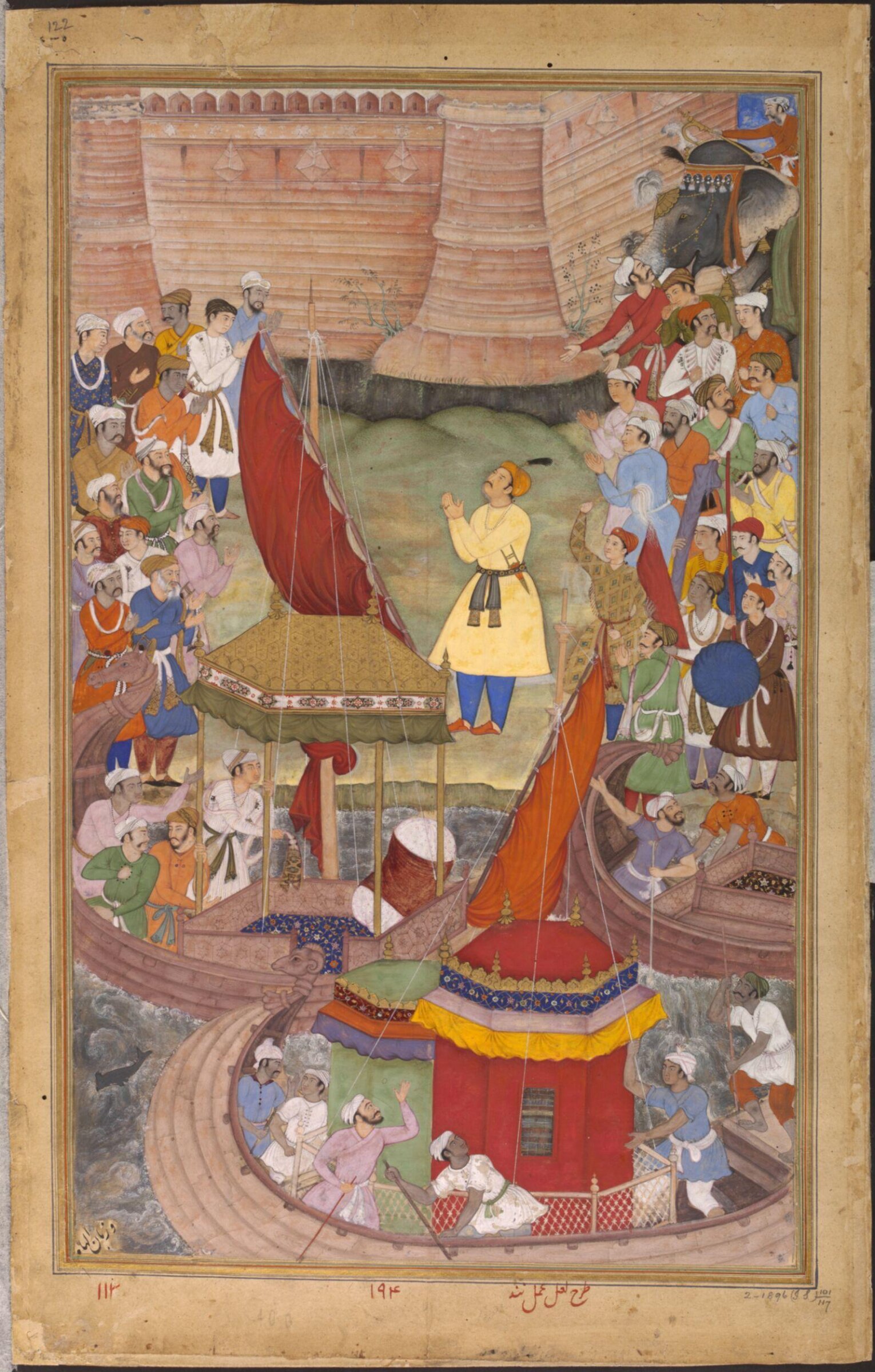
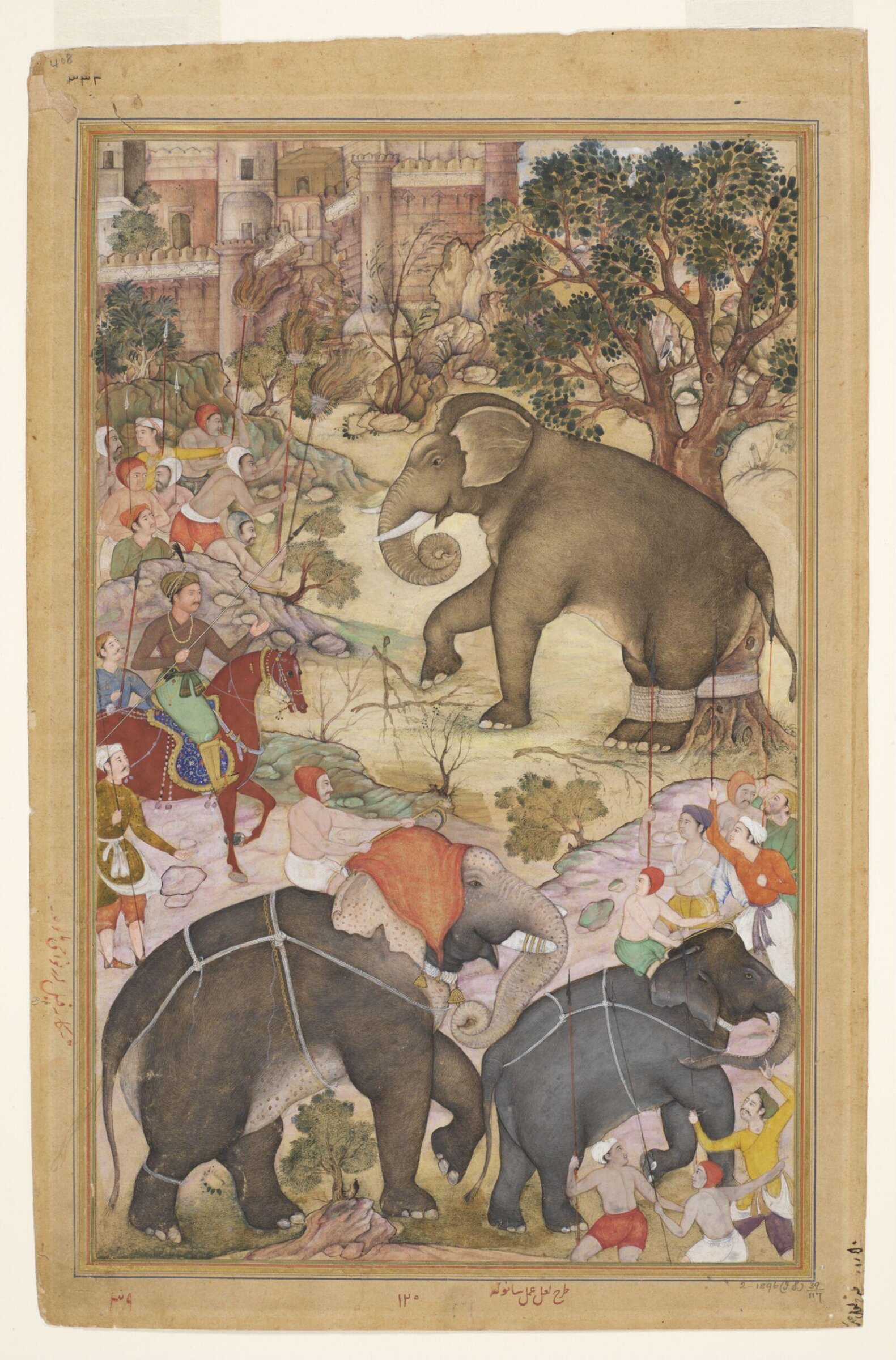
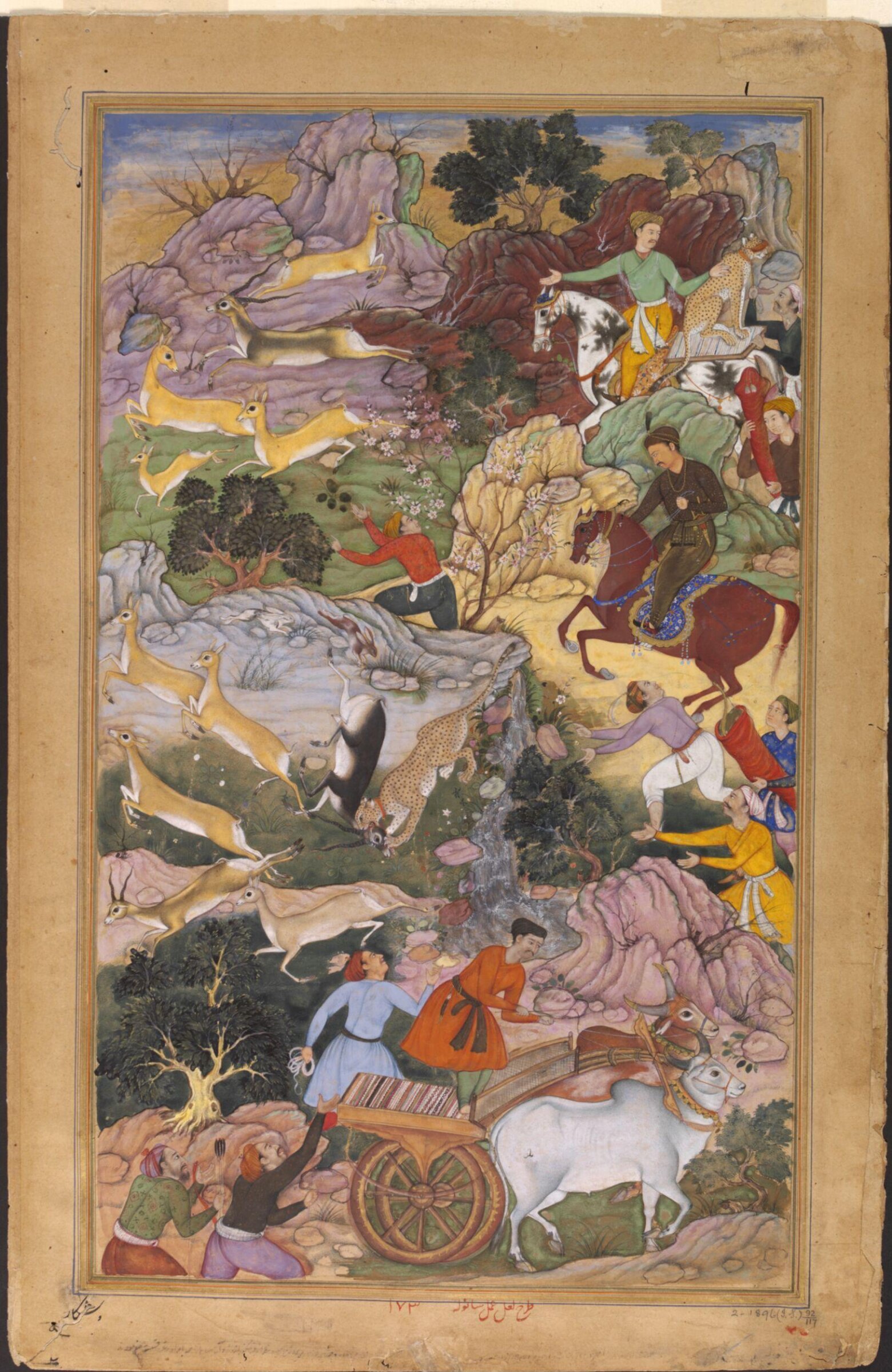
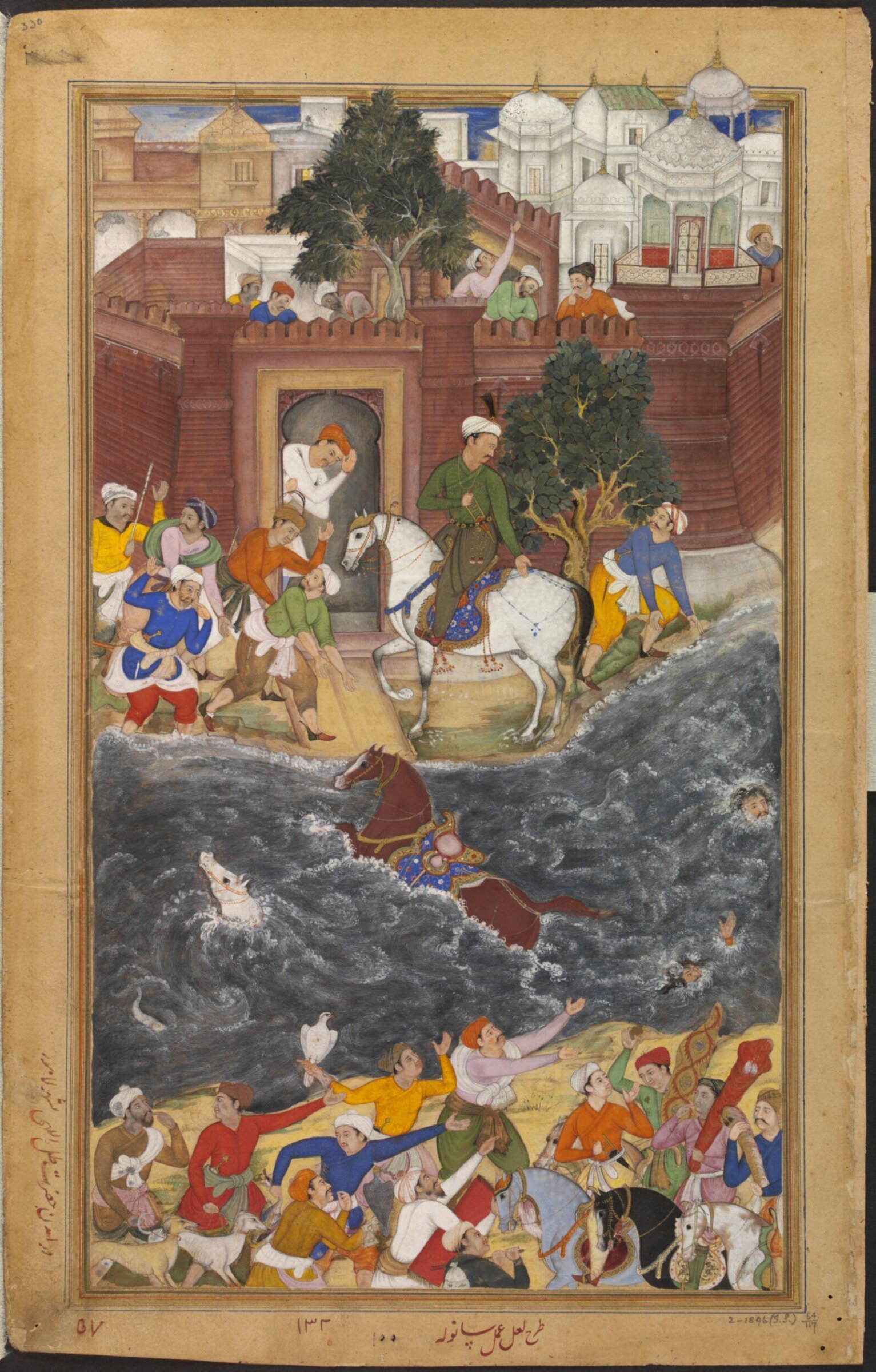
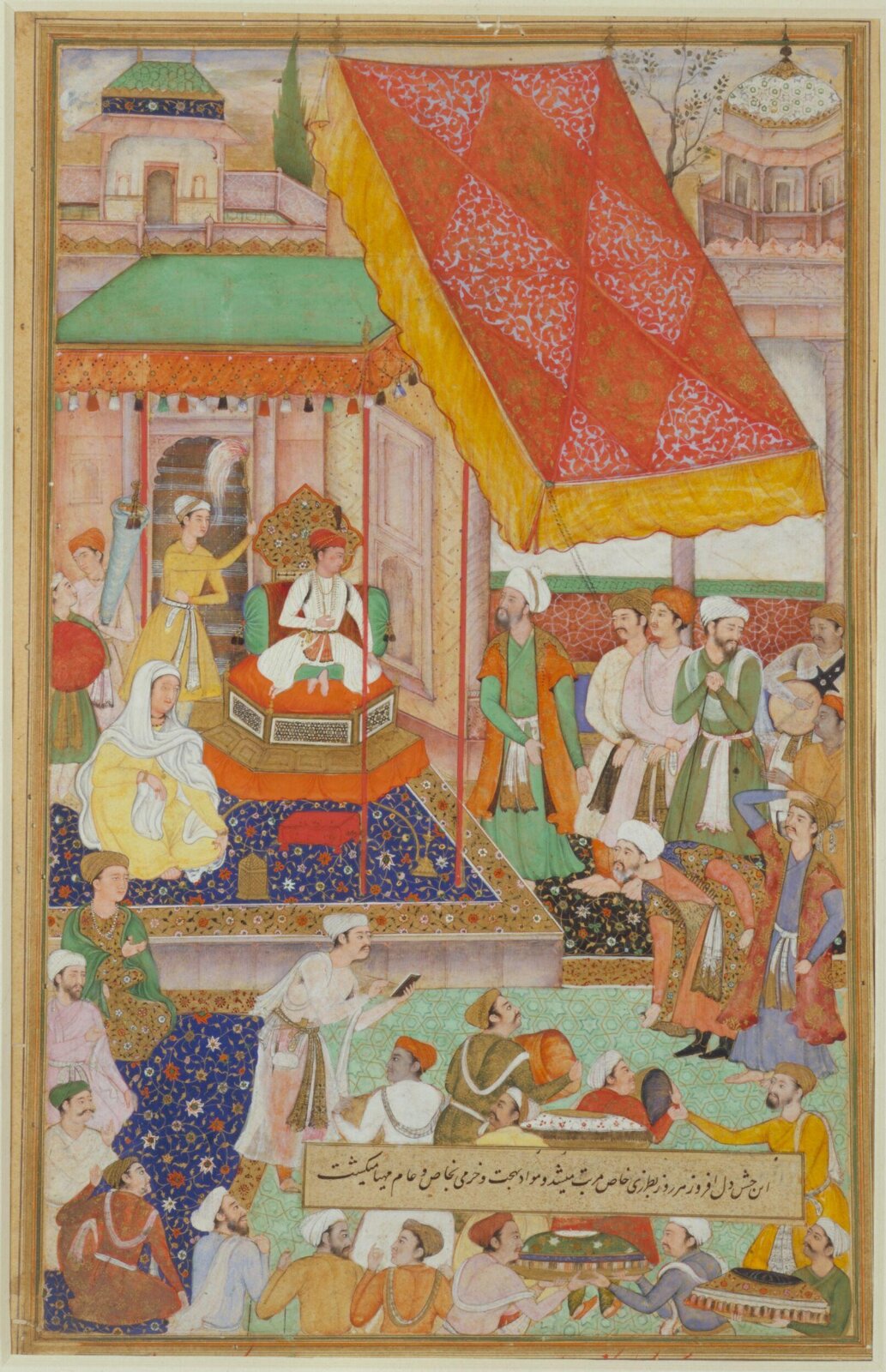
This is part of a double-page illustration from the Akbarnama (Book of Akbar). It depicts the marriage festivities in 1561 of the eldest son of Maham Anaga, the foster-mother of the Mughal emperor Akbar (r.1556–1605). Maham Anaga held a powerful position at court, as shown by her dominant position in the painting, and the privilege implied by the fact that she is permitted to be seated, rather than standing, next to the emperor. The other side of this double-page composition (IS.2:8-1896), illustrates dancers and musicians taking part in the celebrations. The Mughal court artist La’l was responsible for the overall composition across the two pages, with Sanwala painting the details of this half.
Weiterlesen
The Akbarnama was commissioned by Akbar as the official chronicle of his reign. It was written in Persian by his court historian and biographer, Abu’l Fazl, between 1590 and 1596, and the V&A’s partial copy of the manuscript is thought to have been illustrated between about 1592 and 1595. This is thought to be the earliest illustrated version of the text, and drew upon the expertise of some of the best royal artists of the time. Many of these are listed by Abu’l Fazl in the third volume of the text, the A’in-i Akbari, and some of these names appear in the V&A illustrations, written in red ink beneath the pictures, showing that this was a royal copy made for Akbar himself. After his death, the manuscript remained in the library of his son Jahangir, from whom it was inherited by Shah Jahan.
The V&A purchased the manuscript in 1896 from Frances Clarke, the widow of Major General John Clarke, who bought it in India while serving as Commissioner of Oudh between 1858 and 1862.
Victoria and Albert Museum
Angaben
- Inventarnummer
- IS.2:9-1896
Was es zeigt
Im Katalog
Quellen
- Victoria and Albert Museum
- Bild: Victoria and Albert Museum — © Victoria and Albert Museum, London