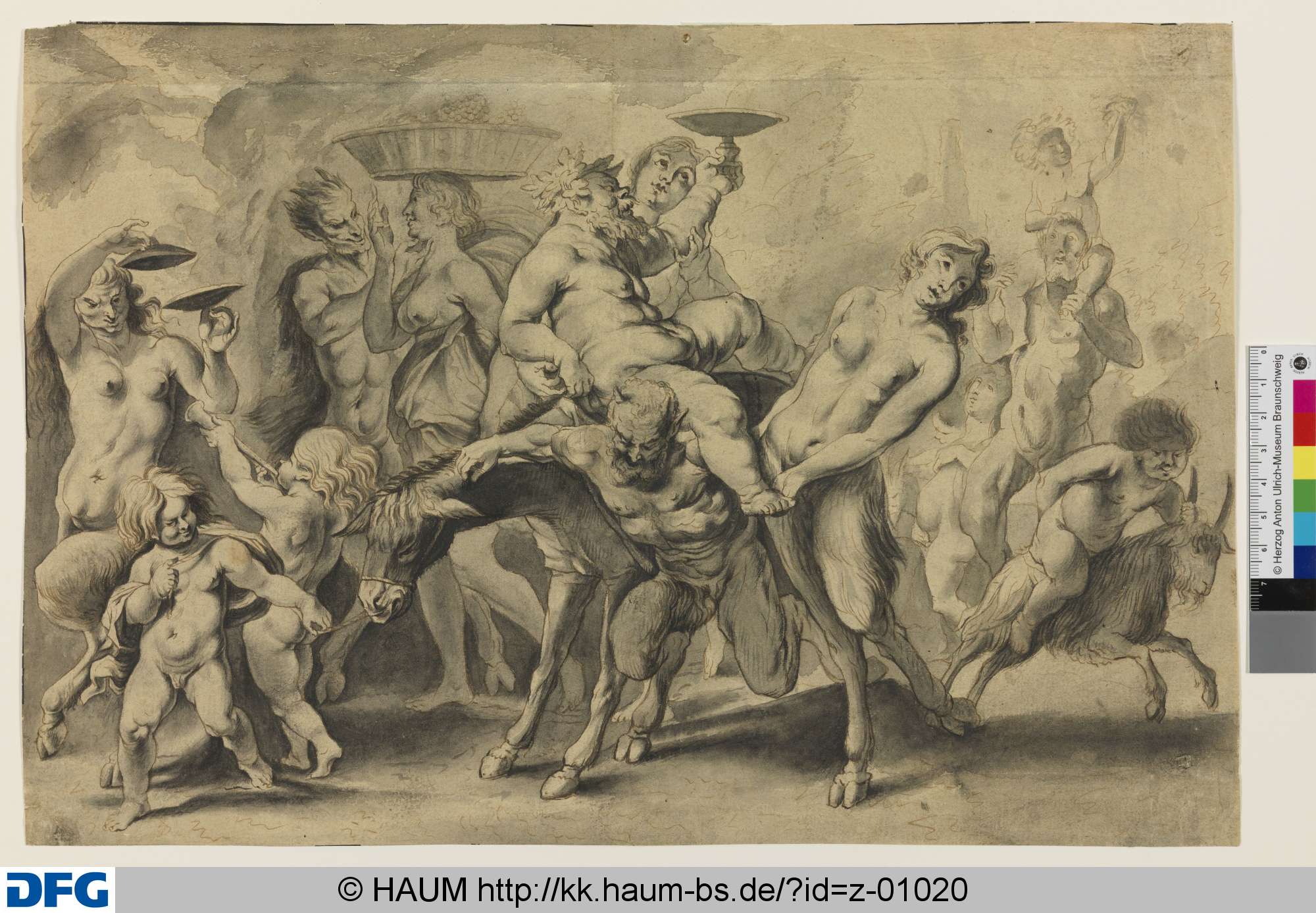
 Cornelis SchutFlandern, 1597–1655
Bacchantenzug
Darf man es sehen?
Unbekannt

Braunschweig, Deutschland
Der Besitzer ist bekannt; ob das Werk derzeit ausgestellt ist, nicht.
- Unverändert seit
- Quelle
- Das Museum
Angaben
Was es zeigt
Im Katalog
Quellen
- Herzog Anton Ulrich-Museum
- Bild: Herzog Anton Ulrich-Museum — CC BY-NC-SA 4.0
Derweil im Leben von Cornelis Schut
Das ganze Leben1618–1655 · Wirkungsort
Antwerp
1624–1627
Giustiniani's Patronage and Poussin's Attention
In Rome the banker and collector Vincenzo Giustiniani commissioned two large religious compositions from him (now in the Abbey of Sainte-Trinité in Caen). Schut attracted the attention of the young Poussin, whose early works borrowed motifs from these pieces.
1624–1627 · Wirkungsort
Rome
16 September – 2 October 1627
Imprisoned on Suspicion of a Colleague's Murder
He was held in a Roman prison on suspicion of murdering a fellow painter named Giusto; he was released on 2 October thanks to the intervention of the Accademia di San Luca. He then left Rome for Florence.
1628 · Wirkungsort
Florence
1635
Decorations for the Entry of Cardinal-Infante Ferdinand
He played a prominent part in the decorative program for the ceremonial entry of Cardinal-Infante Ferdinand into Antwerp (under the overall direction of Rubens) and into Ghent; commissioned by the Ghent magistrate, he executed more than 100 etchings of all the decorations.




![The Barbaric Dance (Before Salomé and Hérod) [La danse barbare (devant Salomé et Hérode)], Pablo Picasso, 1905, published 1913](https://api.nga.gov/iiif/50a2abdc-52b3-49f7-af3f-2ef384c8f1d0/full/!2400,2400/0/default.jpg)