 William-Adolphe BouguereauFrankreich, 1825–1905
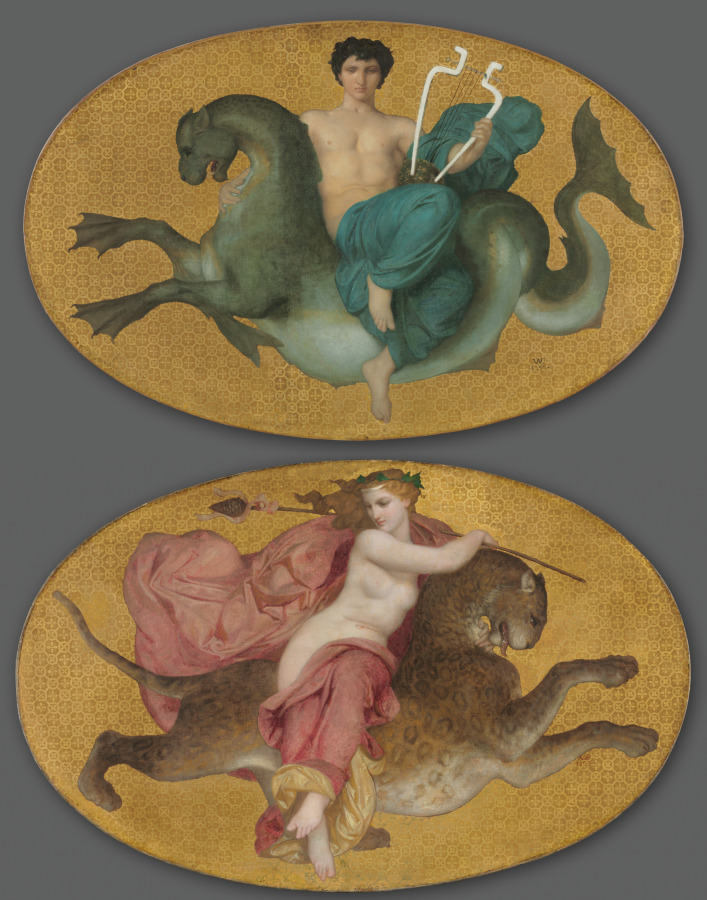
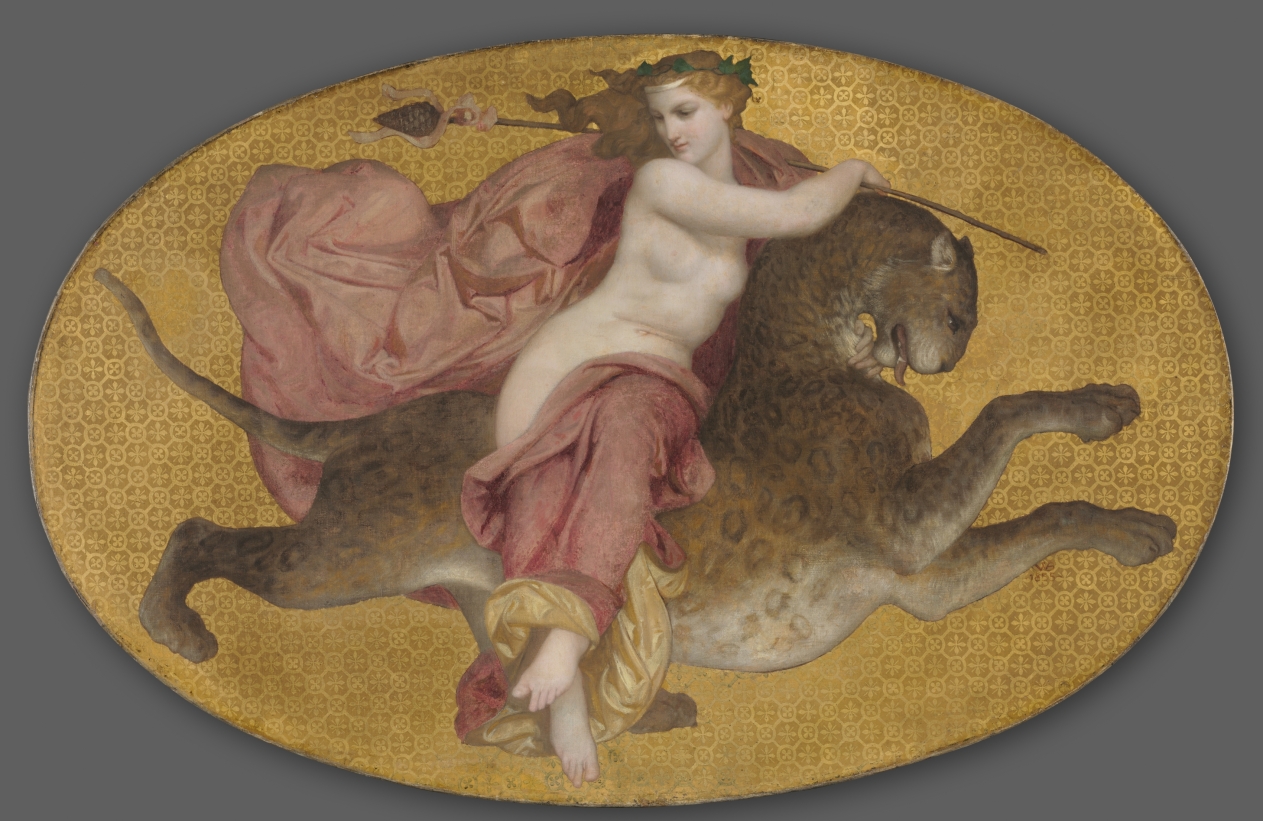
Bacchante on a Panther
Kann ich es sehen?
Ja, derzeit ausgestellt
Wo ist „Bacchante on a Panther“ heute? Cleveland Museum of Art, 201 Neoclassical Painting & Sculpture, Cleveland. Ja, derzeit ausgestellt. Geprüft 29. September 2026.

Öffentlich ausgestellt.
- Geprüft
- Unverändert seit
- Quelle
- Das Museum
Über das Gemälde
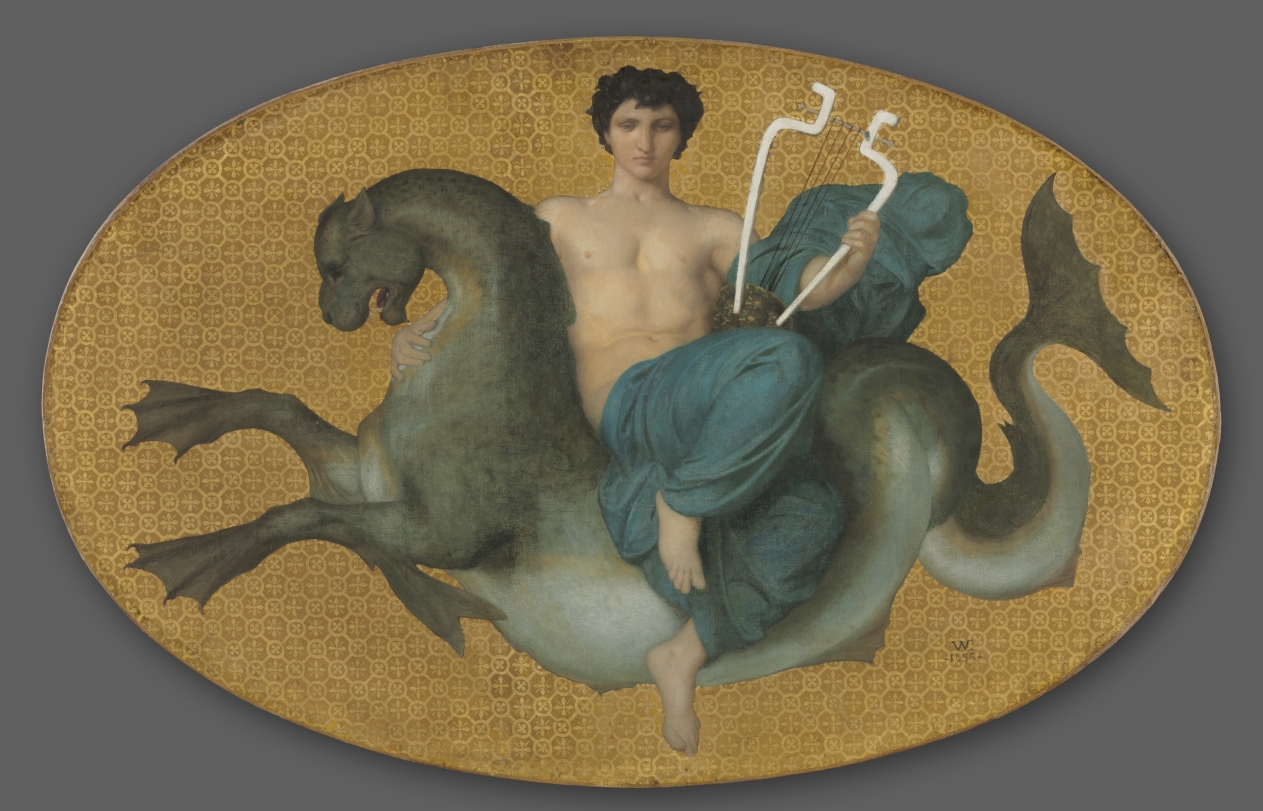
Part of a series of six paintings that decorated Etienne Bartholony's house in Paris, these paintings emulate ancient Roman designs. Crisp, cut out forms are set against a gold background painted in imitation of mosaic. Arion was an ancient Greek poet who escaped death by riding away on the back of a sea creature who had been attracted by the poet's song. In the companion picture, a bacchante—a female worshipper of the wine god Bacchus—rides on a panther, the god's symbolic animal. These works were shown at the 1857 Paris Salon exhibition.
Cleveland Museum of Art
Angaben
- Inventarnummer
- 1980.238.2
Im Katalog
Ausstellungen
Ausgestellt · 201 Neoclassical Painting & Sculpture
Cleveland Museum of Art · 28. Sept. 2026 — jetzt · Geprüft
War ausgestellt · 201 French Neoclassical Painting & Sculpture
Cleveland Museum of Art · 19. Aug. 2026 — 28. Sept. 2026 · Geprüft
Quellen
- Cleveland Museum of Art
- Bild: Cleveland Museum of Art — Museum open access
Im Leben von William-Adolphe Bouguereau
Das ganze Leben1851–1853 · Ausbildung
French Academy in Rome
1851–1854
Through Italy with Curzon: copies of Raphael, Titian, Assisi
At the French Academy in Rome Bouguereau meets G. Boulanger and J. Lenepveu, but becomes closest friends with the landscape painter P. Curzon; together they make many journeys through Italy — Naples, Pompeii, Siena, Perugia, Assisi, Florence, Pisa, Milan, Ravenna. Bouguereau visits almost all the museums and private collections, copies ancient Roman monuments, makes a replica of the complete cycle of frescoes in the basilica of San Francesco in Assisi, and copies Raphael’s “Triumph of Galatea” and Titian’s “Triumph of Flora”.
1851–1854
His tastes and the “discovery” of Giotto
In Italy Bouguereau’s tastes take shape: he names Michelangelo, Raphael and Leonardo as his chief authorities, finds Botticelli too “nervous”, counts Correggio among the geniuses but denies that status to Mantegna, whom he finds “soulless”. In Padua and Assisi he immerses himself in Giotto and discovers in his gestures and faces a link between Proto-Renaissance painting and French gallant painting of the eighteenth century — a “discovery” that will shape his work for the rest of his life and shows in two paintings called “Idyll” (1850 and 1851), reminiscent of Rococo pastorals.
1856
Marie-Nelly Monchablon: a secret liaison with a model
In 1856 Bouguereau begins living with one of his models, the 19-year-old Marie-Nelly Monchablon: the couple keep their liaison secret and live together unmarried, and their first child, Henriette, is born in April 1857. They will marry only on 24 May 1866, and quietly, since many assumed they were already married (other accounts say he married as early as 1856).
1857
The Salon of 1857: a medal, Gautier and Napoleon III’s commissions
The works Bouguereau shows at the Salon of 1857 arouse the enthusiasm of Théophile Gautier and win a medal of honour, above all for the decoration of the Bartholoni mansion. Commissions from Emperor Napoleon III follow: in 1857 an official commission for “The Emperor Visiting the Victims of the Flood at Tarascon in June 1856” (other accounts say the ministry gave this commission in 1856).
late 1850s
Paul Durand-Ruel and genre pictures
His growing family needs a steady income, and it comes from his acquaintance with the art dealer Paul Durand-Ruel, later the champion of the Impressionists: through him Bouguereau also meets Hugues Merle, who is later often compared with him. Small genre pictures — women in folk costume, family scenes — are in demand, predominate in Durand-Ruel’s own collection and open a new direction in Bouguereau’s work.