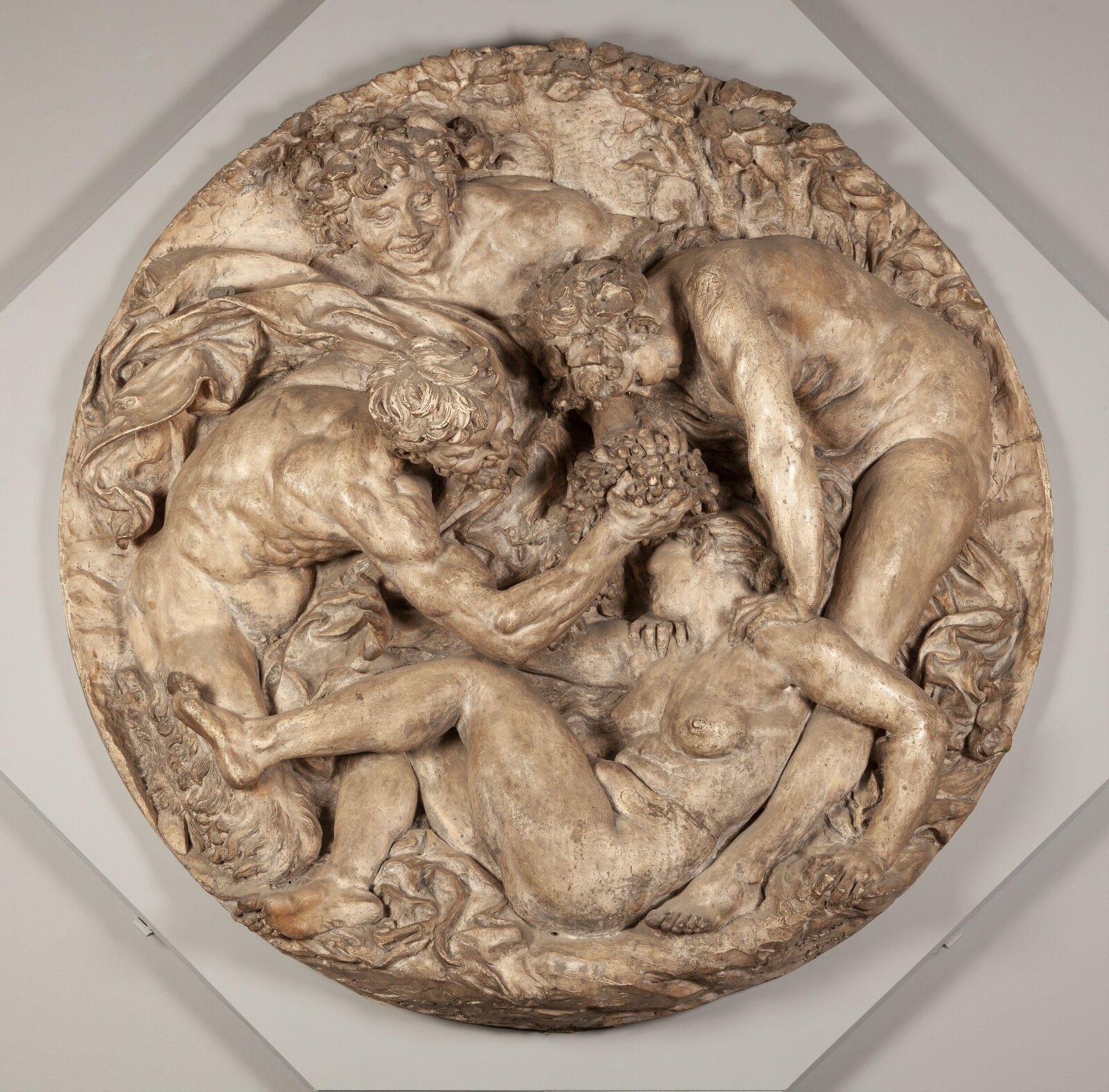
 Aimé-Jules DalouFrankreich, 1838–1902
Bacchanal
Darf man es sehen?
Ja, es empfängt Besucher

Victoria and Albert Museum
London, Vereinigtes Königreich
SaalSculpture, Room 21a, The Dorothy and Michael Hintze Galleries
Öffentlich ausgestellt. Wer dafür bürgt, steht unten.
- Geprüft
- Unverändert seit
- Quelle
- Sammlungsdaten des Museums selbst
About the sculpture
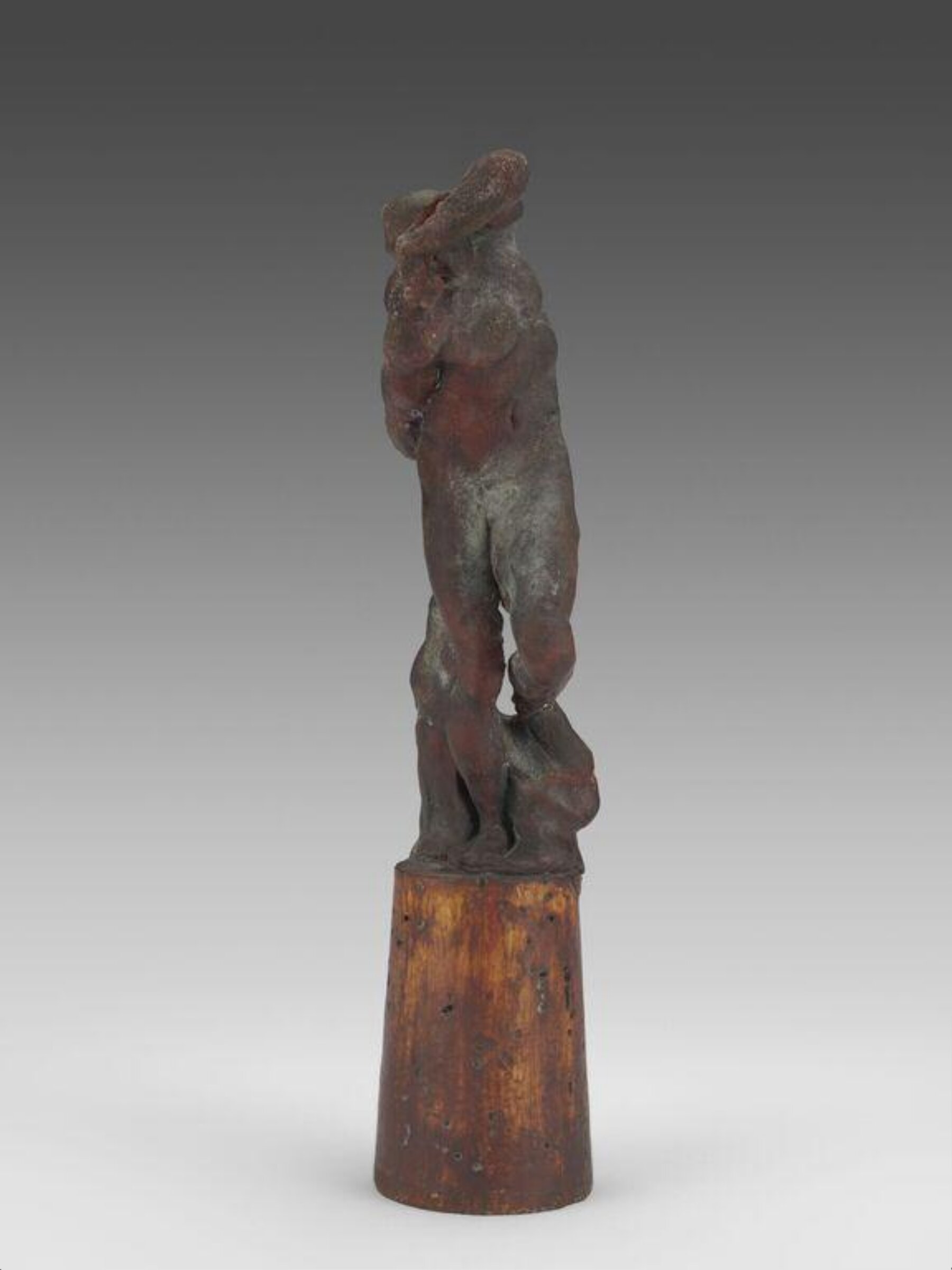
This is the first of several versions of Dalou's Bacchanal; it was exhibited at the Royal Academy of Arts, London, in 1879. The relief, showing a drunken orgy, part of the ancient cult of Bacchus, the god of wine, was accepted on loan by the V&A in 1887 from Boehm; his daughter confirmed it as a gift in 1896. Another plaster version was exhibited at the Salon of the Société Nationale des Beaux-Arts in Paris in 1891, and it was subsequently acquired by the Ville de Paris in 1893. It was accessioned by the Musée des Beaux-Arts, Calais, in 1975. The composition was later re-worked in marble (on a slightly larger scale); this version now adorns the Fontaine du Fleuriste at Auteuil, a suburb of Paris, under the title Scène Bacchique. There are several reduced versions of this piece in existence; a unique bronze is now in the Musée d'Orsay, Paris. There is a small plaster version in the Petit Palais, Paris, and another was shown at the exhibition Dalou Inédit at the Galerie Delestre, Paris, in 1978, and is now in a private collection.
Read on
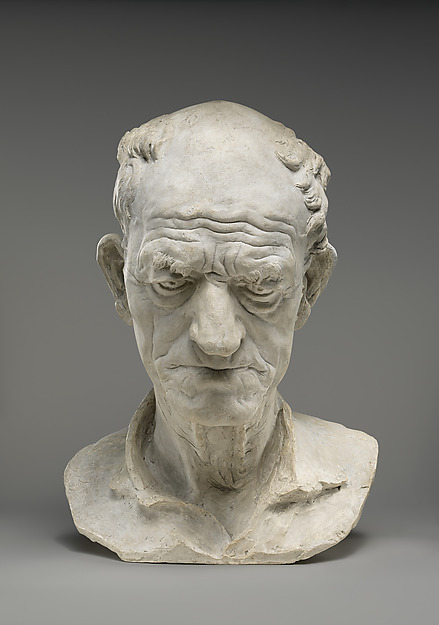
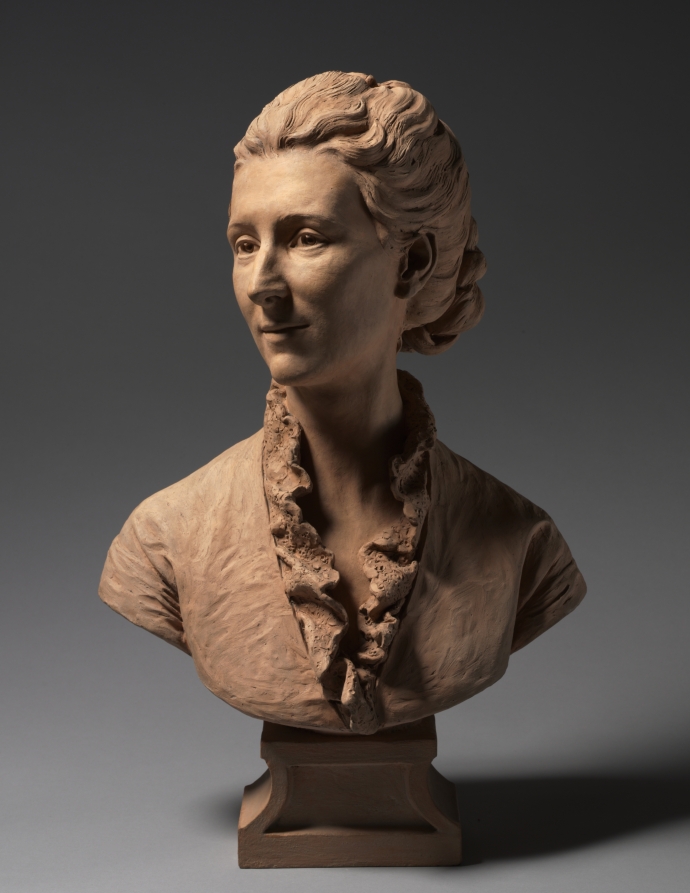
Dalou (1838-1902) was the son of a glove maker and initially trained in drawing at the Petit École in Paris. There he was encouraged to do sculpture. In 1854 he entered the École des Beaux-Arts, where he trained for four years. He was known for his left-wing political sympathies and was involved in the establishment of the Paris Commune in 1871. After his overthrow he was forced into exile in London, where he lived from 1871 until his return to Paris in 1879. In London he frequently exhibited at the Royal Academy and he was given a teaching appointment at the National Art Training School in South Kensington (later the Royal College of Art), where he had a profound effect on the development of British sculpture.
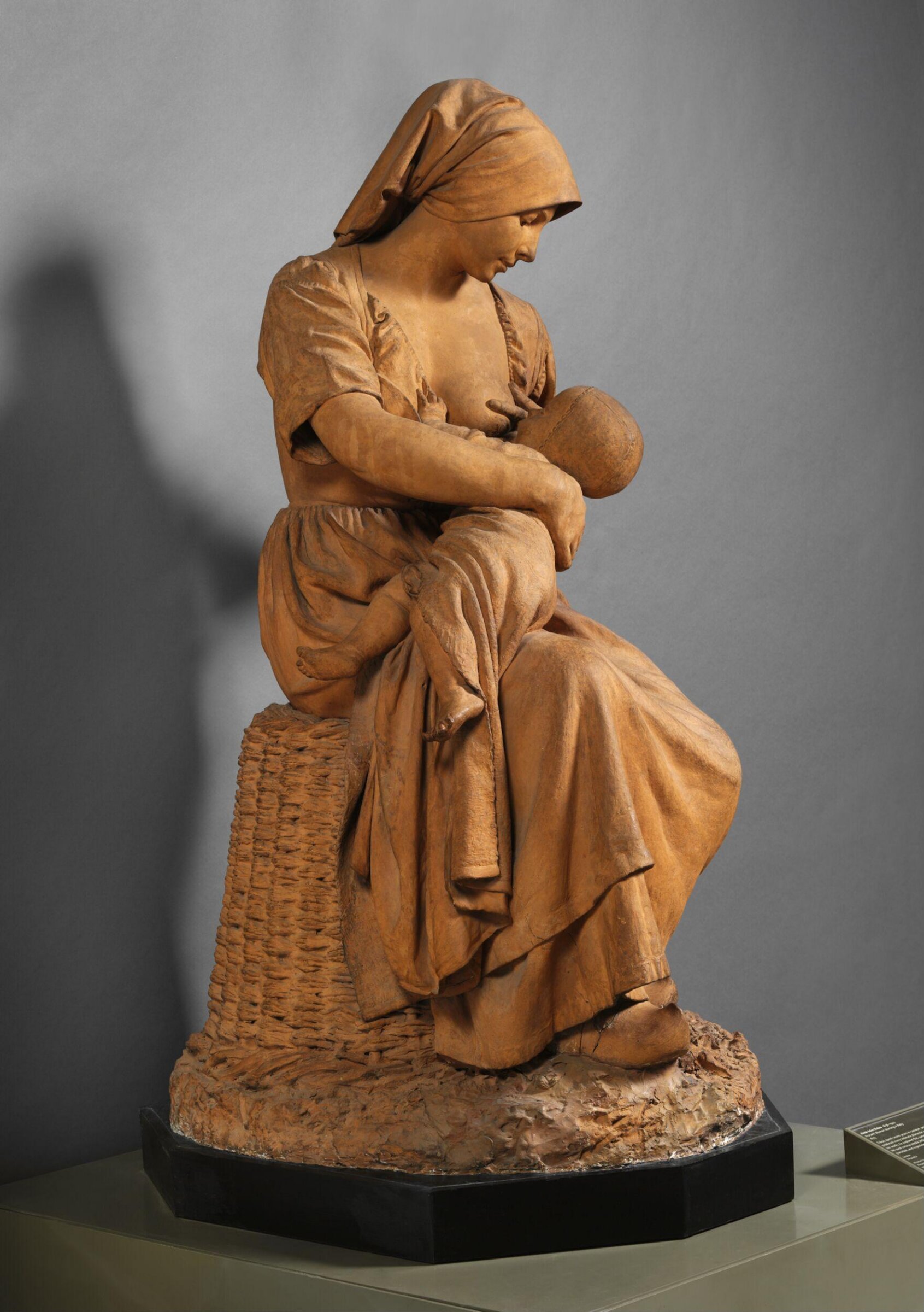
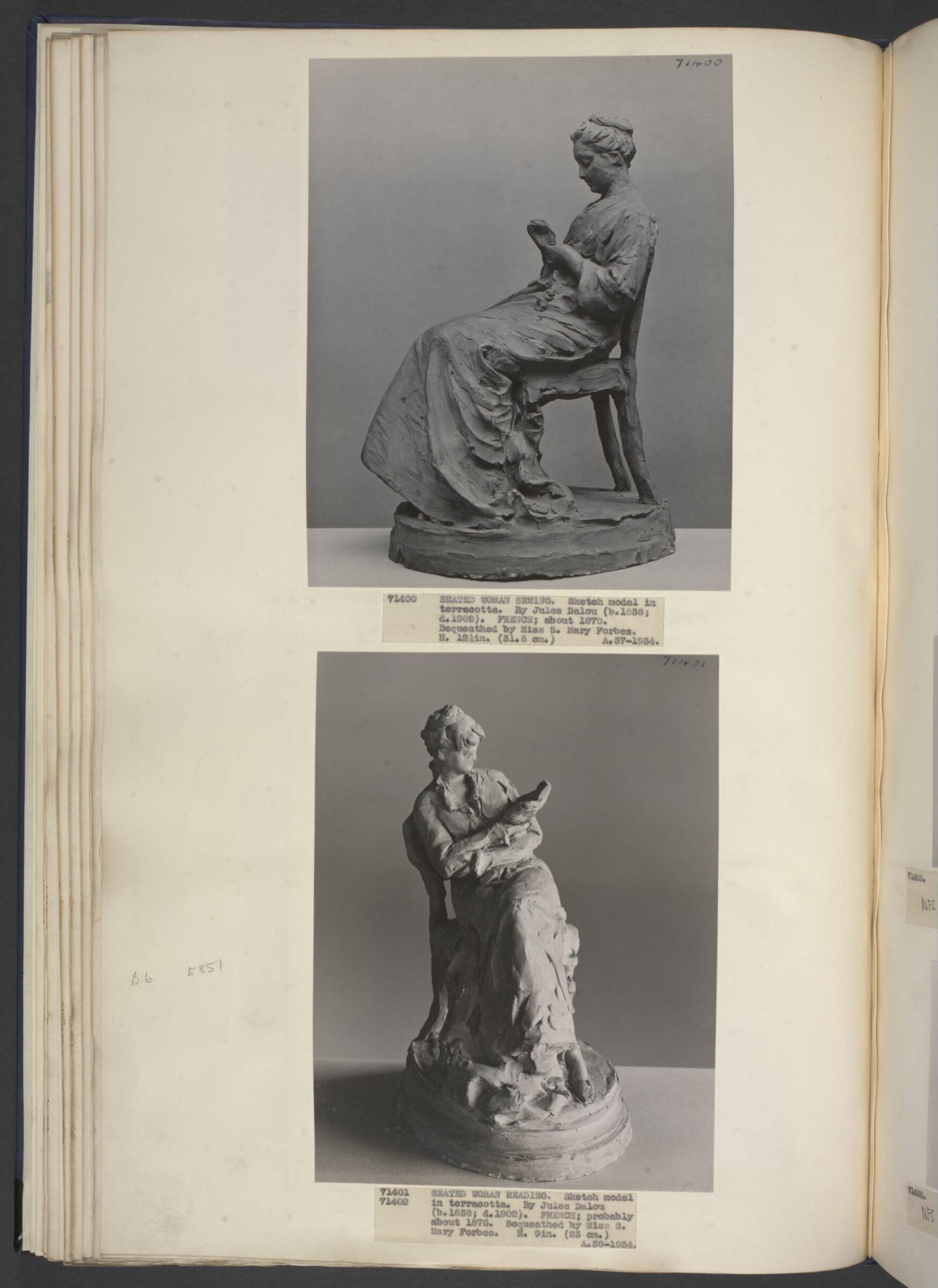
Many of his works are of women in intimate domestic situations. Whether reading, sewing or, as here, with small children, they have a remarkable informality and intimacy. Dalou executed a number of versions specifically of Charity 1877-8.
Victoria and Albert Museum
Angaben
- Inventarnummer
- 434-1896
What it shows
Im Katalog
Quellen
- Victoria and Albert Museum: the museum's own open data · abgerufen vor 10 Tagen
- Bild: Victoria and Albert Museum — © Victoria and Albert Museum, London