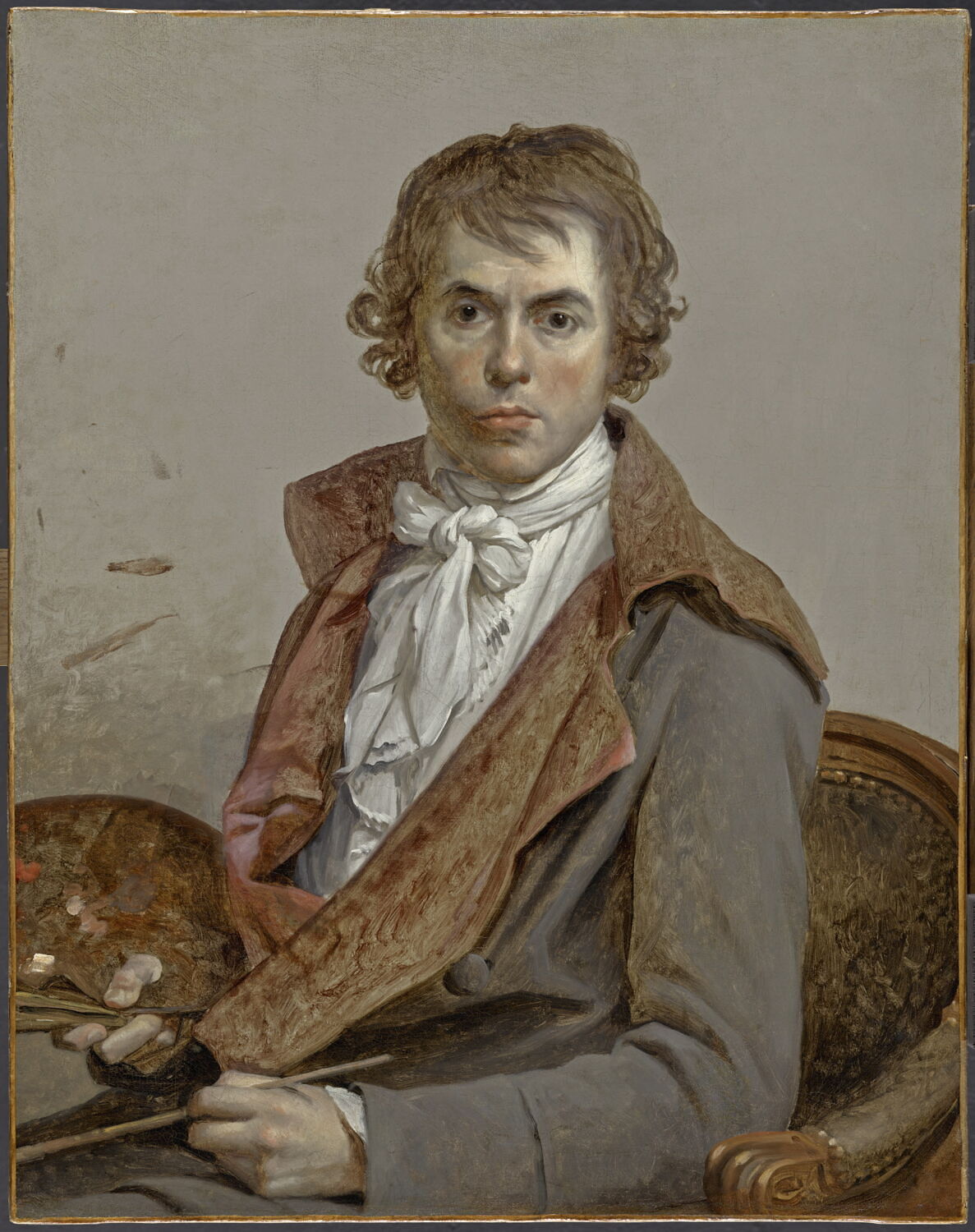
 Jacques-Louis DavidFrankreich, 1748–1825
Autoportrait
Darf man es sehen?
Ja, es empfängt Besucher

Öffentlich ausgestellt. Wer dafür bürgt, steht unten.
- Geprüft
- vor 9 Tagen
- Unverändert seit
- 26. Sept. 2026
- Quelle
- Sammlungsdaten des Museums selbst
About the painting
Self-Portrait (in French: Autoportrait) is the title of a self-portrait painted by the artist Jacques-Louis David in 1794 while in imprisonment at the Hôtel des Fermes for having supported the Robespierreans. It was his third and last self-portrait. He gave the work to his former student Jean-Baptiste Isabey. It entered the collections of the Louvre in 1852 (inv. 3705).
Angaben
- Inventarnummer
- INV 3705
Quellen
- Louvre: the museum's own open data · abgerufen vor 9 Tagen
- Bild: Louvre — © 2025 GrandPalaisRmn (musée du Louvre) / Didierjean/Chan-Liat
Derweil im Leben von Jacques-Louis David
Das ganze Leben17 September 1792
Elected a deputy to the National Convention
He was elected deputy for the Museum section of Paris and joined the Montagnards in the Convention.
after January 1793
Divorce from his royalist wife
His wife, the royalist Charlotte Pécoul, divorced him after his vote for the king’s execution.
16 – 19 January 1793
Votes for the death of Louis XVI
During the trial of Louis XVI he voted in the Convention for the king’s death; for this part in the execution he was later banished from France.
1793–1794
The executions of friends and patrons
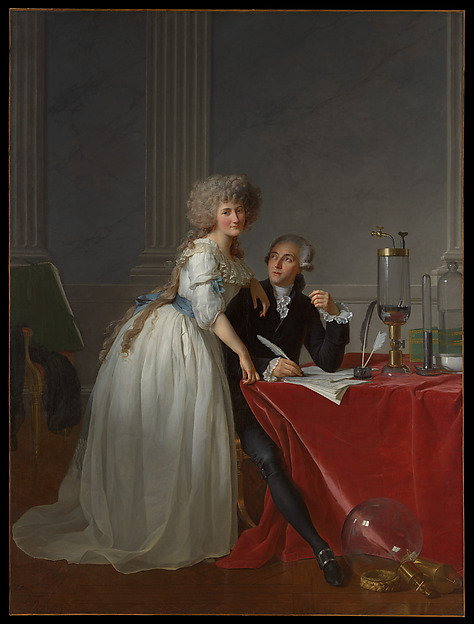
He did nothing to prevent the executions of former friends and patrons — the Trudaine brothers, Lavoisier, the Duchesse de Noailles, André Chénier; Carle Vernet held him responsible for the execution of his sister, Marguerite Émilie Vernet.
1794
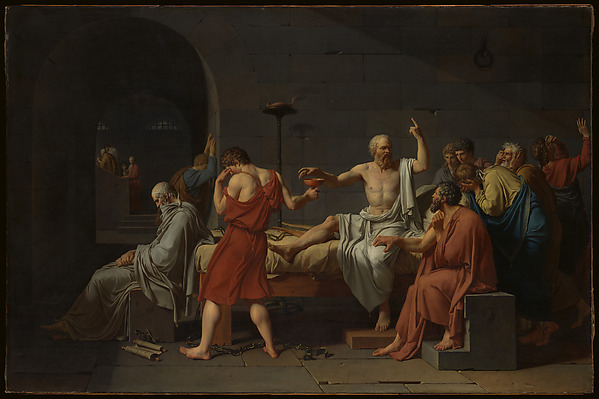
The fall of Robespierre and the hemlock vow
As Robespierre was being arrested, David shouted that he would drink hemlock with him; he supposedly fell ill and stayed away from the evening session with “stomach pain,” which saved him from the guillotine.
2 August 1794 – 3 August 1795
Arrested after Robespierre’s fall
He was imprisoned twice, from 2 August to 28 December 1794 and from 29 May to 3 August 1795, spending most of the time in the not uncomfortable Palais du Luxembourg in Paris.