John RuskinEngland, 1819–1900
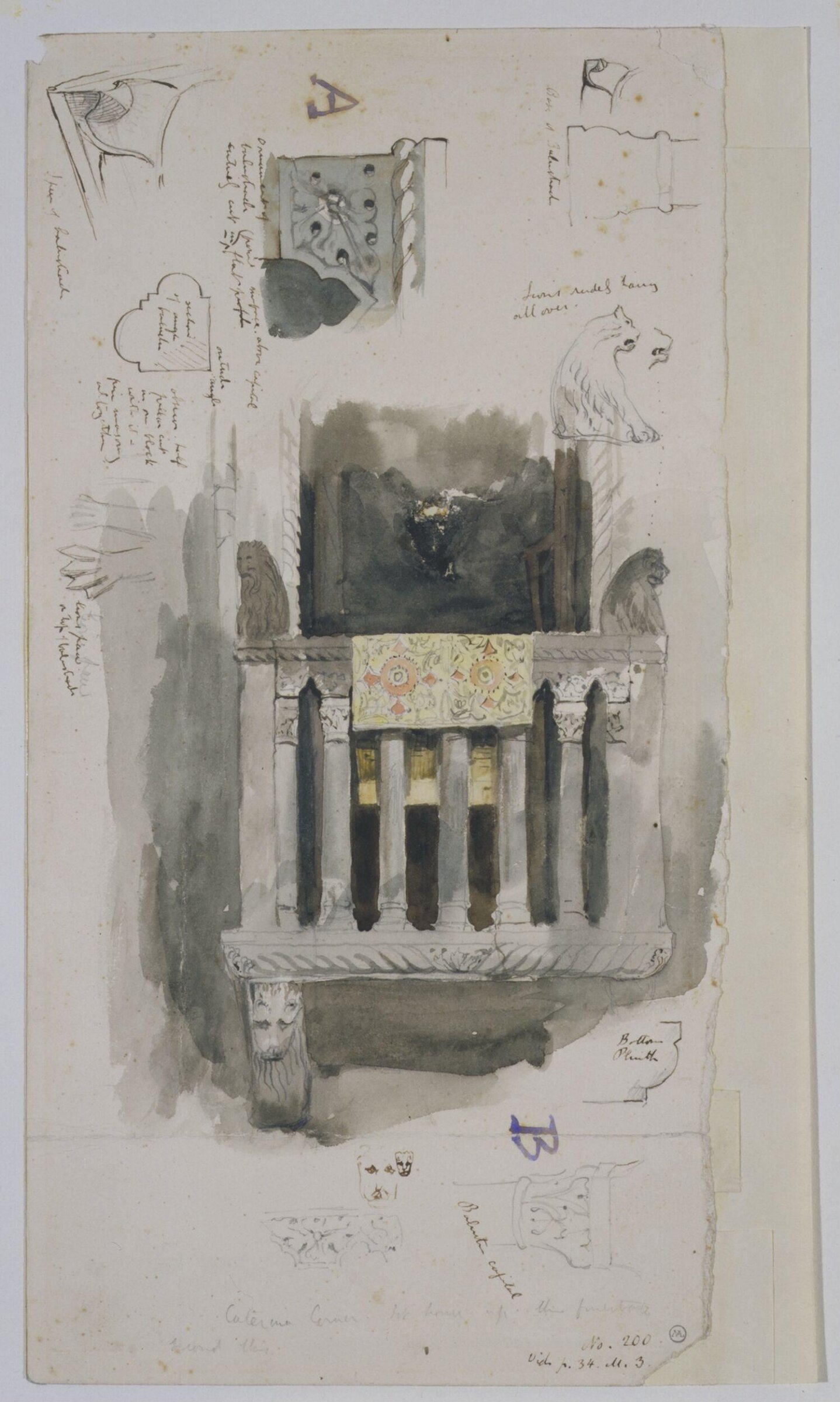
Architectural Study at Caudebec
Darf man es sehen?
Empfängt derzeit nicht

Harvard Art Museums
Cambridge, Vereinigte Staaten
Es gehört zur Sammlung, ist derzeit aber nicht ausgestellt.
- Geprüft
- gestern
- Unverändert seit
- 27. Sept. 2026
- Quelle
- Sammlungsdaten des Museums selbst
Angaben
- Inventarnummer
- 1926.33.143
Im Katalog
Quellen
- Harvard Art Museums: the museum's own open data · abgerufen vor 5 Tagen
- Bild: Harvard Art Museums — © President and Fellows of Harvard College
Derweil im Leben von John Ruskin
Das ganze Leben1834–1900 · Wirkungsort
Great Britain
April 1846
The second volume of “Modern Painters”
The second volume, written on the strength of his travels, concentrates on Renaissance and pre-Renaissance artists rather than Turner and is more theoretical than the first: Ruskin links the beautiful with the divine, and critics receive it more warmly, although many find his attack on the aesthetic orthodoxy of Joshua Reynolds hard to accept. That summer he is abroad again with his father, who still hopes his son might become a poet — one of many factors raising the tension between them.
October 1847
Engagement to Effie Gray
During 1847 Ruskin grows closer to Euphemia “Effie” Gray, the daughter of family friends, for whom he had once written “The King of the Golden River”; they become engaged in October.
10. April 1848
Married: Effie Gray
1849
“The Seven Lamps of Architecture”, the first book to bear his name
His growing interest in Gothic architecture produces a book with fourteen plates etched by the author: seven moral categories — sacrifice, truth, power, beauty, life, memory and obedience — that Ruskin considers vital to and inseparable from all architecture. It promotes a secular and Protestant form of Gothic and challenges the Catholic influence of the architect A. W. N. Pugin.
November 1849
In Venice with Effie: the sketches behind “The Stones of Venice”
In November 1849 the couple stay at the Hotel Danieli: Effie looks for company, while Ruskin works alone and hurries to draw the Ca' d'Oro and the Doge's Palace, fearing that the occupying Austrian troops will destroy them. These sketches and notes will grow into “The Stones of Venice”.