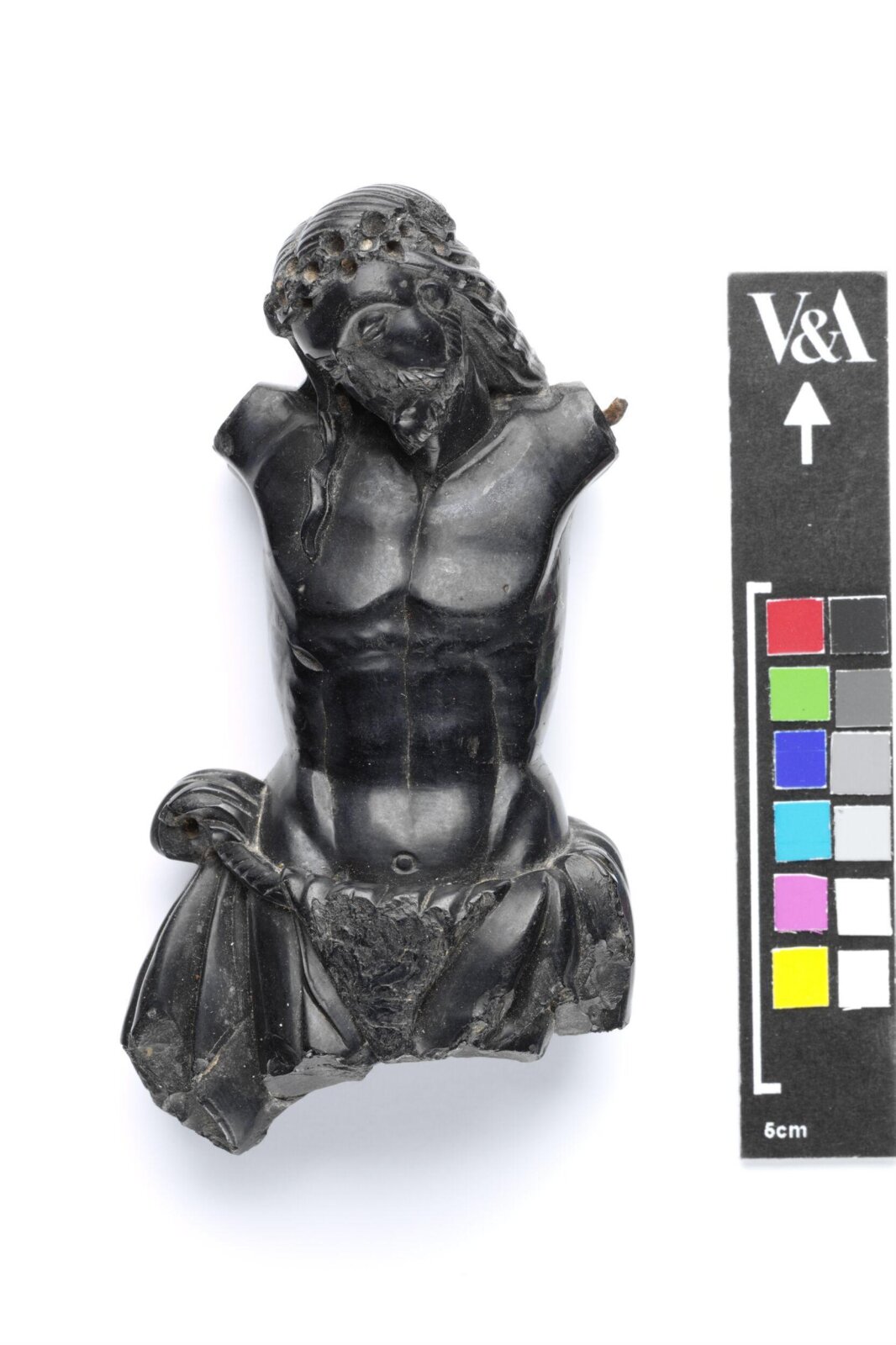
A Crucifix Figure
Darf man es sehen?
Empfängt derzeit nicht

Victoria and Albert Museum
London, Vereinigtes Königreich
Es gehört zur Sammlung, ist derzeit aber nicht ausgestellt.
- Geprüft
- vor 8 Tagen
- Unverändert seit
- 25. Sept. 2026
- Quelle
- Sammlungsdaten des Museums selbst
About the sculpture
This jet figure from a crucifix is made in Santiago de Compostela in Spain in ca. 1600-1700. The prime function of jets seems to have been to signify that pilgrims had completed their journeys, and reached the shrine of St James (the patron Saint of Spain) at the Cathedral of Santiago, which pilgrims did over the course of six hundred years, from the twelfth to the eighteenth century.
This figure is originally from a crucifix. It seems likely that the figure was made of separate pieces of jet joined together, and this is why it was more vulnerable to damage. Twenty-one small holes drilled into the crown of thorns almost certainly held thorns. Also the arms were dowelled in.
Read on
Despite its fragmentary condition, this is one of the most impressive jets in the V&A collection. The anatomy of the body is subtly conveyed, and the drapery is similarly suggested in fluent manner. Unlike many of the surviving Spanish jets, this one seems to be by a sculptor aware of carved work in other materials such as wood, rather than a craftsman with a poor grasp of sculptural traditions.
Victoria and Albert Museum
Angaben
- Inventarnummer
- A.13-1953
What it shows
Im Katalog
Quellen
- Victoria and Albert Museum: the museum's own open data · abgerufen vor 8 Tagen
- Bild: Victoria and Albert Museum — © Victoria and Albert Museum, London