![Qué hai que hacer mas? [Was kann man noch tun?; What more can be done?], Francisco Goya, 1812–1815](https://diglib.hab.de/varia/haum/goya-des-33/min/000001.jpg) Francisco de GoyaQué hai que hacer mas? [Was kann man noch tun?; What more can be done?]Francisco de GoyaQué hai que hacer mas? [Was kann man noch tun?; What more can be done?]
Francisco de GoyaQué hai que hacer mas? [Was kann man noch tun?; What more can be done?]Francisco de GoyaQué hai que hacer mas? [Was kann man noch tun?; What more can be done?] William BlakeSatan Before the Throne of God
 Francisco de GoyaModo de Volar
![Banderillas de fuego [Brennende Banderillas; Banderillas with firecrackers], Francisco Goya, 1816](https://diglib.hab.de/varia/haum/goya-taur-31/min/000001.jpg) Francisco de GoyaBanderillas de fuego [Brennende Banderillas; Banderillas with firecrackers]
Francisco de GoyaBanderillas de fuego [Brennende Banderillas; Banderillas with firecrackers]![Espiró sin remedio [Er starb ohne Hilfe; There was nothing to be done and he is died], Francisco Goya, 1812–1815](https://diglib.hab.de/varia/haum/goya-des-53/min/000001.jpg) Francisco de GoyaEspiró sin remedio [Er starb ohne Hilfe; There was nothing to be done and he is died]
Francisco de GoyaEspiró sin remedio [Er starb ohne Hilfe; There was nothing to be done and he is died]![Enterrar y callar [Begraben und schweigen; Bury them and keep quiet], Francisco Goya, 1810–1812](https://diglib.hab.de/varia/haum/goya-des-18/min/000001.jpg) Francisco de GoyaEnterrar y callar [Begraben und schweigen; Bury them and keep quiet]
Francisco de GoyaEnterrar y callar [Begraben und schweigen; Bury them and keep quiet]![Populacho [Pöbel; Rabble], Francisco Goya, 1814–1819](https://diglib.hab.de/varia/haum/goya-des-28/min/000001.jpg) Francisco de GoyaPopulacho [Pöbel; Rabble]
Francisco de GoyaPopulacho [Pöbel; Rabble]![El diestrísimo estudiante de Falces, embozado burla al toro con sus quiebros [Der äußerst geschickte "Student von Falces" reizt, in seinen Mantel gehüllt, den Stier durch die Wendungen seines Körpers; The very skilfull student of Falces, wrapped in his cape, tricks the bull with the play of his body], Francisco Goya, 1816](https://diglib.hab.de/varia/haum/goya-taur-14/min/000001.jpg) Francisco de GoyaEl diestrísimo estudiante de Falces, embozado burla al toro con sus quiebros [Der äußerst geschickte "Student von Falces" reizt, in seinen Mantel gehüllt, den Stier durch die Wendungen seines Körpers; The very skilfull student of Falces, wrapped in his cape, tricks the bull with the play of his body]
Francisco de GoyaEl diestrísimo estudiante de Falces, embozado burla al toro con sus quiebros [Der äußerst geschickte "Student von Falces" reizt, in seinen Mantel gehüllt, den Stier durch die Wendungen seines Körpers; The very skilfull student of Falces, wrapped in his cape, tricks the bull with the play of his body]![Disparate claro [Klare Torheit; Clear folly], Francisco Goya, 1815–1824](https://diglib.hab.de/varia/haum/goya-prov-15/min/000001.jpg) Francisco de GoyaDisparate claro [Klare Torheit; Clear folly]
Francisco de GoyaDisparate claro [Klare Torheit; Clear folly]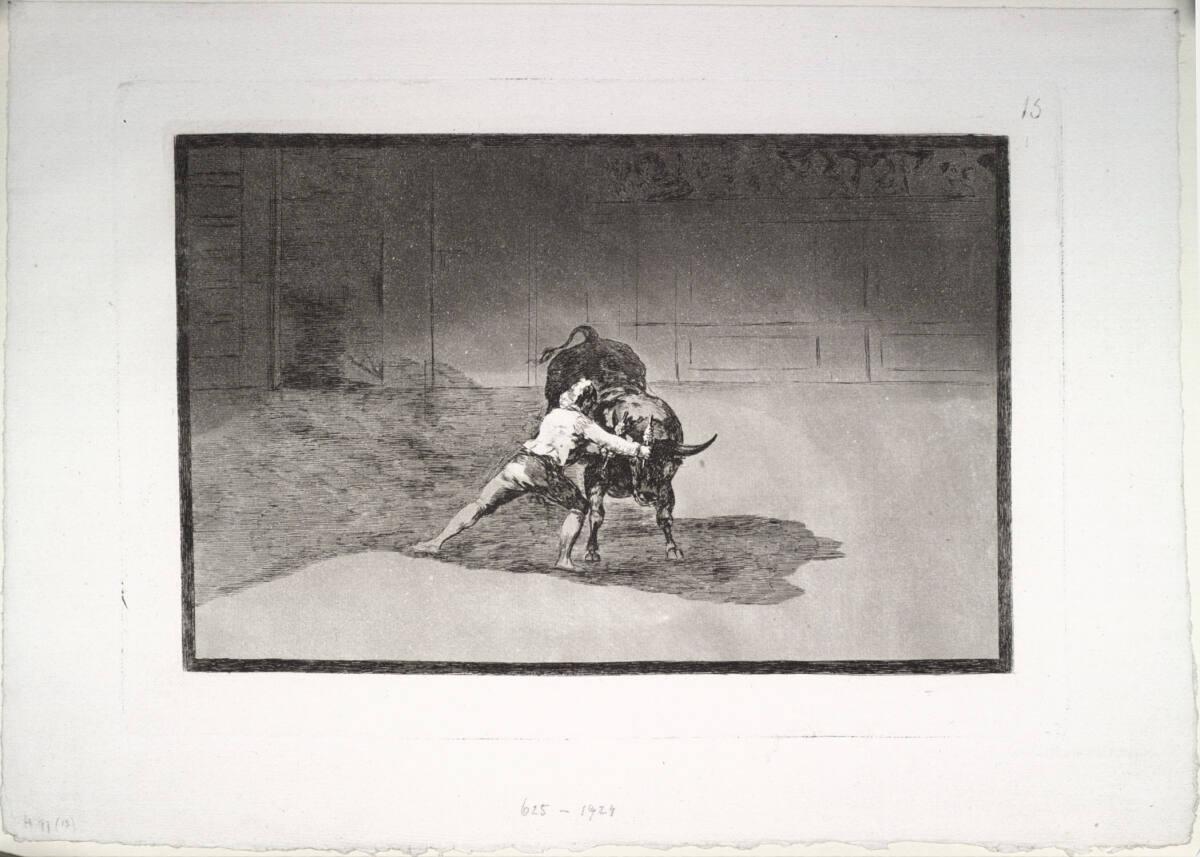 Francisco de GoyaLa Tauromáquia: El famosos Martincho poniendo banderillas al quiebro - Wie der berühmte Martincho die Wurfpfeile mit einer Körperwendung setzt
![Origen de los arpones ó banderillas [Ursprung der Harpunen oder Banderillas; Origin of the harpoons or banderilals], Francisco Goya, 1816](https://diglib.hab.de/varia/haum/goya-taur-07/min/000001.jpg) Francisco de GoyaOrigen de los arpones ó banderillas [Ursprung der Harpunen oder Banderillas; Origin of the harpoons or banderilals]
Francisco de GoyaOrigen de los arpones ó banderillas [Ursprung der Harpunen oder Banderillas; Origin of the harpoons or banderilals]![Tristes presentimientos de lo que ha de acontecer [Traurige Vorahnung dessen, was sich ereignen wird; Sad forebodings of what is going to happen], Francisco Goya, 1820](https://diglib.hab.de/varia/haum/goya-des-01/min/000001.jpg) Francisco de GoyaTristes presentimientos de lo que ha de acontecer [Traurige Vorahnung dessen, was sich ereignen wird; Sad forebodings of what is going to happen]
Francisco de GoyaTristes presentimientos de lo que ha de acontecer [Traurige Vorahnung dessen, was sich ereignen wird; Sad forebodings of what is going to happen]![Esto es lo poer! [Das ist das Schlimmste!; That is the worst of it!], Francisco Goya, 1815–1820](https://diglib.hab.de/varia/haum/goya-des-74/min/000001.jpg) Francisco de GoyaEsto es lo poer! [Das ist das Schlimmste!; That is the worst of it!]
Francisco de GoyaEsto es lo poer! [Das ist das Schlimmste!; That is the worst of it!] Francisco de GoyaLa Tauromáquia: Palenche de los moros hecho con burros para defenderse del toro embolado - Wie sich die Mauren der Esel bedienen, um sich gegen die Stiere zu verteidigen, deren Hörnerspitzen mit Kugeln versehen sind
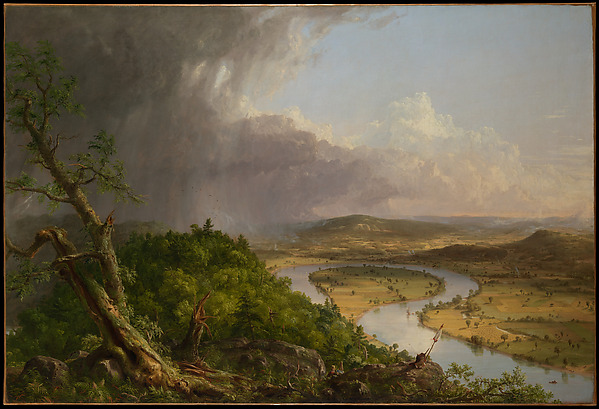 Thomas ColeThe Oxbow
![Y no hai remedio [Hier ist keine Rettung mehr; And there's no help for it], Francisco Goya, 1814](https://diglib.hab.de/varia/haum/goya-des-15/min/000001.jpg) Francisco de GoyaY no hai remedio [Hier ist keine Rettung mehr; And there's no help for it]
Francisco de GoyaY no hai remedio [Hier ist keine Rettung mehr; And there's no help for it] Francisco de GoyaLa Tauromaquia: Desgracias acaecidas en el tendido de la plaza de Madrid, y muerte del Alcalde de Torrejón - In den ersten Reihen der Arena von Madrid geschehenes Unglück und Tod des Bürgermeisters von Torrejón
 William BlakeThe Vision of Christ
![Náda. Ello dirá [Nichts, es wird sich zeigen; Nothing. The event will tell], Francisco Goya, 1815–1820](https://diglib.hab.de/varia/haum/goya-des-69/min/000001.jpg) Francisco de GoyaNáda. Ello dirá [Nichts, es wird sich zeigen; Nothing. The event will tell]
Francisco de GoyaNáda. Ello dirá [Nichts, es wird sich zeigen; Nothing. The event will tell] Francisco de GoyaLa Tauromáquia: El cid Campeador lanceando otro toro - Der Cid Campeador greift einen Stier mit der Lanze an
![No saben el camino [Sie wissen den Weg nicht; They do not know the way], Francisco Goya, 1815–1820](https://diglib.hab.de/varia/haum/goya-des-70/min/000001.jpg) Francisco de GoyaNo saben el camino [Sie wissen den Weg nicht; They do not know the way]
Francisco de GoyaNo saben el camino [Sie wissen den Weg nicht; They do not know the way]![Disparate pobre [Arme Torheit; Poor folly], Francisco Goya, 1815–1824](https://diglib.hab.de/varia/haum/goya-prov-11/min/000001.jpg) Francisco de GoyaDisparate pobre [Arme Torheit; Poor folly]
Francisco de GoyaDisparate pobre [Arme Torheit; Poor folly] Francisco de GoyaLa Tauromáquia: El esforzado Rendon picando un toro, de cuya suerte murió en la plaza de Madrid - Der tapfere Rendon verwundet einen Stier und tötet ihn in einem Gang im Zirkus von Madrid
![Ya no hay tiempo [Es ist keine Zeit mehr; There isn't time now], Francisco Goya, 1810–1812](https://diglib.hab.de/varia/haum/goya-des-19/min/000001.jpg) Francisco de GoyaYa no hay tiempo [Es ist keine Zeit mehr; There isn't time now]
Francisco de GoyaYa no hay tiempo [Es ist keine Zeit mehr; There isn't time now] Francisco de GoyaLa Tauromáquia: Pepe Illo haciendo el recorte al toro - Pepe Illo greift den Stier mit einem besonderen Trick (el recorte) an
![El Cid Campeador lanceando otro toro [El Cid Campeador tötet einen anderen Stier mit der Lanze; The Cid Campeador spearing another bull], Francisco Goya, 1816](https://diglib.hab.de/varia/haum/goya-taur-11/min/000001.jpg) Francisco de GoyaEl Cid Campeador lanceando otro toro [El Cid Campeador tötet einen anderen Stier mit der Lanze; The Cid Campeador spearing another bull]
Francisco de GoyaEl Cid Campeador lanceando otro toro [El Cid Campeador tötet einen anderen Stier mit der Lanze; The Cid Campeador spearing another bull] Albert von Sachsen-CoburgRomeo en Tybalt
![Caridad [Nächstenliebe; Charity], Francisco Goya, 1810](https://diglib.hab.de/varia/haum/goya-des-27/min/000001.jpg) Francisco de GoyaCaridad [Nächstenliebe; Charity]
Francisco de GoyaCaridad [Nächstenliebe; Charity] William BlakeThe Lord Answering Job out of the Whirlwind
![Aun podrán servir [Auch sie können noch nützlich sein; They can still be of use], Francisco Goya, 1810–1812](https://diglib.hab.de/varia/haum/goya-des-24/min/000001.jpg) Francisco de GoyaAun podrán servir [Auch sie können noch nützlich sein; They can still be of use]
Francisco de GoyaAun podrán servir [Auch sie können noch nützlich sein; They can still be of use] William BlakeThe Lord Answering Job out of the Whirlwind
![Sanos y enfermos [Gesunde und Kranke; the healthy and the sick], Francisco Goya, 1812–1815](https://diglib.hab.de/varia/haum/goya-des-57/min/000001.jpg) Francisco de GoyaSanos y enfermos [Gesunde und Kranke; the healthy and the sick]
Francisco de GoyaSanos y enfermos [Gesunde und Kranke; the healthy and the sick]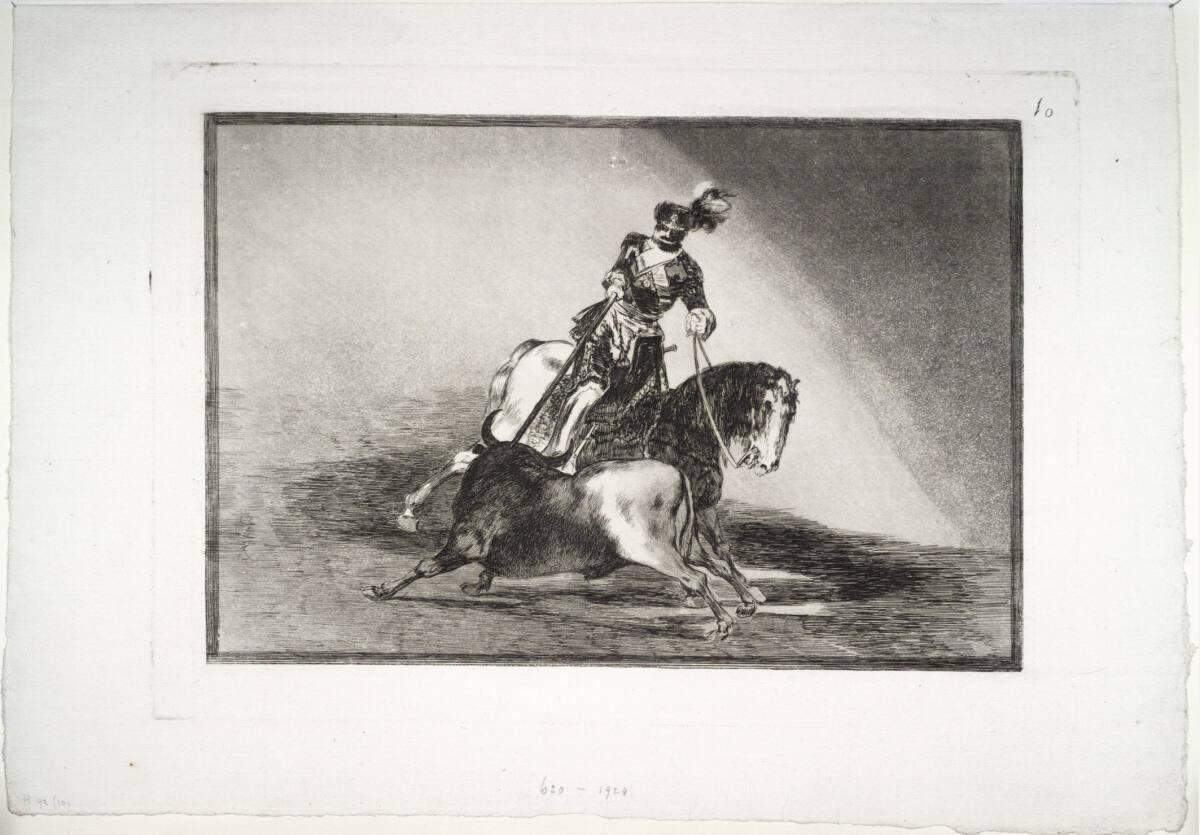 Francisco de GoyaLa Tauromáquia: Carlos V. lanceando un toro en la plaza de Valladolid - Karl V. bekämpft einen Stier im Zirkus von Valladolid
 Francisco de GoyaLa Tauromáquia: Dos grupos de picadores arrolados de seguida por un solo toro - Wie zwei Gruppen von Stierkämpfern von einem einzigen Stier Schlag auf Schlag über den Haufen geworfen werden
 Francisco de GoyaLa Tauromáquia: Los moros hacen otro capeo en plaza von su albornoz - Die Mauren necken den Stier im Zirkus in anderer Weise mit ihrem Burnus
![Capean otro encerrado [Sie reizen den anderen Stier mit der Capa in einer geschlossenen Kampfbahn; They play another with the cape in an enclosure], Francisco Goya, 1816](https://diglib.hab.de/varia/haum/goya-taur-04/min/000001.jpg) Francisco de GoyaCapean otro encerrado [Sie reizen den anderen Stier mit der Capa in einer geschlossenen Kampfbahn; They play another with the cape in an enclosure]
Francisco de GoyaCapean otro encerrado [Sie reizen den anderen Stier mit der Capa in einer geschlossenen Kampfbahn; They play another with the cape in an enclosure]![Ligereza y atrevimiento de Juanito Apiñani de Madrid [Wendigkeit und Waghaldigkeit des Juanito Apinani in der Arena von Madrid; The agility and audacity of Juanito Apinani in (the ring) at Madrid], Francisco Goya, 1816](https://diglib.hab.de/varia/haum/goya-taur-20/min/000001.jpg) Francisco de GoyaLigereza y atrevimiento de Juanito Apiñani de Madrid [Wendigkeit und Waghaldigkeit des Juanito Apinani in der Arena von Madrid; The agility and audacity of Juanito Apinani in (the ring) at Madrid]
Francisco de GoyaLigereza y atrevimiento de Juanito Apiñani de Madrid [Wendigkeit und Waghaldigkeit des Juanito Apinani in der Arena von Madrid; The agility and audacity of Juanito Apinani in (the ring) at Madrid] Taras ShevchenkoPortrait of General, Prince Nikolai G. Repnin-Volkonsky (1778-1845)
 Francisco de GoyaLa Tauromáquia: El animoso moro Gazul es el primero que lanceó toro en regla - Der kühne Maure Gazul ist der erste, der die Stiere nach den Regeln der Kunst bekämpfte
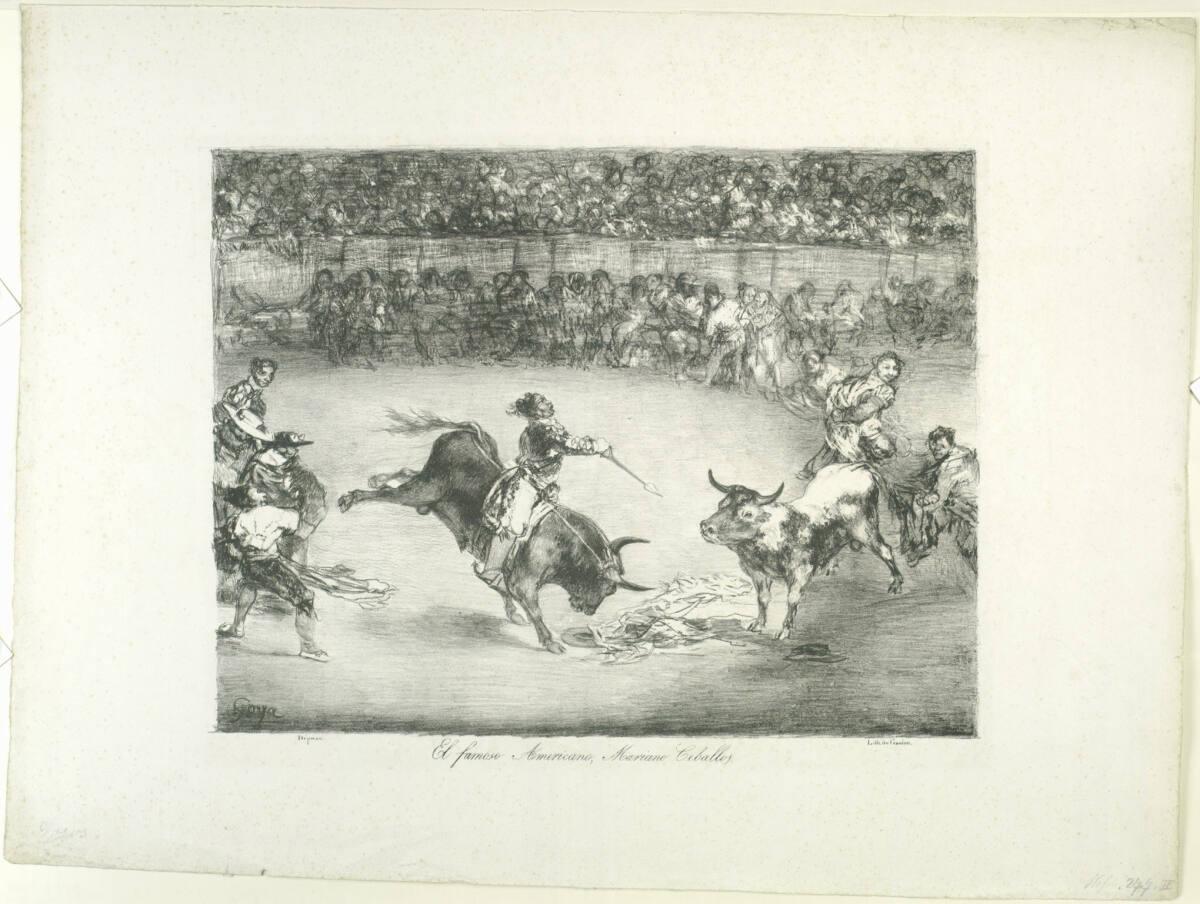 Francisco de GoyaLos Toros de Burdeos: El famoso americano Mariano Ceballos - Der berühmte Amerikaner Mariano Ceballos
![No llegan á tiempo [Sie kommen zu spät; They do not arrive in time], Francisco Goya, 1812–1815](https://diglib.hab.de/varia/haum/goya-des-52/min/000001.jpg) Francisco de GoyaNo llegan á tiempo [Sie kommen zu spät; They do not arrive in time]
Francisco de GoyaNo llegan á tiempo [Sie kommen zu spät; They do not arrive in time]![Esto es peor [Dies ist schlimmer; This is worse], Francisco Goya, 1812–1815](https://diglib.hab.de/varia/haum/goya-des-37/min/000001.jpg) Francisco de GoyaEsto es peor [Dies ist schlimmer; This is worse]
Francisco de GoyaEsto es peor [Dies ist schlimmer; This is worse]![Disparate feminino [Weibliche Torheit; Feminine folly], Francisco Goya, 1815–1824](https://diglib.hab.de/varia/haum/goya-prov-01/min/000001.jpg) Francisco de GoyaDisparate feminino [Weibliche Torheit; Feminine folly]
Francisco de GoyaDisparate feminino [Weibliche Torheit; Feminine folly]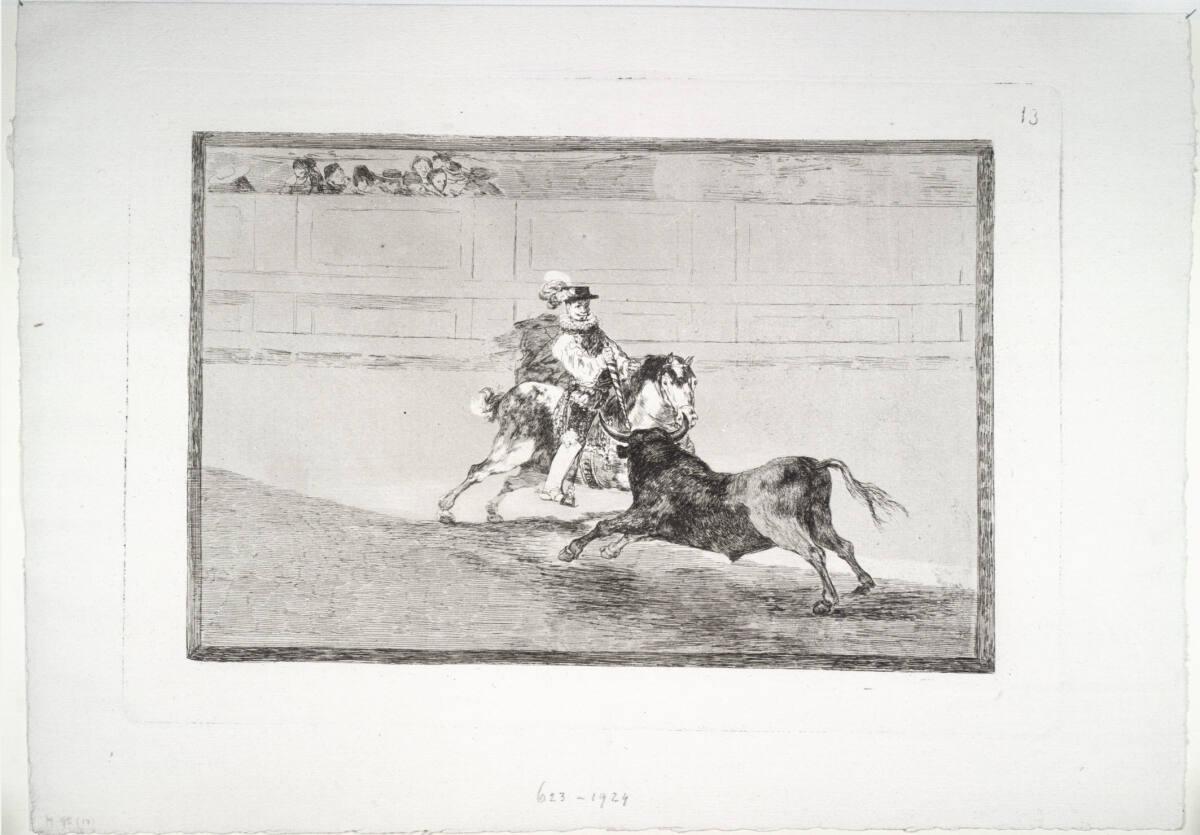 Francisco de GoyaLa Tauromáquia: Un caballero espanol en plaza quebrando rejoncillos sin auxilio de los chulos - Ein berittener Stierfechter bricht Wurfspieße ohne Hilfe der Chulos (Stierfechter-Gehilfen)
![La Tauromaquia: Ligereza y atrevimiento de Juanito Apinani en la <plaza> de Madrid - Leichtsinn und Waghalsigkeit des Juanito Apinani in der [Arena] von Madrid, Francisco Goya, 1816](https://sammlungenonline.albertina.at/internal/media/dispatcher/161173/preview) Francisco de GoyaLa Tauromaquia: Ligereza y atrevimiento de Juanito Apinani en la <plaza> de Madrid - Leichtsinn und Waghalsigkeit des Juanito Apinani in der [Arena] von Madrid
Francisco de GoyaLa Tauromaquia: Ligereza y atrevimiento de Juanito Apinani en la <plaza> de Madrid - Leichtsinn und Waghalsigkeit des Juanito Apinani in der [Arena] von Madrid![No hay que dar voces [Es lohnt nicht zu schreien; It's no use crying out], Francisco Goya, 1812–1815](https://diglib.hab.de/varia/haum/goya-des-58/min/000001.jpg) Francisco de GoyaNo hay que dar voces [Es lohnt nicht zu schreien; It's no use crying out]
Francisco de GoyaNo hay que dar voces [Es lohnt nicht zu schreien; It's no use crying out] Francisco de GoyaLa Tauromáquia: Cobida de un moro en la plaza - Verwundung eines Mauren im Zirkus
![Que se rompe la cuerda [Hoffentlich reißt das Seil; May the cord break], Francisco Goya, 1815–1820](https://diglib.hab.de/varia/haum/goya-des-77/min/000001.jpg) Francisco de GoyaQue se rompe la cuerda [Hoffentlich reißt das Seil; May the cord break]
Francisco de GoyaQue se rompe la cuerda [Hoffentlich reißt das Seil; May the cord break]