 Nicholas HilliardEngland, 1547–1619
Young Man among Roses
Kan det ses?
Ja, udstillet nu
Hvor er »Young Man among Roses« i dag? Victoria and Albert Museum, British Galleries, Room 57, London. Ja, udstillet nu. Kontrolleret 25. september 2026.

Åbent nu· til kl. 22.00
Udstillet for publikum.
- Kontrolleret
- Uændret siden
- Kilde
- Museet
Om maleriet
Object Type
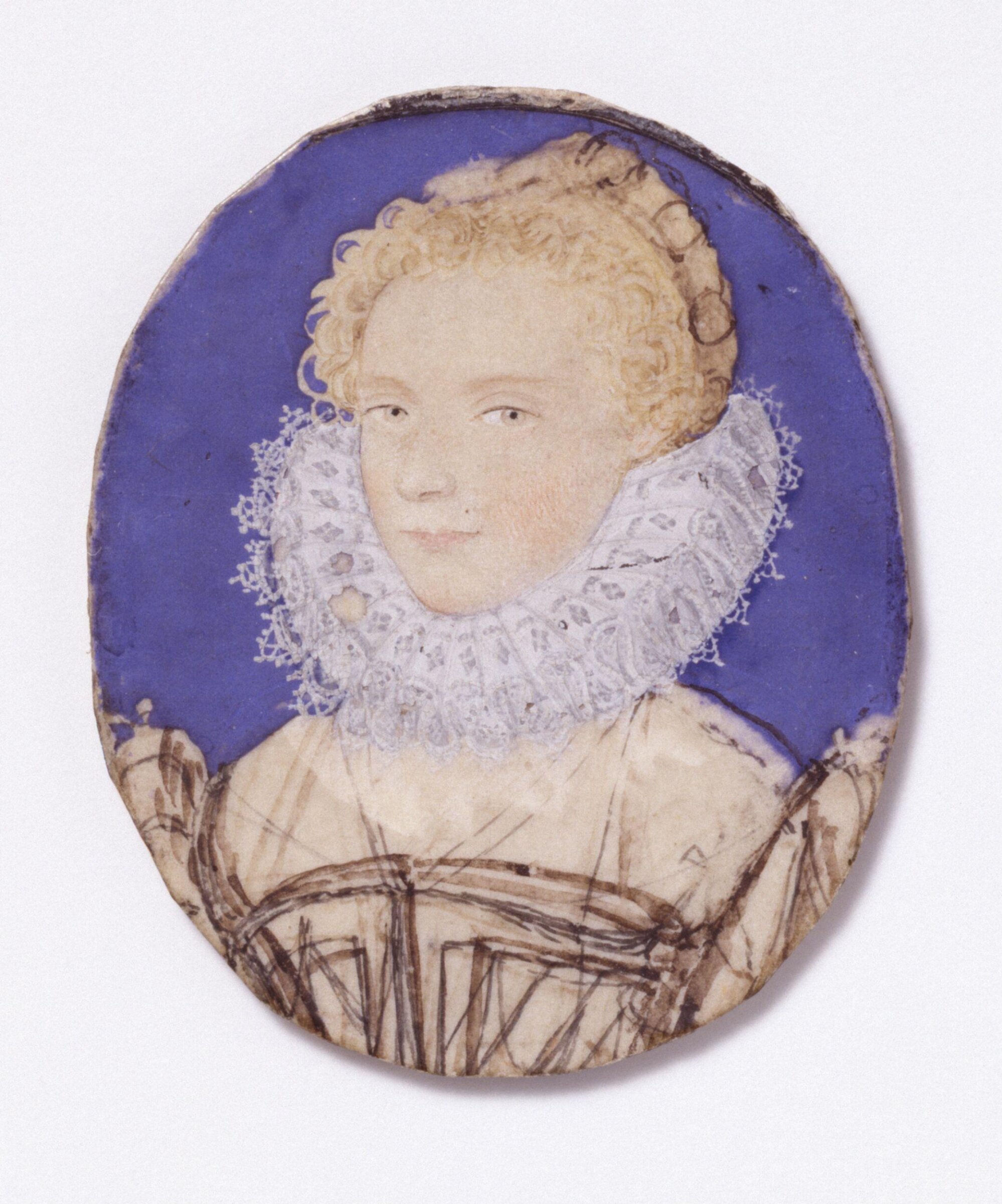
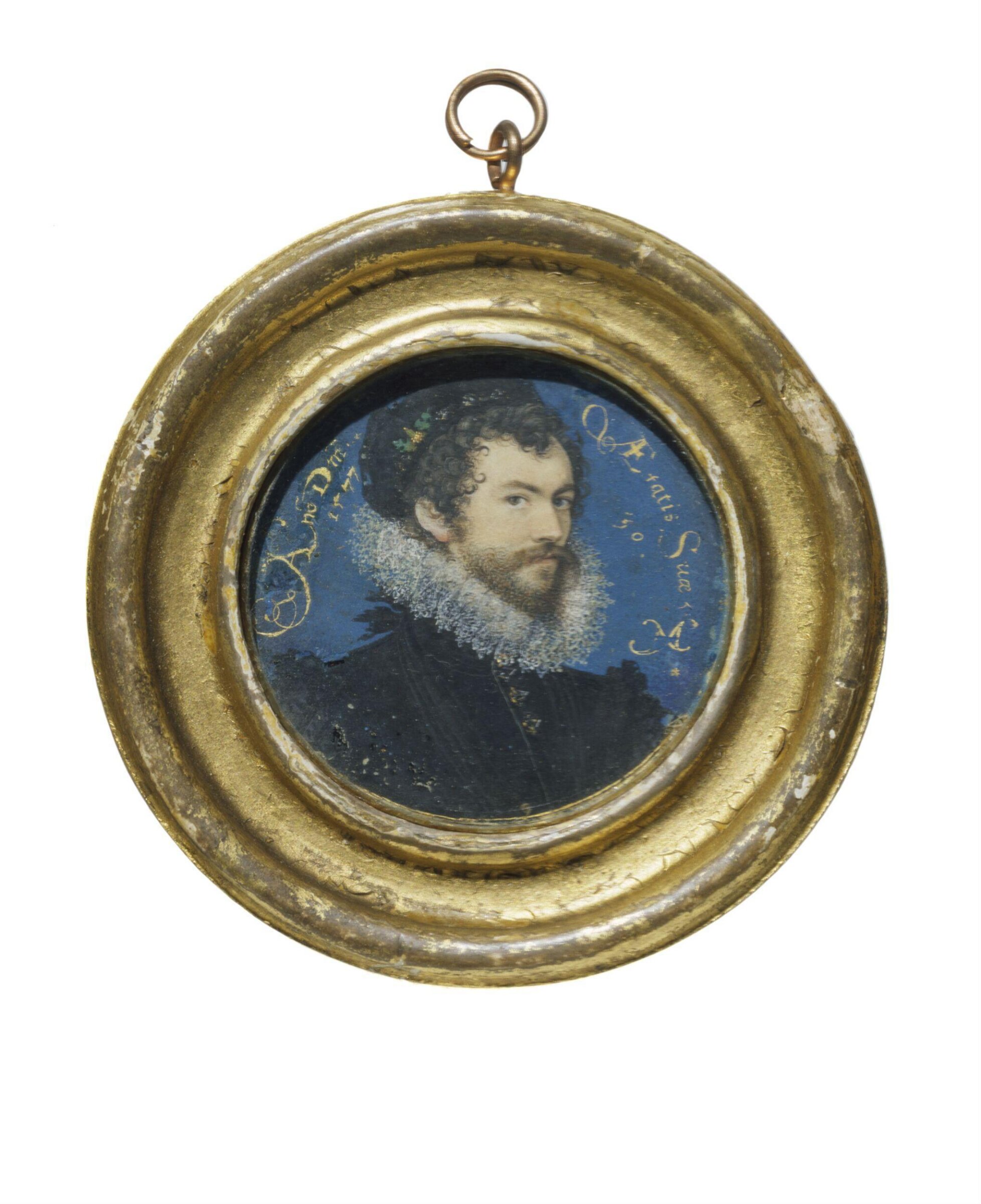
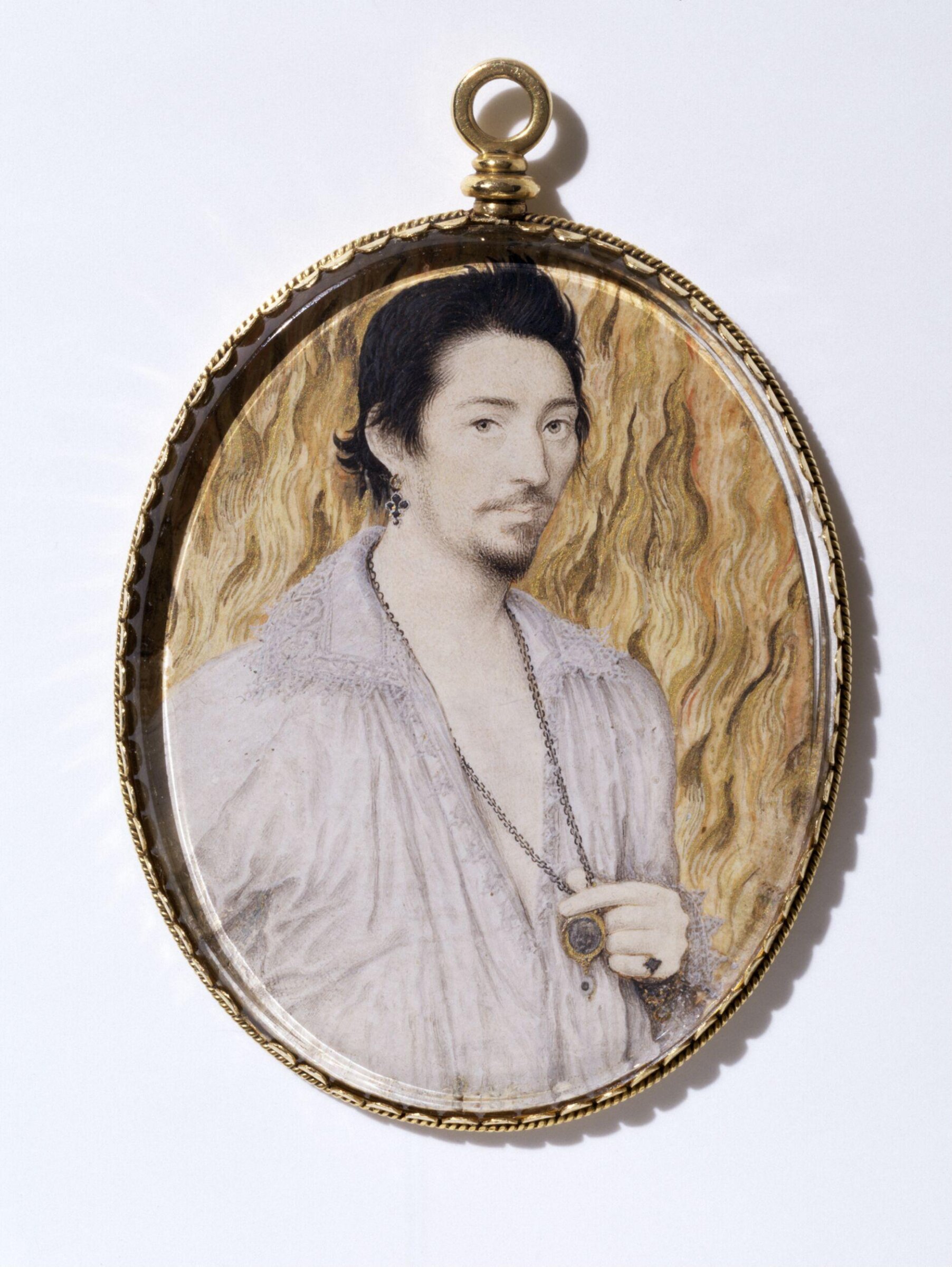
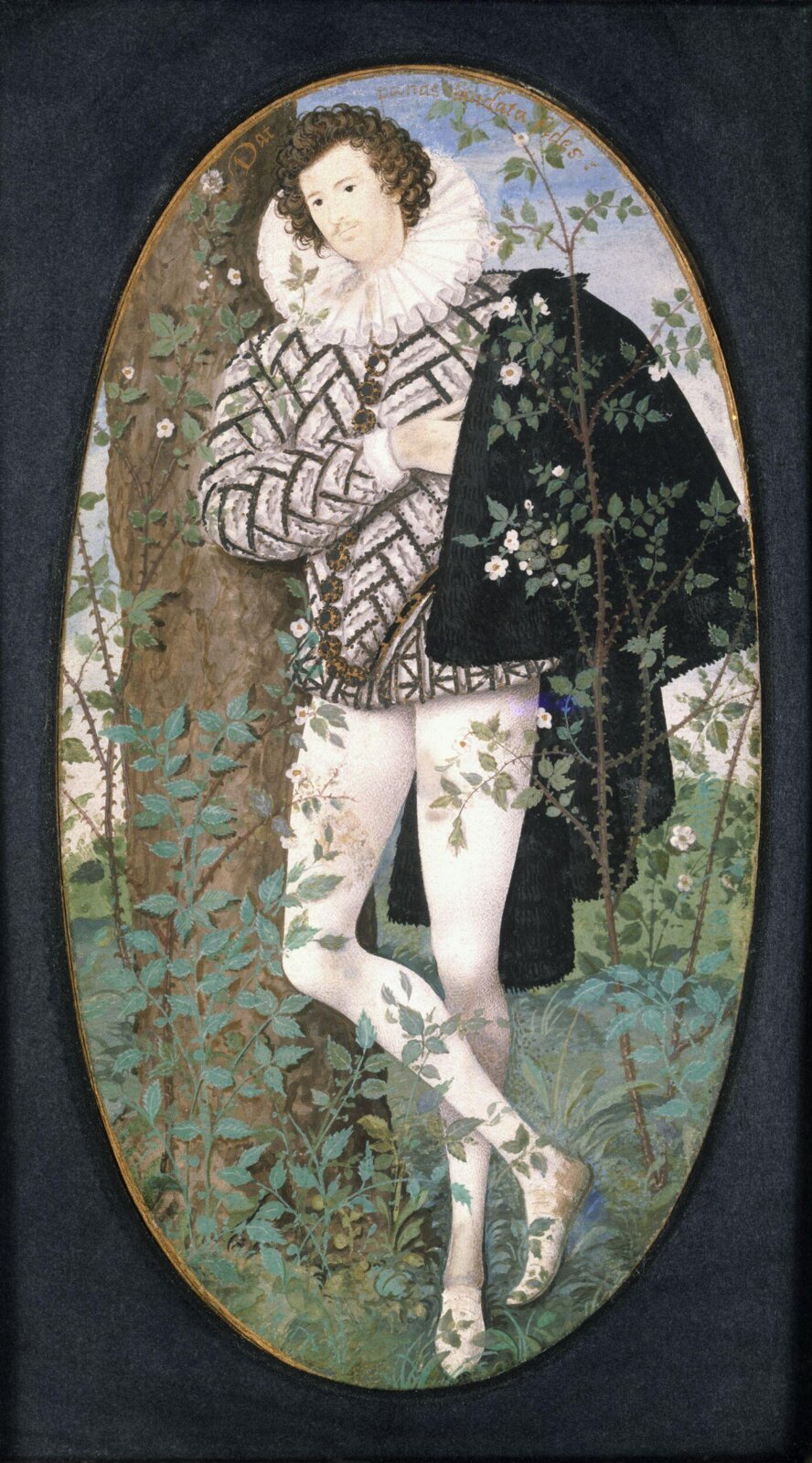
This portrait is perhaps the most famous of English miniatures. It epitomises the romantic Elizabethan age and is a masterpiece of miniature paintings by its greatest exponent, Nicholas Hilliard. The large elongated oval shape of this miniature was never repeated in Hilliard's work and must relate to the now unknown purpose of the object. Possibly it was incorporated into an expensive object such as a looking-glass.
Subjects Depicted
Læs videre
Elizabeth was the heart of government and the focus of power in England. As a woman ruler she encouraged a unique court culture, exerting her authority through elaborate rituals of courtship with her male courtiers. This role-playing reached a pitch at the Accession Day ceremonial jousts at which the Queen received the homage of her knights. Each courtier presented her with a shield bearing an 'impressa', a combination of picture and motto 'borne by noble personages.to notify some particular conceit', usually their devotion to the Queen. This culture is reflected in this portrait of a young courtier. [He wears the Queen's colours, black and white, and is surrounded by the eglantine rose, a symbol of the Queen: see note below]
The Sitter
It has been suggested that this unknown young man is Robert Devereux, 2nd Earl of Essex, the Queen's young favourite. At this date he was about 30 years younger than the Queen he pays homage to, hand on heart.
Note: The interpretation of the colours worn by the sitter and the rose is now questioned (See Catharine MacLeod, 'Elizabethan Treasures. Miniatures by Hilliard and Oliver', National Portrait Gallery, London 2019 exhibition cat. no.64). The meanings of these symbols were suggested by experts such as Roy Strong, former Director of the Victoria and Albert Museum, who argued on the basis of these that the young man depicted is declaring his devotion to the Queen. Comparison with portraits thought to be of Robert Devereux, 2nd Earl of Essex (1566-1601) fixed the idea that the miniature could be of Devereux: The young man is said to be dressed in the Queen's colours of black and white. However these colours were not exclusive to the Queen. Another link to Elizabeth is the idea that the young man is surrounded by her personal flower, the eglantine rose. However, as Mary Edmond has pointed out, the eglantine has a red flower, not a white.
Victoria and Albert Museum
Oplysninger
- Inventarnummer
- P.163-1910
Hvad det viser
I kataloget
Kilder
- Victoria and Albert Museum
- Billede: Victoria and Albert Museum — © Victoria and Albert Museum, London