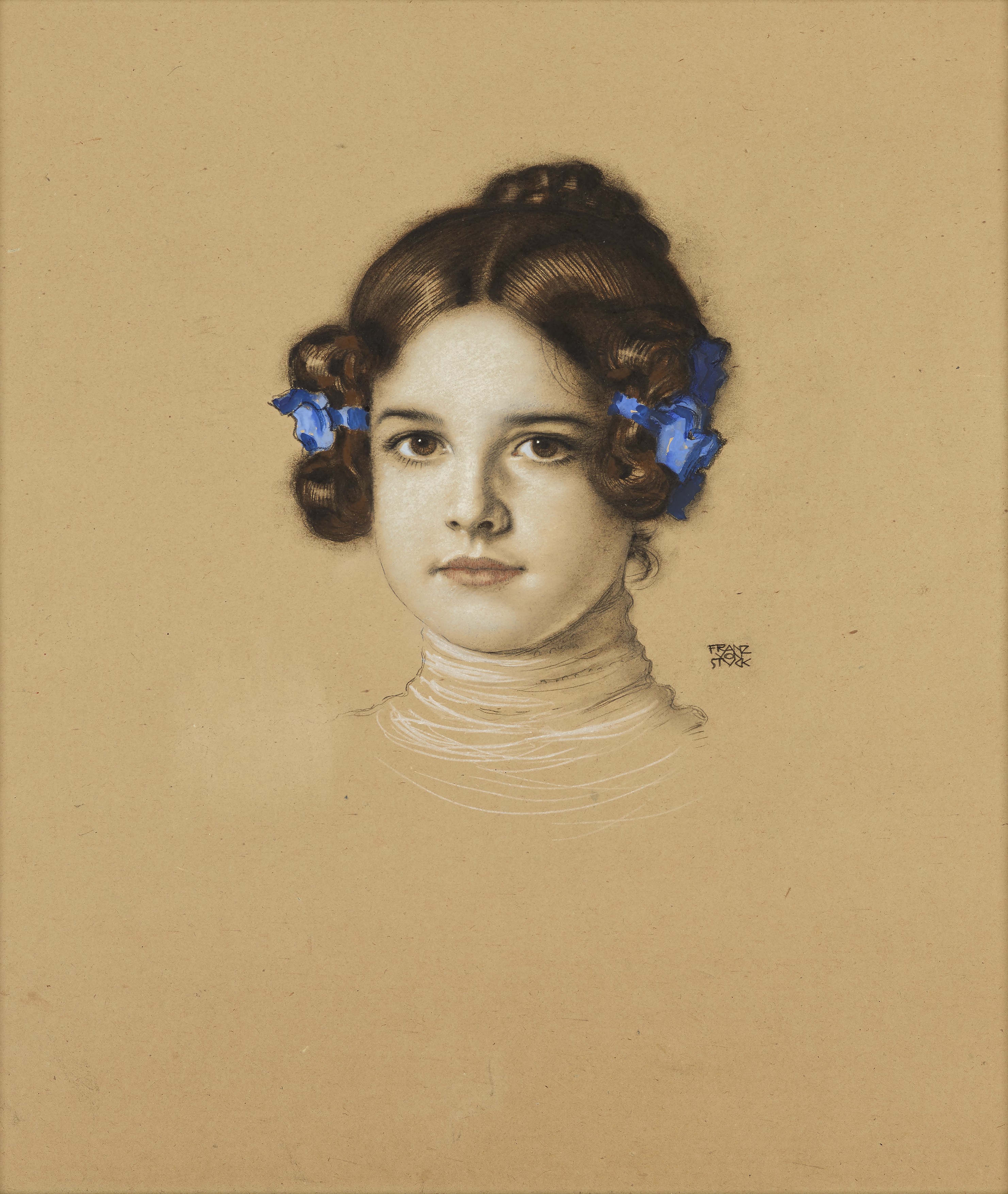
Franz von StuckTyskland, Østrig, 1863–1928
Wounded Amazon
Må man se det?
Ja, det tager imod

Udstillet for publikum. Hvem der står inde for det, står nedenfor.
- Kontrolleret
- Uændret siden
- Kilde
- Museets egne samlingsdata
About the painting
As both a founder of the Munich Secession and an influential teacher at the city’s Royal Academy (where his students included Paul Klee and Wassily Kandinsky), Franz von Stuck was a central figure in Munich’s art world at the turn of the twentieth century. His modern interpretation of the antique in works such as this sculpture and painting brought him particular success. Wounded Amazon (2002.96) depicts a battle between Amazons and centaurs; the particular subject is not found in classical mythology but is of the artist’s own invention. Though he was clearly influenced by the antiquities in Munich’s Glyptothek museum, Stuck based the painting on photographic studies of a model posed in his studio. Ever since he had featured the goddess Athena on the poster for the first Munich Secession exhibition in 1893, classical female warriors had appeared in his work as symbols of the new art.
Read on
There are two other versions of this painting, and the artist eventually produced three life-sized versions of the sculpture (2003.132). One was installed outside Villa Stuck, the home he had designed for himself in Munich.
Harvard Art Museums
Oplysninger
- Inventarnummer
- 2002.96
I kataloget
Kilder
- Harvard Art Museums: the museum's own open data · hentet for 6 dage siden
- Billede: Harvard Art Museums — © President and Fellows of Harvard College
Imens i livet hos Franz von Stuck
Hele livet1903
Co-founder of the German Artists' Association
He becomes one of the founders of the German Artists' Association (Deutscher Künstlerbund) and sits on its extended board as a member of the jury.
1904
First exhibition of the Artists' Association
At the first exhibition of the German Artists' Association, organized by the Munich Secession, Stuck is represented by four large oil paintings.
1904
Order of Merit of St Michael, 3rd class
He receives the Bavarian Order of Merit of St Michael, 3rd class.
1905 · Udmærkelse
Merit Order of the Bavarian Crown
9 December 1905
Ennobled: “Ritter von Stuck”
Prince Regent Luitpold awards him the Knight's Cross of the Order of Merit of the Bavarian Crown, which confers personal nobility; after registration in the nobility roll on 2 January 1906 he is entitled to call himself “Ritter von Stuck” (other accounts date the order to 1906).